Osmosis video - Amino acids and protein folding
00:00 / 00:00
More Videos
11:33
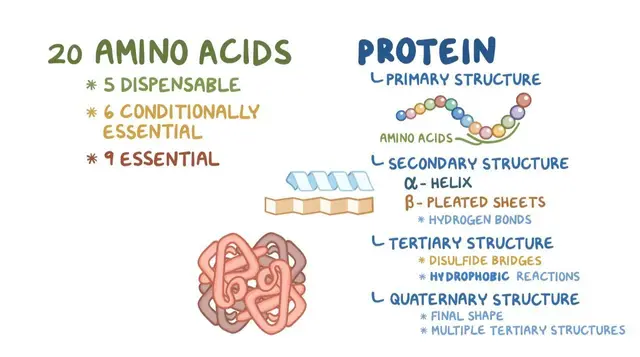
Amino acids and protein folding

07:08
Cell cycle

12:18
DNA damage and repair
11:53
DNA mutations

08:14
DNA replication
07:17
DNA structure
06:36
Epigenetics
11:56
Gene regulation

06:45
Lac operon
10:48
Mitosis and meiosis

06:41
Nuclear structure
10:23
Nucleotide metabolism
07:14
Transcription of DNA
06:39
Translation of mRNA
Video Summary of Amino acids and protein folding
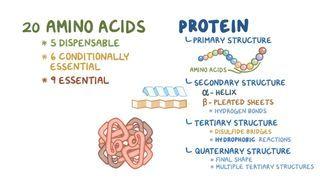
Amino acids are the building blocks of protein. Protein folding is the process by which a single polypeptide chain, or peptide, assumes its unique 3-dimensional conformation or "fold." This folded conformation is necessary for the protein to carry out its biological function.
Some proteins fold spontaneously, while others require the help of other proteins, known as chaperones, to fold correctly. In some cases, misfolded proteins can form aggregates that can be harmful to a cell. This is thought to play a role in a variety of human diseases, including Alzheimer's disease and Huntington's disease.