Osmosis video - Zinc deficiency and protein-energy malnutrition: Pathology review
00:00 / 00:00
Video Summary of Zinc deficiency and protein-energy malnutrition: Pathology review
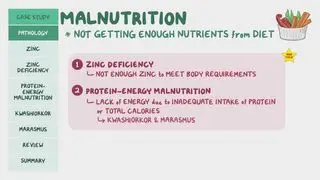
Zinc deficiency is mainly caused by inadequate dietary consumption or a defect in intestinal absorption, like celiac disease and acrodermatitis enteropathica, and it's commonly associated with alcoholic cirrhosis. Symptoms include impaired wound healing, alopecia, immune dysfunction, dysgeusia, anosmia, and male hypogonadism. Protein-energy malnutrition is most common in resource-deprived regions and includes Kwashiorkor and marasmus. Kwashiorkor is due to inadequate protein intake with normal or increased calorie intake and presents in children between 6 months and 3 years of age with lethargy, poor appetite, susceptibility to infections, bilateral pitting edema, moon faces, mild muscle wasting, distended abdomen with an enlarged fatty liver, hair loss, and dermatitis.
Marasmus is due to inadequate calorie intake from all macronutrients and presents in infants under the age of 1 with restlessness or irritability, voracious appetite, susceptibility to infections, an emaciated appearance, profound muscle wasting, and dry and wrinkled skin. However, with marasmus, the abdomen is typically flat, and there is no edema or hepatomegaly. Blood tests in both Kwashiorkor and marasmus may show electrolyte disturbances, like hypophosphatemia, hypomagnesemia, and hypokalemia, as well as anemia and lymphocytopenia. But what sets them apart is that Kwashiorkor also has hypoalbuminemia, while in marasmus, serum albumin is normal or slightly decreased.