
Acute Gastritis · What Is It, Causes, Symptoms, Diagnosis, and More

Published: Jul 30, 2025
Author: Anna Hernández, MD
Editor: Ahaana Singh
Editor: Lisa Miklush, PhD, RN, CNS
Editor: Kelsey LaFayette, DNP, ARNP, FNP-C
Editor: Józia McGowan, DO
Illustrator: Jillian Dunbar
7-day free trial

Go deeper with Osmosis

Osmosis is a learning platform with videos, questions, and AI tools to help you master topics like this.

4.8 · 12,000+ reviews
Watch quick, visual videos
Practice with Qbank-style questions
Use AI to explain, quiz, and review
Study anytime with the mobile app
Start free trial

No credit card · Cancel anytime

What is acute gastritis?

Acute gastritis refers to a sudden onset of inflammation of the stomach lining, also known as the gastric mucosa. In contrast, chronic gastritis refers to long-term inflammation of the gastric mucosa.   

With acute gastritis, a disruption in the gastric mucosa triggers an inflammatory immune response that attracts white blood cells to the site of injury. If the mucosal damage is severe enough, acute gastritis can progress to erosive gastritis, which consists of shallow lesions of the stomach lining (i.e., gastric erosions), painful ulcerations or sores, and small areas of bleeding within the mucosa.  

Although the term “gastritis” is sometimes used as a synonym for “upset stomach” or “indigestion,” it most accurately refers to the evidence of inflammatory cells in a stomach biopsy, usually obtained through an upper endoscopyAn endoscopy is a minimally invasive procedure that uses a flexible tube attached to a small camera to look at the inside of a part of the body, like the gastrointestinal tract. If no inflammation is seen on the gastric biopsy, then the term gastropathy can be used instead.  

Learn deeper with Osmosis

Master this topic faster with videos, questions, and AI.

Used by 8M+ healthcare learners.

Start free trial

No credit card · Cancel anytime

What causes acute gastritis?

Acute gastritis occurs as a result of weakness or injury to the gastric mucosa, which can allow stomach acids to damage and inflame the lining. There are several risk factors for damage to the gastric mucosa, including use of certain medications, infections, acute stress, and dietary factors 

One of the main causes of acute gastritis is frequent or long-term use of nonsteroidal anti-inflammatory drugs (NSAIDs), such as aspirin and ibuprofen. These medications interfere with the protective mechanisms of the gastric mucosa, leading to a decreased production of gastric mucus and increased vulnerability to gastric acid. As a result, excessive use of NSAIDs can increase the risk of developing acute gastritis.  

Bacterial infection by Helicobacter pylori (H. pylori) is another common cause of gastritis. H. pylori is a spiral-shaped bacteria that colonizes the stomach of many individuals. In most people, early infection by H. pylori doesn’t cause many symptoms and usually goes unnoticed. However, long-lasting or chronic infection by H. pylori can lead to persistent inflammation of the gastric mucosa, as well as loss of the normal glandular structure of the stomach. Eventually, this can increase the risk of developing other digestive problems, such as stomach ulcers and stomach cancer  

Acute gastritis can also occur as a result of extreme physiological stress, often due to major surgery, trauma, severe burns, or severe illnesses. In some cases, the stomach ulcers associated with specific types of physiological stress are given specific names, such as Curling ulcers, which are associated with severe burns, and Cushing ulcers that are associated with brain injury.  

Additional risk factors for developing acute gastritis include autoimmune conditions, increased intake of alcohol, a high salt diet, and tobacco use, all of which can irritate the gastric mucosa. More rarely, the ingestion of harsh chemicals can lead to severe mucosal damage due to a direct gastric injury.  

How long does acute gastritis last?

Acute gastritis usually lasts for a short period of time, typically days or weeks, depending on the cause. In most cases, it can resolve spontaneously; when the offending cause is removed (e.g., stop NSAIDs); or with short term treatment with a proton pump inhibitor 

In other cases, however, acute gastritis can lead to recurrent or long-term inflammation of the gastric mucosa. With time, chronic gastritis can increase the risk of developing other complications, such as stomach ulcers, upper gastrointestinal bleedingand certain types of stomach cancer. 

What are the signs and symptoms of acute gastritis?

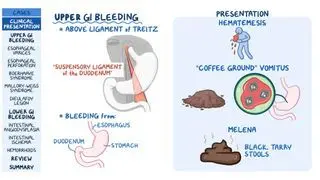
Most individuals with acute gastritis are asymptomatic or experience mild symptoms, such as loss of appetite, upper abdominal discomfort, belching, nausea, and vomiting. In more severe cases, some individuals may experience upper gastrointestinal bleeding due to gastric erosions and ulcerations of the mucosa. In turn, this can lead to hematemesis, or vomiting blood, as well as melena, which are tarry, black stools caused by the digestion of blood in the gastrointestinal tract 

What are the differential diagnoses for acute gastritis?

Differential diagnoses involve considering various possible conditions that could be causing symptoms and then ruling out each one through use of history, clinical evaluation, diagnostic tests, and critical thinking. This process helps to narrow down the list of potential diagnoses to determine the most likely cause of the symptoms.

Differential diagnoses can be broken down into four categories: most likely, less likely, least likely, and can’t miss. Most likely diagnoses are conditions most probable based on symptoms and clinical presentation. Less likely diagnoses are not as probable but should still be considered. On the other hand, least likely diagnoses can be considered if other, more probable conditions are excluded. Finally, can’t miss diagnoses are less common but critical to promptly identify and treat as they can lead to severe consequences.

Differential diagnoses for acute gastritis include:
Most likely:
- NSAID-induced gastritis: Common due to inhibition of prostaglandin synthesis, leading to mucosal injury.
- Alcohol-induced gastritis: Alcohol is a direct gastric irritant.
- Helicobacter pylori infection: A frequent cause of both acute and chronic gastritis.
- Stress-related mucosal disease: Seen in critically ill patients.

Less likely:
- Bile reflux gastritis: Occurs after gastric surgery or pyloric dysfunction.
- Viral infections: More common in immunocompromised individuals.
- Autoimmune gastritis (early phase): May present acutely before progressing to chronic atrophic gastritis.
- Food poisoning or dietary irritants: Spicy or contaminated food can mimic gastritis symptoms.

Least likely:
- Eosinophilic gastritis: Associated with allergies or parasitic infections.
- Radiation gastritis: Seen in patients receiving abdominal radiation therapy.
- Zollinger-Ellison syndrome: Gastrin-secreting tumor causing acid hypersecretion and mucosal damage.

Can’t miss:
- Gastric ulcer with active bleeding: Can present similarly but requires urgent intervention.
- Gastric malignancy: Especially in older adults with weight loss or anemia.
- Perforated viscus: Presents with acute abdomen and requires emergency surgery.
- Ingestion of corrosive substances: Can cause severe mucosal injury and systemic toxicity.

How is acute gastritis diagnosed?

Initially, a history is taken to identify possible causes of acute gastritis, such as long-term use of NSAIDs, excessive alcohol consumption, or H. pylori infection. A physical examination will follow and can help aid in determining differential diagnoses. In some cases, when a clear cause of inflammation can be identified clinically, such as a history of long-term use of NSAIDs, no additional tests are usually required. 

However, if the diagnosis is uncertain, or if bleeding occurs, additional work-up is necessary, such as an upper endoscopy to directly visualize the gastric mucosa and obtain a biopsy to examine.  

How is acute gastritis treated?

Treatment of acute gastritis is aimed at relieving the underlying cause of inflammation. Some cases of acute gastritis resolve without any treatment, while others require treatment via lifestyle changes or medications. 

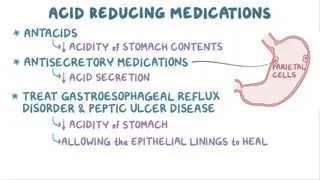
Proton pump inhibitors, such as omeprazole or pantoprazole, may aid in relieving the symptoms of gastritis by helping decrease gastric acid production which allows for healing of the gastric mucosaProton pump inhibitors, along with a combination of various antibiotics, can also be used to treat H. pylori infection. Additionally, other medications including H2 blockers (e.g., famotidine) and some over-the-counter medications, such as bismuth subsalicylate and calcium carbonate have been used in the symptom relief and treatment of gastritis.  

It’s also important, when possible, to remove or avoid any risk factors that may cause inflammation. This may include ceasing use of NSAIDs or reducing or abstaining from alcohol and tobacco. 

What are the dietary recommendations for acute gastritis?

Individuals with acute gastritis may be advised to make certain dietary changes, such as eating a bland diet; avoiding irritating foods such as spicy or fatty foods; eating small, frequent meals; and reducing the intake of alcoholic, carbonated, and caffeinated beverages 

What are the most important facts to know about acute gastritis?

Acute gastritis refers to a sudden onset of inflammation of the stomach lining that results from a disruption to the gastric mucosa allowing damage and inflammation from stomach acids. There are many risk factors that can lead to acute gastritis, such as long-term use of nonsteroidal anti-inflammatory drugs (NSAIDs), infection by Helicobacter pylori bacteria, increased intake of alcohol, and severe physiological stress, among others. Common symptoms of acute gastritis include stomach discomfortloss of appetite, nausea, and vomiting. In severe cases, ulceration and gastrointestinal bleeding may also occur. Diagnosis of acute gastritis is usually based on history and physical examination, although in some cases, it can be confirmed through biopsy taken during endoscopy. Treatment of acute gastritis depends on the underlying cause of inflammation and may include lifestyle changes, acid-reducing medications, or antibiotics. 

Key Takeaways

Definition 

Sudden onset of inflammation of the gastric mucosa, which can progress to erosive gastritis 

Causes 

- NSAIDs use (frequent/long-term 

- H. pylori infection 

- Extreme physiological stress 

- Major surgery, trauma, severe burns or illnesses 

Signs and Symptoms 

- Loss of appetite 

- Upper abdominal discomfort 

- Belching 

- Nausea 

- Vomiting  

- Upper gastrointestinal bleeding 

- Hematemesis 

- Melena 

- Usually lasts for days-weeks, but can become chronic  

Diagnosis 

- Medical history  

- Long-term NSAIDs use, excessive alcohol consumptionH. pylori infection 

- Physical examination 

- Upper endoscopy 

Treatment 

- Remove underlying cause of inflammation (e.g., NSAIDs)  

- Proton pump inhibitors (e.g., pantoprazole) 

- H2 blockers  

- Over-the-counter medications 

- Bismuth subsalicylate, calcium carbonate 

- If H. pylori → antibiotics 

- Dietary recommendations 

Students say Osmosis is 100% worth it

Because Osmosis saves them time. Lowers stress. And actually helps them remember when it counts.

I used Osmosis to prepare for my first medical school licensing exam! Super helpful and interactive for people who may not do great with just pages of text info!

Cecilia Ruiz

Cecilia Ruiz

MD student

Sayan Misra

I have used Osmosis for about four years. Best thing I have ever used for my medical studies.

Sayan Misra

Sayan Misra

Med student

Osmosis videos are superior because they define simple concepts, tell a story with a clear progression, and provide context.

Jay Pate

Jay Pate

Dental student

References


Chey WD, Leontiadis GI, Howden CW, Moss SF. ACG clinical guideline: Treatment of Helicobacter pylori infection. Am J Gastroenterol. 2017;112(2):212–239. doi:10.1038/ajg.2016.563. Published correction appears in Am J Gastroenterol. 2018;113(7):1102 


Duque-Buitrago LF, Tornero-Martínez A, Loera-Castañeda V, Mora-Escobedo R. Use of food and food-derived products in the treatment of gastritis: A systematic review. Crit Rev Food Sci Nutr. 2023;63(22):5771-5782. doi:10.1080/10408398.2021.2024131 


Kumar V, Abbas AK, Aster JC. Chapter 17 The gastrointestinal tract. In: Kumar V, Abbas AK, Aster JC, eds. Robbins and Cotran Pathologic Basis of Disease. 10th ed. Elsevier; 2021:753-822. doi:10.1016/B978-0-323-53113-9.00017-0 


 Lanza FL, Chan FK, Quigley EM. Practice Parameters Committee of the American College of Gastroenterology. Guidelines for prevention of NSAID-related ulcer complications. Am J Gastroenterol. 2009;104(3):728-738. doi:10.1038/ajg.2009.115 


 Shah SC, Piazuelo MB, Kuipers EJ, Li D. AGA clinical practice update on the diagnosis and management of atrophic gastritis: Expert review. Gastroenterology. 2021;161(4):1325-1332.e7. doi:10.1053/j.gastro.2021.06.078