
Argininosuccinic Aciduria · What It Is, Causes, Signs and Symptoms, Treatment, and More

Published: Mar 30, 2026
Author: Emily Miao, MD, PharmD
Editor: Alyssa Haag, MD
Editor: Lily Guo, MD
Editor: Kelsey LaFayette, DNP, ARNP, FNP-C
Editor: Arianna Succi, MD
Editor: Lisa Miklush PhD, RN, CNS
Illustrator: Abbey Richard, MSc
7-day free trial

Go deeper with Osmosis

Osmosis is a learning platform with videos, questions, and AI tools to help you master topics like this.

4.8 · 12,000+ reviews
Watch quick, visual videos
Practice with Qbank-style questions
Use AI to explain, quiz, and review
Study anytime with the mobile app
Start free trial

No credit card · Cancel anytime

What is argininosuccinic aciduria?

Argininosuccinic aciduria is a rare, inherited metabolic disorder characterized by a deficiency in the enzyme argininosuccinate lyase, which breaks down argininosuccinic acid into arginine and fumarate. A deficiency in this enzyme results in elevated levels of argininosuccinic acid and, as a result, excess ammonia buildup in the blood. Because it is a neurotoxin, excessively high ammonia levels in the body can lead to severe, life-threatening metabolic complications, neurocognitive deficits, and developmental delays.

Learn deeper with Osmosis

Master this topic faster with videos, questions, and AI.

Used by 8M+ healthcare learners.

Start free trial

No credit card · Cancel anytime

What causes argininosuccinic aciduria?

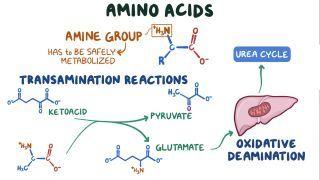
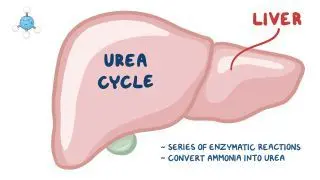
The urea cycle is responsible for converting the nitrogen released from muscle breakdown and protein ingestion into urea, a water-soluble form that can be excreted by the kidneys. A deficiency in any one of the enzymes of the urea cycle will prevent urea formation, thereby leading to an excess buildup of ammonia (a toxic nitrogen-containing compound). Argininosuccinic aciduria is one of many urea cycle disorders and is caused by mutations in the ASL gene, which codes the enzyme argininosuccinate lyase. The mutation is inherited in an autosomal recessive pattern, meaning two copies of the mutated alleles are required to cause the disease. Argininosuccinate lyase breaks down its substrate, argininosuccinic acid, into its products, arginine and fumarate. Arginine is then converted into urea and ornithine by the enzyme arginase. A deficiency in argininosuccinate lyase leads to the accumulation of argininosuccinic acid and disruption of the urea cycle, which ultimately results in the buildup of ammonia.

What are the signs and symptoms of argininosuccinic aciduria?

Broadly, infants with argininosuccinic aciduria may present with similar symptoms to those of sepsis (i.e., a life-threatening systemic infection), including the inability to autoregulate body temperature, poor feeding, altered mental status, nausea, vomiting, and rarely, coma. Moreover, typical long-term complications include liver disease, cognitive deficits, seizures, brittle hair, and hypertension. Symptom severity and onset vary depending on whether individuals have partial or complete loss of argininosuccinate lyase enzyme activity.  

Specifically, those with complete loss of enzyme activity (referred to as severe form) often show signs and symptoms of the disease as early as the first 30 days of life. Infants with argininosuccinic aciduria may appear well in the first 24 to 48 hours of life, but symptoms often appear after feeding, since breast milk and formula contain proteins. Individuals may also experience more severe manifestations, including breathing abnormalities, neurologic complications (e.g., seizures, coma), accumulation of fluid in the brain, developmental delay, and liver disease. Although the underlying mechanisms for liver disease are poorly understood, it is thought to be related to chronic liver inflammation, dysregulation of arginine-derived intermediates, and glycogen metabolism. 

Individuals who are carriers with partial enzyme deficiencies may experience symptom onset later on in life, during childhood or early adulthood, in what is known as the late-onset form. Additionally, the clinical presentation in carriers with partial enzyme activity is typically mild and non-specific. Symptoms include chronic nausea, vomiting, lethargy, failure to thrive, ataxia (lack of coordination), brittle hair, and headaches. Symptomatic episodes are associated with triggers including protein-rich diets, infections, stress, and medications, such as valproic acid.

How is argininosuccinic aciduria diagnosed?

Diagnosis of argininosuccinic aciduria begins with a thorough review of symptoms and medical history.  
For neonates, newborn screening for inborn errors of metabolism, including various urea cycle disorders, is routinely performed. Because disease presentation in newborns resembles sepsis, an infectious workup may be initiated to exclude infection. The main indicator of argininosuccinic aciduria is elevated ammonia levels (i.e., greater than >100 to 150 micromol/L), detected through arterial or venous blood sampling. Other adjunct laboratory tests that can support the diagnosis include arterial pH, serum lactate, serum glucose, and serum electrolytes to calculate the anion gap. Further molecular testing is used to identify the argininosuccinate lyase enzyme deficiency and can include enzymatic testing on biopsied tissue (e.g., liver) or molecular genetic testing (e.g., DNA sequencing) to identify mutations in the ASL gene.

How is argininosuccinic aciduria treated?

Treatment of argininosuccinic aciduria focuses on supportive care measures to manage symptoms and prompt ammonia removal. Supportive care measures include hydration with intravenous fluids to maintain an adequate urine output and supplemental oxygen if respiratory distress is present. Ammonia removal can be accomplished through nitrogen scavenging therapy using a preparation of sodium phenylacetate-sodium benzoate. Both these compounds help “trap” excess nitrogen, forming complexes that are easily excreted into the urine. Arginine deficiency can lead to a catabolic state which further stimulates muscle and protein breakdown, increasing the nitrogenous load, and exacerbating the disease. Intravenous arginine supplementation may also be used in the initial management of metabolic decompensation secondary to arginine deficiency. In severe cases that are refractory to nitrogen scavenging therapy and medications, hemodialysis may be required to remove excess ammonia. In some individuals presenting with progressive liver disease, or if medical therapy is not enough to prevent disease episodes, liver transplantation might be necessary. 

After resolution of the acute episode, individuals may transition to oral sodium phenylbutyrate, which promotes urinary excretion of nitrogenous waste. Individuals should avoid drugs that can increase nitrogen or ammonia levels in the blood (e.g., glucocorticoids, valproic acid, mannitol) and restrict protein intake, to minimize the nitrogen load from protein breakdown. Individuals should establish regular follow-up visits with a metabolic specialist and develop an emergency protocol to recognize signs and symptoms of acute hyperammonemia (e.g., nausea, vomiting, altered mental status, weakness, lethargy).

What are the most important facts to know about argininosuccinic aciduria?

Argininosuccinic aciduria is a rare, inherited metabolic disorder characterized by a deficiency in the enzyme argininosuccinate lyase. A deficiency in this enzyme results in elevated levels of argininosuccinic acid and, subsequently, excess ammonia buildup in the blood. Argininosuccinic aciduria is one of many urea cycle disorders and is caused by mutations in the ASL gene, which codes for argininosuccinate lyase. Signs and symptoms of argininosuccinic aciduria may include poor feeding, altered mental status, nausea, vomiting, and rarely, coma. For neonates, newborn screening for inborn errors of metabolism, including various urea cycle disorders, is routinely performed and can identify argininosuccinic aciduria. The main indicator of argininosuccinic aciduria is elevated ammonia levels (i.e., greater than >100 to 150 micromol/L) detected through arterial or venous blood sampling. Enzymatic testing or molecular genetic testing may also help confirm the pathogenic variant. Treatment of argininosuccinic aciduria is aimed at supportive care measures to stabilize symptoms, prompt ammonia removal via hemodialysis or nitrogen scavenging therapy, and preventive measures to facilitate ammonia excretion.

Key Takeaways

Definition 

A rare, inherited metabolic disorder characterized by a deficiency in the enzyme argininosuccinate lyase, which ultimately results in excess ammonia buildup in the blood. 

Cause 

-ASL gene mutation (autosomal recessive inheritance)  

-Argininosuccinate lyase deficiency → argininosuccinic acid accumulation → urea cycle disruption → ammonia buildup 

Signs and symptoms 


-Severe form → inability to autoregulate body temperature, poor feeding, altered mental status, nausea, vomiting, neurological complications, developmental delay, liver disease 

-Late-onset form → chronic nausea, vomiting, lethargy, failure to thrive, ataxia (lack of coordination), brittle hair, headaches 

-Long-term complications → liver disease, cognitive deficits, seizures, brittle hair, and hypertension 

Diagnosis 

-Review of symptoms and medical history 

-Newborn screening for urea cycle disorders 

-Laboratory tests 

-Elevated ammonia  

-Enzymatic testing on biopsied tissue (liver) 

-Molecular genetic testing to identify ASL gene mutations 

Treatment 

-Supportive care 

-Nitrogen scavenging therapy 

-Intravenous arginine supplementation 

-Severe cases: hemodialysis, liver transplantation 

-Avoid triggers (medications, high-protein diet)  

Students say Osmosis is 100% worth it

Because Osmosis saves them time. Lowers stress. And actually helps them remember when it counts.

I used Osmosis to prepare for my first medical school licensing exam! Super helpful and interactive for people who may not do great with just pages of text info!

Cecilia Ruiz

Cecilia Ruiz

MD student

Sayan Misra

I have used Osmosis for about four years. Best thing I have ever used for my medical studies.

Sayan Misra

Sayan Misra

Med student

Osmosis videos are superior because they define simple concepts, tell a story with a clear progression, and provide context.

Jay Pate

Jay Pate

Dental student

References


Brosnan ME, Brosnan JT. Orotic acid excretion and arginine metabolism. Nutr. 2007;137(6 suppl 2):1656S-1661S. doi:https://doi.org/10.1093/jn/137.6.1656S 


Mori T, Nagai K, Mori M, et al. Progressive liver fibrosis in late-onset argininosuccinate lyase deficiency. Pediatr Dev Pathol. 2002;5(6):597-601. doi:https://doi.org/10.1007/s10024-002-0109-7 


Nagamani SC, Shchelochkov OA, Mullins MA, et al. A randomized controlled trial to evaluate the effects of high-dose versus low-dose arginine therapy on hepatic function tests in argininosuccinic aciduria. Mol Genet Metab. 2012;107(3):315-321. doi:https://doi.org/10.1016/j.ymgme.2012.09.016 


National Organization for Rare Disorders. Argininosuccinic aciduria. National Organization for Rare Disorders. Published 2023. Accessed February 22, 2026. https://rarediseases.org/rare-diseases/argininosuccinic-aciduria/ 


Urea Cycle Disorders Conference Group. Consensus statement from a conference for the management of patients with urea cycle disorders. J Pediatr. 2001;138(1 suppl):S1-S5. doi:https://doi.org/10.1067/mpd.2001.111830 


Walker V. Ammonia metabolism and hyperammonemic disorders. In: Makowski GS, ed. Advances in Clinical Chemistry. Vol 67. Elsevier; 2014:73-150. doi:https://doi.org/10.1016/bs.acc.2014.09.002