
Meconium Ileus · What It Is, Causes, Diagnosis, Treatment, and More

Published: Mar 04, 2025
Author: Anna Hernández, MD
Editor: Ahaana Singh
Editor: Lisa Miklush, PhD, RN, CNS
Illustrator: Jillian Dunbar
7-day free trial

Go deeper with Osmosis

Osmosis is a learning platform with videos, questions, and AI tools to help you master topics like this.

4.8 · 12,000+ reviews
Watch quick, visual videos
Practice with Qbank-style questions
Use AI to explain, quiz, and review
Study anytime with the mobile app
Start free trial

No credit card · Cancel anytime

What is meconium ileus?

Meconium ileus refers to a small bowel obstruction caused by an unusually thick and sticky meconium, which is the very first stool of a newborn baby. In most cases, meconium ileus is the earliest manifestation of cystic fibrosis, a genetic condition characterized by extremely thick and viscous body secretions, along with decreased pancreatic function and frequent lung infections

Severe cases of meconium ileus can become complicated by the rupture of the intestines, along with subsequent inflammation of the abdominal cavity (i.e., meconium peritonitis). Meconium peritonitis is a severe complication that can lead to life-threatening consequences, such as systemic infection, septic shock, and even organ failure. Therefore, meconium ileus is considered a surgical emergency that requires prompt treatment in order to avoid further complications.

Learn deeper with Osmosis

Master this topic faster with videos, questions, and AI.

Used by 8M+ healthcare learners.

Start free trial

No credit card · Cancel anytime

What causes meconium ileus?

The vast majority of meconium ileus cases occur in infants with cystic fibrosis (CF). This condition is caused by a mutation in the cystic fibrosis transmembrane conductance regulator (CFTR) gene, which regulates the production of the CFTR protein, responsible for maintaining the balance of water and salt on many surfaces of the body

Normally, the CFTR protein pumps chloride ions out into the thick mucus of the digestive and respiratory tracts, which helps pull water into the mucus to make it less viscous. When the CFTR protein isn’t working properly, chloride becomes trapped inside the cell, preventing water from thinning out the body’s secretions. As a result, the mucus secreted by these cells is unusually thick and sticky. This mucus builds up and obstructs the organs where it is secreted. In newborns with CF, the meconium can become so thick that it becomes stuck in the final part of the small intestine, also known as the terminal ileum, causing a blockage in the gastrointestinal tract.

Although most cases of meconium ileus occur in infants with CF, newborns with a very low birthweight (i.e., less than 1500 grams, or about 3.5 pounds) and those with gastrointestinal malformations may also experience meconium ileus.

What are the signs and symptoms of meconium ileus?

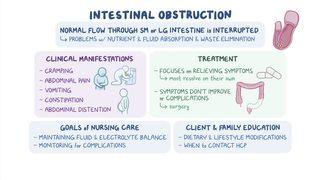
Infants with meconium ileus can present signs of intestinal obstruction at birth or during the first days of life. Common signs of intestinal obstruction include failure to pass meconium within the first hours of life, abdominal distention, and bilious vomiting, which occurs when the vomit has a green color due to a high bile content. In addition, infants who have developed meconium peritonitis may present abdominal tenderness and increased swelling of the abdomen, as well as signs of infection, such as fever, increased heart rate, and low blood pressure. Upon physical examination, the abdomen may appear rigid, and thickened bowel loops may be felt through the abdominal wall. Finally, a digital rectal exam may reveal an empty rectum (i.e., the final part of the large intestine) caused by the intestinal obstruction.

What happens if a baby does not pass meconium?

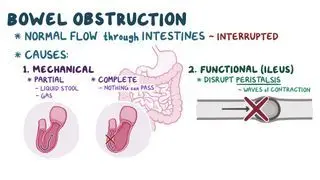
Most healthy, full-term infants pass meconium within the first 12 to 24 hours of life. Failure to pass meconium within the first 48 hours of life is considered a warning sign of neonatal bowel obstruction. Besides meconium ileus, other causes of neonatal bowel obstruction include meconium plug syndrome, which occurs in preterm infants due to an immature digestive tract; Hirschsprung disease, which results from the absence of nervous ganglion cells in the intestines; and malformations affecting the gastrointestinal tract, such as ileal atresia or imperforate anus.

How is meconium ileus diagnosed?

In some cases, meconium ileus can be identified before birth through a prenatal ultrasound. However, in most cases, it is suspected when a newborn develops signs of bowel obstruction and fails to pass meconium shortly after birth, especially if there’s a family history of cystic fibrosis

If meconium ileus is suspected, preliminary investigations include performing an abdominal X-ray to look for signs of obstruction, such as enlarged bowel loops before the blockage. Other typical findings include a characteristic “soap bubble” appearance caused by small air bubbles mixed with the meconium, as well as the absence of air-fluid levels, which are usually seen with other types of bowel obstruction. If meconium peritonitis has occurred, small meconium flecks that have been calcified, or covered in calcium, may also be seen within the abdominal cavity

If the diagnosis is unclear, a water-soluble contrast enema can be performed to rule out other causes of neonatal bowel obstruction. With meconium ileus, a contrast enema typically shows a small, underused large intestine (i.e., a microcolon), along with impacted meconium pellets that cause contrast filling defects at the site of obstruction. These findings can help differentiate meconium ileus from meconium plug syndrome, in which a normal or dilated colon is typically seen. 

Finally, infants with meconium ileus require additional tests in order to confirm the presence of cystic fibrosis. In most cases, diagnosis of cystic fibrosis can be determined by increased levels of chloride (≥ 60 mmol/L) on a sweat test, although in some cases, genetic tests may also be required.

How is meconium ileus treated?

Treatment of meconium ileus consists of relieving the small bowel obstruction through non-surgical measures, or, in some cases, with surgical treatment. Initially, a small tube, called a nasogastric tube, may be placed through the infant’s nose and into the stomach to help remove excess air and fluid and reduce the baby’s discomfort. After that, if there are no signs of bowel perforation or peritonitis, agents to help soften the thickened meconium may be mixed with the contrast enema solution to help flush out the thickened meconium. 

If that doesn’t work, or if there are signs of complicated meconium ileus, surgery may be required to resolve the obstruction. Surgical treatment may include performing a surgical decompression of the gastrointestinal tract, resection of the damaged intestines, or the creation of a surgical opening (i.e., ileostomy) from the gastrointestinal tract into the abdominal wall in order to evacuate the thickened meconium. Once the meconium has been removed, a second surgery can be performed to repair the gastrointestinal tract.

What are the most important facts to know about meconium ileus?

Meconium ileus refers to a blockage in the gastrointestinal tract caused by an extremely thick and sticky meconium (i.e., the very first stool of a newborn baby). In most cases, meconium ileus is the earliest manifestation of cystic fibrosis, a genetic condition characterized by extremely thick and viscous body secretions, along with decreased pancreatic function and frequent lung infections. Infants with meconium ileus may present with signs of intestinal obstruction in the first few days of life, including abdominal distention, bilious vomiting, and failure to pass meconium. If a doctor suspects meconium ileus, an abdominal X-ray and a contrast enema can be done to look for signs of intestinal obstruction. Treatment of meconium ileus prioritizes relieving the intestinal obstruction through non-surgical measures. If conservative treatment does not solve the obstruction, or if there are signs of complicated meconium ileus (e.g., bowel perforation, meconium peritonitis), surgery may be required to prevent further complications
Students say Osmosis is 100% worth it

Because Osmosis saves them time. Lowers stress. And actually helps them remember when it counts.

I used Osmosis to prepare for my first medical school licensing exam! Super helpful and interactive for people who may not do great with just pages of text info!

Cecilia Ruiz

Cecilia Ruiz

MD student

Sayan Misra

I have used Osmosis for about four years. Best thing I have ever used for my medical studies.

Sayan Misra

Sayan Misra

Med student

Osmosis videos are superior because they define simple concepts, tell a story with a clear progression, and provide context.

Jay Pate

Jay Pate

Dental student

References


Keckler, S., Peter, S., Spilde, T., Tsao, K., Ostlie, D., Holcomb, G., & Snyder, C. (2008). Current Significance of Meconium Plug Syndrome. Journal of Pediatric Surgery, 43(5): 896-898. DOI: 10.1016/j.jpedsurg.2007.12.035


Omogiade, U. (2019). Meconium Ileus. Pediatric Surgery, Flowcharts and Clinical Algorithms. DOI: 10.5772/intechopen.85548 


Paradiso, V., Briganti, V., Oriolo, L., Coletta, R., & Calisti, A. (2011). Meconium Obstruction In Absence of Cystic Fibrosis in Low Birth Weight Infants: An Emerging Challenge From Increasing Survival. Italian Journal of Pediatrics, 37: 55. https://doi.org/10.1186/1824-7288-37-55


Parikh, N., Ibrahim, S., & Ahlawat, R. (2020). Meconium Ileus. In: StatPearls [Internet] / NCBI. Retrieved from: https://www.ncbi.nlm.nih.gov/books/NBK537008/


Ziegler, M. (2012). Meconium Ileus. Pediatric Surgery: 1073-1083. DOI: 10.1016/b978-0-323-07255-7.00083-0