Phytanic Acid · What Is It, What Foods Contain It, and More

Published: Oct 22, 2025
Author: Corinne Tarantino, MPH
Editor: Alyssa Haag, MD
Editor: Józia McGowan, DO
Editor: Kelsey LaFayette, DNP, ARNP, FNP-C
Editor: Anna Hernández, MD
Illustrator: Jillian Dunbar
Copyeditor: Joy Mapes
7-day free trial

Go deeper with Osmosis

Osmosis is a learning platform with videos, questions, and AI tools to help you master topics like this.

4.8 · 12,000+ reviews
Watch quick, visual videos
Practice with Qbank-style questions
Use AI to explain, quiz, and review
Study anytime with the mobile app
Start free trial

No credit card · Cancel anytime

What is phytanic acid?

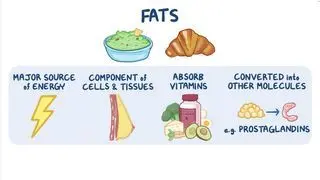
Phytanic acids are branched chain fatty acids that mainly come from the breakdown of chlorophyll in the human diet, as they are not naturally produced by the human body. Fatty acids are the simplest form of fats in the human body and have many important functions, such as fat storage.  

Phytanic acid doesn’t have any well-defined physiological roles in the human body like omega-3 or omega-6 fatty acids do, but it does have some bioactive properties, like regulating fatty acid metabolism and energy balance. Its importance lies in the fact that excessive amounts are toxic for the nervous system 

Learn deeper with Osmosis

Master this topic faster with videos, questions, and AI.

Used by 8M+ healthcare learners.

Start free trial

No credit card · Cancel anytime

What foods are rich in phytanic acid?

Phytanic acid is found mainly in animal-derived foods, especially those high in fat from grass-fed animals. These animals digest chlorophyll-rich plants and convert the phytol from chlorophyll into phytanic acid, which then accumulates in their fat. This makes dairy products like butter, whole milk, yogurt, and cheeses very rich in phytanic acid. The same goes for beef, goat, lamb, and venison meat. Certain fish and seafood are also naturally high in phytanic acid, including cod, haddock, tuna, and shellfish, but to a lesser degree. 

What causes excess accumulation of phytanic acid?

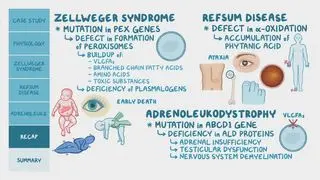
Phytanic acid accumulation most commonly occurs in the setting of Refsum disease, a rare neurologic disorder characterized by numbness and weakness in the arms and legs. Most frequently, Refsum disease is due to a genetic mutation in the gene for phytanoyl-CoA α-hydroxylase (PHYH), which is involved in the metabolism of phytanic acid. Less frequently, it can be caused by a mutation of the gene for peroxin 7 receptor protein (PEX7).  

Both mutations are typically inherited in an autosomal recessive pattern, meaning an individual must inherit a copy of the mutation from each parent to develop the condition. 

PHYH and PEX7 are responsible for the breakdown, or metabolism, of phytanic acid to pristanic acid. The metabolism of phytanic acid occurs by a unique process known as alpha-oxidation, which differs from the more common beta-oxidation of fatty acids. Alpha-oxidation occurs in the peroxisome of the cell, which is a membrane-bound organelle responsible for the breakdown of many molecules, including certain fatty acids and amino acids. The genetic mutation that occurs with Refsum disease alters the peroxisome’s ability to break down phytanic acid, eventually causing the body to accumulate large stores of phytanic acid in the blood and tissues, including the nervous system, retina of the eye, skin, and heart.  

Ultimately, excess phytanic acid prevents proper growth and function of the myelin sheath, which is the fatty layer that surrounds nerves and protects them from damage. 
What are the symptoms of excess accumulated phytanic acid?

Peripheral polyneuropathy is one symptom of excess accumulated phytanic acid. Peripheral polyneuropathy describes damage to the peripheral nerves, which causes muscle weakness and a loss of feeling in arms and legs. Muscle weakness is often evidenced through foot drop, which is when the toes drag on the ground when walking.  

Uncoordinated movements due to damage to the cerebellum, called cerebellar ataxia, is another common symptom. Some individuals with accumulated phytanic acid develop retinitis pigmentosa, the loss of cells in the retina, or the back of the eye, which impairs their ability to see peripherally, especially at night.  

Less common symptoms may include anosmia (i.e., loss of smell), sensorineural hearing loss, ichthyosis (i.e., dry, rough skin), and cardiac conduction abnormalities (i.e., problems with the electrical system of the heart that can cause chest pain and fainting). Additionally, infants with Refsum disease often have an orange-yellow color on their teeth. Though symptoms can occur at varying ages, they typically begin between the ages of 10 and 20 and progressively worsen with time. 

How is excess accumulated phytanic acid diagnosed and treated?

Refsum disease is usually diagnosed through a thorough assessment of signs and symptoms, review of medical history, and physical examination. Typically, a blood sample can be analyzed for the presence of elevated levels of phytanic acid in the blood. A diagnosis of Refsum disease often requires confirmation of a genetic mutation in PHYH or PEX7 genes. Nerve conduction studies, which use electrical signals to test responsiveness of nerves, may be conducted to determine the severity of an individual’s case. Finally, a nerve biopsy, when a small segment of nerve is taken from the leg or arm, may be examined to assess the severity of nerve damage. 

Refsum disease is typically treated with dietary changes, particularly avoiding foods containing phytanic acid. An individual with Refsum disease will often be referred to a dietician who can assist in navigating the new diet. Genetic counseling may be helpful for the individual and their family in order to understand the genetic risk of Refsum disease in other family members. If symptoms are severe, plasmapheresis, or blood filtration, may be performed to decrease the level of stored phytanic acid. 

What are the most important facts to know about phytanic acid?

Phytanic acid is a branched, medium chain fatty acid that is usually obtained through foods, such as full-fat dairy products and grass-fed meats. An accumulation of phytanic acid is generally caused by Refsum disease, a rare neurological disorder due to an inherited genetic mutation in either the PHYH or PEX7 gene. The symptoms of phytanic acid accumulation include peripheral polyneuropathy, cerebellar ataxia, retinitis pigmentosa, anosmia, and hearing lossRefsum disease is usually diagnosed through medical evaluation and blood tests, which assess for genetic mutations and phytanic acid levels. Treatment for Refsum disease typically involves a change in the individual's diet to avoid consumption of phytanic acid.  

Key Takeaways

Definition 

Phytanic acids are branched chain fatty acids that mainly come from the breakdown of chlorophyll in the human diet, which play a role in regulating fatty acid metabolism and energy balance, and can be toxic for the nervous system in excessive amounts.  

Foods Rich in Phytanic Acid 

- Animal-derived foods, especially high in fat  

     - Butter, whole milk, yogurt, cheeses 

     - Beef, goat, lamb, and venison meat  

     - Certain fish and seafood (cod, haddock, tuna, shellfish)  

Causes of Phytanic Acid Accumulation 

- Refsum disease  

     - Rare neurologic disease  

     - Numbness and weakness in arms and legs  

     - Genetic mutation in PHYH or PEX7 (autosomal recessive) → altered peroxisome ability to break down phytanic acid → accumulation in blood and tissues (nervous system, retina, skin, heart)  

Symptoms of Excess Phytanic Acid  

- Onset: 10-20 years of age, worsen over time  

- Peripheral neuropathy  

     - Muscle weakness and loss of feelings in arms and legs  

          - Foot drop  

- Cerebellar ataxia  

- Retinitis pigmentosa → impaired peripheral vision  

- Anosmia  

- Sensorineural hearing loss  

- Ichthyosis 

- Cardiac conduction anomalies  

- Orange-yellow teeth  

Diagnosis 

- Signs and symptoms 

- Medical history 

- Physical examination  

- Blood sample → elevated levels of phytanic acid  

- Confirmation of PHYH or PEX7 gene mutations  

- Nerve conduction studies  

- Nerve biopsy  

Treatment 

- Dietary changes  

     - Avoid foods containing phytanic acid  

- Genetic counseling  

- If severe → plasmapheresis 

Students say Osmosis is 100% worth it

Because Osmosis saves them time. Lowers stress. And actually helps them remember when it counts.

I used Osmosis to prepare for my first medical school licensing exam! Super helpful and interactive for people who may not do great with just pages of text info!

Cecilia Ruiz

Cecilia Ruiz

MD student

Sayan Misra

I have used Osmosis for about four years. Best thing I have ever used for my medical studies.

Sayan Misra

Sayan Misra

Med student

Osmosis videos are superior because they define simple concepts, tell a story with a clear progression, and provide context.

Jay Pate

Jay Pate

Dental student

References


Raymond GV, Barañano KW, Fatemi SA. Peroxisomal disorders. In: Swaiman KF, Ashwal S, Ferriero DM, et al, eds. Swaiman's Pediatric Neurology. 43rd ed. Elsevier; 2020: e868-e884. 


Stipanuk MH, Caudill MA. Biochemical, Physiological, and Molecular Aspects of Human Nutrition. 4th ed. Saunders; 2018.   


Torequl Islam M, Shimul Bhuia M, Paulo Martins de Lima J. Phytanic acid, an inconclusive phytol metabolite: A review. Curr Res Toxicol. 2023;5(100120):100120. doi:10.1016/j.crtox.2023.100120 


Truong P, Mack HG, Metha AB, et al. Forty-year odyssey to Refsum disease diagnosis: Impact of diagnostic delay on effective treatment. Clin Exp Optom. Published online 2024:1-4. doi:10.1080/08164622.2024.2401509