
Polycythemia · What Is It, How It Differs from Polycythemia Vera, and More

Published: Mar 04, 2025
Author: Corinne Tarantino, MPH
Editor: Alyssa Haag
Editor: Ian Mannarino, MD, MBA
Illustrator: Abbey Richard
Copyeditor: Sadia Zaman, MBBS, BSc
7-day free trial

Go deeper with Osmosis

Osmosis is a learning platform with videos, questions, and AI tools to help you master topics like this.

4.8 · 12,000+ reviews
Watch quick, visual videos
Practice with Qbank-style questions
Use AI to explain, quiz, and review
Study anytime with the mobile app
Start free trial

No credit card · Cancel anytime

What is polycythemia?

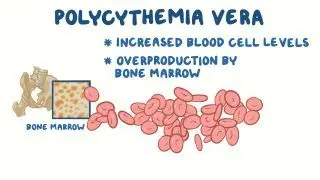
Polycythemia is a blood disorder in which there is an increased number of red blood cells (RBCs) in the body. Red blood cells are primarily responsible for transporting oxygen from the lungs to the rest of the body by traveling through the circulatory system. Red blood cells are produced in the bone marrow, where hematopoietic stem cells are stimulated by erythropoietin, a hormone produced by the kidneys. Polycythemia can be triggered by either increased erythropoietin production or excessive division of the hematopoietic stem cells, thereby increasing RBC production. Consequently, the blood thickens which can result in congestion within peripheral organs. In particular, the spleen, which is responsible for destroying RBCs, can become enlarged.

Learn deeper with Osmosis

Master this topic faster with videos, questions, and AI.

Used by 8M+ healthcare learners.

Start free trial

No credit card · Cancel anytime

Is there a difference between polycythemia and polycythemia vera?

Polycythemia is a general term for all conditions that result in a high red blood cell count, whereas polycythemia vera is only used to describe primary polycythemia. Primary polycythemia is a rare blood disorder in which the polycythemia is not a result of another condition (secondary polycythemia).

What causes polycythemia?

Primary polycythemia is most commonly caused by an acquired genetic mutation in the Janus kinase 2 (JAK2) gene. The JAK2 gene codes for a non-receptor tyrosine kinase, which is an enzyme that transfers a phosphate group from adenosine triphosphate (ATP) onto another molecule in order to help regulate cell division. When there is a JAK2 mutation, this process can become unregulated. As a result, hematopoietic stem cell division and differentiation is uncontrolled. They may subsequently differentiate into many types of blood cells, primarily RBCs, white blood cells, and platelets

On the other hand, secondary polycythemia results by consequence of another underlying condition.  Secondary polycythemia is most commonly associated with low oxygen levels from tissue hypoxia, which can stimulate the kidneys to increase erythropoietin production. Common causes of this hypoxia include high altitudes, chronic obstructive pulmonary disease, and cyanotic heart disease. Additionally, conditions that directly affect the kidney (e.g., renal artery stenosis, renal cysts, and renal tumors) may also cause an increase in erythropoietin production. Side effects of some hormone-related medications, such as erythropoietin analogues, anabolic steroids, and testosterone, can also cause polycythemia. Rarely, tumors, like hepatocellular carcinoma, can secrete erythropoietin, thereby causing polycythemia.

Risk factors for all types of polycythemia include obesity, smoking, chronic alcoholism, diabetes, high cholesterol, and hypertension. Specific risk factors for primary polycythemia include being assigned male at birth or being over the age 50.

What are the signs and symptoms of polycythemia?

The primary signs and symptoms of polycythemia include fatigue, headaches, dizziness, and episodic blurred vision. Individuals may also experience peripheral tingling, or burning sensations and itching, after taking a hot shower or bath. Other signs and symptoms may include hypertension, mucosal cyanosis, bruising, and petechiae (i.e., pinpoint spots on the skin that are red and flat). Upon palpation of the abdomen, an enlarged spleen or liver may be felt.

Polycythemia can also cause complications related to organ congestion and increased blood thickness, or viscosity. Individuals are at a high risk of blood clots, which may lead to deep vein thrombosis, stroke, myocardial infarction, and angina pectoris. The rapid blood cell turnover also increases the production of uric acid in the body, leading to the formation of kidney stones and gout (i.e., uric acid-induced inflammation in the joints). Additionally, the increased inflammation can cause issues in the gastrointestinal system, including peptic ulcer development. Over time, if polycythemia vera is not well controlled, the bone marrow can become filled with scar tissue and RBC production will ultimately decrease. This can lead to the development of myelofibrosis, a bone marrow cancer, with symptoms, such as weakness and fatigue.

How is polycythemia diagnosed?

Diagnosis of polycythemia begins with a thorough review of signs and symptoms and medical history, and conduction of a physical exam. Subsequently,  blood tests are typically performed. A complete blood count can confirm suspicions of an increased red blood cell count, as it will typically show increased hematocrit and hemoglobin. With primary polycythemia, there may also be increased numbers of white blood cells and platelets. Genetic tests for a JAK2 mutation may also confirm primary polycythemia. High serum levels of erythropoietin can confirm several causes of secondary polycythemia. Additionally, imaging, including X-ray, ultrasound, or MRI, could be used to identify the underlying pulmonary or cardiac cause of secondary polycythemia.

How is polycythemia treated?

The goal of polycythemia treatment is to decrease red blood cell production. For secondary polycythemia, treatment of the underlying condition is essential. In general, phlebotomy can be used to remove blood from the body and initially reduce the blood’s viscosity and volume. It is then recommended that individuals increase fluid intake and take aspirin to prevent blood clots from developing. To suppress bone marrow production of RBCs, treatment may also include myelosuppressive agents, like hydroxyurea. 

What are the most important facts to know about polycythemia?

Polycythemia is a blood disease characterized by overproduction of red blood cells. There are two types, primary and secondary. Primary polycythemia, or polycythemia vera, is typically caused by an acquired JAK2 mutation. Secondary polycythemia is polycythemia developing secondarily to another condition that causes increased erythropoietin production and hematopoietic stem cell stimulation, such as tissue hypoxia, kidney diseases, and side effects of certain medications. Common signs and symptoms include fatigue, headaches, episodic blurred vision, and dizziness. Diagnosis includes a medical assessment followed by blood tests that confirm an increased RBC count. Treatment includes removing blood through phlebotomy, increasing fluid intake, taking aspirin, and either suppressing bone marrow RBC production or treating the underlying condition.

Students say Osmosis is 100% worth it

Because Osmosis saves them time. Lowers stress. And actually helps them remember when it counts.

I used Osmosis to prepare for my first medical school licensing exam! Super helpful and interactive for people who may not do great with just pages of text info!

Cecilia Ruiz

Cecilia Ruiz

MD student

Sayan Misra

I have used Osmosis for about four years. Best thing I have ever used for my medical studies.

Sayan Misra

Sayan Misra

Med student

Osmosis videos are superior because they define simple concepts, tell a story with a clear progression, and provide context.

Jay Pate

Jay Pate

Dental student

References


Haider, M., & Anwer, F. (2022, January 5). Secondary Polycythemia. In StatPearls [Internet]. Retrieved January 29, 2022 from https://www.statpearls.com/articlelibrary/viewarticle/27405/


Harding, M. M., Kwong, J., Roberts, D., Hagler, D., & Reinisch, C. (2020). Lewis’s medical-surgical nursing: Assessment and management of clinical problems (11th ed.). Elsevier.


Mayo Clinic. (2022, February 11). Polycythemia Vera - Symptoms and Causes. In Mayo Clinic. Retrieved November 29, 2021 from https://www.mayoclinic.org/diseases-conditions/polycythemia-vera/symptoms-causes/syc-20355850


National Heart, Lung, and Blood Institute. (2022, March 24). Polycythemia Vera. In National Heart, Lung, and Blood Institute. Retrieved March 29, 2022 from  https://www.nhlbi.nih.gov/health-topics/polycythemia-vera 


National Organization for Rare Disorders. (2018). Polycythemia Vera. In NORD. Retrieved November 29, 2021 from https://rarediseases.org/rare-diseases/polycythemia-vera/ 


Pillai, A. A., Fazal, S., & Babiker, H. M. (2021, November 3). Polycythemia. In StatPearls [Internet]. Retrieved  January 29, 2022 from http://www.ncbi.nlm.nih.gov/books/NBK526081/