Ruptured Spleen · What Is It, Causes, Symptoms, Treatment, and More
Published: Mar 04, 2025
Author: Ahaana Singh•
Editor: Antonella Melani, MD•
Editor: Lisa Miklush, PhD, RN, CNS
Illustrator: Aileen Lin
7-day free trial
Go deeper with Osmosis
Osmosis is a learning platform with videos, questions, and AI tools to help you master topics like this.
Watch quick, visual videos
Practice with Qbank-style questions
Use AI to explain, quiz, and review
Study anytime with the mobile app
Try Osmosis Free
No credit card required
What is a ruptured spleen?
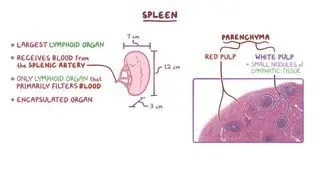
A ruptured spleen can occur when there’s damage to the spleen’s surface. The spleen is an organ located in the upper left side of the abdominal cavity, underneath the rib cage. It plays an important role in filtering blood by removing old or damaged cells and debris, as well as in helping the body fight infections. Splenic rupture may result in internal bleeding that can be life threatening if not treated promptly.
Learn deeper with Osmosis
Master this topic faster with videos, questions, and AI.
Used by 8M+ healthcare learners.
Try Osmosis Free
No credit card required
What causes a ruptured spleen?
Splenic rupture is most commonly caused by an injury to the spleen. Penetrating abdominal trauma, such as a stab wound or gunshot, can cause acute ruptures. Blunt trauma to the left upper abdomen can either cause acute splenic injury upon contact, or a delayed rupture that develops days or weeks after the initial injury. Such injuries most often occur in contact sports and motor-vehicle crashes.
Can a spleen spontaneously rupture?
Spontaneous splenic rupture can happen as a result of an enlarged spleen (splenomegaly), which occurs when blood cells accumulate in the spleen. The most common cause of spontaneous rupture due to an enlarged spleen is infectious mononucleosis, a viral infection that is spread through saliva. Additional infections include bacterial infections such as syphilis and parasitic infections such as malaria. Splenomegaly can also be a sign of several underlying conditions including liver disease, metabolic disorders, or some types of blood cancer.
What are the symptoms of a ruptured spleen?
Symptoms of a ruptured spleen can vary depending on the associated injury, however, the most common symptom is pain and tenderness in the left upper abdomen. The pain may be referred to the left shoulder, which is known as Kehr’s sign, and typically feels worse when breathing. Individuals may also develop low blood pressure from the blood loss, which may cause additional symptoms such as lightheadedness, confusion, dizziness, and blurred vision. In some cases, massive blood loss can evolve into hemorrhagic shock, causing a rapid heart rate, pale skin, shallow breathing, and restlessness or anxiety.
How do you manage a ruptured spleen?
A ruptured spleen is a medical emergency and can be life-threatening. Management for a ruptured spleen typically depends on the underlying conditions and the severity of the injury. Physicians will first diagnose the condition based on symptoms and a physical exam. Blood tests may also be performed. To check for blood in the abdomen, they may administer an ultrasound. A computed tomography (CT) scan can also be performed to determine the severity of the injury.
In mild splenic ruptures, the spleen can heal itself with rest and time. Physicians may recommend hospitalization during recovery to monitor the condition and provide supportive care. Follow-up CT scans can show progress and determine whether any additional measures are needed.Can a ruptured spleen be repaired?
In more severe cases, a ruptured spleen may require surgery to repair or remove the spleen. If the bleeding is controllable, surgeons may be able to fix the spleen by repairing the tear with stitches or other methods. In some cases, it may be possible to remove part of the spleen to repair the rupture. If the bleeding is more serious, it may require the full removal of the spleen (splenectomy).
Although one can survive without a spleen, it does increase the risk of infection and sepsis. Individuals without a spleen are at an increased risk of infections from encapsulated bacteria, thus vaccination against pneumococcus, meningococcus, and Haemophilus influenzae is advised after splenectomy.How long does it take to recover from a ruptured spleen?
Generally, recovery from a ruptured spleen can take anywhere from 3 to 12 weeks, depending on the severity and treatment. To promote healing, rest is encouraged, along with refraining from high-impact exercise, strenuous activities, and heavy lifting until physician approval. Alternatively, low-impact exercise and activity, such as walking, may help recovery if suggested by a physician.
What are the most important facts to know about a ruptured spleen?
A ruptured spleen usually caused by an injury to the left upper abdomen. In some cases, an enlarged spleen can cause spontaneous splenic rupture, often as a result of certain infections, liver disease, metabolic disorders, or some types of blood cancer. Symptoms of a ruptured spleen can include left-side abdominal pain, referred left shoulder pain, lightheadedness, confusion, dizziness, and blurred vision. Some individuals may also experience hemorrhagic shock as a result of massive blood loss. A ruptured spleen can be life-threatening if not treated promptly. Treatment options vary depending on the severity of the condition and can include rest and observation, surgical repair, or splenectomy. Recovery from a ruptured spleen can take anywhere from 3 to 12 weeks.


Students say Osmosis is 100% worth it
Because Osmosis saves them time. Lowers stress. And actually helps them remember when it counts.
I used Osmosis to prepare for my first medical school licensing exam! Super helpful and interactive for people who may not do great with just pages of text info!"

Cecilia Ruiz
MD student

I have used Osmosis for about four years. Best thing I have ever used for my medical studies."

Sayan Misra
Med student
Osmosis videos are superior because they define simple concepts, tell a story with a clear progression, and provide context."

Jay Pate
Dental student