

Today’s NCLEX-RN® question of the day focuses on a diabetic patient who has developed pneumonia. Do you know the answer? Let’s find out!
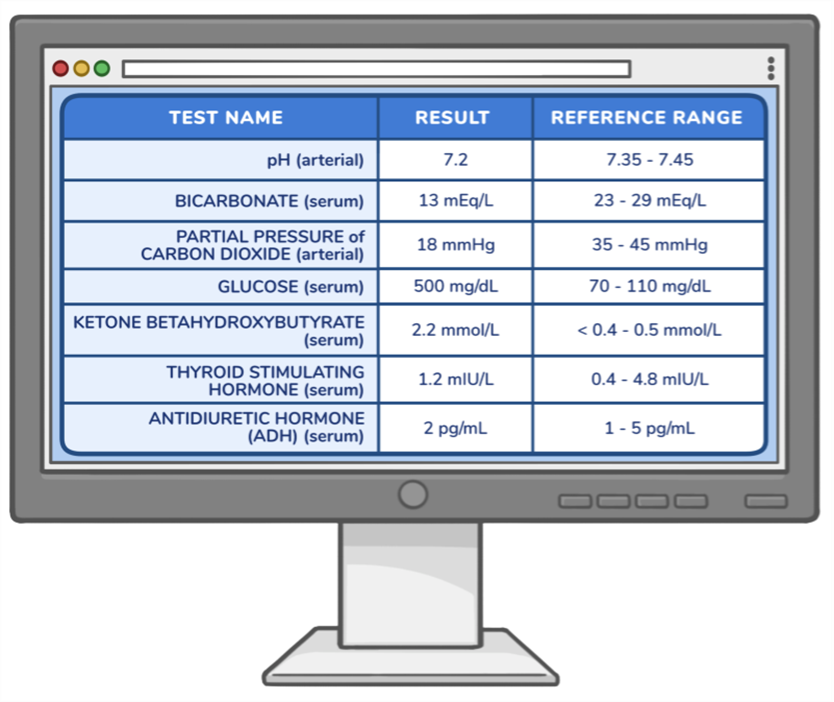
The nurse in the critical care unit is reviewing laboratory test results for a patient with type 1 diabetes mellitus (DM) recently diagnosed with pneumonia. Based on the clinical findings, which condition should the nurse anticipate the healthcare provider diagnosing and treating?
A. Thyroid storm
B. Diabetes insipidus
C. Hyperosmolar hyperglycemic state
D. Diabetic ketoacidosis (DKA)
Scroll down for the correct answer!
The correct answer to today’s NCLEX® Question is…
D. Diabetic ketoacidosis (DKA)
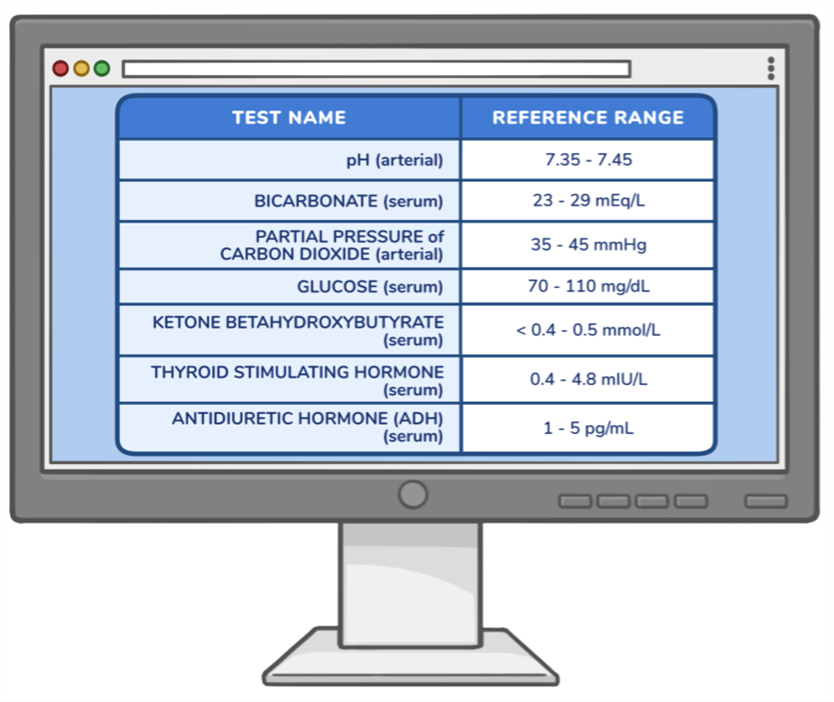
Rationale: DKA is a life-threatening complication of type 1 DM caused by an insulin deficiency, where glucose cannot be taken up into cells and used for energy. Infections, like pneumonia, can precipitate DKA by increasing stress hormones that contribute to elevated glucose and reduced insulin utilization. As glucose levels rise, the kidneys reach the maximum amount of glucose they can reabsorb, so extra glucose spills into the urine, resulting in glycosuria. Additionally, since glucose is osmotically active, glycosuria is accompanied by a large amount of water in the urine, resulting in polyuria. Glucose also pulls water out of cells and into the bloodstream, expanding the blood volume and leaving the cells dehydrated. As an alternative energy source, fat is converted into glucose by metabolizing fatty acids, resulting in ketones. This results in a build-up of acidic ketones within the blood, giving rise to metabolic acidosis. DKA is evident in laboratory test results with a decreased pH, bicarbonate, and partial pressure of carbon dioxide; elevated serum glucose; and elevated serum ketones.
Main Takeaway
Diabetic ketoacidosis (DKA) is a life-threatening complication of type 1 diabetes mellitus (DM) caused by an insulin deficiency, where glucose cannot be taken up into cells and used for energy. Infections, like pneumonia, can precipitate DKA by increasing stress hormones that contribute to elevated glucose and reduced insulin utilization. As glucose levels rise, the kidneys reach the maximum amount of glucose they can reabsorb, so extra glucose spills into the urine, resulting in glycosuria. Additionally, since glucose is osmotically active, glycosuria is accompanied by a large amount of water in the urine, resulting in polyuria. Glucose also pulls water out of cells and into the bloodstream, expanding the blood volume and leaving the cells dehydrated. As an alternative energy source, fat is converted into glucose by metabolizing fatty acids, resulting in ketones. This results in a build-up of acidic ketones within the blood, giving rise to metabolic acidosis. DKA is evident in laboratory test results with a decreased pH, bicarbonate, and partial pressure of carbon dioxide; elevated serum glucose; and elevated serum ketones.
Incorrect Answer Explanations
A. Thyroid storm
Rationale: Thyroid storm occurs in patients with uncontrolled hyperthyroidism, causing a hypermetabolic state due to elevated levels of thyroid hormones. Based on the laboratory test results, another option is more appropriate.
B. Diabetes insipidus
Rationale: Diabetes insipidus is a disorder caused by a deficiency of antidiuretic hormone (ADH) that leads to polyuria as the kidneys are unable to conserve water. Based on the laboratory test results, another option is more appropriate.
C. Hyperosmolar hyperglycemic state
Rationale: Hyperosmolar hyperglycemic state is an endocrine emergency related to extremely elevated glucose levels due to insufficient insulin and excess glucagon. Hyperosmolar hyperglycemic state is more common in patients with type 2 DM than in type 1 DM as patients with type 2 DM still produce some insulin, whereas patients with type 1 DM have a complete lack of insulin production. Because of this difference, patients with hyperosmolar hyperglycemic state do not develop ketoacidosis as their bodies do not need to break down fats and protein for new supplies of glucose. Based on the laboratory test results, another option is more appropriate.
Want to learn more about this topic?
Watch the Osmosis video: Critical care case study – Diabetic ketoacidosis: Nursing
References
- Flynn Makic, M.B. & Morata, L.T. (2024). Sole’s introduction to critical care nursing. Elsevier.
- Pagana, K. D., Pagana, T. J., & Pagana, T. N. (2025). Mosby’s diagnostic and laboratory test reference. Elsevier.
- Urden, L.D., Stacy, K.M., & Lough, M.E. (2022). Critical care nursing: Diagnosis and management. Elsevier.

Try Osmosis from Elsevier today! Access your free trial and find out why millions of current and future clinicians and caregivers love learning by Osmosis.
Leave a Reply