
Today’s NCLEX-RN® question of the day focuses on writing a nursing plan for a patient with a metastatic cancer diagnosis. Do you know the answer? Let’s find out!
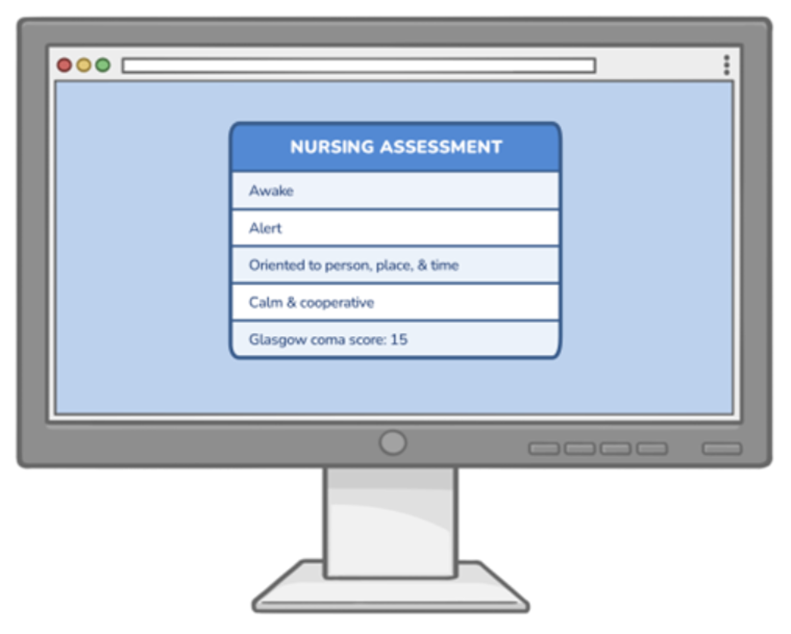
A patient with metastatic bone cancer receives a prognosis of 6 months. The most recent nursing assessment is below. When assisting the patient to develop goals of care, which is the most appropriate action for the nurse to take?
A. Prepare and submit documents for legal guardianship
B. Encourage the patient to voice their goals for end-of-life interventions
C. Allow the patient’s family members to make care decisions for the patient
D. Explain to the patient that the oncologist will make the final treatment decisions
Scroll down for the correct answer!
The correct answer to today’s NCLEX® Question is…
B. Encourage the patient to voice their goals for end-of-life interventions
Rationale: The patient’s own goals for end-of-life care are paramount and should be highly valued. This patient is awake, alert, and oriented. They are most likely able to make decisions for themselves. It is most appropriate to encourage the patient to make their own decisions regarding their care.
Main Takeaway
Patient involvement in decision-making regarding their care is a cornerstone of patient-centered care. The nurse should advocate for patient autonomy, and encourage the patient to voice their goals about what they want at end-of-life, and what they want to get out of palliative and/ or hospice care. If patients can make decisions for themselves, it is most appropriate for the nurse to encourage the patient to make care decisions. It is not appropriate to allow family members or physicians to make final decisions regarding the patient’s care. Guardianship is not required for patients who can make decisions for themselves.
Incorrect Answer Explanations
A. Prepare and submit documents for legal guardianship
Rationale: Adult guardianship, also called conservatorship, is when a judge appoints someone to make decisions for adults who cannot make decisions for themselves due to a medical condition. Although this patient does require end-of-life planning, the patient is awake, alert, and oriented. This patient does not require guardianship.
C. Allow the patient’s family members to make care decisions for the patient
Rationale: Allowing family members to make decisions for the patient may be appropriate in certain situations. However, based on the nursing assessment, this patient is awake, alert, and oriented. The goals of the patient’s family members should not take priority over the patient’s own goals.
D. Explain to the patient that the oncologist will make the final treatment decisions
Rationale: Although the oncologist may be involved in the patient’s care decision, the final treatment plan is not made solely by the oncologist. Other sources of input should be considered.
Want to learn more about this topic?
Watch the Osmosis video: Palliative and hospice care: Nursing

Try Osmosis from Elsevier today! Access your free trial and find out why millions of current and future clinicians and caregivers love learning by Osmosis.
Leave a Reply