
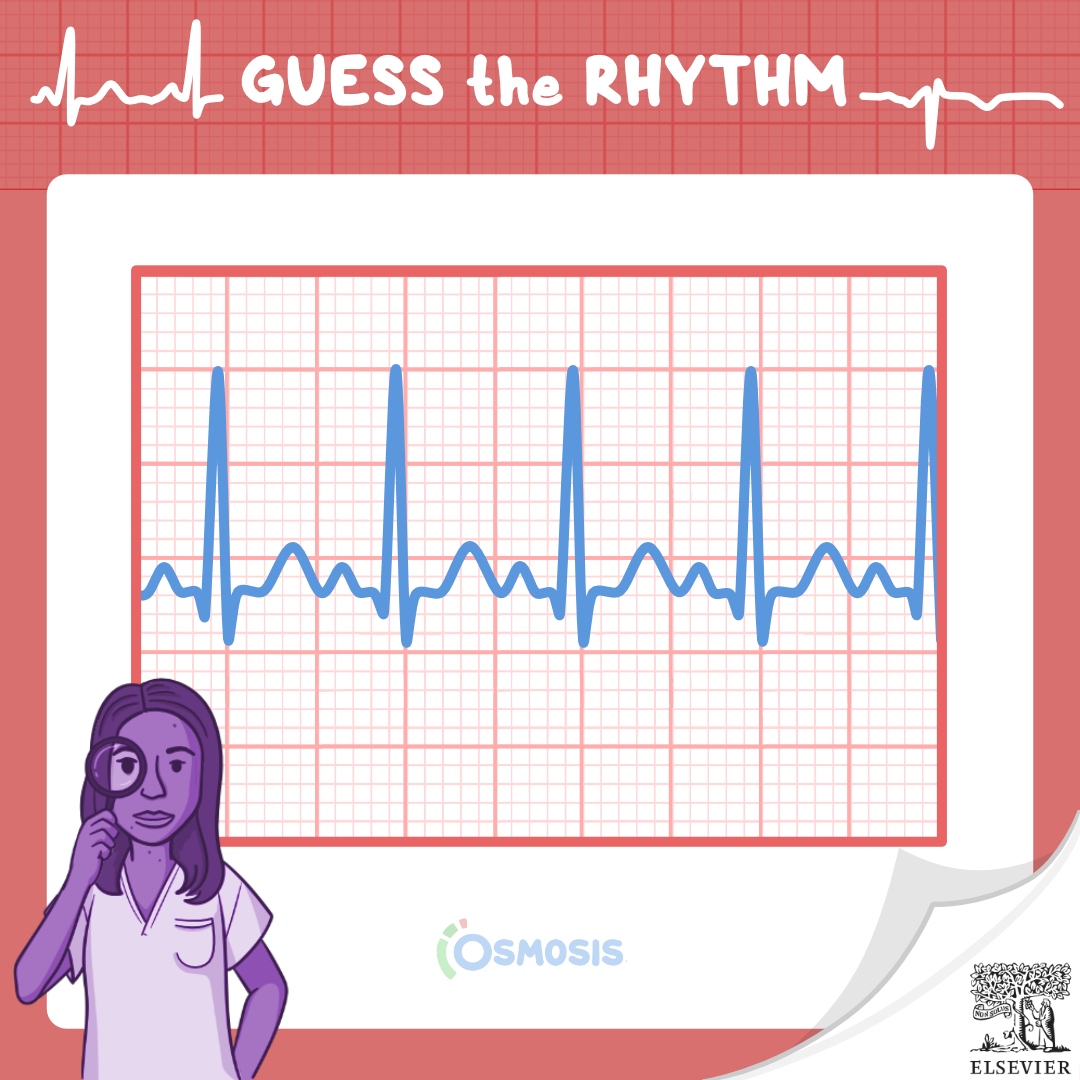
The findings of the ECG above indicate a sinus tachycardia, which is considered an tachyarrhythmia, meaning the rate is too fast. In patients with sinus tachycardia, they have most features of a normal ECG pattern. This means there is a P-wave that’s normal in shape and duration, that precedes every QRS complex; in addition to a normal PR interval and a regular distance between R-waves, called R-R interval. With sinus tachycardia, however, the heart rate is between 101 and 180 beats per minute.
Sinus tachycardia is typically caused by sympathetic nervous system stimulation, or parasympathetic nervous system inhibition. Sinus tachycardia can be normal during exercise and pregnancy, and can also occur as a physiological response to fear or pain. Pathological causes include fever, anemia, electrolyte abnormalities, as well as hypoglycemia, hyperthyroidism, hypotension, hypovolemia and hypoxia. In addition, caffeine, cocaine, and amphetamine, as well as various medications can also lead to sinus tachycardia.
Learn more about this and other types of cardiac rhythms in Osmosis: Arrhythmias – Sinus tachycardia and sinus bradycardia: Nursing
Key Takeaways
- Sinus tachycardia is a fast heart rate between 101 and 180 bpm with normal ECG features.
- It shows a normal P wave before each QRS and regular rhythm intervals.
- Common causes include exercise, fever, anxiety, and electrolyte imbalances.
- Sympathetic stimulation or parasympathetic inhibition triggers sinus tachycardia.
- Medications and substances like caffeine or cocaine can induce this rhythm.

Want more practice questions? Try Osmosis by Elsevier today! Access your free trial and discover why millions of current and future clinicians and caregivers love learning with us.
Leave a Reply