
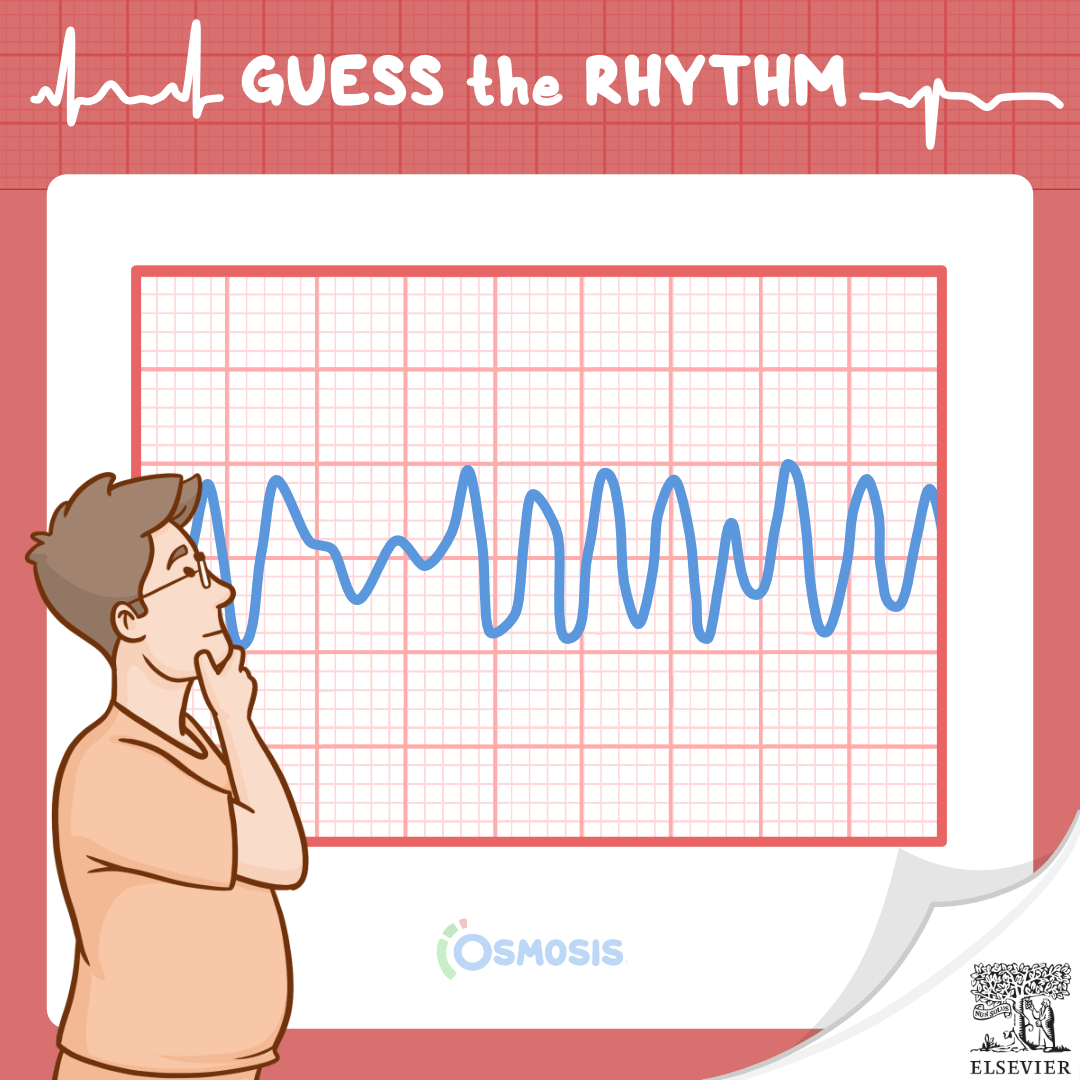
Answer: Ventricular fibrillation (V fib)
The findings of this ECG indicate ventricular fibrillation (V-fib) which is a life-threatening condition, which occurs when the ventricular muscle fibers start firing impulses from multiple foci in a totally disorganized manner. As a result, instead of a single, coordinated contraction, there is quivering of the ventricles.
The diagnosis of V-fib can be done by placing an ECG monitor which can show a rapid heart rate of 300 to 400 beats per minute but the rhythm is irregular and chaotic. The classic finding is irregular waveforms of varying shapes and amplitudes, with no clear P wave, or QRS complexes.
Learn more about this and other types of cardiac rhythms on Osmosis: Arrhythmias – Ventricular fibrillation (Vfib): Nursing
Key Takeaways
- A rapidly chaotic ECG rhythm signals a medical emergency requiring swift assessment.
- Presence of irregular waveforms without clear P waves or organized QRS complexes can indicate a malignant arrhythmia.
- Immediate management typically includes CPR and defibrillation per clinical guidelines.
- Early recognition on the monitor improves survival; distinguishing rhythms is critical for appropriate action.
- Ongoing training and review of protocol-based responses enhance readiness for critical cardiac events.

Try Osmosis by Elsevier today! Access your free trial and discover why millions of current and future clinicians and caregivers love learning with us.
Leave a Reply