
Today’s NCLEX-RN® Question of the Day focuses on a client diagnosed with acute kidney injury (AKI). Can you figure out the answer? Let’s find out!
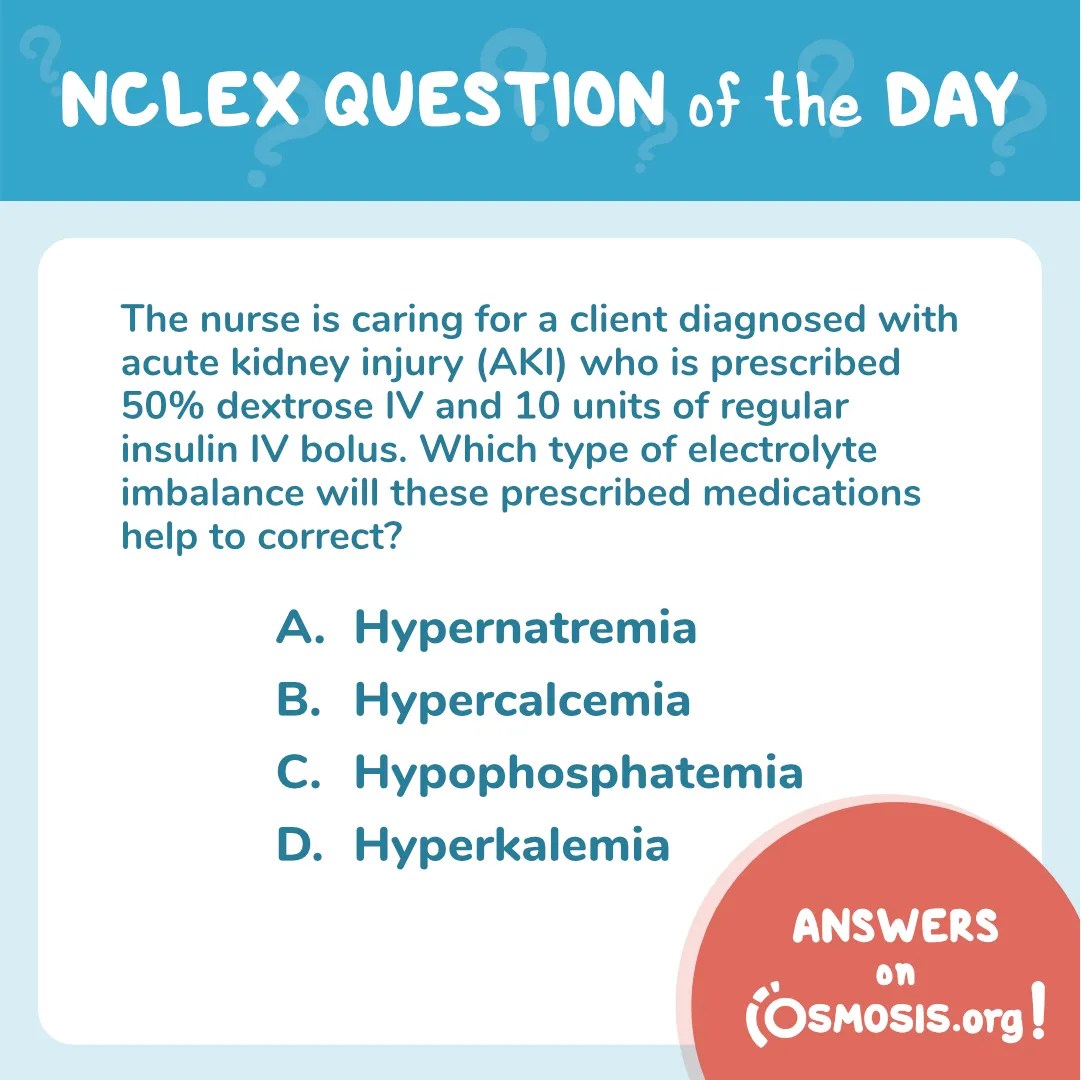
The nurse is caring for a client diagnosed with acute kidney injury (AKI) who is prescribed 50% dextrose IV and 10 units of regular insulin IV bolus. Which type of electrolyte imbalance will these prescribed medications help to correct?
A. Hypernatremia
B. Hypercalcemia
C. Hypophosphatemia
D. Hyperkalemia
Scroll down for the correct answer!
Check out our NCLEX-RN Study Plan Guide!
The correct answer to today’s NCLEX-RN® Question is…
D. Hyperkalemia
Rationale: AKI is associated with increased serum blood urea nitrogen (BUN), creatinine, and potassium. Because hyperkalemia, or a high serum potassium level, is a life-threatening complication of AKI, the nurse should anticipate administering IV glucose and insulin to promote the movement of potassium into the cells. If hyperkalemic changes are noted on the electrocardiogram (ECG), IV calcium gluconate may also be administered to raise the cardiac excitation threshold.
Ready to put your nursing knowledge to the test?
Explore the NCLEX® Question of the Day: Smarter Prep, Better Results page to practice with NCLEX-style questions and boost your confidence before exam day.
Main Takeaway
Because hyperkalemia is a life-threatening complication of AKI, the nurse should anticipate administering IV glucose and insulin to promote the movement of potassium into the cells. Following administration, the nurse should monitor the client for arrhythmias and frequently check the blood glucose level.

Incorrect Answer Explanations
Rationale: Hypernatremia, or a high serum sodium level, is not a common complication of AKI. Serum sodium levels may be normal or low with AKI.
Rationale: Hypercalcemia, or a high serum calcium level, is not a common complication of AKI. Hypercalcemia is not treated with glucose and insulin.
Rationale: Hypophosphatemia, or a low serum phosphorus level, is not a common complication of AKI. Rather, hyperphosphatemia can occur.
References
- Lewis, S.L., Bucher, L., Heitkemper, M.M. & Harding, M.M. (2017). Medical-surgical nursing: Assessment and management of clinical problems (10th ed.). St. Louis, MO: Elsevier.

Want more NCLEX®-style practice questions? Try Osmosis today! Access your free trial and find out why millions of current and future clinicians and caregivers love learning with us.
Leave a Reply