
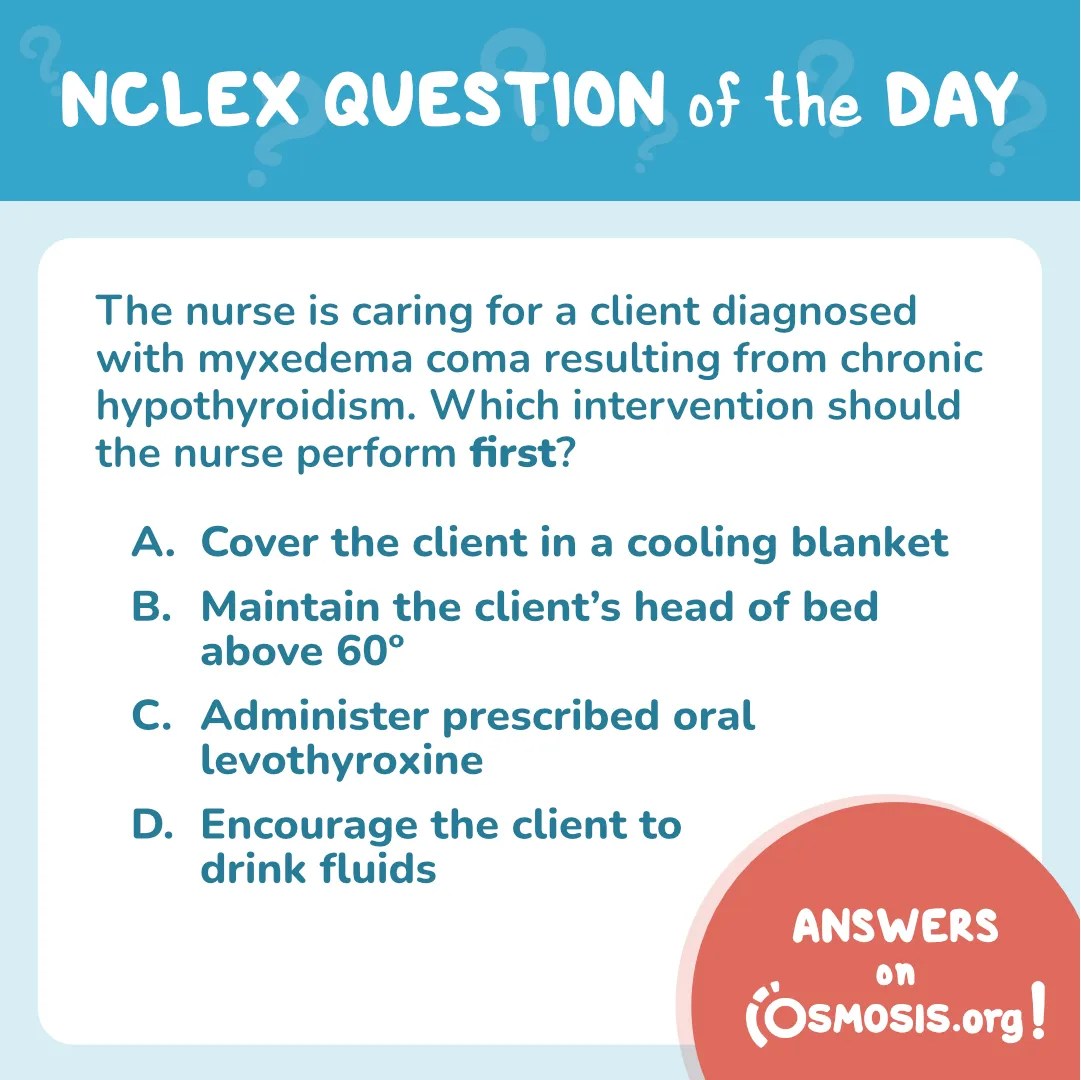
Today’s NCLEX-RN® question of the day focuses on a client diagnosed with myxedema coma. Can you figure it out?
The nurse is caring for a client diagnosed with myxedema coma resulting from chronic hypothyroidism. Which intervention should the nurse perform first?
A. Cover the client in a cooling blanket
B. Maintain the client’s head of bed above 60 degrees
C. Administer prescribed oral levothyroxine
D. Encourage the client to drink fluids
Scroll down for the correct answer!
Check out our NCLEX-RN Study Plan Guide!
The correct answer to today’s NCLEX-RN® Question is…
B. Maintain the client’s head of bed above 60 degrees
Rationale: This intervention should be performed first. The nurse should prioritize nursing interventions using the concept of airway, breathing, circulation (ABCs). Clients diagnosed with myxedema coma can lose airway patency and have decreased consciousness due to the slowed metabolic processes. Therefore, keeping the head of the bed elevated between 60 and 90 degrees, or High Fowler’s position, will assist the client to maintain an open airway.

Ready to put your nursing knowledge to the test?
Explore the NCLEX® Question of the Day: Smarter Prep, Better Results page to practice with NCLEX-style questions and boost your confidence before exam day.
Main Takeaway
If not treated, hypothyroidism can result in a serious complication called myxedema coma. This is a medical emergency where the body goes into a state of severe and profound slowing of metabolic processes, leading to cardiovascular collapse. This is usually triggered by acute stress like surgery, infection, and trauma, and presents with hypothermia, hypotension, metabolic abnormalities like hypoglycemia and lactic acidosis, as well as worsening edema, seizures, impaired consciousness, and possibly coma. The nurse should prioritize maintaining airway patency prior to other interventions.
Incorrect Answer Explanations
A. Cover the client in a cooling blanket
Rationale: Clients diagnosed with myxedema coma present with hypothermia, therefore, this intervention would not be applicable.
C. Administer prescribed oral levothyroxine
Rationale: Although the nurse should plan to administer levothyroxine, it does not take priority over another intervention. In addition, clients diagnosed with myxedema coma will usually have intravenous (IV) levothyroxine prescribed instead of oral (PO) in case they lose consciousness.
D. Encourage the client to drink fluids
Rationale: Although fluid replacement is necessary to treat the hypotension associated with myxedema coma, the client should have intravenous (IV) fluids administered as this route has rapid effects and this condition is considered an emergency.

Want more NCLEX®-style practice questions? Try Osmosis today! Access your free trial and find out why millions of current and future clinicians and caregivers love learning with us.


Leave a Reply