

Today’s NCLEX-RN® question of the day focuses on Medicare eligibility. Do you know the answer? Let’s find out!
The nurse case manager reviews the list of patients to be seen during the shift. Which patient is most likely eligible for Medicare?
A. A 45-year-old patient undergoing dialysis for end-stage renal disease (ESRD)
B. A 22-year-old patient with pneumonia who is considered low-income
C. A 58-year-old patient with type II diabetes mellitus who is employed full-time
D. A 31-year-old patient with irritable bowel syndrome who became unemployed two days ago
Scroll down for the correct answer!
The correct answer to today’s NCLEX® Question is…
A. A 45-year-old patient undergoing dialysis for end-stage renal disease (ESRD)
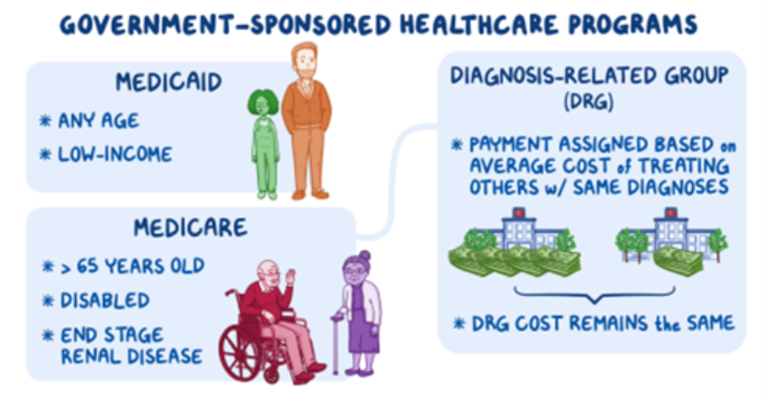
Rationale: Medicare is an insurance program that serves patients over 65 years old, as well as those who are disabled or with end-stage renal disease (ESRD). Therefore, this patient will most likely be eligible for Medicare.
Main Takeaway
Medicaid and Medicare are two government-sponsored healthcare programs.
- Medicaid is an insurance program that serves patients of any age who are considered low-income
- Medicare is an insurance program that serves patients over 65 years old, as well as those who are disabled or with end-stage renal disease.
- Private health insurance comes from private companies, and the premium for the insurance is often paid for in part by a person’s employer.
- Consolidated Omnibus Budget Reconciliation Act (COBRA) gives workers and their families who lose health benefits the right to choose to continue group health benefits provided by their group health plan for limited periods of time under certain circumstances such as voluntary or involuntary job loss.
Incorrect Answer Explanations
B. A 22-year-old patient with pneumonia who is considered low-income
Rationale: This patient is likely eligible for Medicaid rather than Medicare. Medicaid is an insurance program that serves patients of any age who are considered low-income.
C. A 58-year-old patient with type II diabetes mellitus who is employed full-time
Rationale: It is more likely this patient is eligible for private health insurance, which comes from private companies, and the premium for the insurance is often paid for in part by a person’s employer.
D. A 31-year-old patient with irritable bowel syndrome who became unemployed two days ago
Rationale: This patient is most likely eligible for the Consolidated Omnibus Budget Reconciliation Act (COBRA) since they lost their employment recently. COBRA gives workers and their families who lose health benefits the right to choose to continue group health benefits provided by their group health plan for limited periods of time under certain circumstances such as voluntary or involuntary job loss.
Want to learn more about this topic?
Watch the Osmosis video: Healthcare costs: Nursing

Get your free trial and find out why millions of current and future clinicians and caregivers love learning by Osmosis.
Leave a Reply