
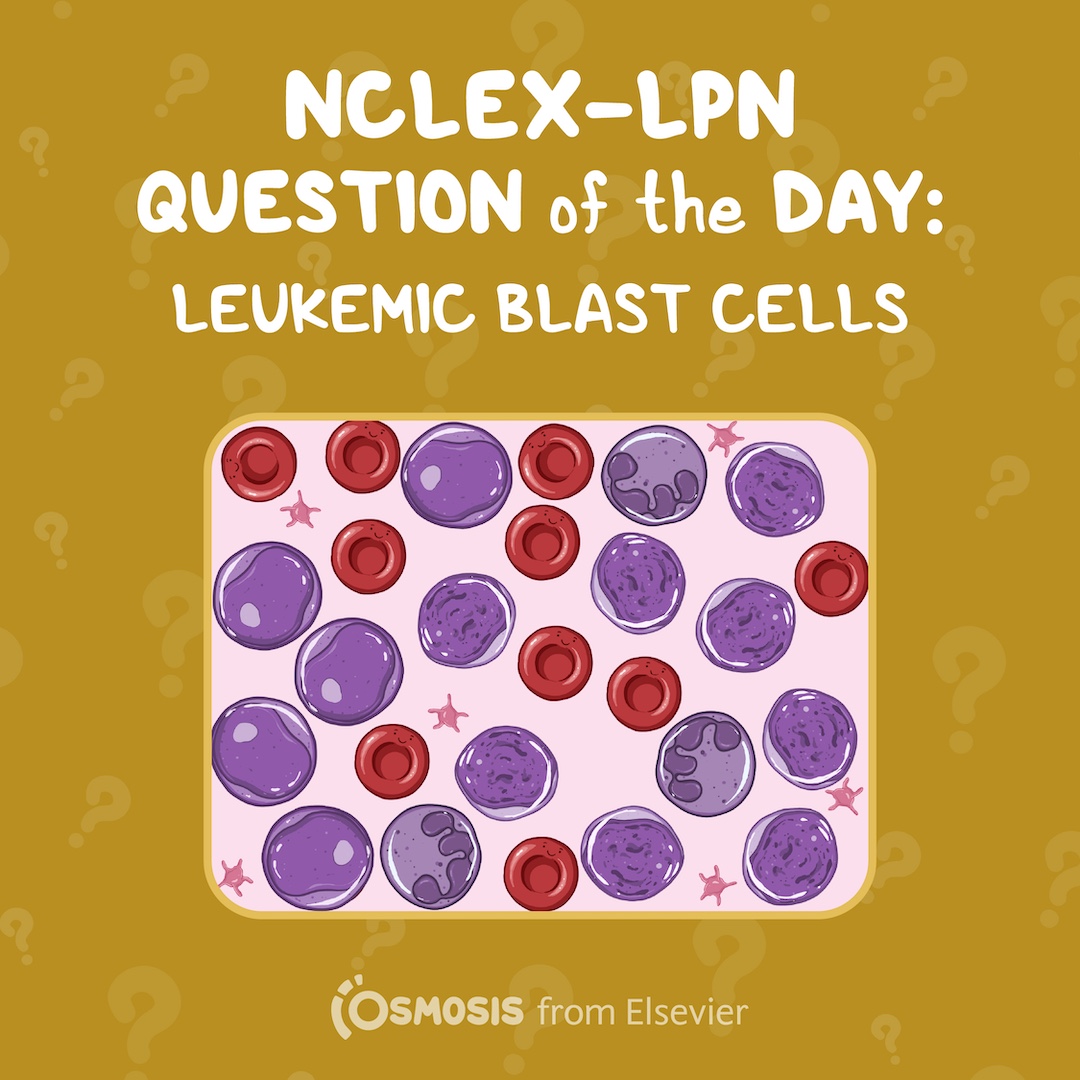
Today’s NCLEX-PN® question of the day focuses on leukemic blast cells. Do you know the answer? Let’s find out!
The nurse in the emergency department is caring for a patient with leukemia. Which clinical finding is related to the rapid proliferation and destruction of leukemic blast cells?
A. Diarrhea
B. Weight loss
C. Epistaxis
D. Hepatosplenomegaly
Scroll down for the correct answer!
The correct answer to today’s NCLEX-PN® Question is…
B. Weight loss
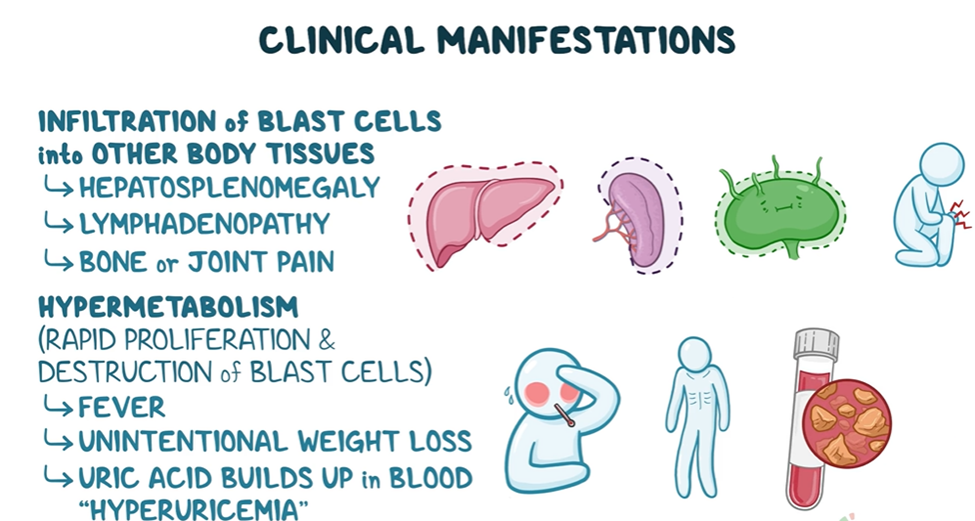
Rationale: Hypermetabolism related to rapid proliferation and destruction of leukemic blast cells can manifest as weight loss.
Main Takeaway
Clinical manifestations of leukemia are primarily related to bone marrow failure. Anemia can produce symptoms like pallor, fatigue, and shortness of breath; thrombocytopenia can cause problems with clotting like excessive bruising, epistaxis, and hematuria; and with leukopenia, there is immune dysfunction and increased risk of infections, which can manifest as fever and fatigue. Additionally, infiltration of blast cells into other body tissues can cause hepatosplenomegaly and lymphadenopathy, as well as bone or joint pain; and hypermetabolism related to rapid proliferation and destruction of leukemic blast cells can manifest as fever and unintentional weight loss. Finally, since the leukemic blast cells die quickly, uric acid builds up in the blood, which can cause hyperuricemia.
Incorrect Answer Explanations
A. Diarrhea
Rationale: Diarrhea is not a clinical finding associated with the rapid proliferation and destruction of leukemic blast cells.
C. Epistaxis
Rationale: Although patients with leukemia can develop epistaxis, it is not related to the rapid proliferation and destruction of leukemic blast cells. Instead, thrombocytopenia from leukemia can cause problems with clotting like epistaxis, or nose bleeds.
D. Hepatosplenomegaly
Rationale: Although patients with leukemia can develop hepatosplenomegaly, it is not related to the rapid proliferation and destruction of leukemic blast cells. Instead, infiltration of blast cells into the liver and spleen can cause hepatosplenomegaly.
Want to learn more about this topic?
Watch the Osmosis video: Leukemia: Nursing pathophysiology

Get your free trial now to find out why millions of current and future clinicians and caregivers love learning with us.
Leave a Reply