-
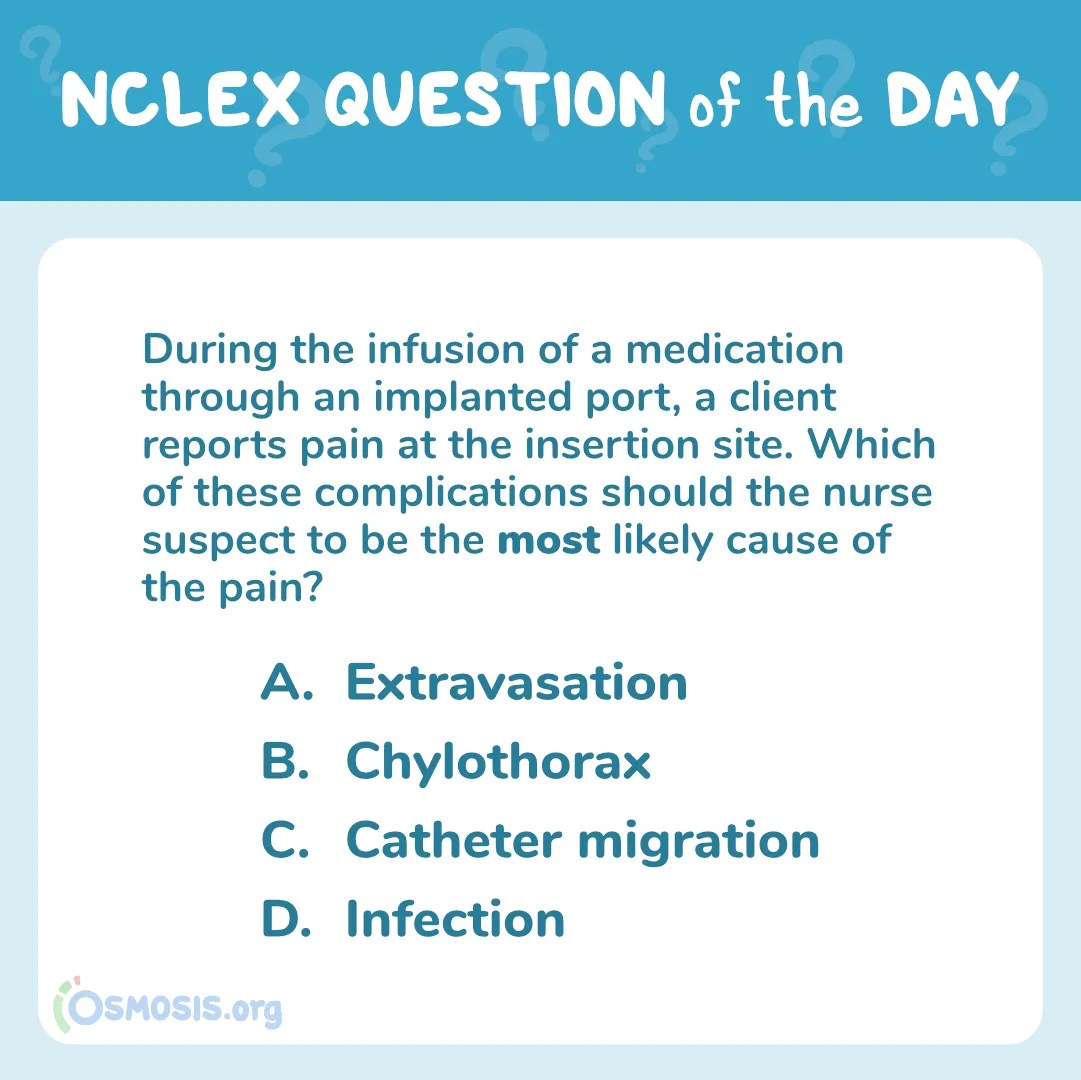
NCLEX-RN® Question of the Day: Pain at port insertion site
— Updated:
—
Today’s NCLEX-RN® question of the day focuses on a patient who feels pain at the insertion site during infusion of a medication. During the infusion of a medication through an implanted port, a client reports pain at the insertion site. Which of these complications should the nurse suspect to be…
-
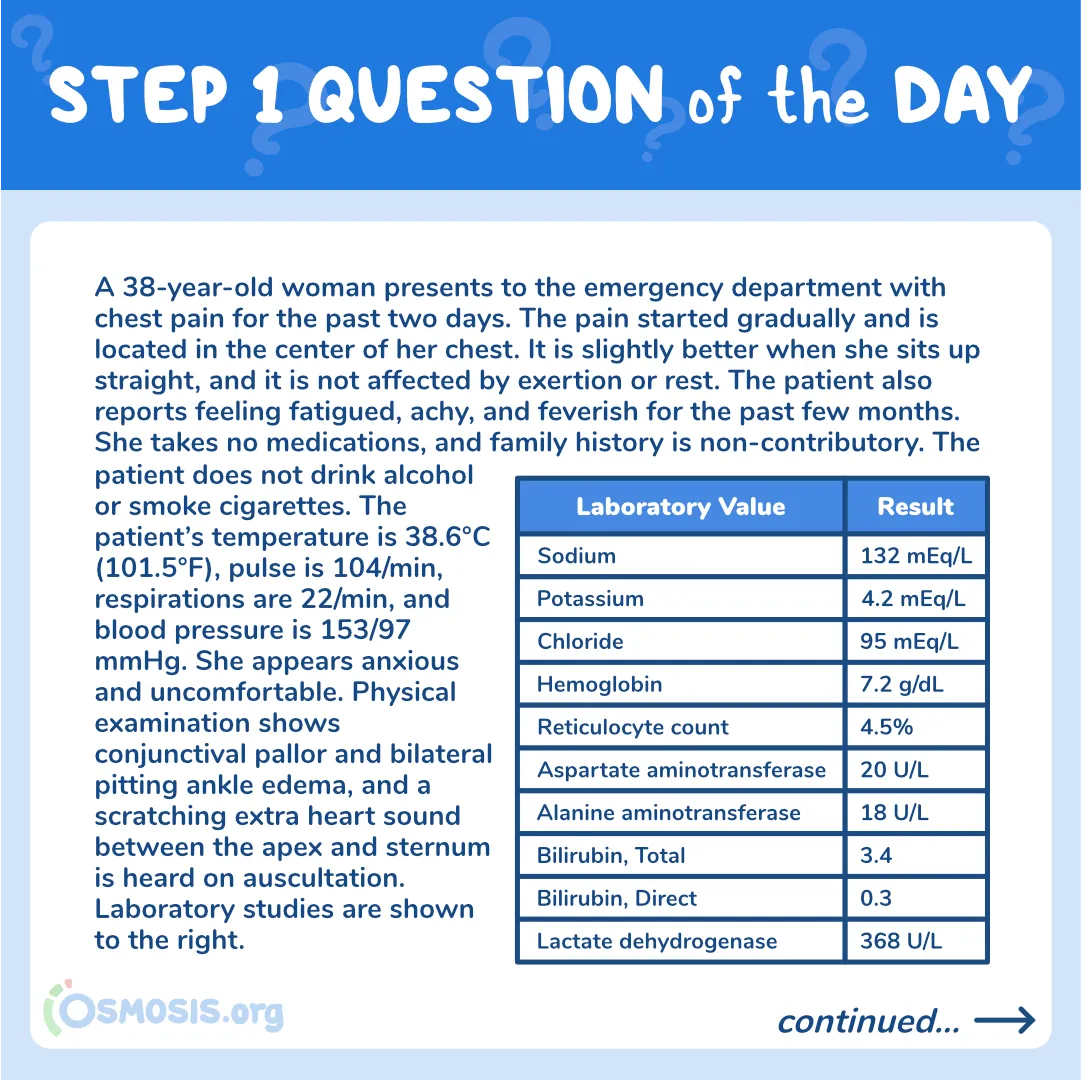
USMLE® Step 1 Question of the Day: Bilateral Pitting Ankle Edema
— Updated:
—
Each week, Osmosis shares a USMLE® Step 1-style practice question to test your knowledge of medical topics. Today’s case involves a 38-year-old woman with pain in the center of her chest. The pain is slightly better when she sits up straight. Physical examination shows conjunctival pallor and bilateral pitting ankle…
-
How to Take Notes Faster in Medical School
— Updated:
—
Taking notes in medical school can be messy and time-consuming. With so much material to write down and memorize, having a strategy for effective note-taking can make a difference in your performance in medical school.
-
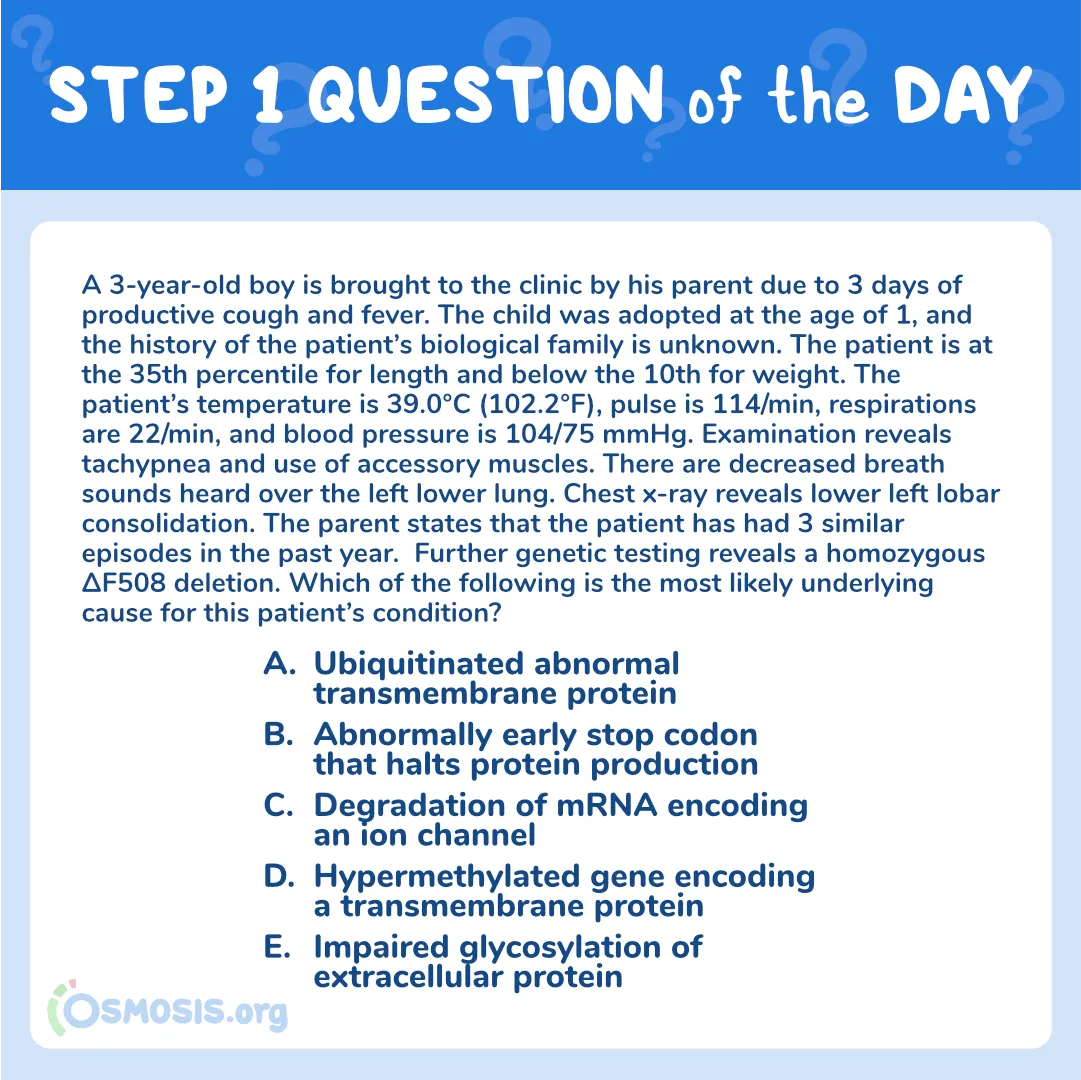
USMLE® Step 1 Question of the Day: Homozygous Delta-F508 Deletion
— Updated:
—
Prepare for the USMLE® Step 1 exam with today’s question focusing on a 3-year-old boy presenting with symptoms indicative of cystic fibrosis and learn to identify the underlying genetic cause. Strengthen your clinical assessment skills and improve your understanding of managing this common genetic condition!
-
USMLE® Step 2 CK Exam Dates: When Can You Take the Second Exam?
— Updated:
—
Whether you’re a medical student or a graduate, you probably cannot wait to pass all your exams and finally become a certified physician in the US. You’re almost there, but now you’re up for the second USMLE® challenge: the Step 2 Clinical Knowledge exam. But when can you take it?…
-
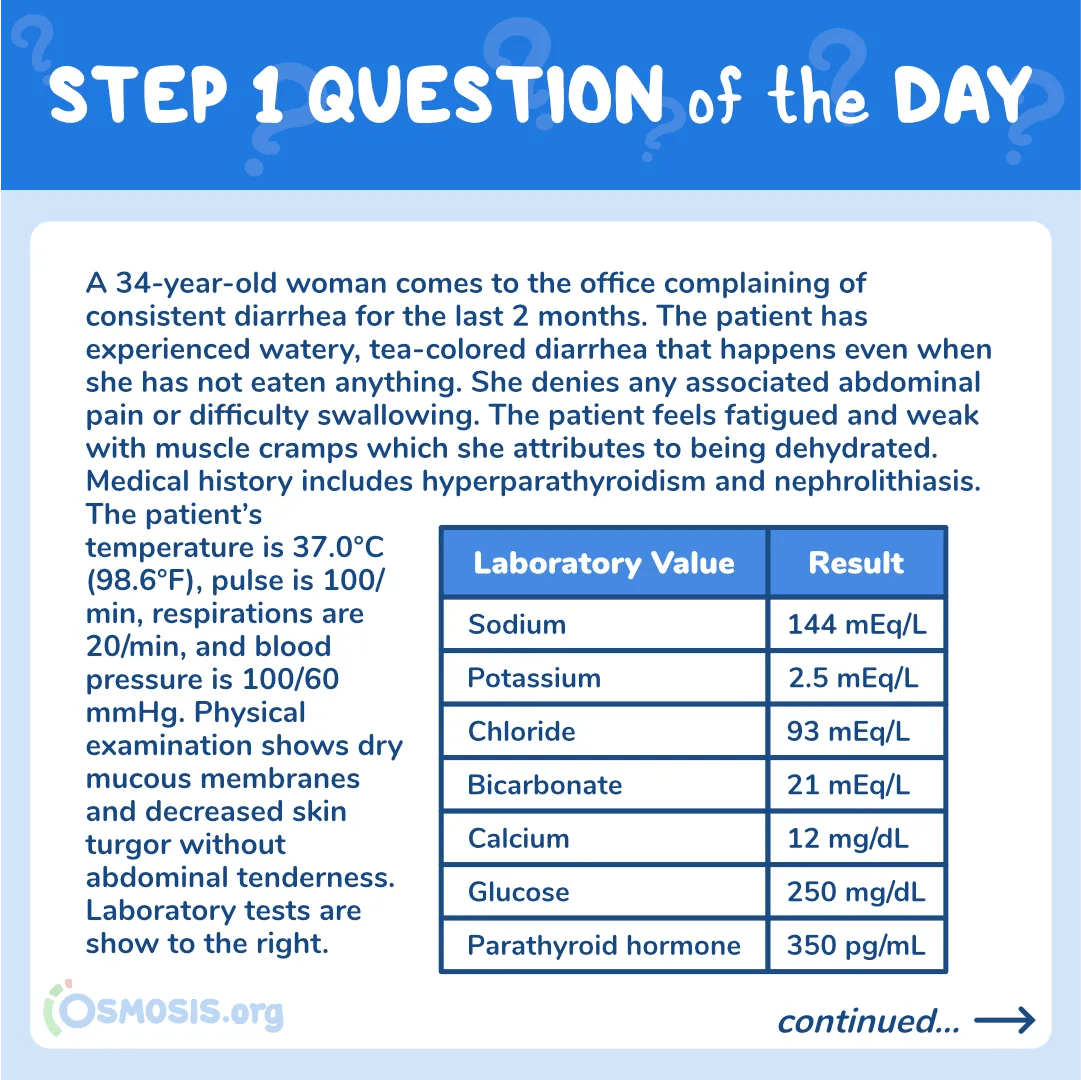
USMLE® Step 1 Question: Tea-Colored Diarrhea
— Updated:
—
Each week, Osmosis shares a USMLE® Step 1-style practice question to test your knowledge of medical topics. Today’s case involves a 34-year-old woman with tea-colored diarrhea for the last 2 months. She experiences muscle cramps and feels weak. Can you figure it out? A 34-year-old woman comes to the office complaining…
-
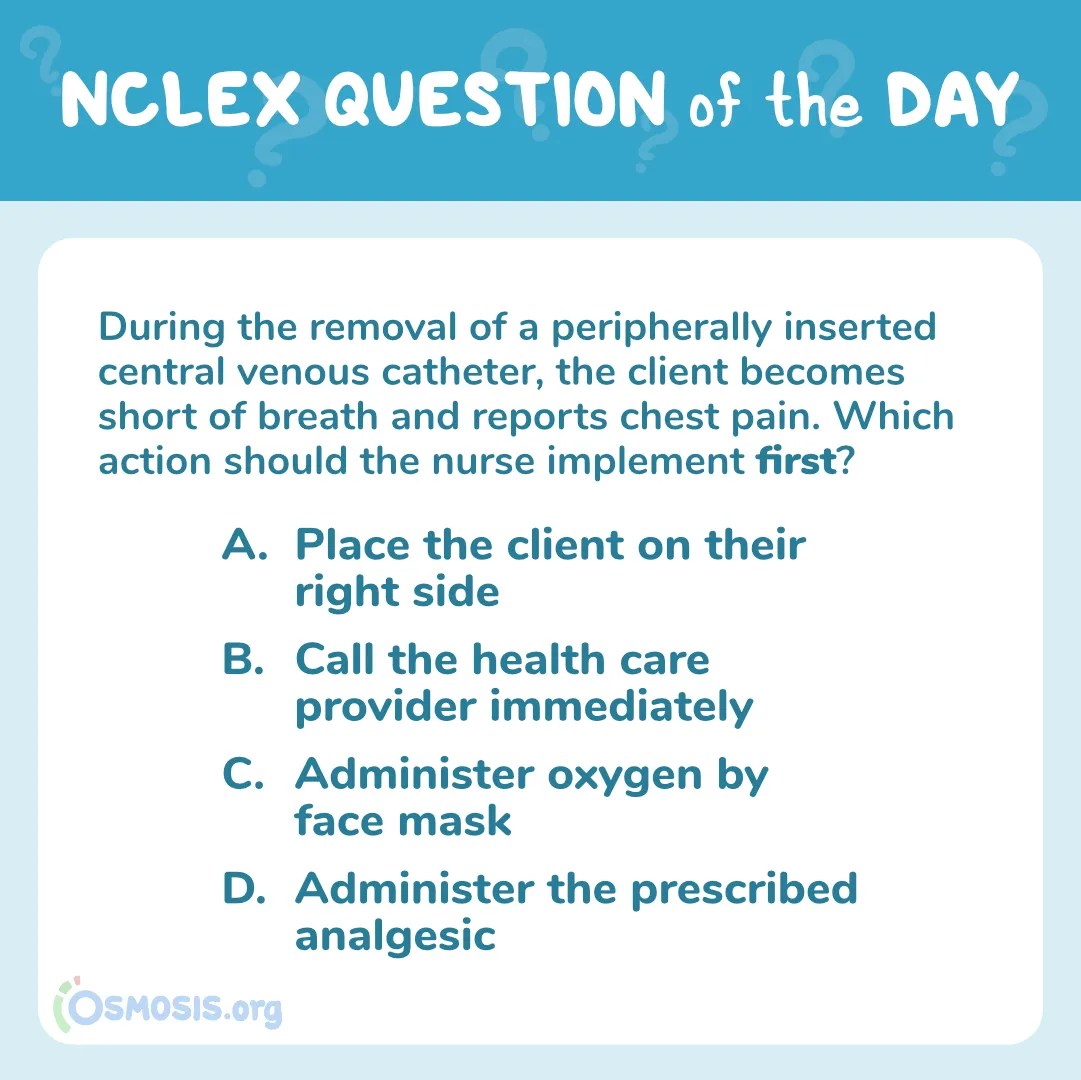
NCLEX-RN® Question of the Day: Chest pain after venous catheter removal
— Updated:
—
A patient experiences chest pain and shortness of breath during catheter removal. What is the nurse’s first priority intervention?
-
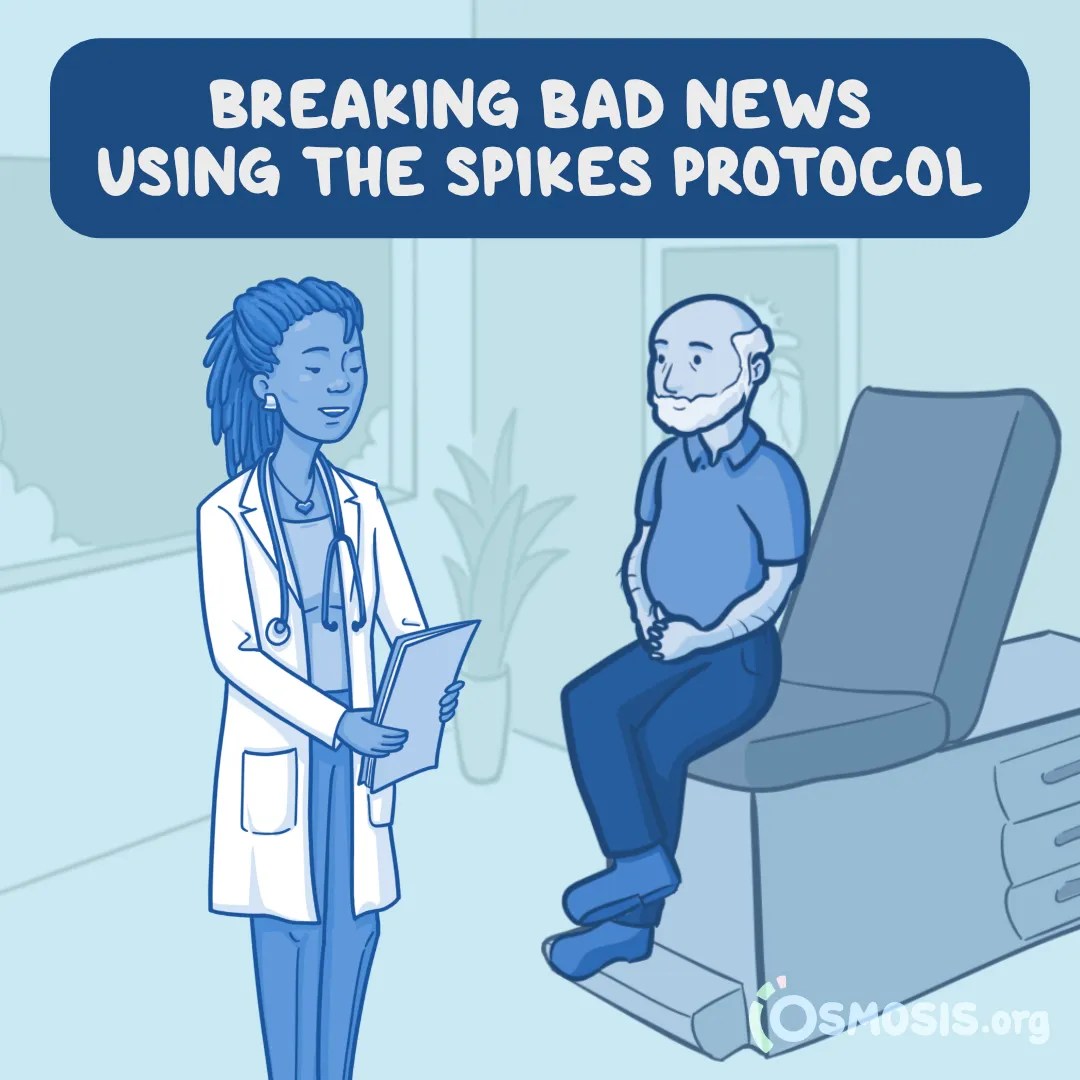
Breaking Bad News: Using the SPIKES Protocol vs. the BREAKS Protocol
— Updated:
—
Learn how to deliver tough medical news to patients using the SPIKES and BREAKS protocols to enhance communication and create better patient outcomes.
-
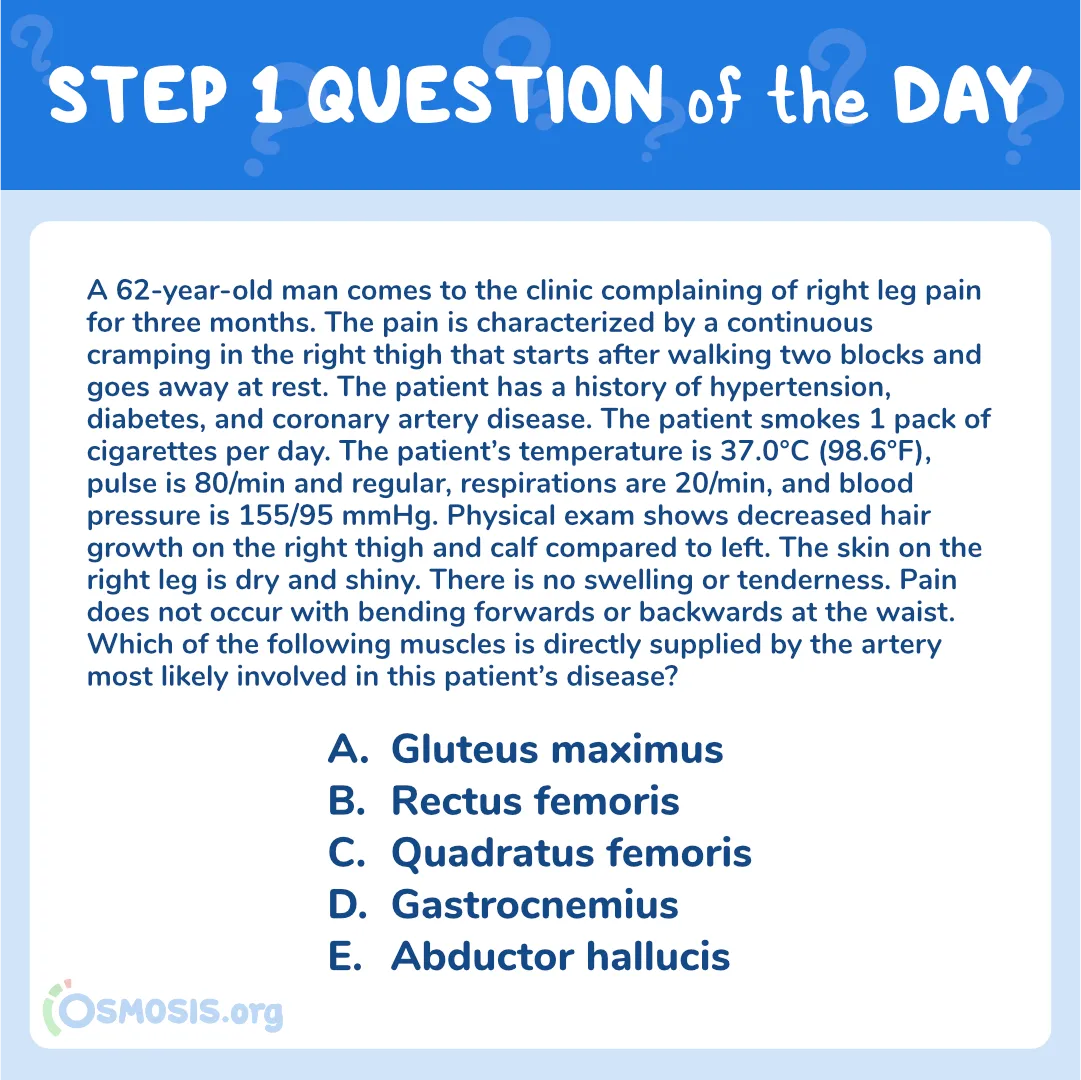
USMLE® Step 1 Question of the Day: Right Leg Pain
— Updated:
—
Each week, Osmosis shares a USMLE® Step 1-style practice question to test your knowledge of medical topics. Today’s case involves a 62-year-old man who comes into the clinic to tell you about a pain in his right leg that comes and goes with activity. When you inspect his leg, you…
-
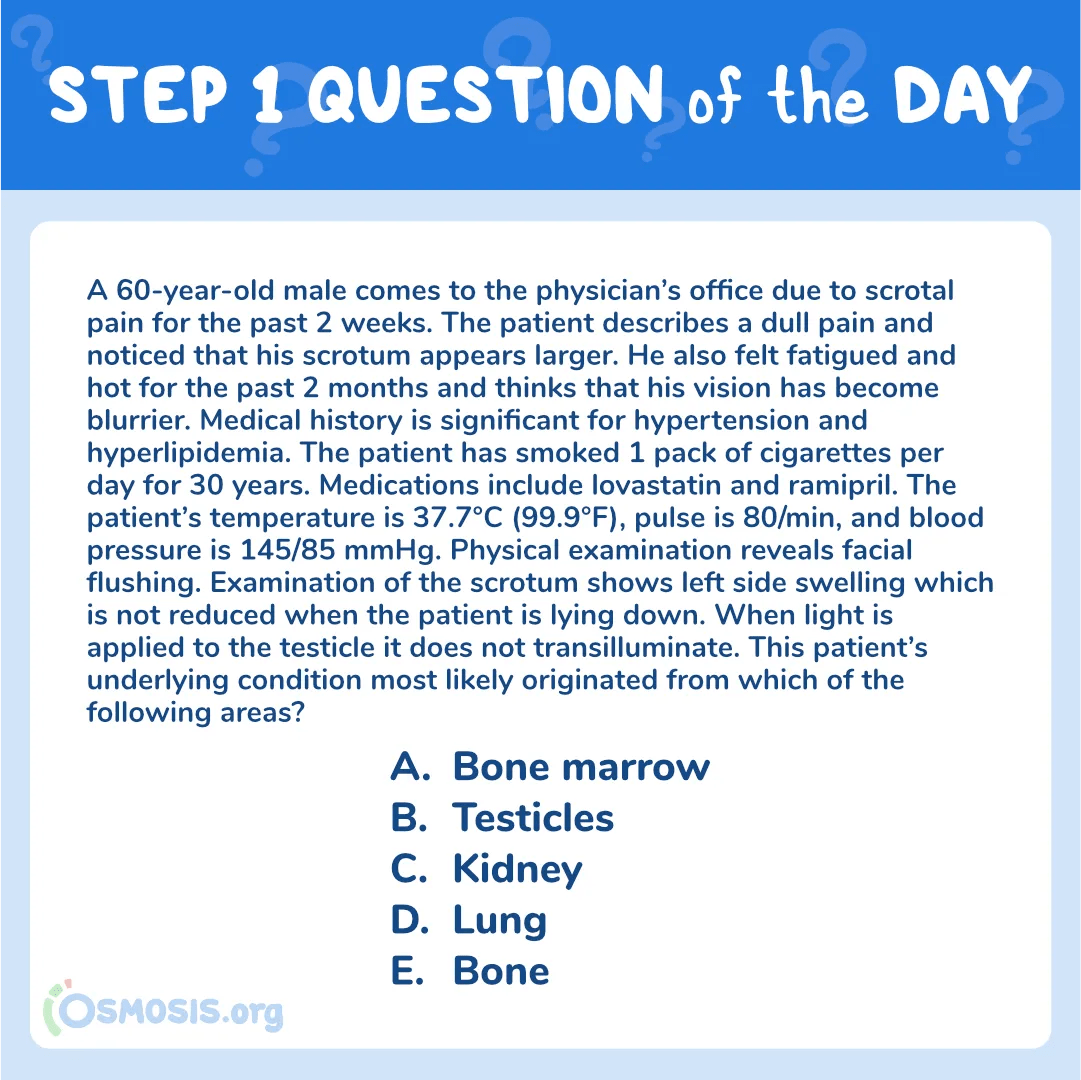
USMLE® Step 1 Question of the Day: Renal Cell Carcinoma
— Updated:
—
Each week, Osmosis shares a USMLE® Step 1-style practice question to test your knowledge of medical topics. Today’s case involves a 60-year-old man with pain in his scrotum. The scrotum appears to be swollen and the man’s vision has become blurrier. Can you figure it out? A 60-year-old male comes…
-
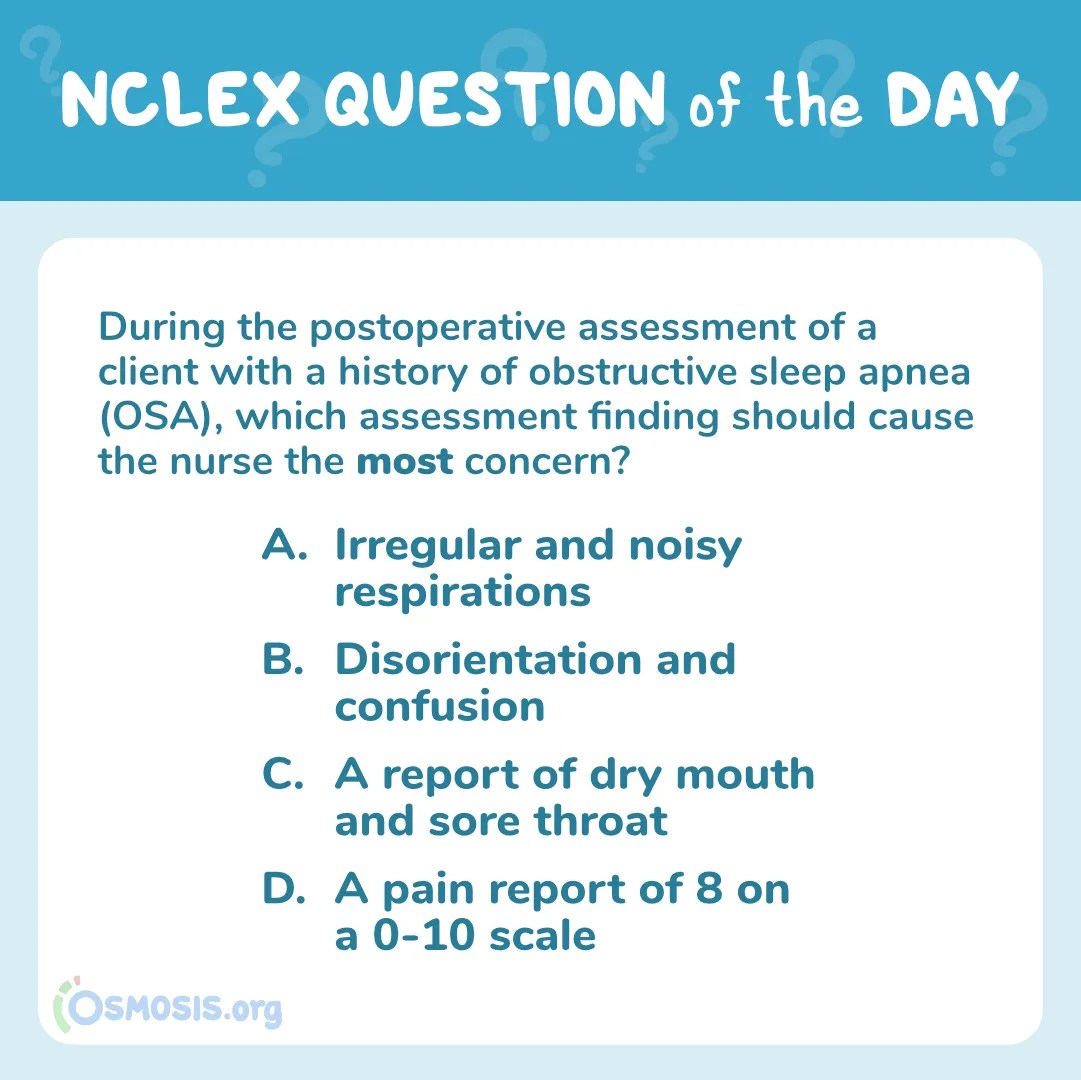
NCLEX-RN® Question of the Day: Obstructive sleep apnea
— Updated:
—
Today’s NCLEX-RN® question of the day focuses on the postoperative assessment of a client with obstructive sleep apnea. What should a nurse keep an eye on? During the postoperative assessment of a client with a history of obstructive sleep apnea (OSA), which assessment finding should cause the nurse the most…
-
USMLE® Step 2 CS and COMLEX-USA® Level 2-PE Canceled: What This Means For US Medical Students, IMGs, and Institutions
— Updated:
—
Some medical students are breathing a sigh of relief that they have one less exam to study for: the United States Medical Licensing Examination® (USMLE®) Step 2 Clinical Skills (CS) exam. The USMLE Step 2 CS canceled news comes about eight months after the exam was initially suspended amidst the…
-
My Non-Traditional Journey Into a Top-100 Ranked Medical School
— Updated:
—
Can a self-proclaimed “poor-performing” student still do well in a top-100 ranked medical school? Yes! That is, if you “seize opportunities rather than being afraid of failure” like fourth-year medical student Anthony Mompiere. He shares why rejections aren’t the end of the world, and why pushing past them can actually…
-
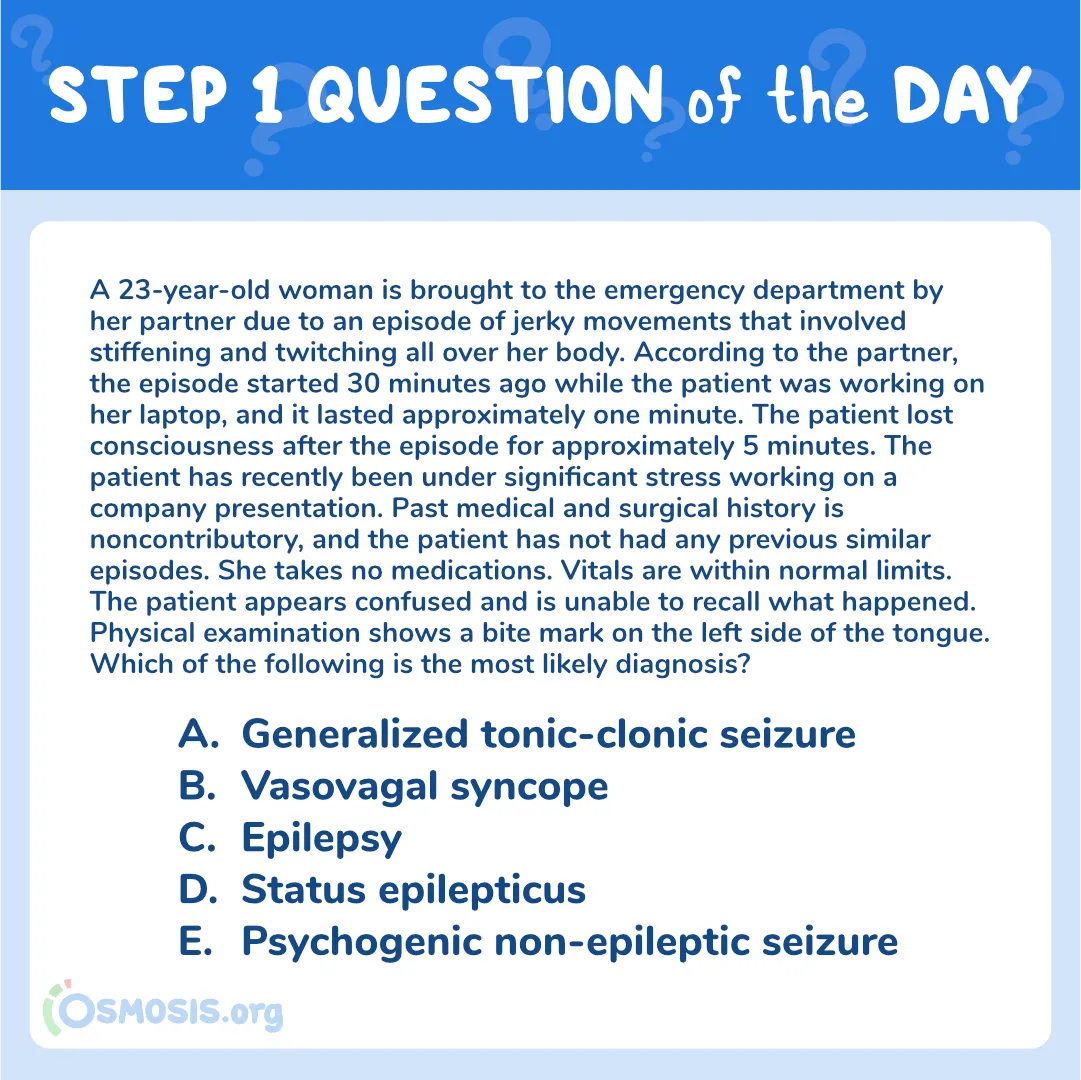
USMLE® Step 1 Question of the Day: Spasms and Syncope
— Updated:
—
For today’s USMLE® Step 1-style question, we examine the case of a woman who is brought into the ER by her partner after experiencing a sudden episode of jerky movements and loss of consciousness. A 23-year-old woman is brought to the emergency department by her partner due to an episode…
-

How to Develop Your Emotional Intelligence as a Health Professional
— Updated:
—
Emotional intelligence may have once sounded like an odd term, but it’s an absolutely crucial skill to improve, especially in the medical field. Managing your emotional intelligence will help you control and properly express your emotions during high-pressure situations. Learn how to hone your emotional intelligence with these tips from…
-
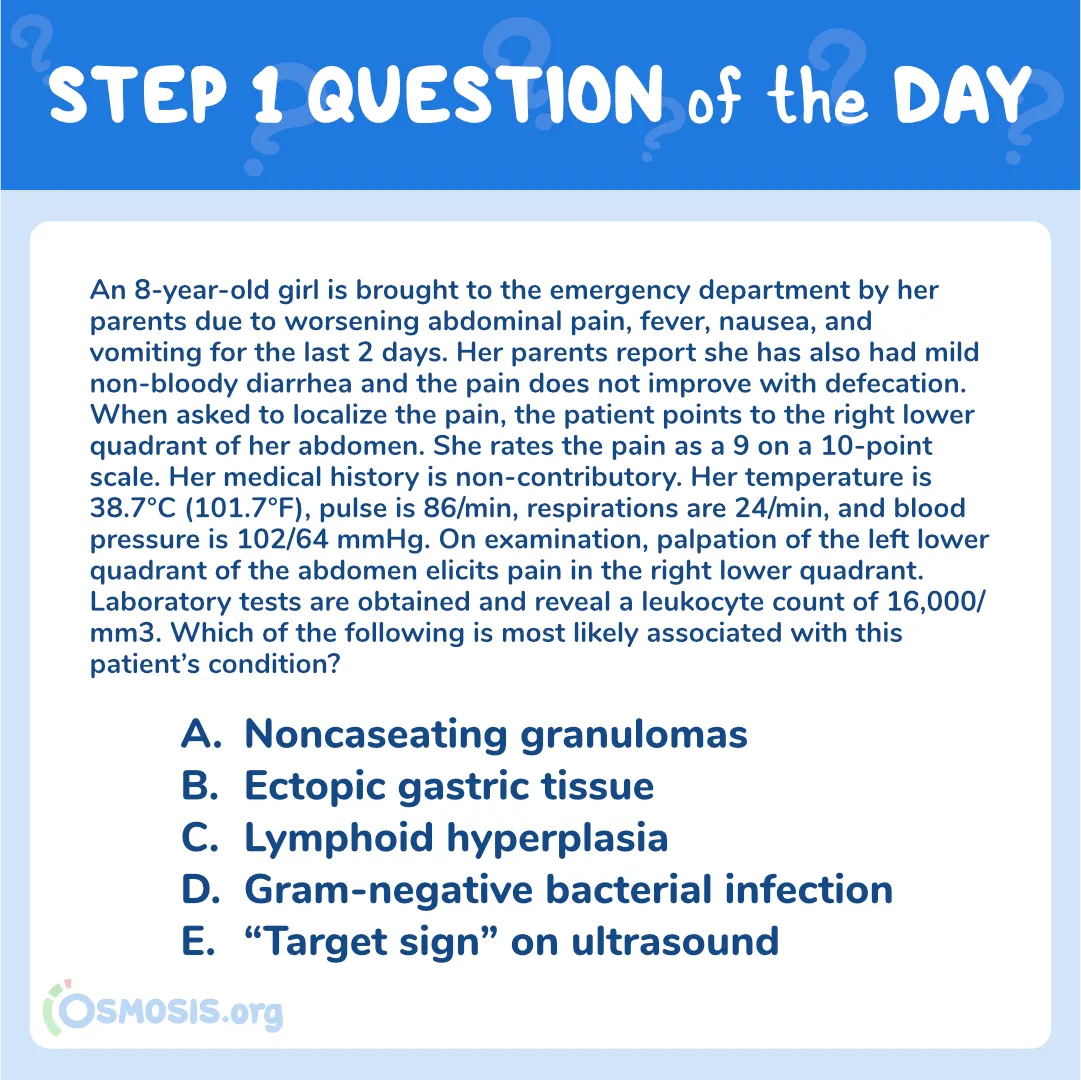
USMLE® Step 1 Question of the Day: Abdominal Pain
— Updated:
—
Each week, Osmosis shares a USMLE® Step 1-style practice question to test your knowledge of medical topics and help you prepare for the boards. Today’s case involves an 8-year-old girl who’s experiencing abdominal pain, fever, nausea, and vomiting. Can you figure out the cause? An 8-year-old girl is brought to…
-
NCLEX-RN® Question of the Day: CPAP masks
— Updated:
—
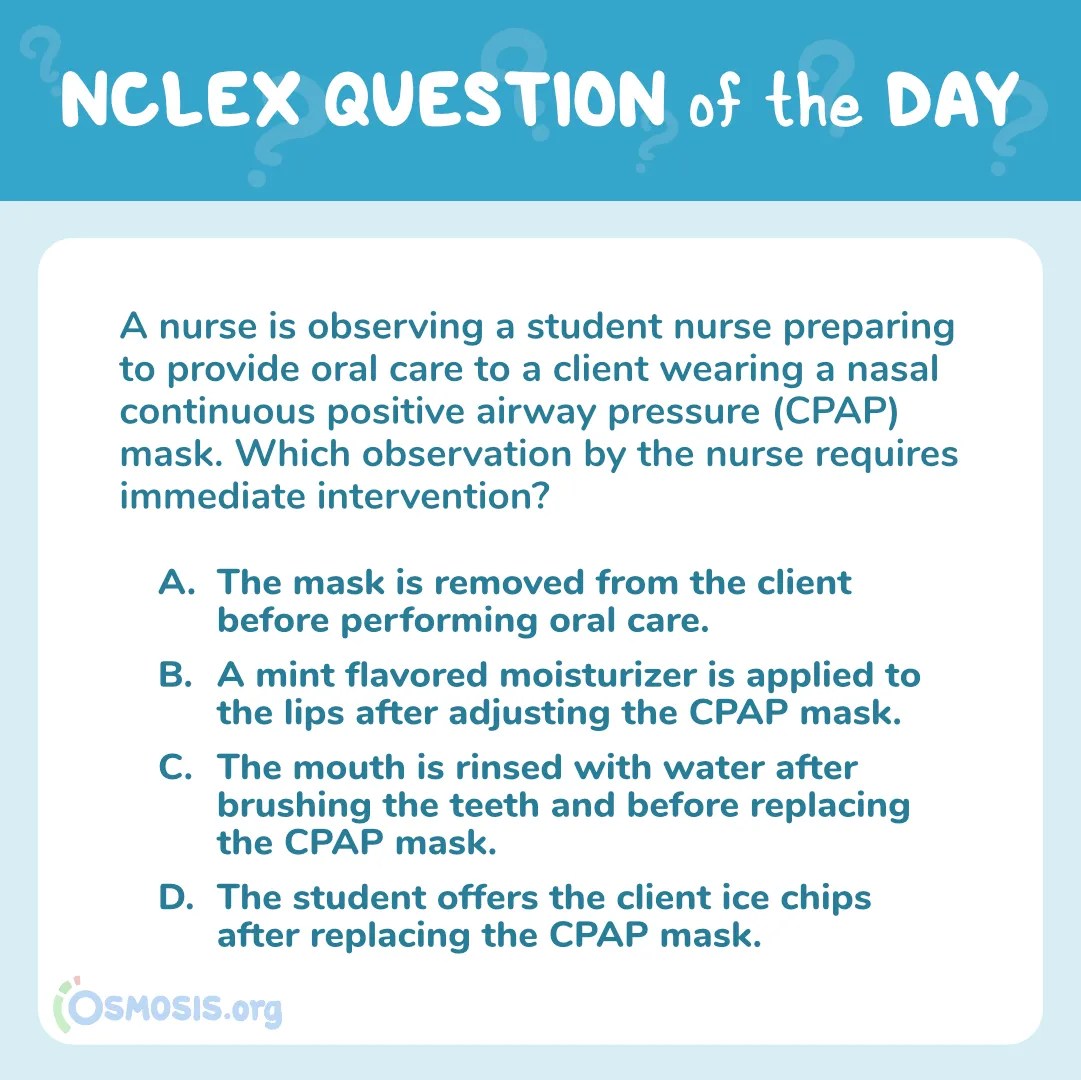
Today’s NCLEX-RN® question of the day presents a scenario where an RN is observing a student nurse as they provide oral care to a client. The client wears a CPAP mask to protect against sleep apnea. During the observation, the RN notices the student nurse making an error. Can you…
-
USMLE® Step 1 Question of the Day: Signs of End Organ Damage
— Updated:
—
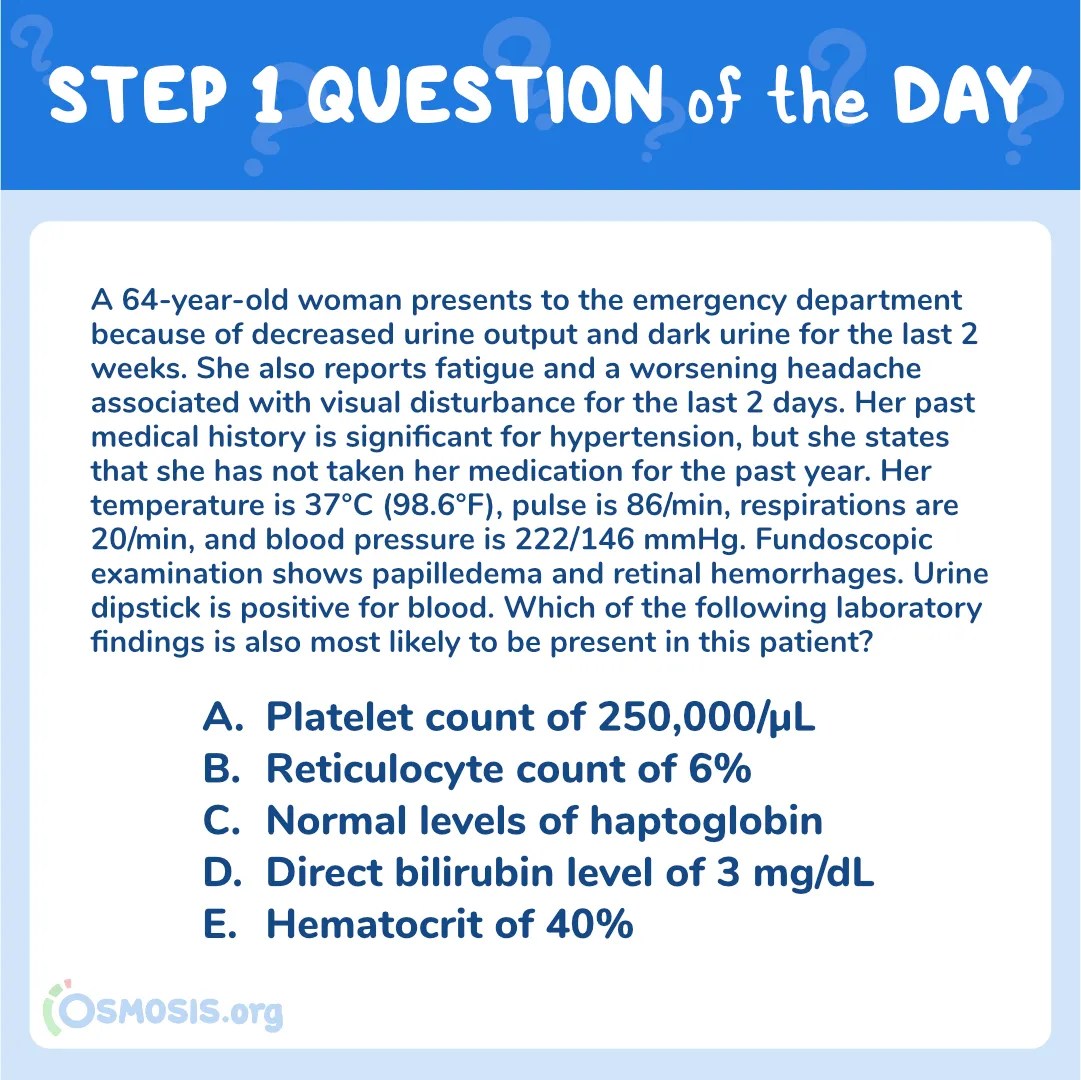
Each week, Osmosis shares a USMLE® Step 1-style practice question to test your knowledge of medical topics and help you prepare for the boards. Today’s case involves a 64-year-old woman who’s experiencing headaches, vision disturbances, and reduced urine output. Can you figure out what the diagnosis could be? A 64-year-old…
-
How to Cope With A Patient’s Death in Medical School
— Updated:
—
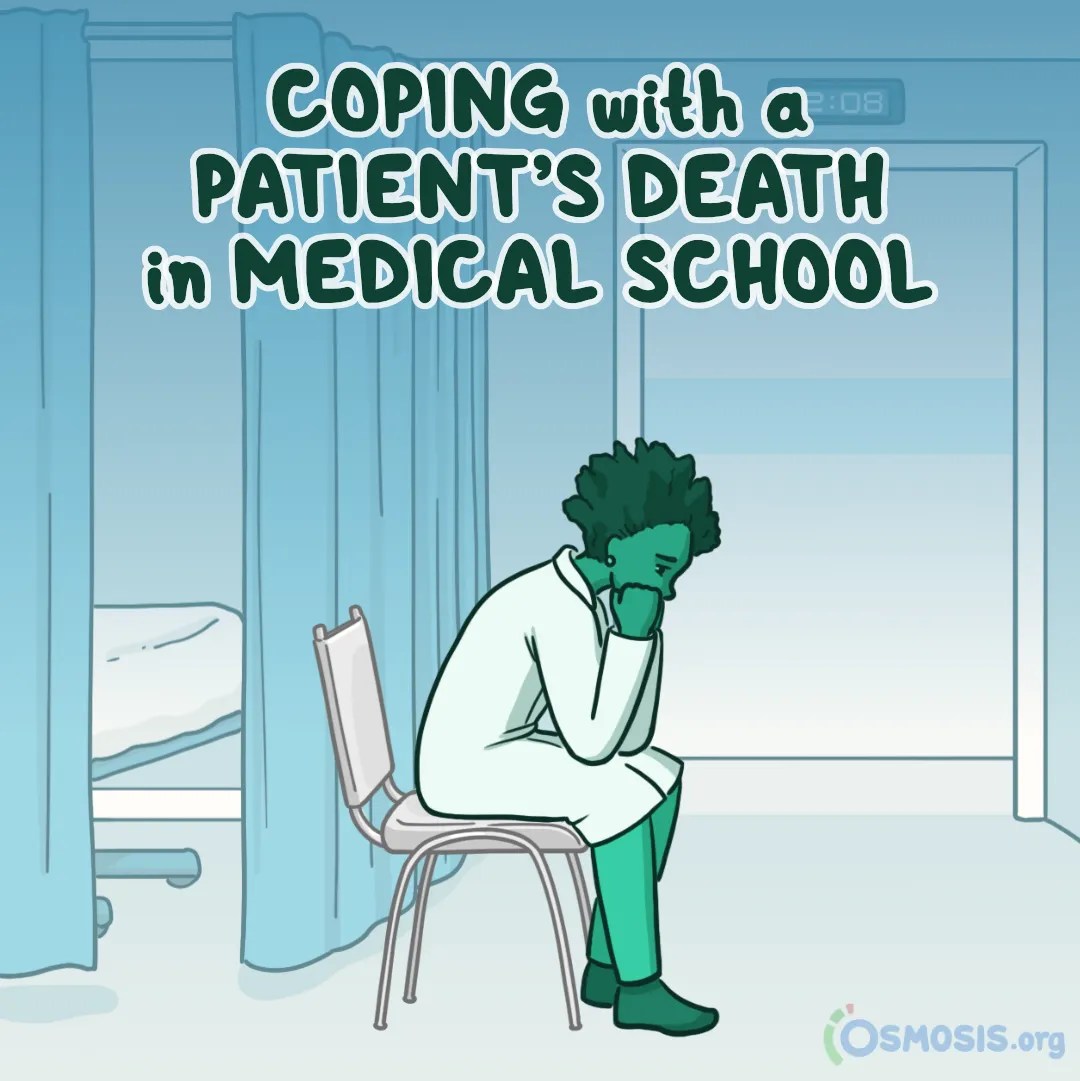
Patient care in medical school involves the two sides of a coin: recovery or deterioration of the patient’s health. Many medical students may not be fully prepared for the impact of losing a patient. Join Joy Muli, a medical student and Osmosis Medical Education Fellow, as she shares how to…
-

Being a Medical Student When Disaster Strikes
— Updated:
—
Pandemics, protests, fires, and explosions were among the many catastrophes we faced in 2020. In this article, OMEF George Katoul al Rahbani dives deeper into the role of the medical student in the middle of all these crises, giving a personal account of what life has been like for him…
-
USMLE® Step 1 Question of the Day: Neural Tube Defects
— Updated:
—
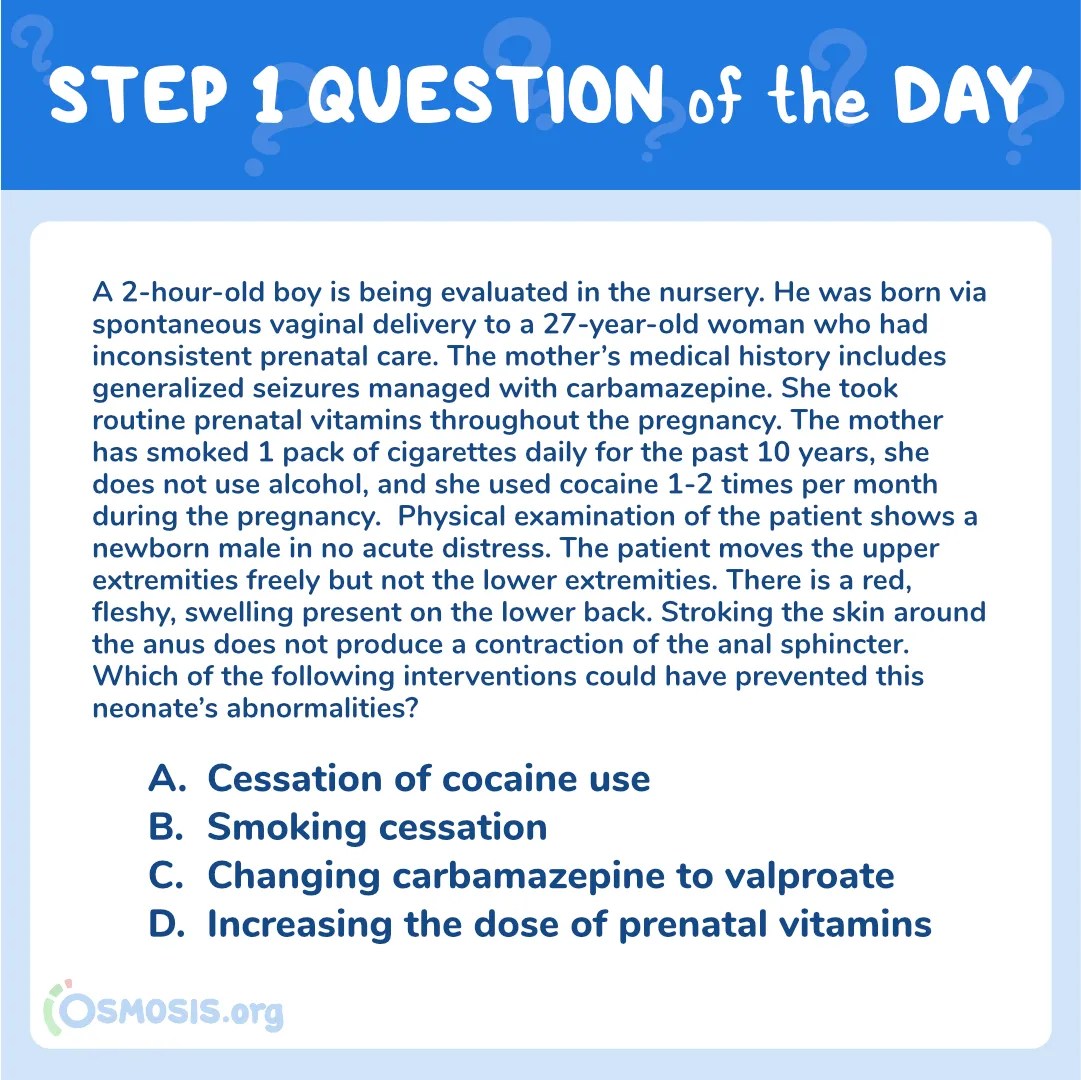
Each week, Osmosis shares a USMLE® Step 1-style practice question to test your knowledge of medical topics. Today’s case involves a two-hour-old baby who was born with a defect and can’t move his lower extremities. The mother is worried and wants to know if this could occur again if she…
-
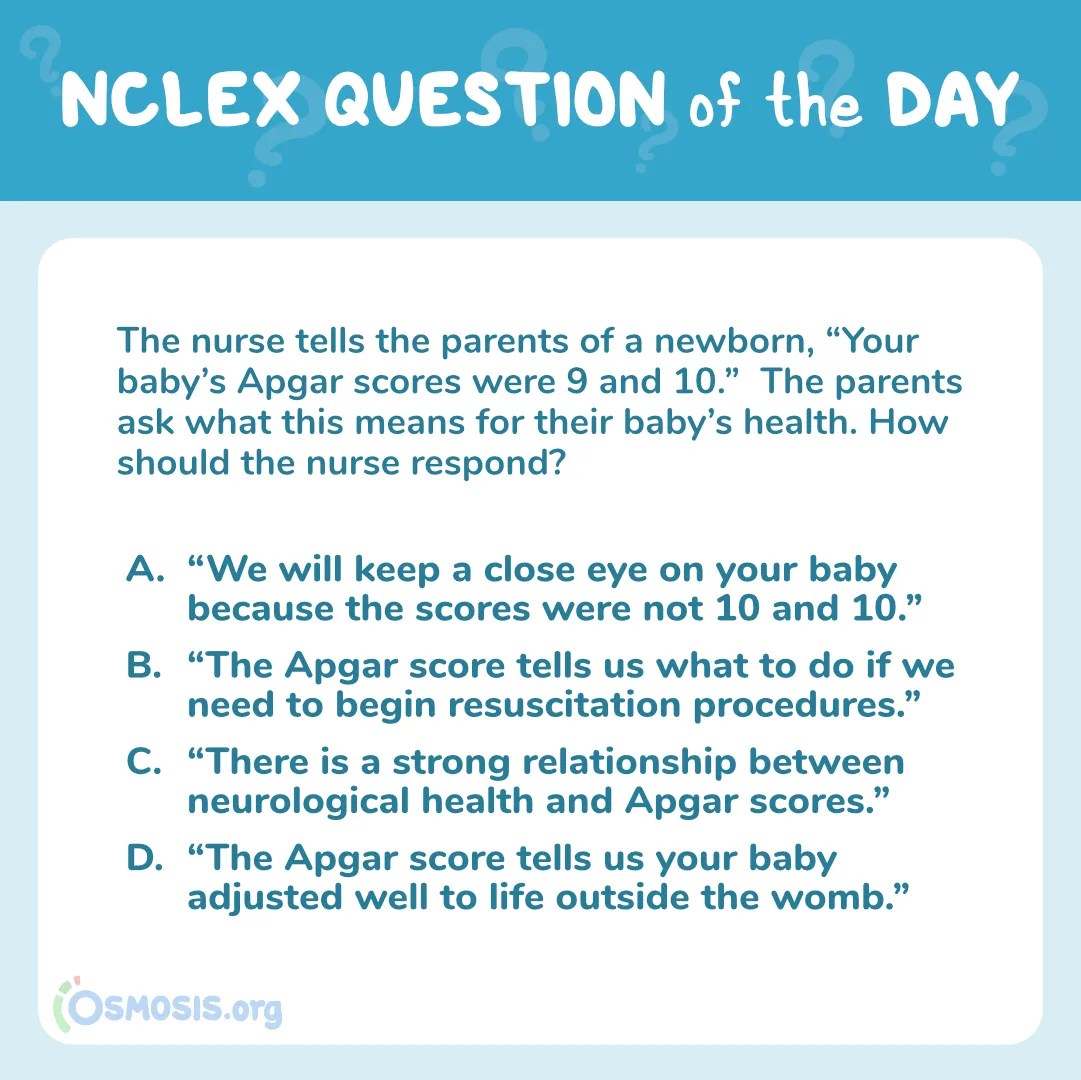
NCLEX-RN® Question of the Day: Apgar scores
— Updated:
—
Today’s NCLEX-RN® question of the day focuses on the Apgar score, a numerical measurement used to quantify the overall health of a newborn baby. How would you explain the Apgar score to a client? A nurse tells the parents of a newborn, “Your baby’s Apgar scores were 9 and 10.”…
-

Osmosis: An Organization With Ubuntu
— Updated:
—
Medical students are faced with multiple challenges while attending medical school, one of them being the plethora of resources and which one to choose. Today on the blog, OHLI, Nichole Anderez shares how Osmosis—”an education platform with Ubuntu”—made it easier for her to feel truly connected to her studies. As…
-
How to Prepare for and Pass USMLE® Step 2 CK as an IMG
— Updated:
—
With USMLE® Step 1 becoming pass/fail and USMLE Step 2 CS on hiatus, there’s a greater need for International Medical Graduates who wish to practice medicine in the US to do well on the USMLE Step 2 CK exam. In today’s blog, Osmosis Medical Education Fellow and Regional Lead, Santiago…
-
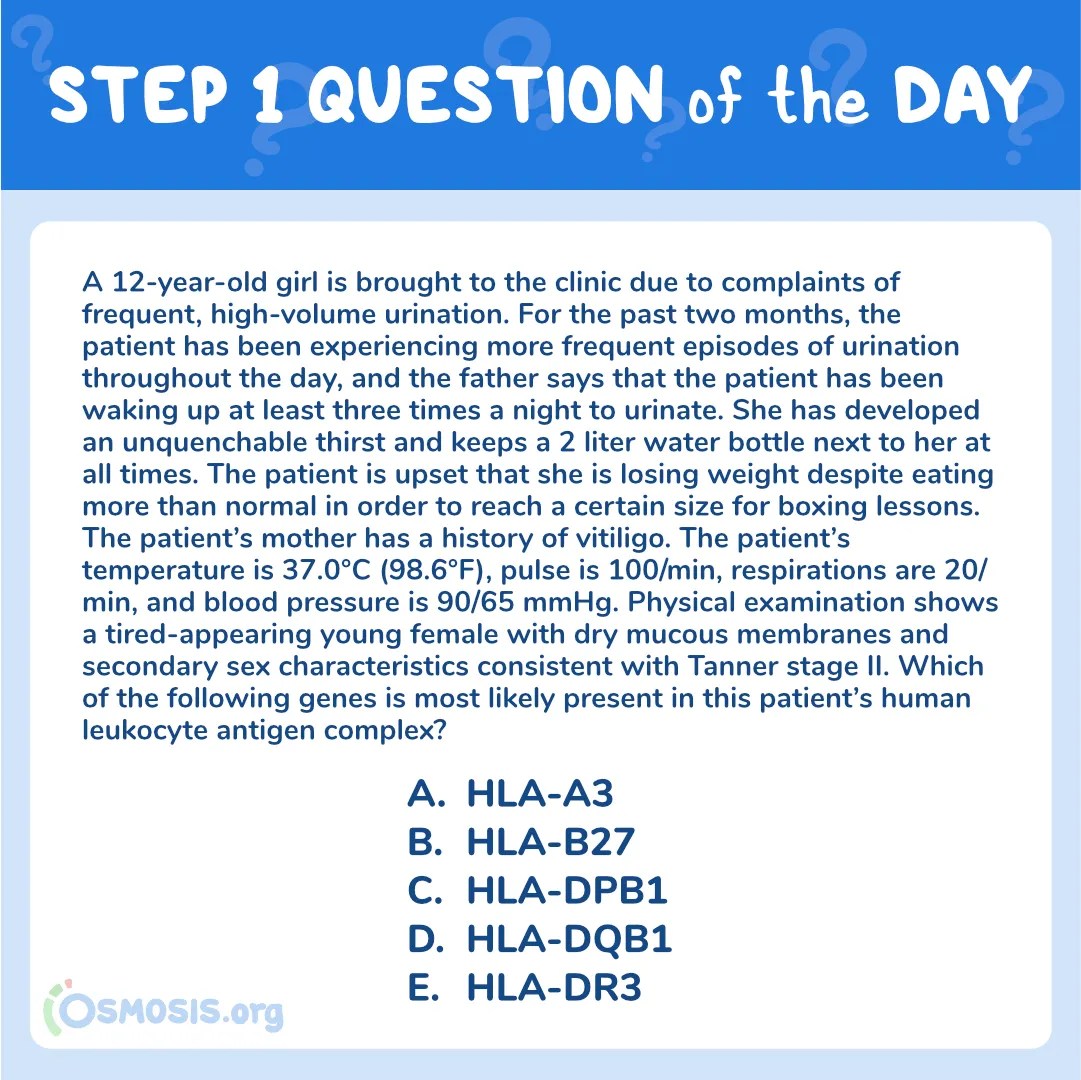
USMLE® Step 1 Question of the Day: Human Leukocyte Antigen Complex
— Updated:
—
Each week, Osmosis shares a USMLE® Step 1-style practice question to test your knowledge of medical topics. Today’s case involves a young girl who is worried because of recent urinary issues and weight loss. These symptoms are upsetting her because she is trying to keep a certain weight for boxing…
-
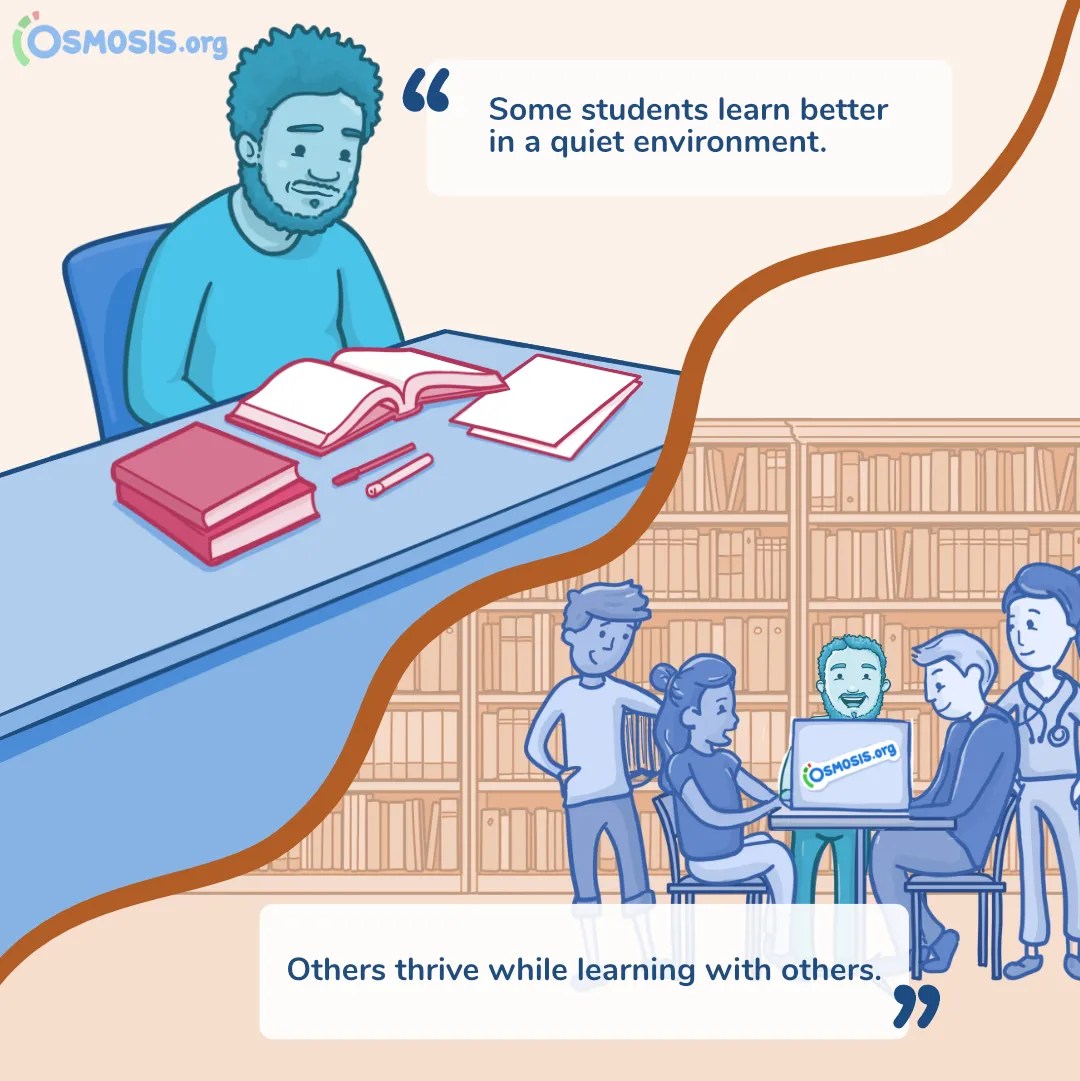
Useful Life Hacks for Medical Students
— Updated:
—
Life in medical school is not always easy to tackle. In today’s Osmosis blog, medical student and Osmosis Medical Education Fellow, Javed Iqbal, shares his experiences and life hacks he thinks every student needs to know. Study hacks & memory techniques Medicine has always been among most respected professions. But…
-
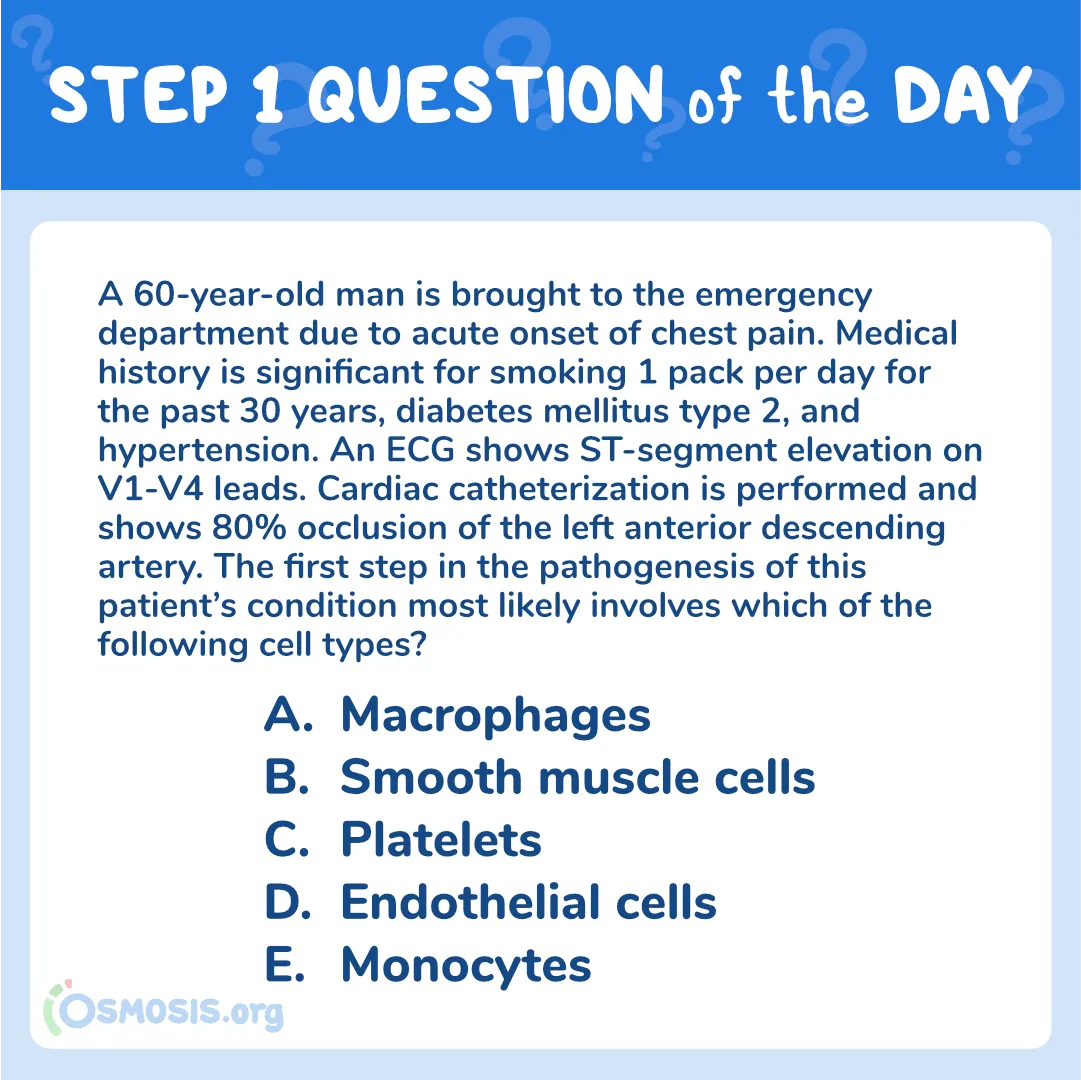
USMLE® Step 1 Question of the Day: Acute Chest Pain with Diabetes and Hypertension
— Updated:
—
A 60-year-old with chest pain and ECG changes shows LAD artery occlusion. Learn why endothelial cell injury is the first step in atherosclerosis causing myocardial infarction.
-
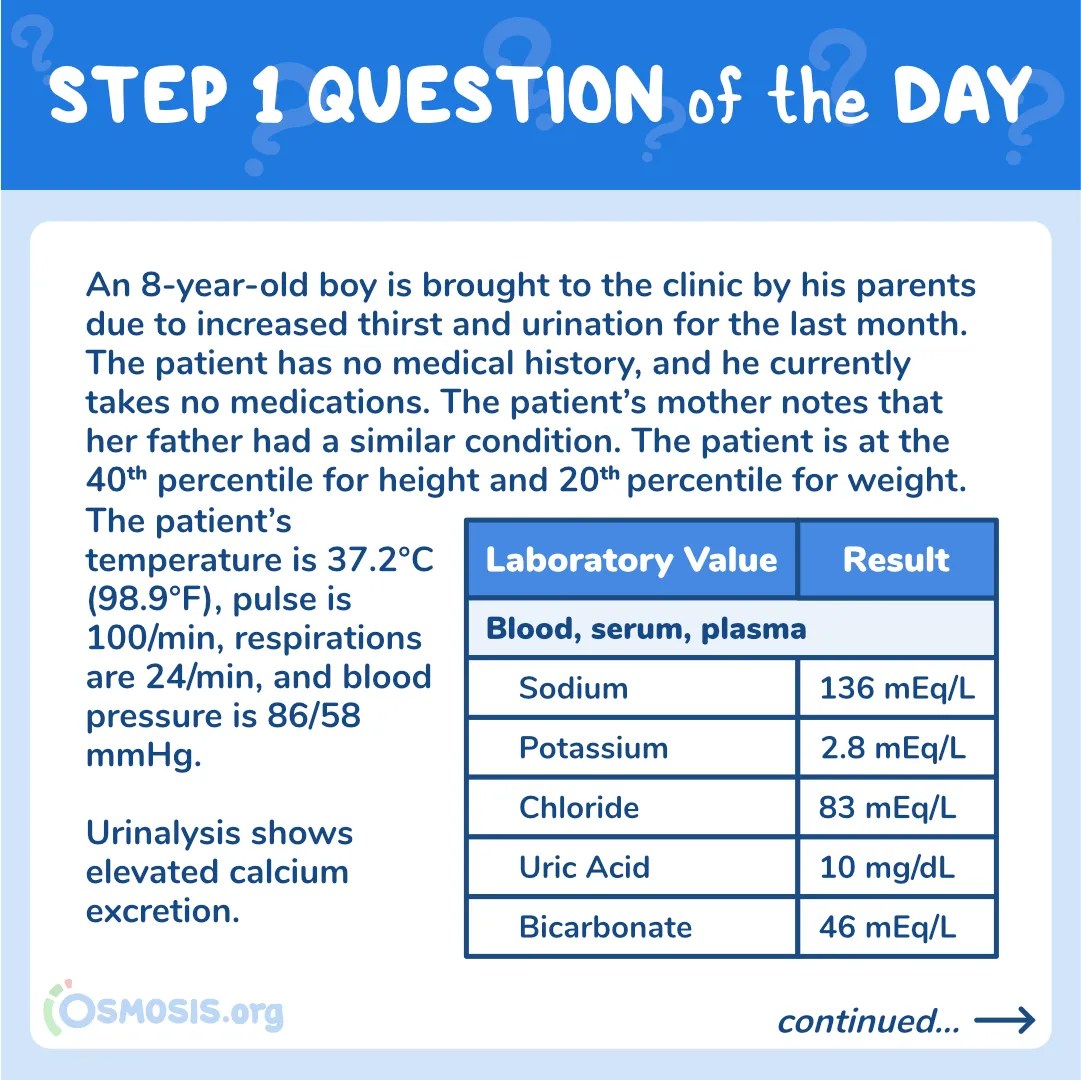
USMLE® Step 1 Question of the Day: Frequent Urination Diagnosis
— Updated:
—
Each week, Osmosis shares a USMLE® Step 1-style practice question to test your knowledge of medical topics. Today’s case involves a young boy whose worsening issues with thirst and frequent urination are worrying his parents. Can you make the correct diagnosis and help this family out? An 8-year-old boy is…
-

Financial Strategies for Health Professional Students to Save and Manage Money Better
— Updated:
—
Healthcare training is demanding academically and financially. Discover practical strategies to budget wisely, minimize student debt, and build healthy financial habits throughout medical, nursing, or PA school.
-
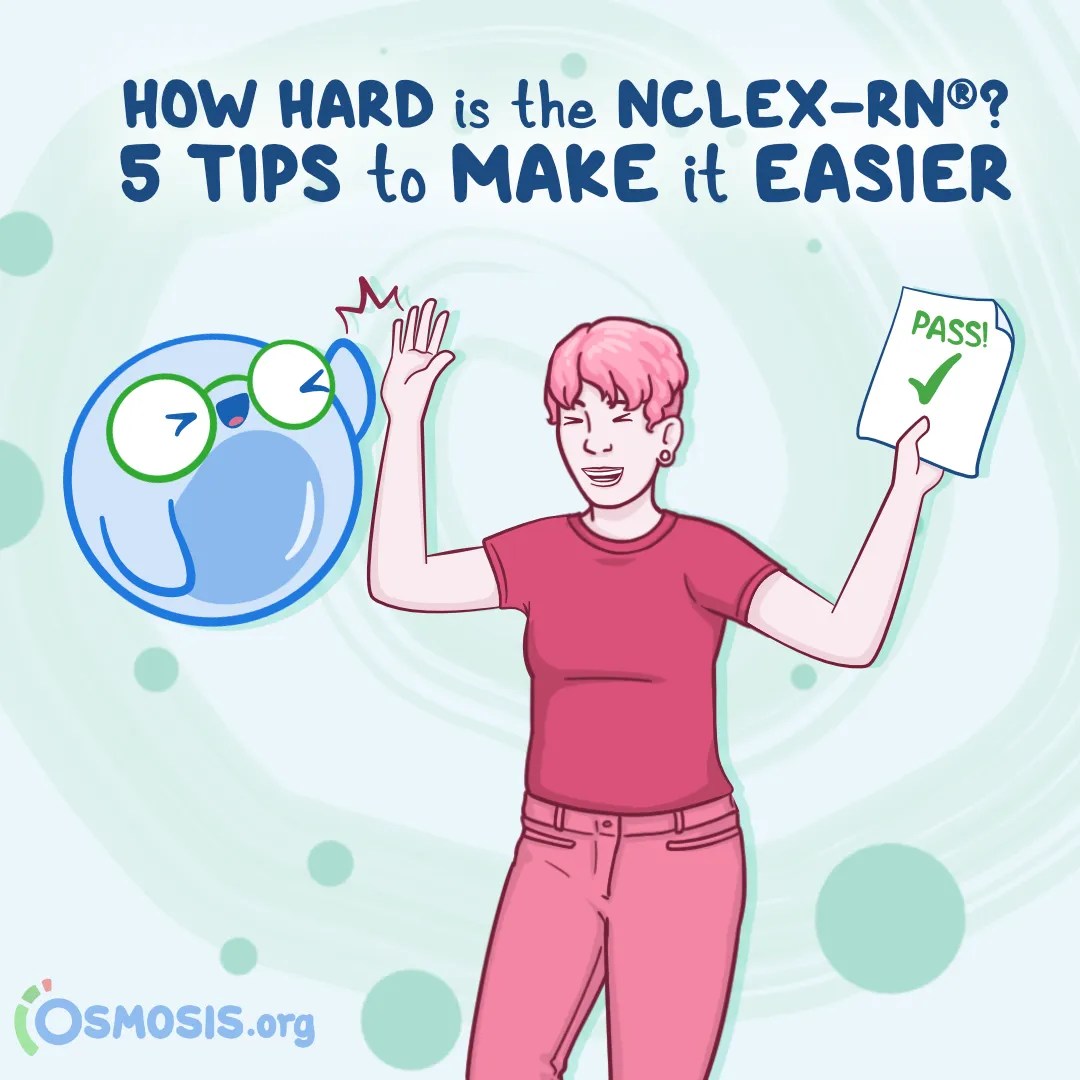
How Hard is the NCLEX®? 5 Tips to Make it Easier!
— Updated:
—
Congratulations on graduating from nursing school! Now, your next order of business is to prepare for and pass the NCLEX® exam. You might be wondering: “Is the NCLEX hard?” Well, it depends on how well you’ve prepared. Here are a few tips to help you approach the exam with confidence…
-

Overcoming Testing Anxiety Part 2: Test Day
— Updated:
—
This blog is based out of a two part webinar hosted by Dr. Marina Horiates, Content Manager for Test Questions at Osmosis, called Overcoming testing anxiety. Today we will be giving you the major takeaways from part two—test day tips and tricks. It’s test day! You have done all the…
-
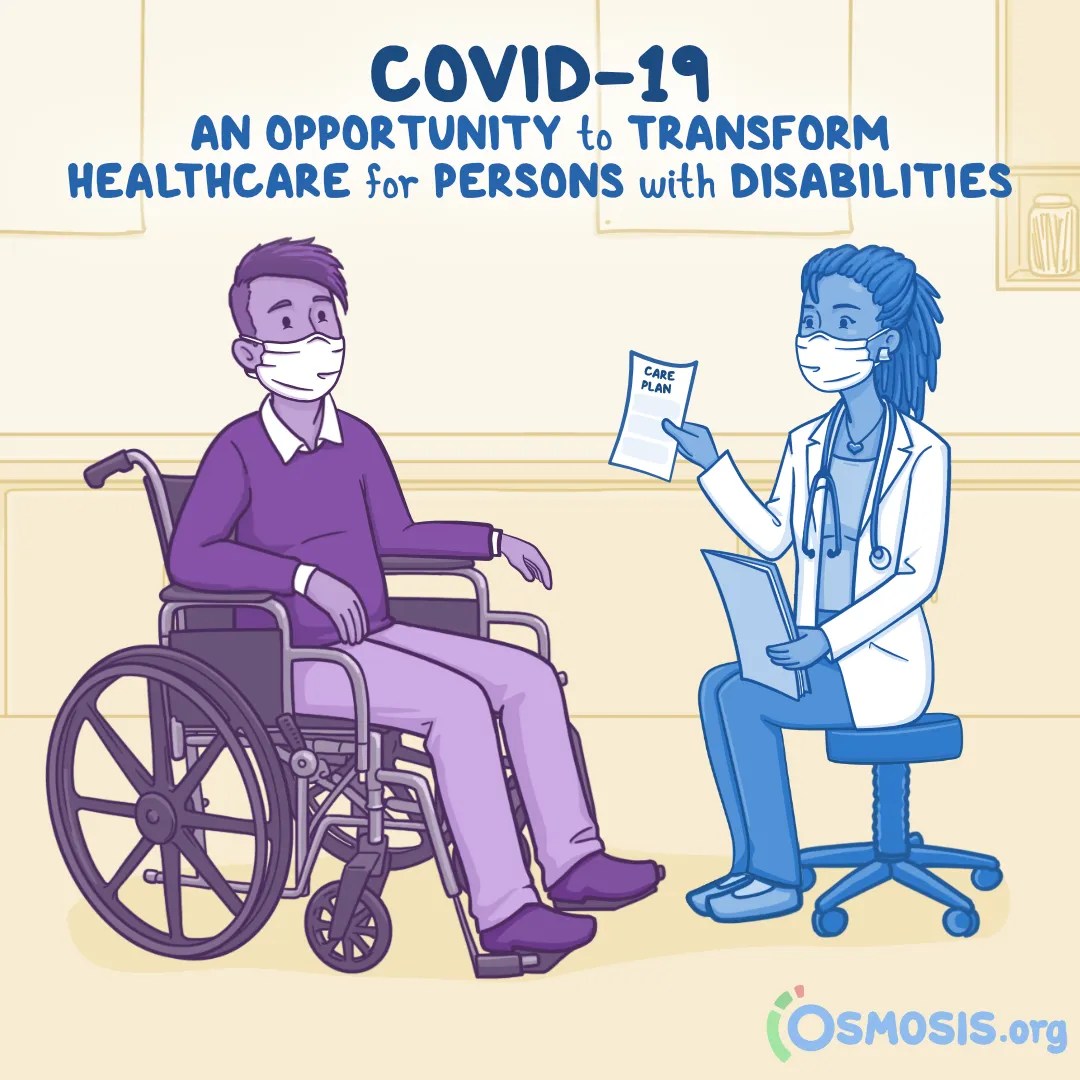
What COVID-19 Can Teach Us About Treating Patients With Disabilities
— Updated:
—
Today is International Day of Persons with Disabilities. This year the theme is “Building Back Better: Toward a disability-inclusive, accessible and sustainable post COVID-19 World”. To honor the theme this year, Osmosis Medical Education Fellow Casey Gilman partners with Dr. Sarah Elizabeth Moreman to discuss how COVID-19 has shed light…