Bronchopulmonary dysplasia (BPD): Nursing

Bronchopulmonary dysplasia (BPD): Nursing

Medical Surgical

Medical Surgical

Arrhythmias - Asystole: Nursing
Arrhythmias - Atrial fibrillation (Afib): Nursing
Arrhythmias - Atrial flutter (Aflutter): Nursing
Arrhythmias - Heart blocks: Nursing
Arrhythmias - Premature atrial contractions (PACs): Nursing
Arrhythmias - Premature ventricular contractions (PVCs): Nursing
Arrhythmias - Sinus tachycardia and sinus bradycardia: Nursing
Arrhythmias - Supraventricular tachycardia (SVT): Nursing
Arrhythmias - Ventricular fibrillation (Vfib): Nursing
Arrhythmias - Ventricular tachycardia (Vtach): Nursing
Arterial embolism: Nursing
Electrocardiogram (ECG) - Normal sinus rhythm (NSR): Nursing
Cardiomyopathy: Nursing
Congenital heart defects - Acyanotic: Nursing
Congenital heart defects - Cyanotic: Nursing
Endocarditis: Nursing
Heart defects that decrease pulmonary blood flow - Nursing considerations & client education: Nursing
Kawasaki disease: Nursing
Myocarditis: Nursing
Pericarditis: Nursing
Shock - Anaphylactic: Nursing
Shock - Cardiogenic: Nursing
Shock - Hypovolemic: Nursing
Shock - Neurogenic: Nursing
Shock - Obstructive: Nursing
Shock - Septic: Nursing
Valvular heart disease: Nursing
Geriatric considerations - Cardiac: Nursing
Aortic aneurysm: Nursing process (ADPIE)
Coronary artery disease (CAD) and angina pectoris: Nursing process (ADPIE)
Hypertension: Nursing process (ADPIE)
Left-sided heart failure: Nursing process (ADPIE)
Myocardial infarction (MI): Nursing process (ADPIE)
Pericardial effusion and cardiac tamponade: Nursing process (ADPIE)
Rheumatic heart disease: Nursing process (ADPIE)
Alpha-1 adrenergic blockers: Nursing pharmacology
Alpha-2 adrenergic agonists: Nursing pharmacology
Angiotensin II receptor blockers (ARBs): Nursing pharmacology
Angiotensin-converting enzyme (ACE) inhibitors: Nursing pharmacology
Antiarrhythmics: Nursing pharmacology
Antihyperlipidemics - Fibrates: Nursing pharmacology
Antihyperlipidemics - Miscellaneous: Nursing pharmacology
Antihyperlipidemics - Statins: Nursing pharmacology
Beta-adrenergic blockers: Nursing pharmacology
Calcium-channel blockers: Nursing pharmacology
Cardiac glycosides: Nursing pharmacology
Direct-acting vasodilators: Nursing pharmacology
Nitrates: Nursing pharmacology
Sympathomimetic medications: Nursing pharmacology
Adrenal insufficiency (Addison disease): Nursing
Cushing syndrome and Cushing disease: Nursing
Hyperparathyroidism: Nursing
Hypoparathyroidism: Nursing
Hypopituitarism: Nursing
Infant of a diabetic mother (IDM): Nursing
Phenylketonuria (PKU): Nursing
Diabetes insipidus: Nursing process (ADPIE)
Diabetes mellitus (DM): Nursing process (ADPIE)
Diabetic ketoacidosis (DKA): Nursing process (ADPIE)
Hyperosmolar hyperglycemic state (HHS): Nursing process (ADPIE)
Hyperthyroidism: Nursing process (ADPIE)
Hypothyroidism: Nursing process (ADPIE)
Syndrome of inappropriate antidiuretic hormone (SIADH): Nursing process (ADPIE)
Glucocorticoids and mineralocorticoids: Nursing pharmacology
Insulin: Nursing pharmacology
Medications affecting the parathyroid glands: Nursing pharmacology
Medications for antidiuretic hormone (ADH) disorders: Nursing pharmacology
Medications for thyroid disorders: Nursing pharmacology
Medications for growth hormone disorders: Nursing pharmacology
Oral antidiabetic medications - Alpha-glucosidase inhibitors: Nursing pharmacology
Oral antidiabetic medications - Biguanides and thiazolidinediones: Nursing pharmacology
Oral antidiabetic medications - DPP-4 inhibitors: Nursing pharmacology
Oral antidiabetic medications - Sodium-glucose co-transporter-2 (SGLT-2) inhibitors: Nursing pharmacology
Oral antidiabetic medications - Sulfonylureas and meglitinides: Nursing pharmacology
Amblyopia: Nursing
Cataracts: Nursing
Detached retina: Nursing
Hearing impairment and otosclerosis: Nursing
Legal blindness: Nursing
Macular degeneration: Nursing
Meniere disease: Nursing
Pharyngitis: Nursing
Strabismus: Nursing
Geriatric considerations - Sensory: Nursing
Otitis media: Nursing
Epistaxis: Nursing process (ADPIE)
Eye injury: Nursing process (ADPIE)
Glaucoma: Nursing process (ADPIE)
Tonsillitis: Nursing process (ADPIE)
Antiglaucoma medications: Nursing pharmacology
Eye anesthetics: Nursing pharmacology
Mydriatics and cycloplegics: Nursing pharmacology
Ophthalmic anti-inflammatories and anti-infectives: Nursing pharmacology
Biliary atresia: Nursing
Cholecystitis: Nursing
Cholelithiasis: Nursing
Diarrhea: Nursing
Diverticular disease: Nursing
Hepatitis: Nursing
Inflammatory bowel disease - Crohn disease and ulcerative colitis: Nursing
Intestinal obstruction: Nursing
Irritable bowel syndrome (IBS): Nursing
Jaundice: Nursing
Esophageal atresia and tracheoesophageal fistula: Nursing
Geriatric considerations - Gastrointestinal: Nursing
Hirschsprung disease: Nursing
Hyperemesis gravidarum: Nursing
Necrotizing enterocolitis: Nursing
Omphalocele and gastroschisis: Nursing
Appendicitis: Nursing process (ADPIE)
Celiac disease: Nursing process (ADPIE)
Cirrhosis: Nursing process (ADPIE)
Gastroesophageal reflux disease (GERD): Nursing process (ADPIE)
Hiatal hernia: Nursing process (ADPIE)
Pancreatitis: Nursing process (ADPIE)
Peptic ulcer disease (PUD): Nursing process (ADPIE)
Antacids: Nursing pharmacology
Antidiarrheals: Nursing pharmacology
Antiemetics: Nursing pharmacology
Antispasmodics (GI): Nursing pharmacology
Gallstone-dissolving agents: Nursing pharmacology
Gastric mucosal protective agents: Nursing pharmacology
Histamine H2 antagonists: Nursing pharmacology
Laxatives: Nursing pharmacology
Medications for hepatic encephalopathy: Nursing pharmacology
Pancreatic enzyme replacements: Nursing pharmacology
Proton pump inhibitors (PPIs): Nursing pharmacology
Treatment for Helicobacter pylori: Nursing pharmacology
Weight loss medications: Nursing pharmacology
Chronic kidney disease (CKD): Nursing
Dialysis care: Nursing
Epididymitis: Nursing
Glomerulonephritis: Nursing
Nephrotic syndrome: Nursing
Polycystic kidney disease (PKD): Nursing
Pyelonephritis: Nursing
Renal and urinary calculi: Nursing
Urinary retention: Nursing
Bladder exstrophy: Nursing
Circumcision: Nursing
Cryptorchidism: Nursing
Enuresis: Nursing
Geriatric considerations - Urinary: Nursing
Hypospadias and epispadias: Nursing
Acute kidney injury (AKI): Nursing process (ADPIE)
Benign prostatic hyperplasia (BPH): Nursing process (ADPIE)
Urinary incontinence - Stress: Nursing process (ADPIE)
Urinary tract infections (UTIs): Nursing process (ADPIE)
Diuretics - Osmotic and carbonic anhydrase inhibitors: Nursing pharmacology
Diuretics - Thiazide, thiazide-like, loop, and potassium-sparing diuretics: Nursing pharmacology
Antispasmodics (GU): Nursing pharmacology
Cholinergic therapy (GU): Nursing pharmacology
Anemia - Aplastic: Nursing
Anemia - Iron-deficiency: Nursing
Anemia - Macrocytic: Nursing
Disseminated intravascular coagulation (DIC): Nursing
Neutropenia: Nursing
Polycythemia: Nursing
Thalassemia: Nursing
Thrombocytopenia: Nursing
Arterial blood gas (ABG) - Overview: Nursing
Arterial blood gas (ABG) - Metabolic acidosis: Nursing
Arterial blood gas (ABG) - Respiratory alkalosis: Nursing
Blood cultures: Nursing
Cardiac biomarkers - Creatine kinase (CK): Nursing
Cardiac biomarkers - Troponin: Nursing
Coagulation studies - Partial thromboplastin time (PTT): Nursing
Complete blood count (CBC) - Hemoglobin and hematocrit: Nursing
Complete blood count (CBC) - Platelets: Nursing
Complete blood count (CBC) - Red blood cells (RBC): Nursing
Complete blood count (CBC) - White blood cells (WBC) and differential: Nursing
Complete metabolic panel (CMP) - Blood urea nitrogen (BUN) and creatinine (Cr): Nursing
Complete metabolic panel (CMP) - Chloride: Nursing
Complete metabolic panel (CMP) - Estimated glomerular filtration rate (eGFR): Nursing
Complete metabolic panel (CMP) - Glucose: Nursing
Complete metabolic panel (CMP) - Liver function tests (LFT): Nursing
Complete metabolic panel (CMP) - Potassium: Nursing
Complete metabolic panel (CMP) - Sodium: Nursing
Hemolytic disease of the fetus and newborn: Nursing
Hemolytic uremic syndrome: Nursing
Hemophilia: Nursing process (ADPIE)
Leukemia: Nursing process (ADPIE)
Sickle cell disease: Nursing process (ADPIE)
Anticoagulants - Direct thrombin and factor Xa inhibitors: Nursing pharmacology
Anticoagulants - Heparin: Nursing pharmacology
Anticoagulants - Warfarin: Nursing pharmacology
Antihyperlipidemics - Bile acid sequestrants and cholesterol absorption inhibitors: Nursing pharmacology
Antiplatelet agents: Nursing pharmacology
Blood products: Nursing pharmacology
Hematopoietic growth factors: Nursing pharmacology
Hemostatics: Nursing pharmacology
Iron preparations: Nursing pharmacology
Thrombolytics: Nursing pharmacology
Immune response - Adaptive: Nursing
Autoimmunity: Nursing
Human immunodeficiency virus (HIV) and acquired immunodeficiency syndrome (AIDS): Nursing
Hypersensitivity reactions - Type I: Nursing
Hypersensitivity reactions - Type II: Nursing
Hypersensitivity reactions - Type III: Nursing
Hypersensitivity reactions - Type IV: Nursing
Inflammatory process: Nursing
Immune response - Innate: Nursing
Immunodeficiency disorders - Primary: Nursing
Scleroderma: Nursing
Immunodeficiency disorders - Secondary: Nursing
Sjögren syndrome: Nursing
Systemic lupus erythematosus (SLE): Nursing
Toxic shock syndrome (TSS): Nursing
Erythema infectiosum (Fifth disease): Nursing
Fever: Nursing
Infectious mononucleosis: Nursing
Mumps (Parotitis): Nursing
Neonatal sepsis: Nursing
Pertussis: Nursing
Poliomyelitis: Nursing
Postpartum infections: Nursing
Roseola (Exanthem subitum): Nursing
Rubella (German measles): Nursing
Rubeola (Measles): Nursing
Smallpox: Nursing
Zika virus: Nursing
Anaphylaxis: Nursing process (ADPIE)
Lyme disease: Nursing process (ADPIE)
Rheumatoid arthritis (RA): Nursing process (ADPIE)
Antirejection immunosuppressants: Nursing pharmacology
Biologic agents: Nursing pharmacology
Vaccines: Nursing pharmacology
Immunoglobulins: Nursing pharmacology
Immunosuppressants for autoimmune diseases: Nursing pharmacology
Immunomodulators: Nursing pharmacology
Disease-modifying therapy for multiple sclerosis: Nursing pharmacology
Acne: Nursing
Animal and snake bites: Nursing
Burn injury: Nursing
Cutaneous fungal infections: Nursing
Erysipelas and cellulitis: Nursing
Herpes simplex virus (HSV): Nursing
Herpes zoster: Nursing
Impetigo: Nursing
Insect stings and bites: Nursing
Pediculosis and scabies: Nursing
Psoriasis: Nursing
Rocky Mountain spotted fever (RMSF): Nursing
Skin cancer - Basal cell carcinoma, squamous cell carcinoma, and melanoma: Nursing
Urticaria: Nursing
Geriatric considerations - Integumentary: Nursing
Atopic dermatitis: Nursing process (ADPIE)
Frostbite: Nursing process (ADPIE)
Methicillin-resistant Staphylococcus aureus (MRSA): Nursing process (ADPIE)
Pressure injury: Nursing process (ADPIE)
Debridement agents: Nursing pharmacology
Keratolytics: Nursing pharmacology
Antibiotics - Topical: Nursing pharmacology
Antifungals - Topical: Nursing pharmacology
Corticosteroids - Topical: Nursing pharmacology
Medications for acne vulgaris: Nursing pharmacology
Amputation: Nursing
Carpal tunnel syndrome: Nursing
Herniated intervertebral disc: Nursing
Hip fractures: Nursing
Muscular dystrophies - Duchenne and Becker: Nursing
Myasthenia gravis: Nursing
Osteoarthritis: Nursing
Osteomyelitis: Nursing
Osteoporosis: Nursing
Paget disease of bone: Nursing
Craniosynostosis: Nursing
Developmental dysplasia of the hip: Nursing
Juvenile idiopathic arthritis: Nursing
Scoliosis: Nursing
Acute compartment syndrome: Nursing process (ADPIE)
Fractures: Nursing process (ADPIE)
Gout: Nursing process (ADPIE)
Musculoskeletal injuries: Nursing process (ADPIE)
Acetylcholinesterase inhibitors for myasthenia gravis: Nursing pharmacology
Analgesics: Nursing pharmacology
Skeletal muscle relaxants: Nursing pharmacology
Altered level of consciousness (LOC): Nursing
Amyotrophic lateral sclerosis (ALS): Nursing
Bell palsy: Nursing
Cerebral palsy: Nursing
Encephalitis: Nursing
Guillain-Barré syndrome: Nursing
Head injury: Nursing
Hemorrhagic stroke - Intracranial hemorrhage (ICH) and subarachnoid hemorrhage (SAH): Nursing
Epidural and subdural hematoma: Nursing
Huntington disease: Nursing
Increased intracranial pressure (ICP): Nursing
Intracranial aneurysm: Nursing
Migraines: Nursing
Multiple sclerosis (MS): Nursing
Physiology of pain: Nursing
Spinal cord injury (SCI): Nursing
Delirium: Nursing
Dementia: Nursing
Brachial plexus injury: Nursing
Neurological assessment - Neonate: Nursing
Neural tube defects: Nursing
Meningitis: Nursing process (ADPIE)
Parkinson disease: Nursing process (ADPIE)
Seizure disorder: Nursing process (ADPIE)
Stroke: Nursing process (ADPIE)
Trigeminal neuralgia: Nursing process (ADPIE)
Antiepileptics: Nursing pharmacology
Medications for Alzheimer disease: Nursing pharmacology
Medications for migraines: Nursing pharmacology
Biology of cancer: Nursing
Bladder tumors: Nursing
Bone tumors: Nursing
Brain tumors: Nursing
Cervical cancer: Nursing
Colorectal cancer: Nursing
Esophageal cancer: Nursing
Gastric cancer: Nursing
Laryngeal cancer: Nursing
Liver cancer: Nursing
Lung cancer: Nursing
Lymphoma - Hodgkin and non-Hodgkin: Nursing
Multiple myeloma: Nursing
Neuroblastoma: Nursing
Ovarian cancer: Nursing
Pancreatic cancer: Nursing
Prostate cancer: Nursing
Renal cancer: Nursing
Retinoblastoma: Nursing
Testicular cancer: Nursing
Breast cancer: Nursing process (ADPIE)
Tumor lysis syndrome (TLS): Nursing Process (ADPIE)
Alkylating agents: Nursing pharmacology
Angiogenesis inhibitors: Nursing pharmacology
Antimetabolites: Nursing pharmacology
Antitumor antibiotics: Nursing pharmacology
Hormones and hormone modulators for cancer: Nursing pharmacology
Other antineoplastics: Nursing pharmacology
Plant extracts for chemotherapy: Nursing pharmacology
Platinum-based agents: Nursing pharmacology
Buerger disease: Nursing
Raynaud phenomenon: Nursing
Peripheral arterial disease (PAD): Nursing process (ADPIE)
Peripheral venous disease (PVD): Nursing process (ADPIE)
Contraception - Barrier methods: Nursing
Contraception - Hormonal methods: Nursing
Contraception - Natural methods: Nursing
Contraception - Permanent methods: Nursing
Endometriosis: Nursing
Genital warts: Nursing
Infertility: Nursing
Syphilis: Nursing
Gestational trophoblastic disease: Nursing
Precocious puberty: Nursing
Candidiasis: Nursing process (ADPIE)
Gonorrhea and chlamydia: Nursing process (ADPIE)
Pelvic inflammatory disease (PID): Nursing process (ADPIE)
Acute respiratory distress syndrome (ARDS): Nursing
Anthrax: Nursing
Aspergillosis: Nursing
Atelectasis: Nursing
Chest tube care: Nursing
COVID-19: Nursing
Cystic fibrosis: Nursing
Flail chest: Nursing
Influenza: Nursing
Pleural effusion: Nursing
Pleurisy: Nursing
Pneumothorax and hemothorax: Nursing
Pulmonary contusion: Nursing
Pulmonary edema: Nursing
Rib fracture: Nursing
Rupture of diaphragm: Nursing
Sarcoidosis: Nursing
Tuberculosis (TB): Nursing
Bronchopulmonary dysplasia (BPD): Nursing
Congenital diaphragmatic hernia: Nursing
Geriatric considerations - Respiratory: Nursing
Neonatal respiratory distress syndrome (NRDS): Nursing
Asthma: Nursing process (ADPIE)
Bacterial pneumonia: Nursing process (ADPIE)
Bronchiolitis and respiratory syncytial virus (RSV): Nursing process (ADPIE)
Carbon monoxide poisoning: Nursing process (ADPIE)
Chronic obstructive pulmonary disease (COPD): Nursing process (ADPIE)
Epiglottitis: Nursing process (ADPIE)
Foreign body aspiration and upper airway obstruction: Nursing process (ADPIE)
Laryngotracheobronchitis (LTB) and croup: Nursing process (ADPIE)
Smoke inhalation injury: Nursing process (ADPIE)
Venous thromboembolism (VTE): Nursing process (ADPIE)
Antihistamines: Nursing pharmacology
Bronchodilators: Nursing pharmacology
Corticosteroids - Inhaled: Nursing pharmacology
Mast cell stabilizers - Inhaled: Nursing pharmacology
Leukotriene modifiers: Nursing pharmacology
Medications to control airway secretions: Nursing pharmacology
Oxygen therapy: Nursing pharmacology
Respiratory stimulants: Nursing pharmacology
Preoperative care: Nursing
Postoperative care: Nursing
Palliative and hospice care: Nursing
Postmortem care and considerations: Nursing

Notes

BRONCHOPULMONARY DYSPLASIA (BPD)

KEY POINTS
NOTES
DEFINITION
  • Respiratory disease commonly affecting preterm infants

PHYSIOLOGY
  • Upper respiratory tract
  • Lower respiratory tract
    • Lower part trachea
    • Lungs
    • Bronchi
    • Bronchioles
    • Alveolar ducts
    • Alveoli
  • Alveoli
    • Air-filled sacs
    • Gas exchange occurs
    • Surrounded by capillaries
    • Lined with pneumocytes
      • Produce surfactant
  • Interstitial space
    • Between alveolar wall and capillary wall

CAUSES AND RISK FACTORS
  • Causes
    • Multifactorial
      • Positive pressure ventilation
  • Risk factors
    • Prolonged mechanical ventilation
    • Preterm infants
    • Low birth weight
    • Intrauterine growth restriction
    • Patent ductus arteriosus
    • Intrauterine or postnatal infections
    • Maternal smokine

PATHOPHYSIOLOGY
  • Lung injury occurs
  • Immune cells produce pro-inflammatory cytokines
  • Inflammation, edema, and fibrosis of interstitial space occurs
  • Gas exchange inhibited 
  • Capillaries become more permeable
  • Damaged pneumocytes stop producing surfactant
  • Alveolar collapse occurs
  • Hypoxemia and hypercapnia develop
  • Bronchi become hyperreactive and secrete more mucus
  • Complications
    • Right ventricular hypertrophy
    • Subglottic stenosis
    • Tracheobronchomalacia
    • Bronchospasm
    • Aspiration
    • Bacterial or viral infection
    • Persistent abnormalities in pulmonary function
    • Sleep hypoxemia
    • Neurodevelopmental delay
    • Growth impairment

SIGNS AND SYMPTOMS
  • Dependence on oxygen and positive pressure ventilation
  • Increased respiratory secretions
  • Nasal flaring
  • Tachypnea
  • Tachycardia
  • Retraction
  • Grunting
  • Intolerance to feeding or handling
  • Decreased breath sounds, crackles, or wheezing

DIAGNOSIS
  • History
  • Physical assessment
  • Arterial blood gas
  • X-ray

TREATMENT
  • Supportive
    • Respiratory support
    • Oxygen
    • Surfactant supplementation
    • Bronchodilators
    • Corticosteroids
    • Nutritional support

MANAGEMENT OF CARE
  • Goals of care
    • Provide respiratory support
    • Maintain fluid balance
    • Promote nutrition
    • Provide emotional support 
  • Collaborate with respiratory therapist
  • Administer medications as prescribed
  • Assist with weaning from ventilator
  • Monitor fluid balance
  • Measure intake and output
  • Auscultate lungs frequently
  • Provide nutrition and calories
  • Administer parenteral nutrition as prescribed
  • Provide oral, nasogastric, or gastrostomy feedings, fortified breast milk, or high calorie formula as prescribed
  • Measure growth parameters 
  • Assist parents in tasks and bonding
  • Collaborate with interdisciplinary team

PATIENT AND FAMILY TEACHING
  • Explain condition, plan of care, and how to safely administer medications
  • Keep follow-up appointments
  • Provide instructions on medications and special equipment needed at home
  • Teach infection prevention strategies
  • Notify HCP
    • Signs of respiratory infection
    • Difficulty feeding
    • Not gaining weight
    • Concerns about growth or development
  • Encourage parents to learn infant CPR
  • Explain importance of nutrition
  • Demonstrate how to weigh baby
  • Instruct to keep record of weights

Transcript

Watch video only

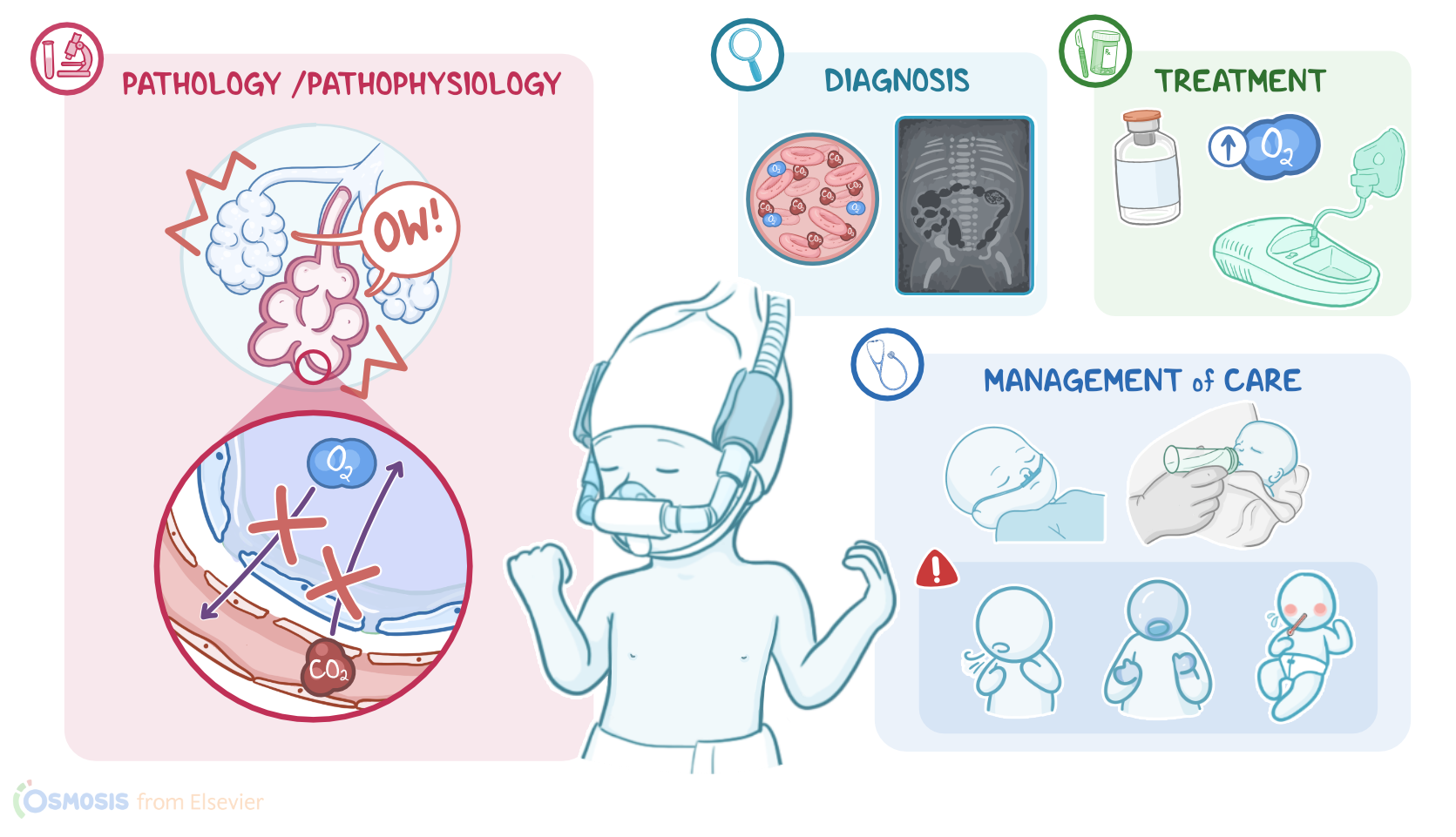
Bronchopulmonary dysplasia, or BPD, also known as neonatal chronic lung disease, is an iatrogenic respiratory disease most commonly affecting preterm newborns that results from lung injury and disrupted lung development.

Now, let’s quickly review the respiratory tract, which can be divided into two regions: the upper respiratory tract and lower respiratory tract. The upper respiratory tract includes the nose, nasal cavity, the oral cavity, pharynx, epiglottis, larynx, and the upper part of the trachea; while the lower respiratory tract includes the lower part of the trachea, and the lungs containing the bronchi. These are lined by pseudostratified ciliated columnar epithelium. This contains goblet cells, which produce mucus to trap small foreign particles; as well as columnar cells, which have cilia, or tiny little hair-like projections that move mucus and foreign particles up the respiratory tract. The bronchi gradually branch into bronchioles, which give rise to the alveolar ducts, and finally the alveoli. Alveoli are tiny air-filled sacs that are surrounded by tiny blood vessels, called capillaries.

If we zoom in even more, we can see a tiny space between the alveolar wall and the capillary wall, called the interstitial space. And that’s where most gas exchange occurs, so as we breathe, the inhaled oxygen moves through the alveolar membrane, the interstitial space, and the capillary membrane to reach the blood, while the carbon dioxide moves from the capillaries through the interstitial space and into the alveolar sacs to be exhaled. Now, the alveoli are lined by alveolar epithelial cells, called pneumocytes. The vast majority are type I pneumocytes, which allow oxygen and carbon dioxide to pass through them. There are also type II pneumocytes scattered around which produce surfactant, an oily secretion that coats the alveoli and prevents their collapse.

Alright, now the cause of BPD is multifactorial, and is often due to positive pressure ventilation. This can cause barotrauma due to high airway pressure, volutrauma where alveoli become overdistended, and the production of reactive oxygen species from high inspired oxygen concentrations. The lungs are also at higher risk of being damaged if there’s abnormal lung growth and impaired alveolar development which results in fewer and larger alveoli.

So, the most important risk factors for developing BPD include prolonged mechanical ventilation and oxygen supplementation. BPD is particularly common in preterm infants, especially those born before 32 weeks of gestation, as well as infants with low birth weight, and those with intrauterine growth restriction or IUGR for short. Additionally, patent ductus arteriosus, intrauterine and postnatal infections, and maternal smoking may increase the risk for BPD.

Okay, regardless of the risk factor, the pathology of BPD involves lung injury. When the lungs are injured, immune cells start producing pro-inflammatory cytokines which trigger inflammation, edema and fibrosis of the interstitial space, inhibiting gas exchange even more. Inflammation also causes capillaries to become permeable to larger molecules like proteins, which leak into the alveoli, pulling interstitial fluid with them. The end result is noncardiogenic pulmonary edema. Meanwhile, damaged type II pneumocytes stop producing surfactant, causing alveolar collapse. These collapsed, fluid-filled alveoli cannot participate in gas exchange. This results in hypoxemia, or low oxygen in the blood, and hypercapnia or high carbon dioxide in the blood. The inability to get rid of carbon dioxide results in respiratory acidosis.

At the same time, lung injury can cause decreased alveolar capillary formation. Fewer alveolar capillaries causes increased pulmonary resistance, which can ultimately lead to pulmonary hypertension.

Lastly, the bronchi may become hyper-reactive to stimuli and secrete more mucus while losing their cilia which makes it easier for foreign particles to reach the lungs.

Complications of BPD include right ventricular hypertrophy, which can ultimately lead to heart failure. Other complications include subglottic stenosis, or narrowing of the airway below the vocal cords, tracheobronchomalacia, where the tracheal and bronchial walls are floppy, and prone to collapse, as well as bronchospasms, and aspiration of gastric fluids.

Finally, long-term outcomes of infants with BPD include increased risk of developing bacterial and viral infections, persistent abnormalities in pulmonary function, sleep hypoxemia, neurodevelopmental delay, and growth impairment.

Clinical manifestations of bronchopulmonary dysplasia include continued dependence on oxygen and positive pressure ventilation. Other findings include increased respiratory secretions, nasal flaring, tachypnea, tachycardia and intercostal or substernal retractions during inspiration, along with grunting during expiration, as well as intolerance to handling and feeding.

During auscultation of the chest, there are typically decreased breath sounds, as well as diffuse crackles which is the sound of collapsed alveoli popping open with inspiration. Intermittent expiratory wheezing might be also audible.

Diagnosis of BPD starts with the client’s history and physical assessment. More specifically, it is based on the need for oxygen supplementation for at least 28 days postnatally, and it’s graded as mild, moderate, or severe. Additionally, arterial blood gas analysis can show hypoxemia, hypercapnia and respiratory acidosis. Finally, a chest radiograph is recommended to assess the extent of the disease, and can reveal diffuse haziness, due to the fluid accumulation, as well as peribronchial thickening and hyperinflation.

Treatment of BPD is mainly supportive to decrease the work of breathing to allow for optimal growth and development. It involves respiratory support and supplemental oxygen with gradual weaning, when possible. Surfactant supplementation can promote better ventilation and pressure distribution in the alveoli during mechanical ventilation, preventing overdistention, decreasing inflammation, and stabilizing the alveoli. Inhaled bronchodilators can be used to reduce airway resistance, and in severe cases, inhaled corticosteroids, might also be needed to reduce inflammation.

Additionally, nutritional support, with increased caloric and protein intake, and fluid restriction, are important. Those who do not respond or cannot tolerate fluid restriction may require diuretics. Antibiotics should also be administered in the case of bacterial infection. Finally, incidence and severity of BPD can be reduced with prevention of preterm birth, administration of antenatal steroids, administration of methylxanthines like caffeine, and vitamin A; and early weaning from positive pressure ventilation.