Cesarean birth: Nursing
Introduction0:00–0:23
Cesarean birth is when the fetus is delivered through a surgical incision in the abdominal wall and the uterus.This type of delivery is preferred if a vaginal delivery could compromise the fetus, the mother, or both; or if the delivery of the fetus needs to be accomplished urgently.
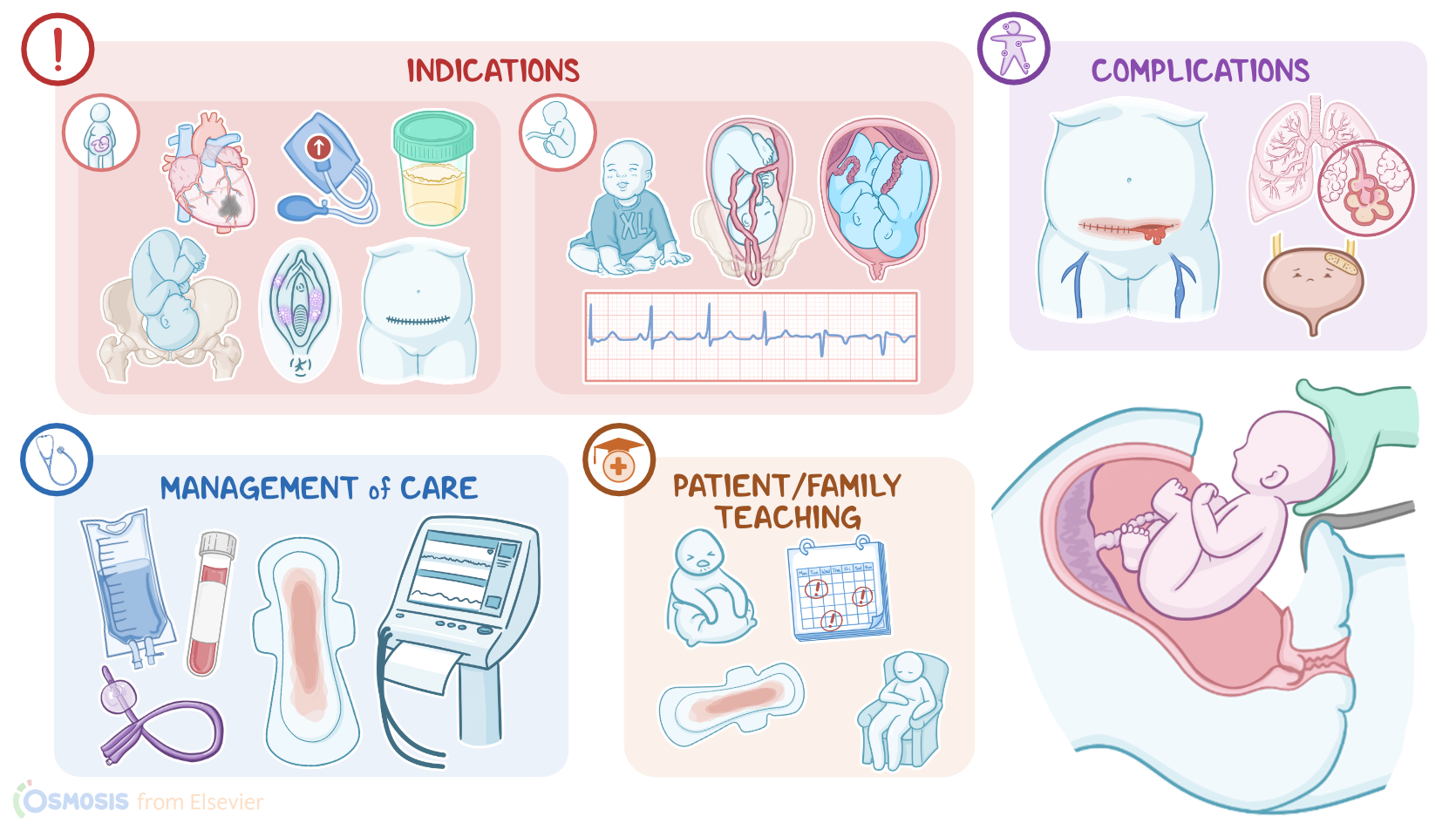
Other times, a cesarean delivery can also be performed on maternal request. Maternal indications can include heart disease; preeclampsia, which is when hypertension is associated with proteinuria; placental problems such as placenta previa or placental abruption; cephalopelvic disproportion, where the maternal pelvis is too small for the fetal head to pass through; active genital herpes simplex virus infection that can be transmitted to the fetus during vaginal birth; and previous uterine surgeries, such as previous cesarean birth due to risk of uterine rupture at the scar site.
Indications0:23–1:20
Fetal indications can include abnormal fetal heart rate tracings; malpresentation, such as breech or transverse lie; prolapsed umbilical cord; as well as congenital malformations or intrauterine infections.
Some other fetal-related risk factors include fetal macrosomia, and multiple gestation, such as twin pregnancies. Let’s switch gears now and go through the process of cesarean birth.
Process1:20–3:57
The first step is preparation of the client for the procedure. This includes routine preoperative laboratory tests, such as complete blood count, blood typing and screening; continuous fetal monitoring; and administration of prophylactic antibiotics.
A wedge is placed under one hip to reduce uterine compression of the aorta and inferior vena cava, and to promote placental blood flow.
A urinary catheter is placed to help empty the bladder. Then, the anesthesiologist administers regional anesthesia, like an epidural, or combined spinal-epidural anesthesia.
If cesarean birth is performed as an emergency procedure, then general anesthesia can be chosen as it can be administered much quicker.
Lastly, sterile abdominal skin preparation is done, cleaning it with a solution like povidone iodine and applying it in a spiral motion away from the umbilicus or away from the incision site.Now, after the client is prepared for the procedure, the next step involves making an incision in the abdominal wall, starting with the skin.
The most common skin incision is a low transverse incision just above the symphysis, which leaves a smaller scar and lowers the chance of dehiscence or hernia formation.
The other type of skin incision is midline vertical incision between the umbilicus and symphysis, which is usually more suitable for clients with abdominal obesity.
This incision can be done much faster, provides better visualization of the uterus and can easily be extended superiorly if needed.
After the abdominal wall is opened, the bladder is separated from the uterus using a retractor. Then, a second incision is done in the uterine wall, most commonly a low transverse incision.
The amniotic sac is then ruptured, followed by suctioning of the amniotic fluid and inspection of its color, odor and quantity.
When the infant’s head is delivered, the nose and mouth are suctioned to decrease aspiration of amniotic fluid. The umbilical cord is clamped and cut as soon as the rest of the infant is delivered, and then the baby is handed to members of the neonatal team for immediate assessment and care.
The uterine and abdominal cavities are then inspected and rinsed with saline before incisions are stitched and stapled closed.
Finally, the uterine fundus is massaged, blood clots are removed from the vagina as needed, an abdominal dressing applied to the incision, and a pad is applied to the perineum.Now let’s switch gears and look at the complications of a cesarean birth.
Complications3:57–4:30
The most common maternal complications involve infection, wound dehiscence, hemorrhage, and venous thromboembolism. Other complications include those associated with the procedure, like drug reactions, aspiration pneumonia, as well as injury to the bowel or bladder.
Fetal complications, on the other hand, involve unintended preterm delivery, and injuries such as lacerations, fractures, and bruising.
Okay, let’s move on to the nursing care you’ll be providing for a client having a cesarean birth. Your primary goals will be to prepare the client for surgery, provide postoperative care, and provide emotional support.Begin by ensuring that all preoperative lab work has been completed, including a CBC and blood typing.
Management of Care4:30–6:40
Keep your client NPO, and continually monitor their vital signs and the fetal heart rate. Also remember to ensure that informed consent for the cesarean birth has been obtained by the healthcare provider.
Next, place an IV and indwelling urinary catheter, and administer IV fluids and medications, as ordered. Then, assist with the transfer to the operative suite.
After your client has been transferred from the postanesthesia unit, provide routine postoperative care. Monitor their vital signs and pain level closely, and check their fundal height and firmness; lochia color, amount, and presence of clots; as well as the abdominal dressing and incisional site.
Report to the healthcare provider if your client’s temperature is more than 100.4° F or 38° C; if their pulse is more than 100 beats per minute; if their uterus is tender, soft, or boggy; if there is excessive vaginal bleeding; or foul-smelling lochia.
Then, administer antibiotics, antipyretic medications, and uterotonics, as ordered; increase the IV flow rate, massage the fundus until it is firm.
Continue to monitor your client closely as they continue to recover after the cesarean birth. Finally, remember to provide emotional support for your client.
Help alleviate their anxiety by addressing any concerns or questions they may have. Use a calm, confident tone and reassure them that you and the healthcare team are working together to take good care of them.All right, now let’s talk about client and family teaching.
General Client and Family Teaching6:40–8:34
Before the procedure, explain how the cesarean birth is a safer way to deliver their baby in their situation. Review the pre-operative preparations and their purpose; the type of anesthesia that will be used; the measures that will be taken to prevent complications like infection and bleeding; and how their pain will be managed.
Lastly, talk to them about how their baby will be cared for immediately after delivery, and when they will be able to bond with their baby, and breastfeed, if desired.
Then, before they are discharged home, teach them how to care for the incision by keeping it clean and dry, to monitor the amount and type of drainage, and to hold a pillow against their lower abdomen when coughing for extra support.
Teach them about how their uterus gradually returns to its normal position in the pelvis, and how their vaginal bleeding will change from bright red, to brownish-pink, and then to a whitish color before stopping around two weeks after delivery.
Remind them to limit their activity for the first week, and reassure them that after 6 weeks they should be able to return to their normal level of activity.
Lastly, emphasize the importance of keeping all follow-up appointments with the healthcare providers for themselves and their newborn.
Finally, instruct them to contact their healthcare provider immediately if they have any of these problems: bright red vaginal bleeding or saturation of 2 or more perineal pads in one hour; a fever of 100.4° F or 38° C; increased drainage from their incision, especially if they notice pus or a foul odor; swelling, redness, or tenderness of their breasts or legs; or a feeling of burning when urinating.
Stress the importance of seeking emergency care if they experience severe mood swings or thoughts of harming themselves or their baby.
Review8:34–10:02
This type of delivery is indicated in situations where there is a higher risk of complications with a vaginal delivery. These indications can be maternal, such as hypertension, placental problems, or cephalopelvic disproportion; or fetal, such as abnormal fetal heart rate, malpresentation, and multiple gestation.
The process of a cesarean birth begins with preparing the client for surgery, including laboratory tests, fetal heart rate monitoring, and administering pre-op medications.
After the anesthesia provider administers either regional or general anesthesia, sterile abdominal skin preparation is done and an incision is made through the skin, abdominal wall, and uterine wall.
Next, the amniotic sac is ruptured, the fetus is lifted out and handed to the neonatal team, the placenta is delivered, and the incisions are closed.
Complications from a cesarean birth include wound dehiscence, infection, and unintended preterm delivery. Priority goals of nursing care include preparing the client for surgery, providing postoperative care, and providing emotional support.
Client and family education centers around learning about the procedure, self-care after discharge, and when to seek medical attention.
| CESAREAN BIRTH | ||
| KEY POINTS | NOTES | |
| DEFINITION |
| |
| INDICATIONS |
| |
| PROCESS |
| |
| COMPLICATIONS |
| |
| MANAGEMENT OF CARE |
| |
| PATIENT AND FAMILY TEACHING |
| |
No notes for this video yet
Try adding a note below