Ectopic pregnancy: Nursing
Introduction0:00–0:11
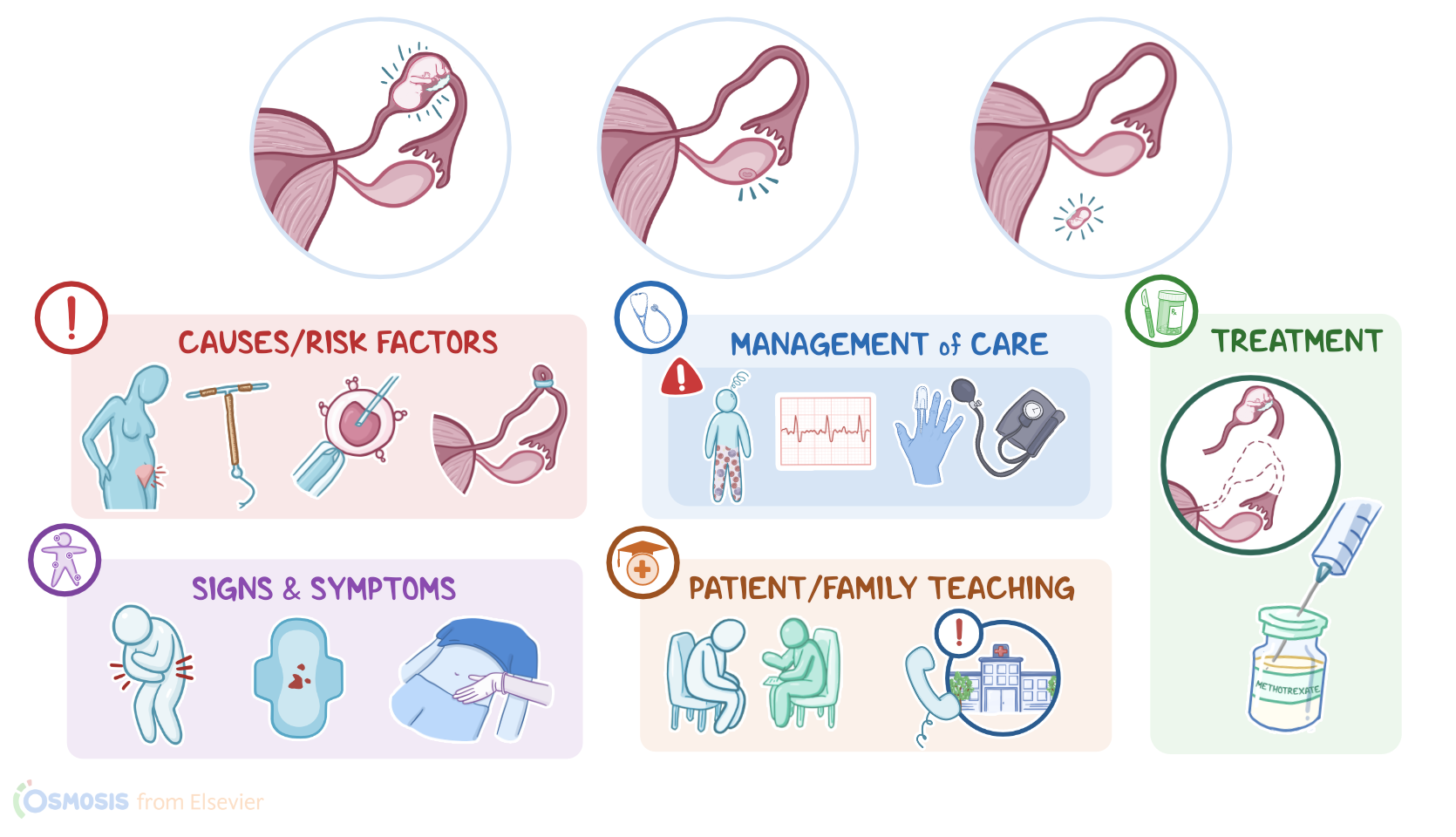
An ectopic pregnancy is a pregnancy that occurs somewhere other than in the uterine cavity, most commonly in one of the fallopian tubes.Alright, now let’s quickly review the physiology of fertilization, starting with the ovaries, which are the paired female gonads.
Physiology0:11–0:58
Each month, they release one mature egg, also called oocyte, which is the female gamete. After leaving the ovaries, this egg enters the fallopian tube and reaches the widest part of it, called the ampulla of the fallopian tube.
This is where the few sperm that have made it this far after ejaculation surround the egg; and of them, a single sperm succeeds in entering the egg and fertilizing it, forming the zygote.
The zygote then makes its way through the fallopian tube in order to reach the uterus; where it implants in the endometrium, also called the uterine lining.
At the same time, the endometrial tissues react to a surge in progesterone released from the ovaries, and engorges with blood and fluids, to become a cozy home for the future embryo.Now, the cause of an ectopic pregnancy in any given client is often unknown, but there are several risk factors.
Causes & risk factors0:58–1:29
These include cigarette smoking; a history of pelvic inflammatory disease; conception by in-vitro fertilization; gynecologic surgery; current use of intrauterine devices; tubal ligation; or a previous ectopic pregnancy.
All of these factors contribute to the formation of scar tissue within the fallopian tube, which in turn prevents the progress of the embryo into the uterus, causing it to attach to the tube itself.Now, pathology-wise, in the vast majority of ectopic pregnancies, the embryo does not complete its journey to the uterus and implants in the fallopian tube, and this is called a tubal pregnancy.
Pathology1:29–2:36
However, there are also ovarian ectopic pregnancies, in which case, the egg never leaves the ovary; as well as abdominal ectopic pregnancies, when the egg is “lost” to the abdominal cavity following ovulation, instead of entering the fallopian tube.After ectopic implantation, the embryo begins developing and growing.
Over time, the tissue can no longer provide enough blood supply for the embryo, causing a spontaneous abortion. On the other hand, if the tissue can supply the embryo with enough blood, then hormones released by the ovaries and placenta can cause early pregnancy signs like a missed menstrual period and other body changes, like nausea and fullness of breasts.
When the ectopic pregnancy occurs in the fallopian tube, the growing embryo eventually runs out of space and damages the walls of the tube, potentially causing the tube to rupture.
A ruptured ectopic pregnancy is a medical emergency, as it can cause massive hemorrhage into the abdominal cavity and hemodynamic instability.Clinically, besides the early signs of pregnancy, signs of an ectopic pregnancy can include abdominal or pelvic pain and vaginal bleeding, possibly accompanied by a palpable mass near the uterus.
Clinical manifestations2:36–3:14
Typically, these symptoms appear around 6 to 8 weeks into the pregnancy, but if the ectopic pregnancy occurs in a place with a lot of space for the embryo to grow, pain and bleeding may not occur until several weeks later.
There can also be signs of hemodynamic instability, such as pallor, tachycardia, or hypotension.The diagnosis of an ectopic pregnancy starts with the client’s history and physical assessment.
Diagnosis3:14–3:38
The next step is to confirm the pregnancy with a β-hCG test and to perform a transvaginal ultrasound to see whether or not there’s an intrauterine pregnancy.
The transvaginal ultrasound can also help identify an ectopic pregnancy based on signs like excess fluid in the peritoneal cavity or the presence of a mass in the fallopian tube.
Treatment3:38–4:48
Now, when it comes to treatment, it’s worth noting that uncomplicated ectopic pregnancies often resolve spontaneously. In the remaining cases, treatment may involve close monitoring, medications, or surgical intervention.
In clients whose ectopic pregnancy is diagnosed early and the β-hCG is already declining, treatment includes close monitoring and serial β-hCG measurements, with no additional medications or procedures.
If the ectopic pregnancy is identified later, then methotrexate can be used to terminate the pregnancy. Finally, if there are signs of a ruptured tube, a salpingostomy can be done.
That’s where the fallopian tube is opened up to remove the pregnancy, and then closed at the end of surgery. Alternatively, a salpingectomy can be done, which is where the fallopian tube is completely removed.
Finally, if the mother is Rh negative, it’s important to give her RhoD immunoglobulin. This is because if the fetus is Rh positive, exposure to fetal blood could cause the mother’s immune system to make anti-Rh antibodies.
These antibodies can harm an Rh positive fetus in future pregnancies, because they can bind to fetal RBCs in the Rh positive fetus, leading to hemolysis.
Alright, let’s discuss the nursing care for a client with an ectopic pregnancy. Your priority goals of care include early recognition and management of tubal rupture, hemorrhage, and hypovolemic shock; and providing emotional support.
Management and care4:48–6:27
Begin by assessing your client closely for signs and symptoms of tubal rupture and internal hemorrhage by checking your client’s pain onset, location, duration, severity, and characteristics.
Immediately report to the healthcare provider if your client has an abrupt onset of severe pain. Also report signs of severe internal bleeding, including pain felt in the shoulder.
Provide comfort measures and administer the prescribed analgesics and IV fluids. If your client is Rh negative, administer the prescribed RhoD immune globulin.
Next, be sure to monitor your client closely for hypovolemic shock. Assess your client’s vital signs, and mental status.
Report to the healthcare provider immediately if your client has a change in mental status, becomes difficult to arouse, appears pale and listless, or has vital sign changes including tachycardia or a mean arterial blood pressure of below 60 mmHg.
Position your client with their legs elevated to increase perfusion to the heart and brain, administer supplemental oxygen, and prepare for aggressive volume replacement with fluids or blood products, and possible surgical intervention, such as salpingostomy.
Use therapeutic communication techniques, and provide emotional support. Ensure there is a referral for counseling, as needed, and provide information on local support resources.Now, let’s move on to client and family teaching.
General client and family teaching6:27–7:50
Explain how an ectopic pregnancy is when an embryo is growing in an area outside the uterus, which cannot support pregnancy.
If your client has been prescribed methotrexate, teach them that it is considered a hazardous medication, so stress the importance of preventing others from coming in contact with their body fluids while they are taking methotrexate, and for 72 hours after completing the medication.
This includes flushing the toilet twice with the lid closed after urinating, for example. If the client requires beta-hCG monitoring, the client should be instructed to follow up with their provider if repeated testing for beta-hCG is needed, and avoid sexual intercourse until there is no beta-hCG detected.
If your client has had surgical intervention or pharmacological treatment for their ectopic pregnancy, let them know that they are at risk for internal bleeding and infection, and instruct them to let their provider know right away if they experience abdominal pain, excessive vaginal bleeding or lightheadedness, as well as fever, chills, or redness and tenderness at their surgical site.Finally, reassure them that it is normal for them to experience different emotions during the healing period, and encourage them to express feelings of sadness and anxiety, and of getting in touch with local support groups.
Stress the importance of seeking medical assistance immediately if they feel restless, agitated, hopeless, or if they have thoughts of hurting themselves or others.
Alright, as a quick recap, an ectopic pregnancy refers to a pregnancy outside of the uterus, most commonly in the fallopian tubes.
Review7:50–9:18
It’s usually caused by factors that contribute to the formation of scar tissue within the fallopian tube, such as pelvic inflammatory disease, gynecological surgery, use of intrauterine devices, or previous ectopic pregnancy.
In addition to the signs and symptoms that accompany pregnancy, clients with an ectopic pregnancy may have abdominal pain and vaginal bleeding, possibly accompanied by a palpable mass near the uterus.
Typically, these symptoms appear around 6 to 8 weeks into the pregnancy, but pain and bleeding may not occur until several weeks later.
In cases complicated by a ruptured tube, there might be severe, acute abdominal pain, pain referred to the shoulder, as well as signs of hemodynamic instability, such as pallor, tachycardia, or hypotension.
Diagnosis is based on the client's history and physical assessment, along with a beta-hCG test and a transvaginal ultrasound to confirm the status and location of the pregnancy.
As far as treatments go, sometimes uncomplicated ectopic pregnancies resolve on their own. For more severe cases, treatment may involve medications like methotrexate or surgical intervention.
Priority nursing goals of care include early recognition of tubal rupture, hemorrhage and hypovolemic shock, and provision of emotional support.
Client and family education focuses on teaching about their condition, self care at home, managing feelings of grief and anxiety, and when to contact the healthcare provider.
| ECTOPIC PREGNANCY | ||
| KEY POINTS | NOTES | |
| DEFINITION |
| |
| PHYSIOLOGY |
| |
| CAUSES AND RISK FACTORS |
| |
| PATHOPHYSIOLOGY |
| |
| SIGNS AND SYMPTOMS |
| |
| DIAGNOSIS |
| |
| TREATMENT |
| |
| MANAGEMENT OF CARE |
| |
| PATIENT AND FAMILY TEACHING |
| |
No notes for this video yet
Try adding a note below