Geriatric considerations - Urinary: Nursing
Introduction0:00–0:21
Geriatrics is the branch of medicine that deals with the physiology and psychology of aging as well as the diagnosis and treatment of diseases affecting older clients.
Now, aging affects various organ systems. One of which is the urinary system.
Physiology0:21–3:02
All right, let's start by reviewing the physiology of the urinary system, which can be divided into the upper and lower urinary tracts.
The upper urinary tract is made of the kidneys and the ureters. Whereas the lower urinary tract includes the urinary bladder and the urethra.
Each bean shaped kidney sits just below and on each side of the diaphragm, they are about 12.5 centimeters long and weigh from 113 to 170 g.
They receive oxygenated blood through renal arteries which arise from both sides of the abdominal aorta. Now, let's take a closer look at the inside of the kidney which consists of an outer cortex and an inner medulla, both of which house the functional units of the kidneys called nephrons.
These tiny nephrons consist of a tuft of capillaries called the glomerulus, surrounded by a double membrane called the bowman capsule.
From the nephron, there extends a group of tubules called the proximal convoluted tubule loop of Henley and distal convoluted tubule which eventually drain urine into collecting tubules and ducts from there.
Urine drains into the ureters which have smooth muscles in their walls that contract to push the urine towards the bladder.
The amount of blood that gets filtered through the kidneys each minute is called glomerular filtration rate or GFR. Additionally, the kidneys help control BP, regulate acid base balance, activate Vitamin D and produce erythropoietin, which is a hormone that stimulates red blood cell production in the bone marrow hormones produced by other organs can also alter the function of the kidneys.
These hormones include aldosterone, anti diuretic hormone or ADH and atrial natriuretic peptide, also known as ANP aldosterone is produced by the adrenal glands and promotes reabsorption of water and sodium.
In return for excretion of potassium. On the other hand, ADH is a hormone released by the posterior pituitary gland.
This hormone increases water reabsorption from the kidney tubules where it is returned back to the circulation. Finally, ap is released from the atria of the heart and it inhibits sodium excretion and increases the GFR the effects of aging on the urinary system include changes in structure and function with age bladder capacity decreases, which can lead to nocturia and sleep disturbances.
Pathology3:02–4:03
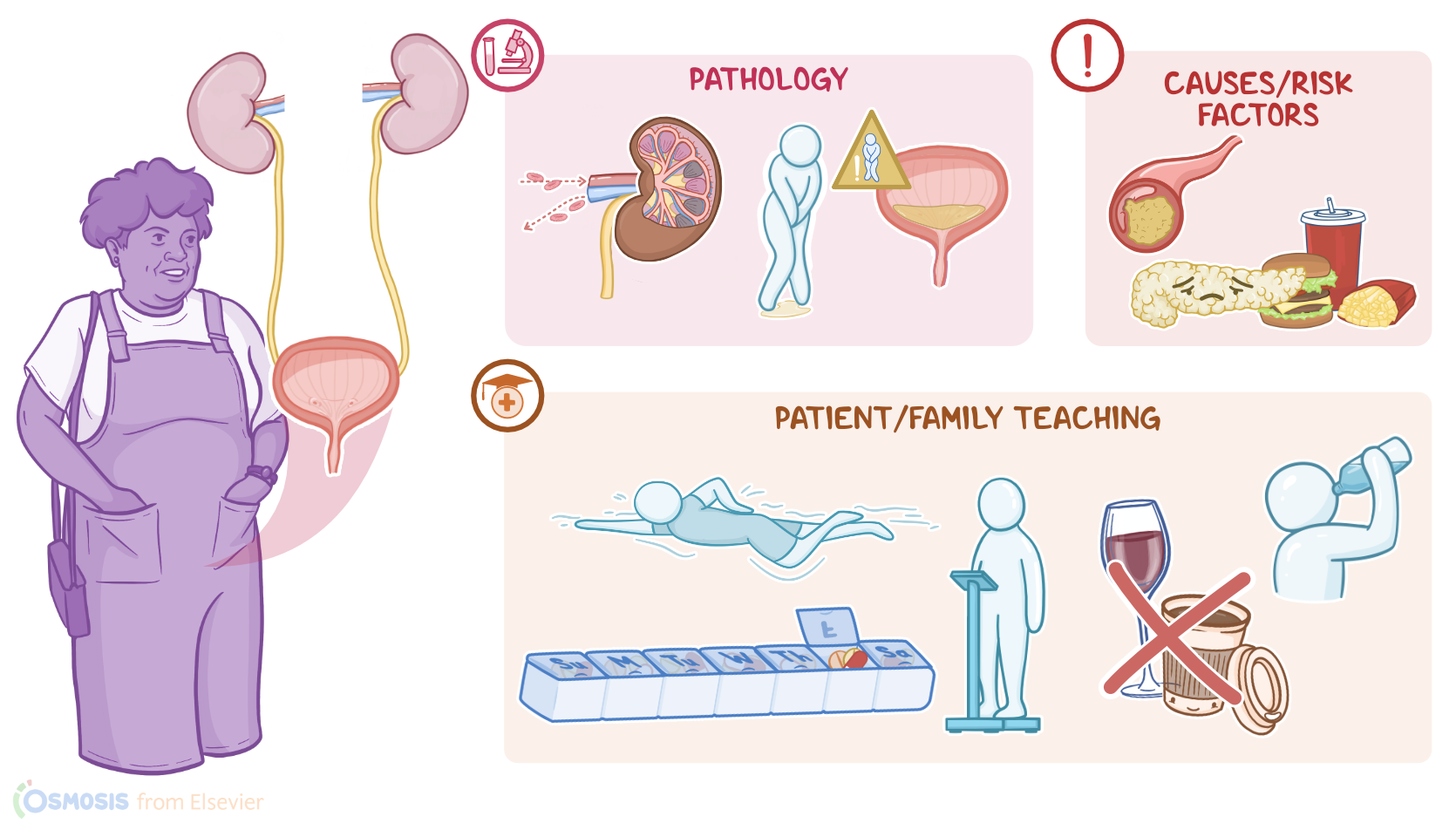
Although urinary incontinence is not a normal part of aging. An involuntary loss of urine can be caused by a weakened pelvic floor, which is a group of muscles and ligaments that support the bladder uterus and urethra, as well as instability of the detrusor muscle, which contracts during urination to help move the urine out of the bladder.
There's also a reduction in the size and weight of the kidneys. A decrease in the number of functioning nephrons and decreased renal blood flow.
These changes can decrease the GFR and impair the excretion of waste products including medications which can extend the medications half life and increase the risk of toxicity of certain medications.
Now, various risk factors worsen the effects of aging on the urinary system. These include atherosclerosis as well as poorly controlled diabetes.
Risk factors4:03–4:16
All right, let's move on to client teaching. Begin by teaching your client about how they can adopt a lifestyle that promotes normal urinary elimination patterns.
General client & family teaching4:16–5:34
Let them know that regular physical activity as tolerated along with maintaining a healthy weight can help promote regular urinary function.
Also encourage your client to stay well hydrated and to drink enough water to keep their urine pale yellow. If they are having difficulty with urinary frequency and occasional incontinence, assist them to establish a bladder training program and remind them to limit bladder irritants like alcohol and caffeine if needed.
Provide a referral to a continent specialist nurse, as well as a physical therapist, specializing in strengthening the pelvic floor.
Now, if your client has a chronic disease like atherosclerosis or diabetes that affects renal and urinary function, provide them with the education and support.
They need to ensure they are adhering to their treatment regimen and that they know how to take their prescribed medications as directed.
Finally, encourage your client to maintain regular visits with their health care provider for continued monitoring and care.
All right, as a quick recap, geriatrics focuses on the physiology and psychology of aging along with diagnoses and treatment of disorders that affect older adults.
Review5:34–6:33
This includes the urinary system which can be divided into the upper urinary tract made of the kidneys and the ureters and lower urinary tract that includes the urinary bladder and the urethra effects of aging on the urinary system include decreased bladder capacity, a weakened pelvic floor and detrusor muscle instability.
These changes can result in problems like nocturia and urinary incontinence. There's also a reduction in the size and weight of the kidney, decreased renal blood flow and a decreased number of nephrons.
These changes decrease the GFR and impair excretion of waste products including medications, client and family teaching is focused on adopting a lifestyle to maintain a healthy urinary system.
| GERIATRIC CONSIDERATIONS - URINARY | ||
| KEY POINTS | NOTES | |
| DEFINITION |
| |
| PHYSIOLOGY |
| |
| PATHOPHYSIOLOGY |
| |
| RISK FACTORS |
| |
| PATIENT AND FAMILY TEACHING |
| |
No notes for this video yet
Try adding a note below