Hygiene - Oral care: Nursing skills
Now, oral hygiene is essential to prevent mouth infections and bad breath. Keeping the bacteria of the mouth under control is important to prevent certain health complications like soft tissue infections in the structures of the mouth, like abscess; tooth loss that can lead to problems with eating and nutrition; or even bacterial overgrowth that can lead to damage of the heart valves. To maintain proper oral hygiene, you have to remember three basic steps: brushing, flossing, and rinsing. The frequency of oral hygiene depends on the individual's condition and comfort level, but it’s typically performed in the morning, after meals, and before bed. Clients who are unable to take food and fluids by mouth, like those who are unconscious, will require oral hygiene every 1 or 2 hours to keep their mouths fresh.
Before we continue, there are several important definitions that you should know. Halitosis refers to a chronic bad breath which can be the result of poor oral hygiene or an underlying health problem. Dental plaques are films of saliva and microbes that stick to the teeth and can lead to tartar which are crusty deposits. Dental caries, also known as tooth decay or cavities, is damage caused by acid-producing bacteria in the mouth. Stomatitis refers to any inflammation that affects mucous membranes of the mouth and lips. Next up is gingivitis which is non-destructive inflammation of the gingiva, or gums. If left untreated, gingivitis can lead to periodontitis which is a severe inflammation of the supporting structures of teeth, including soft tissue and bones. Moreover, in people over the age of 35, periodontitis is the main cause of tooth loss. If a person has lost a tooth, they can replace it with a prosthetic tooth which is also known as a dental implant. On the other hand, dentures are removable replacements of the missing teeth and surrounding tissue which allow people to chew food normally. When a person has no natural teeth left, it’s called edentulous.
Before you start with the procedure, review the client's medical record and evaluate possible oral hygiene issues. These include: restriction of food and water which can cause mucosal dryness; presence of tubes, such as endotracheal, nasogastric, or oxygen tubes which can lead to irritation of mucosa; and previous mouth surgeries which are associated with increased risk of infection and bleeding. Additionally, check if your client is on chemotherapeutic medications or antibiotics because those medications can alter the normal flora of the oral cavity and subsequently cause infection or inflammation. Also, radiation therapy can reduce salivary flow and lower salivary pH. Eventually, this can lead to tooth decay and stomatitis. Finally, don’t forget to check for conditions that are associated with inflammation of gums such as diabetes mellitus.
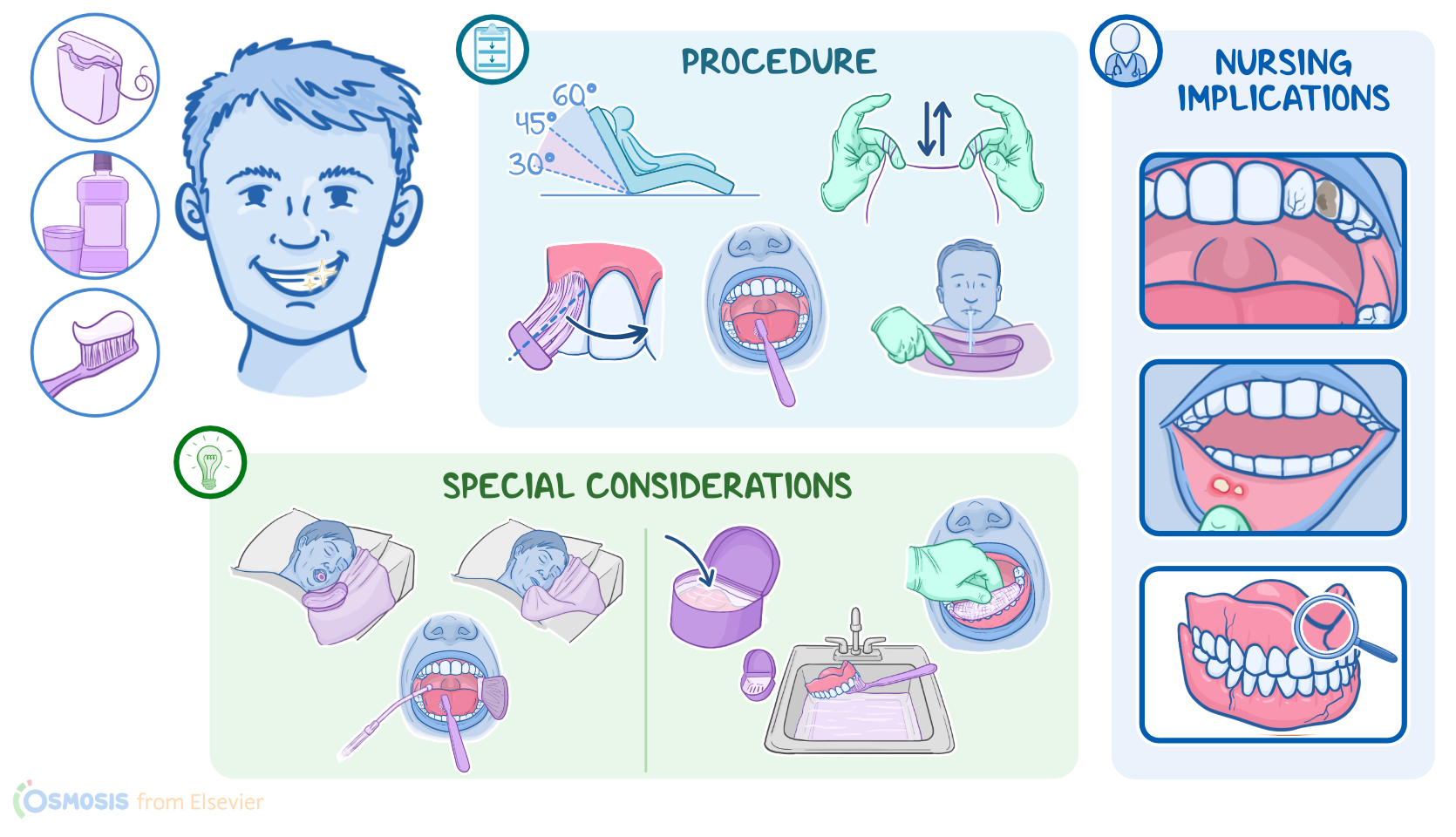
Now, to perform oral hygiene you must have clean gloves, cups, paper and bath towels, an emesis basin, mouthwash, lubricant for lips, dental floss, toothpaste, and toothbrush with soft bristles. If brushing is contraindicated, use an oral swab instead of a toothbrush. Prepare your working area by covering the overbed table with paper towels and placing your equipment. Inform the client about the procedure before beginning and answer any questions related to the procedure. Raise the bed and head of the bed to a comfortable working position that’s tolerated by the client. Typically, the head of the bed should be in a semi-Fowler’s or Fowler’s position to prevent aspiration. Lower the side rails on the side of the bed that you are standing, and place a towel under the client’s chin to protect their clothing. Remember to encourage the client to do as much of the procedure independently as they possibly can.
To brush and floss the teeth, start by moistening the toothbrush with water then apply the toothpaste. Clean the teeth by holding the toothbrush at a 45 degree angle to the teeth. This way, bristles can slide under the gum line and clean the surface where plaques accumulate. Start by brushing the outer surfaces of the teeth, then focus on the inner surfaces, and finally, clean the surfaces used to chew food. Always start at the back of the mouth and proceed to the front with a gentle circular motion. During the process, allow the client to rinse their mouth with water as needed. Hold the emesis basin in front of them, so they can spit the water without changing their position. Finally, brush the tongue while avoiding the back of the tongue since stimulating this area can cause the gag reflex. Let the client rinse their mouth with antiseptic mouthwash. Help them dry the area around the mouth, and proceed with flossing (unless it’s contraindicated). Wrap the dental floss around the middle fingers of each hand, and hold the ends between your index finger and thumb. Floss each tooth separately by using up-and-down motions. Once done, have the client rinse their mouth with water. Offer to help the client put on lip balm or lubricant if they desire.
Alright, let’s move on to cleaning dentures. Besides basic bedside supplies, you’ll also need a 4x4 inches of gauze, denture cup, denture adhesive, and a washcloth. Inform the client about the procedure before beginning and answer any questions related to the procedure. First, ask the person to remove their dentures. You might need to help if the client can’t do this on their own. To remove the upper denture, use gauze to grasp the front teeth with your thumb and index finger, and gently pull downward. To remove the lower denture, lift the denture from the jaw and rotate downward to one side. Place the removed dentures in a denture cup, and bring it to a sink. Place a washcloth at the bottom of the sink and fill it with about an inch of lukewarm water. Next, wet the toothbrush and apply the toothpaste. Pick up the dentures and clean all surfaces and rinse thoroughly in lukewarm water. It’s important to note that cold water can damage dentures and hot water can deform them. Place the cleaned dentures back in the denture cup. Alternatively, you can clean dentures at the bedside by placing the dentures into an emesis basin filled with lukewarm water instead of the sink. Either way, once you’re done, ask the person to rinse their mouth using water or mouthwash. Let them spit into the emesis basin. Slowly and gently clean the person’s mouth and gums using a moistened toothbrush or oral swab. You can also perform a gum massage to improve blood flow if it’s allowed by your facility’s policy. Use your index finger and rub the gum in a circular motion, going from one side of the mouth to the other. Next, if the dentures are loose, you might need to apply denture adhesive before putting them back on. To insert the upper denture, use one hand to grasp it with your thumb and index finger and the other hand to lift the client’s upper lip. Press gently to make sure that the denture is in place. Do the same for the lower denture. Alternatively, if your client wants to let their gums be denture-free for a while, you can leave the dentures in a denture cup filled with lukewarm water—but make sure that the denture cup is within the person’s reach.
| HYGIENE - ORAL CARE | ||
| KEY POINTS | NOTES | |
| INTRODUCTION |
| |
| DEFINITIONS |
| |
| COMMON CARE TIPS |
| |
| PROCEDURE FOR BRUSHING TEETH AND FLOSSING |
| |
| PROCEDURE FOR PROVIDING ORAL CARE FOR A PERSON WITH DENTURES |
| |
| SUPPLIES AND PROCEDURE OF PROVIDING ORAL CARE FOR AN UNCONCIOUS PERSON |
| |
| NURSING INDICATIONS |
| |
No notes for this video yet
Try adding a note below