Syphilis: Nursing
Definitions & Key takeaways
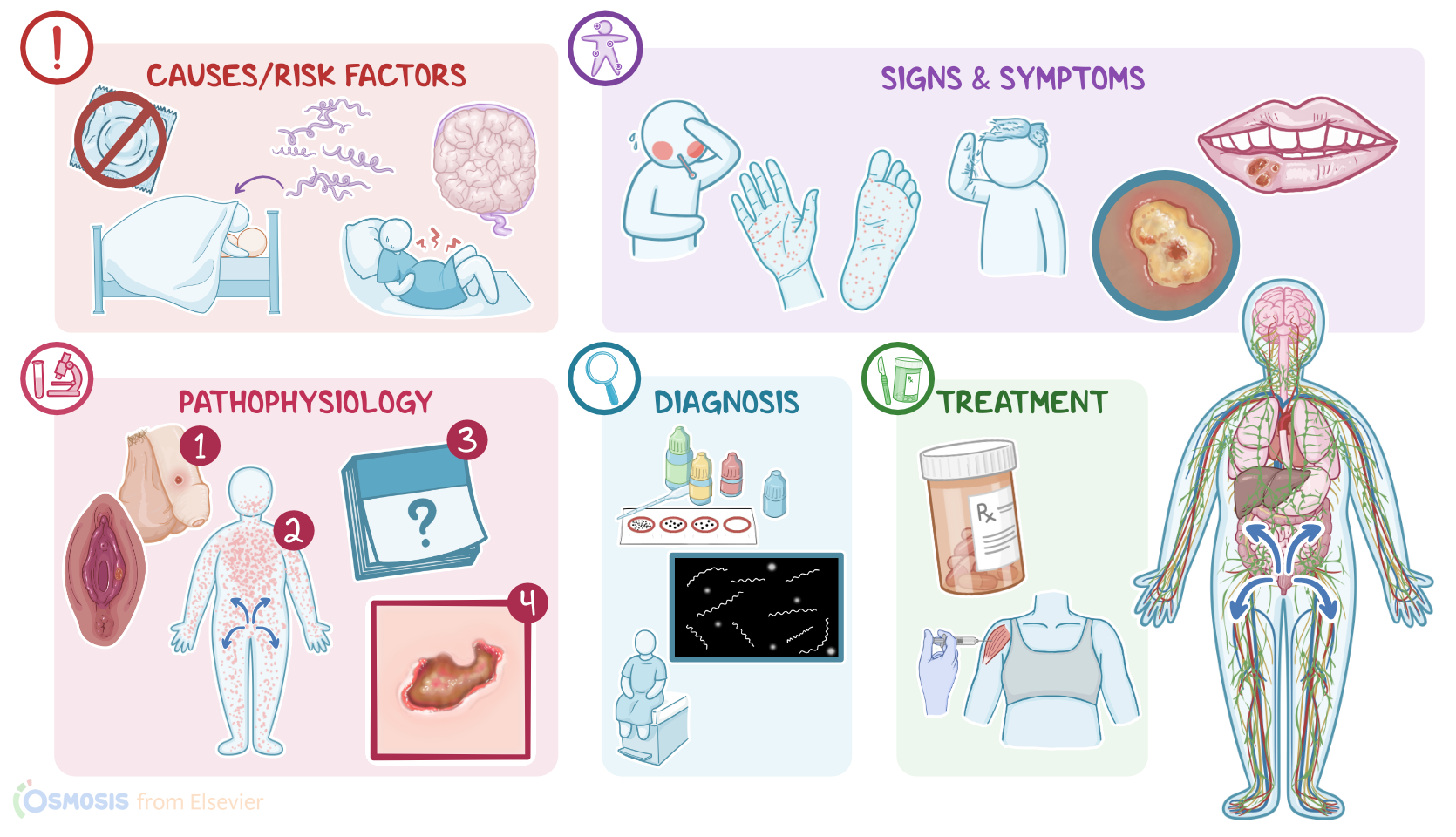
Syphilis is a sexually transmitted infection (STI) caused by the bacteria Treponema pallidum. It can spread through direct contact with a syphilis sore during vaginal, anal, or oral sex. It can cause disease in three stages. The first is localized primary syphilis, and this produces hard chancres. The second is disseminated secondary syphilis, which produces widespread maculopapular rash, and the third is systemic tertiary syphilis, which affects various organs.
Syphilis can be diagnosed by using serological tests and treated with antibiotics like penicillin. If left untreated, it can lead to severe health complications, including organ damage and even death. Syphilis is primarily treated with intramuscular penicillin G benzathine. The main goals of nursing care include the resolution of their infection, and avoiding the spread of the infection among their sexual contacts. Client teaching is aimed at promoting adherence to treatment and follow-up, as well as disease prevention.
Introduction0:00–0:20
Causes & risk factors0:20–1:10
Pathophysiology1:10–3:01
Clinical manifestations3:01–4:45
Diagnosis4:45–5:55
Treatment5:55–6:09
Management and care6:09–7:01
General client and family teaching7:01–7:54
Review7:54–9:44
| SYPHILIS | ||
| KEY POINTS | NOTES | |
| DEFINITION |
| |
| CAUSES AND RISK FACTORS |
| |
| PATHOPHYSIOLOGY |
| |
| SIGNS AND SYMPTOMS |
| |
| DIAGNOSIS |
| |
| TREATMENT |
| |
| MANAGEMENT OF CARE |
| |
| PATIENT AND FAMILY TEACHING |
| |
No notes for this video yet
Try adding a note below