Urinary tract infections (UTIs): Nursing process (ADPIE)

2,620views

Urinary tract infections (UTIs): Nursing process (ADPIE)

Synthesis Of Nursing Practice

Synthesis Of Nursing Practice

Left-sided heart failure: Nursing process (ADPIE)
Heart failure
Heart failure: Pathology review
Heart failure: Clinical
Normal heart sounds
Abnormal heart sounds
Anatomy of the heart
Congenital heart defects: Clinical
Cardiac conduction system
Post-COVID syndrome: Heart, lungs and clotting
Heart blocks: Pathology review
Aortic aneurysm: Nursing process (ADPIE)
Coronary artery disease (CAD) and angina pectoris: Nursing process (ADPIE)
Hypertension: Nursing process (ADPIE)
Myocardial infarction (MI): Nursing process (ADPIE)
Pericardial effusion and cardiac tamponade: Nursing process (ADPIE)
Rheumatic heart disease: Nursing process (ADPIE)
Antihyperlipidemics - Statins: Nursing pharmacology
Calcium-channel blockers: Nursing pharmacology
Angiotensin II receptor blockers (ARBs): Nursing pharmacology
Angiotensin-converting enzyme (ACE) inhibitors: Nursing pharmacology
Antiarrhythmics: Nursing pharmacology
Antihyperlipidemics - Miscellaneous: Nursing pharmacology
Antihyperlipidemics - Fibrates: Nursing pharmacology
Diabetes insipidus: Nursing process (ADPIE)
Diabetes mellitus (DM): Nursing process (ADPIE)
Diabetic ketoacidosis (DKA): Nursing process (ADPIE)
Hyperosmolar hyperglycemic state (HHS): Nursing process (ADPIE)
Hyperthyroidism: Nursing process (ADPIE)
Hypothyroidism: Nursing process (ADPIE)
Syndrome of inappropriate antidiuretic hormone (SIADH): Nursing process (ADPIE)
Medications affecting the parathyroid glands: Nursing pharmacology
Medications for antidiuretic hormone (ADH) disorders: Nursing pharmacology
Medications for thyroid disorders: Nursing pharmacology
Non-insulin injectable antidiabetic drugs - GLP-1 agonists and amylinomimetics: Nursing pharmacology
Oral antidiabetic medications - Alpha-glucosidase inhibitors: Nursing pharmacology
Oral antidiabetic medications - Biguanides and thiazolidinediones: Nursing pharmacology
Oral antidiabetic medications - DPP-4 inhibitors: Nursing pharmacology
Oral antidiabetic medications - Sulfonylureas and meglitinides: Nursing pharmacology
Oral antidiabetic medications - Sodium-glucose co-transporter-2 (SGLT-2) inhibitors: Nursing pharmacology
Insulin: Nursing pharmacology
Medications for growth hormone disorders: Nursing pharmacology
Glucocorticoids and mineralocorticoids: Nursing pharmacology
Epistaxis: Nursing process (ADPIE)
Eye injury: Nursing process (ADPIE)
Glaucoma: Nursing process (ADPIE)
Tonsillitis: Nursing process (ADPIE)
Antiglaucoma medications: Nursing pharmacology
Eye anesthetics: Nursing pharmacology
Mydriatics and cycloplegics: Nursing pharmacology
Ophthalmic anti-inflammatories and anti-infectives: Nursing pharmacology
Appendicitis: Nursing process (ADPIE)
Celiac disease: Nursing process (ADPIE)
Cirrhosis: Nursing process (ADPIE)
Gastroesophageal reflux disease (GERD): Nursing process (ADPIE)
Hiatal hernia: Nursing process (ADPIE)
Pancreatitis: Nursing process (ADPIE)
Peptic ulcer disease (PUD): Nursing process (ADPIE)
Antacids: Nursing pharmacology
Antidiarrheals: Nursing pharmacology
Laxatives: Nursing pharmacology
Weight loss medications: Nursing pharmacology
Antiemetics: Nursing pharmacology
Gallstone-dissolving agents: Nursing pharmacology
Gastric mucosal protective agents: Nursing pharmacology
Antispasmodics (GI): Nursing pharmacology
Histamine H2 antagonists: Nursing pharmacology
Proton pump inhibitors (PPIs): Nursing pharmacology
Treatment for Helicobacter pylori: Nursing pharmacology
Medications for hepatic encephalopathy: Nursing pharmacology
Diuretics - Osmotic and carbonic anhydrase inhibitors: Nursing pharmacology
Diuretics - Thiazide, thiazide-like, loop, and potassium-sparing diuretics: Nursing pharmacology
Antispasmodics (GU): Nursing pharmacology
Cholinergic therapy (GU): Nursing pharmacology
Acute kidney injury (AKI): Nursing process (ADPIE)
Benign prostatic hyperplasia (BPH): Nursing process (ADPIE)
Urinary incontinence - Stress: Nursing process (ADPIE)
Urinary tract infections (UTIs): Nursing process (ADPIE)
Hemophilia: Nursing process (ADPIE)
Leukemia: Nursing process (ADPIE)
Sickle cell disease: Nursing process (ADPIE)
Anticoagulants - Heparin: Nursing pharmacology
Anticoagulants - Warfarin: Nursing pharmacology
Antiplatelet agents: Nursing pharmacology
Hemostatics: Nursing pharmacology
Iron preparations: Nursing pharmacology
Thrombolytics: Nursing pharmacology
Blood products: Nursing pharmacology
Antihyperlipidemics - Bile acid sequestrants and cholesterol absorption inhibitors: Nursing pharmacology
Anticoagulants - Direct thrombin and factor Xa inhibitors: Nursing pharmacology
Hematopoietic growth factors: Nursing pharmacology
Anaphylaxis: Nursing process (ADPIE)
Lyme disease: Nursing process (ADPIE)
Non-biologic disease-modifying antirheumatic drug (DMARD) therapy: Nursing pharmacology
Vaccines: Nursing pharmacology
Immunoglobulins: Nursing pharmacology
Immunosuppressants for autoimmune diseases: Nursing pharmacology
Immunomodulators: Nursing pharmacology
Disease-modifying therapy for multiple sclerosis: Nursing pharmacology
Atopic dermatitis: Nursing process (ADPIE)
Frostbite: Nursing process (ADPIE)
Methicillin-resistant Staphylococcus aureus (MRSA): Nursing process (ADPIE)
Pressure injury: Nursing process (ADPIE)
Debridement agents: Nursing pharmacology
Keratolytics: Nursing pharmacology
Antibiotics - Topical: Nursing pharmacology
Antifungals - Topical: Nursing pharmacology
Corticosteroids - Topical: Nursing pharmacology
Medications for acne vulgaris: Nursing pharmacology
Acute compartment syndrome: Nursing process (ADPIE)
Fractures: Nursing process (ADPIE)
Gout: Nursing process (ADPIE)
Musculoskeletal injuries: Nursing process (ADPIE)
Rheumatoid arthritis (RA): Nursing process (ADPIE)
Acetylcholinesterase inhibitors for myasthenia gravis: Nursing pharmacology
Analgesics: Nursing pharmacology
Antiepileptics: Nursing pharmacology
Medications for Alzheimer disease: Nursing pharmacology
Skeletal muscle relaxants: Nursing pharmacology
Medications for migraines: Nursing pharmacology
Meningitis: Nursing process (ADPIE)
Parkinson disease: Nursing process (ADPIE)
Seizure disorder: Nursing process (ADPIE)
Stroke: Nursing process (ADPIE)
Trigeminal neuralgia: Nursing process (ADPIE)
Breast cancer: Nursing process (ADPIE)
Tumor lysis syndrome (TLS): Nursing Process (ADPIE)
Plant extracts for chemotherapy: Nursing pharmacology
Antitumor antibiotics: Nursing pharmacology
Alkylating agents: Nursing pharmacology
Hormones and hormone modulators for cancer: Nursing pharmacology
Other antineoplastics: Nursing pharmacology
Antimetabolites: Nursing pharmacology
Platinum-based agents: Nursing pharmacology
Peripheral arterial disease (PAD): Nursing process (ADPIE)
Peripheral venous disease (PVD): Nursing process (ADPIE)
Candidiasis: Nursing process (ADPIE)
Gonorrhea and chlamydia: Nursing process (ADPIE)
Pelvic inflammatory disease (PID): Nursing process (ADPIE)
Asthma: Nursing process (ADPIE)
Bacterial pneumonia: Nursing process (ADPIE)
Carbon monoxide poisoning: Nursing process (ADPIE)
Chronic obstructive pulmonary disease (COPD): Nursing process (ADPIE)
Epiglottitis: Nursing process (ADPIE)
Foreign body aspiration and upper airway obstruction: Nursing process (ADPIE)
Laryngotracheobronchitis (LTB) and croup: Nursing process (ADPIE)
Smoke inhalation injury: Nursing process (ADPIE)
Venous thromboembolism (VTE): Nursing process (ADPIE)
Antihistamines: Nursing pharmacology
Bronchodilators: Nursing pharmacology
Corticosteroids - Inhaled: Nursing pharmacology
Mast cell stabilizers - Inhaled: Nursing pharmacology
Leukotriene modifiers: Nursing pharmacology
Medications to control airway secretions: Nursing pharmacology
Oxygen therapy: Nursing pharmacology
Respiratory stimulants: Nursing pharmacology
Applying sterile gloves
Cardioversion
Maintaining an airway
Removing an intravenous line
Venipuncture for blood sampling
Clinical Skills: Abdominal Assessment
Clinical skills: Medication administration - Giving transcutaneous medication
Clinical skills: Patient controlled analgesia
COVID-19: Nursing

Notes

URINARY TRACT INFECTIONS (UTIs)

KEY POINTS
NOTES
PATIENT REPORT
  • 38-year-old woman
  • Painful urination, urinary frequency and urgency x2 days
  • History type 2 diabetes
  • Sexually active

PATHOPHYSIOLOGY
  • UTI
    • Urinary tract infected by pathogenic microorganisms
    • Microorganisms colonize and multiply in the tract
    • Inflammation occurs
  • Complications
    • Strictures
    • Kidney damage
    • Urosepsis
  • Risk factors
    • Urinary stasis
    • Urinary reflux
    • Neurogenic bladder
    • Catheterization
    • Sexual intercourse
    • Depressed immune system
    • Shorter urethra
    • Hormone changes

DIAGNOSIS AND TREATMENT
  • Diagnosis
    • History
    • Physical assessment
    • Urinalysis
    • Urine culture
  • Treatment
    • Antibiotics

ASSESSMENT
  • Appears uncomfortable
  • Pain and burning with urination
  • History frequent UTIs
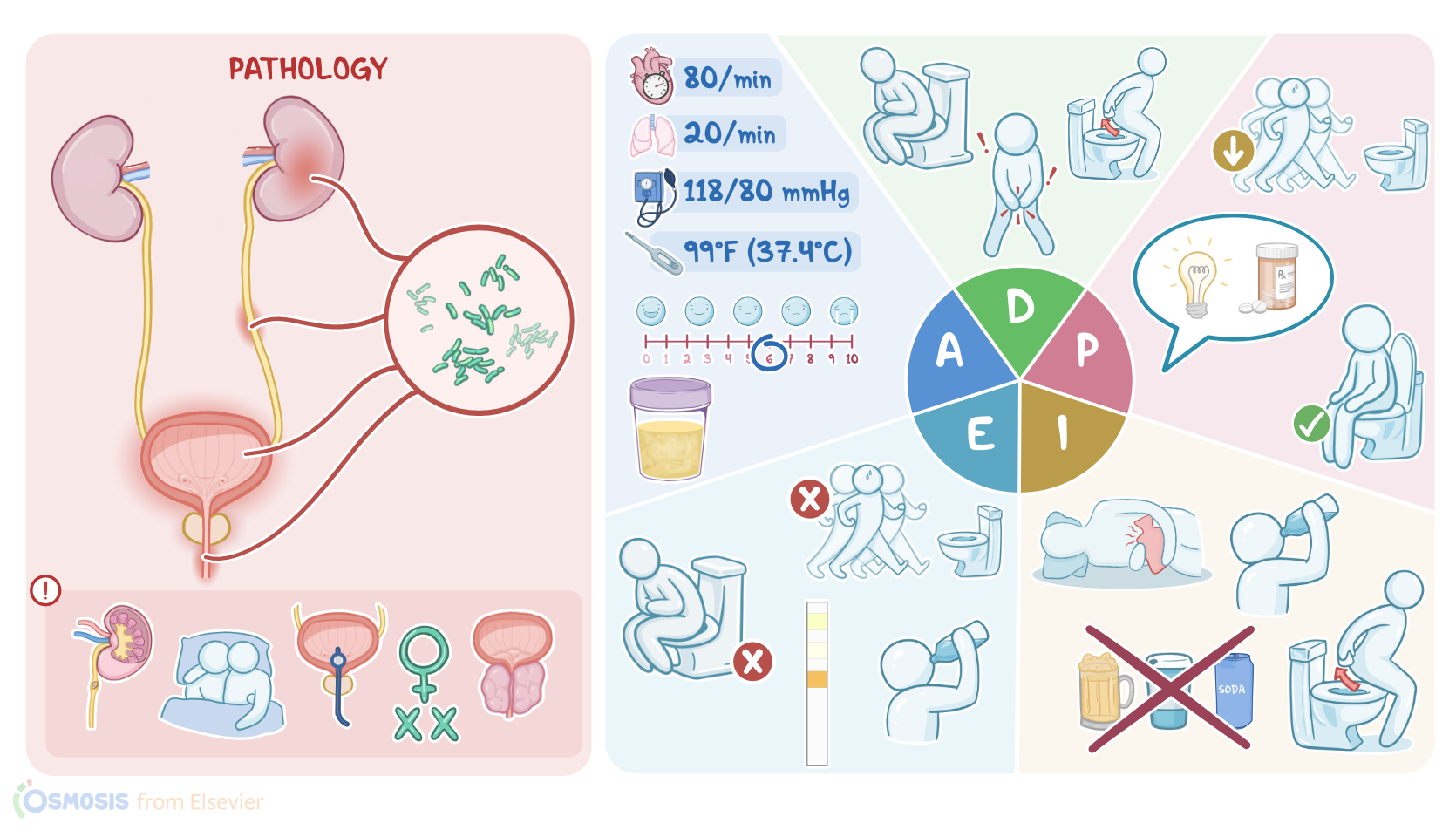
  • Temperature: 99.0 F (37.4 C)
  • Heart rate: 80
  • Respiratory rate: 20
  • Blood pressure: 118/80 mmHg
  • Pain: 6/10
  • Urine dipstick: trace leukoctyte esterase, positive nitrites, pH 6.5, trace blood, specific gravity 1.015, glucose 1+

NURSING DIAGNOSES
  • Acute pain related to urinary tract infection
  • Impaired urinary elimination related to urinary tract infection
  • Ineffective health maintenance related to repeated urinary tract infections

PLANNING
  • Verbalize treatment plan
  • Identify pain relief measures
  • Normal urinary elimination patterns

IMPLEMENTATION
  • Send urine culture
  • Administer medications as prescribed
  • Explain medication
  • Teach about hydration and prevention of urinary stasis
  • Apply heat to abdomen as needed
  • Meet with diabetes educator

EVALUATION
  • Feeling better
  • Less urgency and frequency
  • Remains hydrated
  • Met with diabetes educator
  • Urine dipstick: negative

Transcript

Watch video only

Alejandra Ramirez is a 38-year-old female who presents to urgent care reporting that she has been experiencing painful urination, and has needed to urinate more frequently and urgently than normal over the past two days.

Ms. Ramirez has a history of type 2 diabetes mellitus.

She is sexually active with no history of sexually transmitted infections.

A urinary tract infection, or UTI, happens when the urinary tract which is made up of upper urinary tract, consisting of the kidneys and the ureters, and the lower urinary tract, bladder, prostate, and the urethra, becomes infected by pathogenic microorganisms.

UTIs are most often caused by an ascending bacterial infection.

Esherichia coli, or E. coli accounts for 75 to 95 percent of all urinary tract infections while other bacteria such as Klebsiella pneumoniae, Staphylococcus saprophyticus, or Proteus mirabilis are also common causes of infection.

Once the bacteria enter the urinary tract, they multiply and colonize the urinary tract, causing inflammation.

Inflammation of the urethra, or urethritis, results in dysuria, which is a symptom of pain or burning during urination.

Inflammation of the bladder, or cystitis, leads to edema of the bladder wall, which can result in suprapubic pain, which is pain felt in the lower abdomen near the bladder, a feeling of bladder fullness, and a need to urinate frequently and urgently.

Bacteria in the urine, or bacteriuria, often results in cloudy, foul smelling urine, while damage to the bladder mucosa can cause blood in the urine, referred to as hematuria.

If bacteria ascend further to the upper urinary tract, pyelonephritis, or inflammation of the ureters and kidneys, can occur, producing pain in the side of the back, or flank pain, also called costovertebral angle, or CVA, tenderness, along with manifestations of a systemic response to the infection, such as fever, chills, nausea and vomiting.

Complications of UTIs include scarring and narrowing of the urethra, called a urethral stricture, and damage to the kidney, which can impair its function.

If the infection spreads from the urinary tract to the bloodstream, it can cause urosepsis, which is a systemic reaction to infection that can lead to shock, organ failure, and death.

The risk of a UTI increases with urinary stasis, which is when the normal flow of urine is obstructed and slowed, and urinary reflux, which is when urine moves backwards from the bladder and up to the kidneys.

Urinary stasis and subsequent reflux can occur when kidney stones block the flow of urine through the ureters, or when an enlarged prostate slows the flow of urine through the urethra.

Likewise, a neurogenic bladder, a condition associated with problems like diabetes mellitus and spinal cord injuries, can slow the flow of urine because the nerves and muscles that help the bladder empty don’t work properly.

Other risk factors include the introduction of pathogens in and around the urinary tract, like with urinary catheterization and sexual intercourse, especially with multiple partners, or any factor that depresses the immune response like with HIV/AIDS and diabetes.

There are also a number of reasons why women are at a higher risk of developing a UTI than men.

First of all, women have a shorter urethra, so bacteria have a much shorter distance to travel to enter the bladder.

Furthermore, during pregnancy, increased progesterone levels and the downward pressure from an enlarged uterus tend to relax and dilate the ureters, increasing the risk of urinary stasis and reflux.

And finally, decreased estrogen during menopause alters the normal genitourinary flora, making the urinary tract more susceptible to infection by pathogens.

Diagnosis of a UTI is most often based on client history, physical examination, and diagnostic tests including urinalysis, which looks at the physical and chemical characteristics of the urine, or urine culture, to determine the number and type of organisms present in the urine.

If a UTI is present, the urine will often look cloudy, have a foul odor, will contain nitrites and leukocyte esterase which indicate the presence of bacteria, and microscopic hematuria.

If there are complications or if there are frequent infections where structural problems of the urinary tract is suspected, a computerized tomography scan, or CT scan, or magnetic resonance imaging, or MRI, may be used to visualize the urinary tract.

UTIs are typically treated with antibiotics such as nitrofurantoin, trimethoprim-sulfamethoxazole, and ciprofloxacin.

Urinary tract analgesics such as phenazopyridine can be used to provide pain relief.

Non-pharmacological interventions include the use of heat therapy on the abdomen and increasing the intake of water to help flush out the urinary tract.

Alright, let’s get back to our client Ms. Ramirez.

You enter her room, introduce yourself, perform hand hygiene and confirm her identity.

As you begin your assessment, you notice that she looks extremely uncomfortable.

When you ask her how she’s feeling, she tells you that she has been having pain and burning when she urinates, and that it feels like she has to go to the bathroom “all the time.”

She is concerned because even though she needs to go to the bathroom frequently, she doesn’t produce very much urine.

You ask Ms. Ramirez how much water she drinks each day, and she tells you she is not sure, though she drinks several cups of coffee each day.

She goes on to tell you she’s had three previous UTIs and that she doesn’t understand why she keeps getting them.

Ms. Ramirez’s vital signs are temperature 99°F or 37.4°C, heart rate 80 beats per minute, respiratory rate 20 breaths per minute, blood pressure 118/80 mmHg, and pain 6/10 when her lower abdomen is gently palpated.