Age-related physiological changes: Nursing process (ADPIE)
Video summary
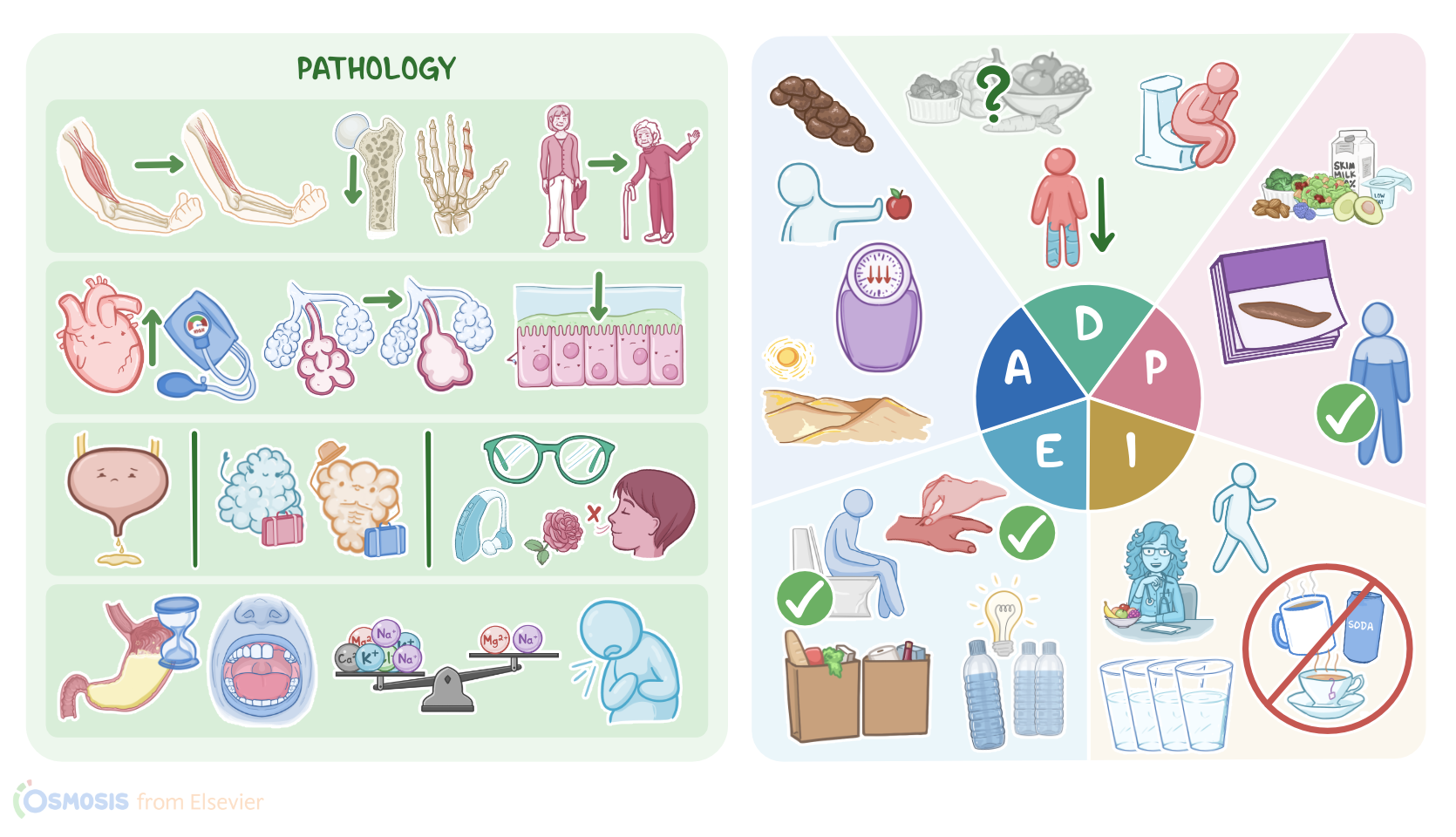
With aging, several physiological changes take place in our bodies. These include the reduction of cardiac output, an increase in the blood pressure as arteriosclerosis develops, a decrease in the vital capacity of our lungs, slowing down of alveolar gas exchange, a decline in our creatinine clearance, and so on. When providing nursing care to older people, the ADPIE framework can be used to help nurses systematically assess and address these changes:
A: Assessment: taking a complete health history and performing a physical exam to identify any changes since the last visit; D: Diagnosis: identifying any specific problems or concerns that need to be addressed; P: Planning: creating a care plan tailored to the individual's needs; I: Implementation: providing care based on the plan; and E: Evaluation: assessing how well the plan is working and making any necessary adjustments.
Matilda Nowell is a 78-year-old female client with a history of depression and osteoarthritis, who presents to the primary care clinic today with a report of frequent and prolonged episodes of constipation along with bloating and abdominal pain. Mrs. Nowell lives alone and has no family close by, and she struggles to afford nutritious food due to her limited income.
Age-related physiological changes include all changes that normally occur in the body over time with aging. First, let’s start with the integumentary system, which undergoes changes in collagen and elastin that eventually cause the skin to lose elasticity, become thinner, and develop wrinkles over time, while the hair becomes gray, thinner, and may fall out, which may lead to baldness. On the flip side, the muscular system atrophies over time, which often leads to a decrease in physical strength; while the skeletal system progressively loses bone mass and density, which typically leads to a gradual decrease in height, and can result in osteopenia or osteoporosis, therefore bones might break more easily, while joints may degenerate and develop arthritis.
Cardiovascular age-related changes generally involve progressive degeneration of the heart, while the valves and large arteries become stiffer, ultimately causing hypertension or decreased cardiac output upon exertion. On the other hand, changes of the respiratory system mainly involve the alveoli, which may lose their architecture and elasticity, which leads to a decreased lung capacity; in addition, there’s decreased mucociliary action and diminished cough reflex, so airway clearance is ultimately impaired.
The urinary system is affected by functional changes that decrease the filtration capacity of the kidneys; in addition, the bladder capacity is decreased, as there’s instability of the detrusor muscle and decreased sensation of bladder fullness, which combined result in urinary frequency or even incontinence; while the reproductive system is associated with gradually decreased production of sex hormones, and females become infertile after menopause. Also, over time, the sensory system can deteriorate, therefore older clients often present with decreased vision and hearing abilities, and some clients may also have impaired sense of smell and taste.
| AGE-RELATED PHYSIOLOGIC CHANGES | ||
| KEY POINTS | NOTES | |
| PATIENT REPORT |
| |
| PATHOPHYSIOLOGY |
| |
| DIAGNOSIS AND TREATMENT |
| |
| ASSESSMENT |
| |
| NURSING DIAGNOSES |
| |
| PLANNING |
| |
| IMPLEMENTATION |
| |
| EVALUATION |
| |
- "Diagnosing the Diagnostic and Statistical Manual of Mental Disorders: Fifth Edition" Routledge (2019)
- "First Aid for the USMLE Step 1 2022, 32E" McGraw-Hill Education (2022)
- "Saunders Comprehensive Review for the NCLEX-RN Examination" Elsevier (2022)
- "Critical care nursing: Diagnosis and management " Elsevier (2022)
- "Harrison's Principles of Internal Medicine, Twenty-First Edition (Vol.1 & Vol.2)" McGraw-Hill Education / Medical (2022)
- "Physical activity and cardiovascular aging: Physiological and molecular insights" Experimental Gerontology (2018)
- "Regulation of inflammation as an anti‐aging intervention" The FEBS Journal (2019)
Aún no hay notas para este video
Intenta agregar una nota a continuación