
Cardiac Glycosides · What Are They, What Are They Used For, How Do They Work, Side Effects, and More

Published: Sep 23, 2025
Author: Jennifer Cheung, RN, BS
Editor: Antonella Melani, MD
Editor: Kelsey LaFayette, DNP, ARNP, FNP-C
Editor: Nimmit Vyas, PharmD
Editor: Emily Miao, MD, PharmD
Illustrator: Meg Gullotto
7-day free trial

Go deeper with Osmosis

Osmosis is a learning platform with videos, questions, and AI tools to help you master topics like this.

4.8 · 12,000+ reviews
Watch quick, visual videos
Practice with Qbank-style questions
Use AI to explain, quiz, and review
Study anytime with the mobile app
Start free trial

No credit card · Cancel anytime

What are cardiac glycosides?

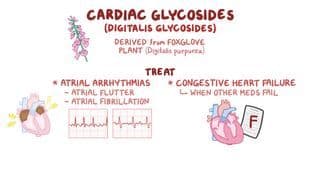
Cardiac glycosides are a class of medications commonly derived from foxglove plants, such as Digitalis lanata and Digitalis purpurea. The most commonly prescribed cardiac glycoside is digoxin. 

Learn deeper with Osmosis

Master this topic faster with videos, questions, and AI.

Used by 8M+ healthcare learners.

Start free trial

No credit card · Cancel anytime

What are cardiac glycosides used for?

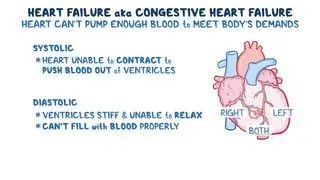
Cardiac glycosides are used to treat arrhythmias such as atrial fibrillation and atrial flutter, as well as congestive heart failure. Of note, cardiac glycosides are contraindicated in ventricular fibrillations. 

How do cardiac glycosides work?

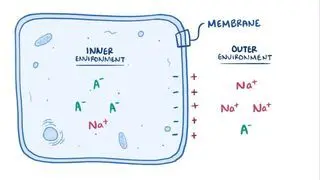
The mechanism of action of cardiac glycosides involves inhibiting the Na+ K+ ATPase enzyme, also known as the sodium-potassium pump. This causes sodium to build up inside the heart cells, decreasing the ability of the sodium-calcium exchanger to push calcium out of the cells, consequently causing calcium to build up in the sarcoplasmic reticulum. Increased intracellular calcium results in a positive inotropic effect, which in turn has the effect of increasing the force of the heart’s contractions. 

What are potential side effects of cardiac glycosides?

Cardiac glycosides can have some potential side effects and can also lead to poisoning and toxicity.   

Common side effects include fatigue and gastrointestinal side effects such as mild nausea and loss of appetiteClinical manifestations of cardiac glycoside toxicity include visual disturbances including blurred vision and alterations in color vision (i.e., chromatopsia), photphobia; gastrointestinal toxicities including anorexia, nausea or vomiting; neurologic toxicities including altered mental status or cognition; and life-threatening cardiac arrhythmias 

Moreover, taking high doses of cardiac glycosides can cause electrolyte imbalances involving sodium, potassium, calcium, and magnesium.
   
Additinally, there are many drug-drug interactions, specifically with digoxin. For example, medications that are CYP3A4 substrates will compete with digoxin for drug metabolism, causing higher levels of digoxin in the blood. These medications include diuretics, calcium channel blockers, amiodarone, cyclosporine, quinidine, and nonsteroidal anti-inflammatory drugs (NSAIDs). Finally, decreased renal function can also result in increased serum digoxin levels, as digoxin is primarily excreted through the kidneys. 
 

Side effects can often be alleviated by reducing the dosage of digoxin. Additionally, individuals who have cardiac arrhythmias should be monitored with blood tests for serum levels of digoxin and electrolytes, as well as an electrocardiogram to assess the heart. In severe toxicity cases, administration of digoxin immune fab may be helpful to rapidly reduce serum digoxin levels.  

What effect do cardiac glycosides have on heart rate?

At low therapeutic doses, cardiac glycosides can have the effect of reducing heart rate and increasing gastrointestinal activity for individuals, as they act on the parasympathetic nervous system. The parasympathetic nervous system is the part of the central nervous system responsible for relaxing our bodies and conserving energy. 

Are cardiac glycosides used as first-line therapy?

Cardiac glycosides are still in use. However, they can cause severe side effects and toxicity, so they are typically not first-line as part of guideline-directed medical therapy (GDMT). GDMT is a combination of medications recommended by guideline cardiology associations for managing heart failure with reduced ejection fraction. For example, first-line agents typically include an ACE inhibitor, ARB receptor antagonist, or angiotensin-receptor/neprilysin inhibitor, and a beta blocker 

What are the most important facts to know about cardiac glycosides?

Cardiac glycosides are a class of medications that inhibit the  Na+ K+ ATPase enzyme, which ultimately increases cardiac contractility.  The most commonly prescribed cardiac glycoside is digoxin, which can be used to treat atrial fibrillation, atrial flutter, and congestive heart failure. However, cardiac glycosides can cause severe side effects and toxicity, so they are not typically used as first-line treatment.  

Key Takeaways

Definition 

Class of medications commonly derived from foxglove plants, such as Digitalis lanata and Digitalis purpurea. The most commonly prescribed cardiac glycoside is digoxin. 

Uses 

- Arrhythmias (e.g., atrial fibrillation, atrial flutter 

- Congestive heart failure  

- Contraindication: ventricular fibrillation  

Mechanism of Action 

- Inhibition of Na+ K+ ATPase enzyme → sodium buildup within heart cells → sodium-calcium exchanger impaired → calcium buildup in the sarcoplasmic reticulum → positive ionotropic effect (increased force of contraction of the heart)  

Side Effects 

- Common side effects:  

     - Fatigue  

     - Gastrointestinal symptoms: mild nausea, loss of appetite  

- Manifestations of toxicity:  

    - Visual disturbances: chromatopsia, photophobia  

     - Gastrointestinal symptoms: anorexia, nausea or vomiting 

     - Neurologic toxicity: altered mental status 

     - Life-threatening cardiac arrhythmias 

     - Electrolyte imbalances  

     - Toxicity can result from:  

- Drug-drug interactions: competition with other CYP3A4 substrates → increased digoxin levels  

- Decreased renal function (impaired excretion)  

Effects on Heart Rate 

- Low therapeutic doses: activation of parasympathetic nervous system  

- Heart rate reduction  

- Increased gastrointestinal activity  

First-line Use 

- Not first-line because of severe side effects and toxicity  

Students say Osmosis is 100% worth it

Because Osmosis saves them time. Lowers stress. And actually helps them remember when it counts.

I used Osmosis to prepare for my first medical school licensing exam! Super helpful and interactive for people who may not do great with just pages of text info!

Cecilia Ruiz

Cecilia Ruiz

MD student

Sayan Misra

I have used Osmosis for about four years. Best thing I have ever used for my medical studies.

Sayan Misra

Sayan Misra

Med student

Osmosis videos are superior because they define simple concepts, tell a story with a clear progression, and provide context.

Jay Pate

Jay Pate

Dental student

References


Fearnley CJ, Roderick HL, Bootman MD. Calcium signaling in cardiac myocytes. Cold Spring Harb Perspect Biol. 2011;3(11). Accessed July 27, 2020. https://www.ncbi.nlm.nih.gov/pmc/articles/PMC3220352/


Heart failure: Guideline for management. American College of Cardiology. Published 2022. Accessed September 17, 2025. http://acc.org/guidelines/hubs/heart-failure


Whittlesea C, Hodson K. Clinical Pharmacy and Therapeutics. 6th ed. Oxford, UK: Elsevier; 2019.


Zipes DP, Libby P, Bonow RO, Mann DL, Tomaselli GF, Braunwald E. Braunwald’s Heart Disease: A Textbook of Cardiovascular Medicine. 11th ed. Philadelphia, PA: Elsevier; 2019.