Dyspnea · What Is It, Pronunciation, Causes, Assessment, Treatment, and More
Published: Mar 04, 2025
Author: Lahav Constantini•
Editor: Antonella Melani, MD•
Editor: Ian Mannarino, MD, MBA
Illustrator: Abbey Richard
7-day free trial
Go deeper with Osmosis
Osmosis is a learning platform with videos, questions, and AI tools to help you master topics like this.
Watch quick, visual videos
Practice with Qbank-style questions
Use AI to explain, quiz, and review
Study anytime with the mobile app
Try Osmosis Free
No credit card required
What is dyspnea?
Dyspnea—also described as a sensation of “air hunger”—refers to shortness of breath. Difficulty breathing is a very common respiratory system symptom experienced by people, and can vary in intensity and duration. When dyspnea lasts for a few days or less, it is considered acute. On the other hand, when it lasts more than four weeks, it’s considered chronic.
Learn deeper with Osmosis
Master this topic faster with videos, questions, and AI.
Used by 8M+ healthcare learners.
Try Osmosis Free
No credit card required
How do you pronounce dyspnea?
What causes dyspnea?
A wide variety of conditions and health problems can lead to dyspnea, but diseases of the heart and lungs are the most common causes.
Acute dyspnea may be caused by allergies, infections, injuries, medications, and anxiety. Some emergency situations—such as choking due to an airway obstruction or a heart attack—can also cause dyspnea. Pulmonary embolisms can be another emergency cause of dyspnea, as they usually occur due to a blood clot that forms in the leg and travels to the lungs.
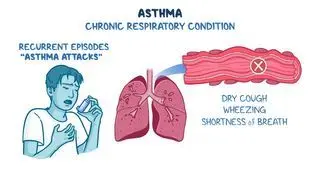
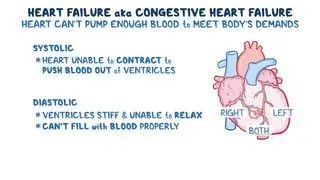
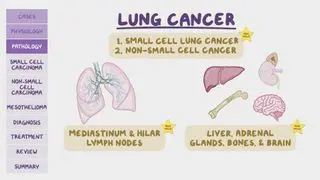
The most common causes of chronic dyspnea include heart failure and lung disease. Diseases such as lung cancer, asthma, and chronic obstructive pulmonary disease (COPD) all affect lung function. COPD is an umbrella term that includes chronic bronchitis and emphysema. Obesity is also a risk factor in the development of chronic dyspnea, especially if it is combined with a sedentary lifestyle.
Acute dyspnea may be caused by allergies, infections, injuries, medications, and anxiety. Some emergency situations—such as choking due to an airway obstruction or a heart attack—can also cause dyspnea. Pulmonary embolisms can be another emergency cause of dyspnea, as they usually occur due to a blood clot that forms in the leg and travels to the lungs.
The most common causes of chronic dyspnea include heart failure and lung disease. Diseases such as lung cancer, asthma, and chronic obstructive pulmonary disease (COPD) all affect lung function. COPD is an umbrella term that includes chronic bronchitis and emphysema. Obesity is also a risk factor in the development of chronic dyspnea, especially if it is combined with a sedentary lifestyle.
What is dyspnea on exertion?
Dyspnea on exertion refers to when individuals feel short of breath during physical activity, with the sensation subsiding during periods of rest. Dyspnea on exertion can be normal and harmless, but it could also be the symptom of an underlying disease. For instance, left-sided heart failure or pulmonary emphysema—especially when dyspnea is associated with chest pain—are possible conditions that are associated with dyspnea on exertion.
How do you assess dyspnea?
When a person reports difficulty breathing, it is important for healthcare practitioners to rapidly evaluate for an underlying disease to improve prognosis, quality of life, and prevent life-threatening complications. Assessment for dyspnea typically starts with the description of shortness of breath and any other associated symptoms. For instance, if dyspnea is associated with chest pain, it could suggest a heart disease, such as myocardial infarction (heart attack), which calls for emergency treatment.
Upon physical examination of individuals with dyspnea, some important clinical findings to assess for include fever, cough, sore throat, chest pain, edema, and cyanosis (blue skin). Pulse oximetry is used to measure the oxygen levels in blood, along with blood tests to check blood gases and complete blood count. Next, auscultation of the heart and lungs should be done to assess for signs that may indicate an underlying health issue, such as heart murmurs, wheezing, stridor, rales, or even absent breath sounds. Finally, individuals with dyspnea may also be evaluated through ECG or imaging techniques, such as chest X-ray or CT scan.How do you treat dyspnea?
The primary and definitive treatment of dyspnea involves treating the underlying health issue. Individuals with low oxygen levels in blood can be treated with ventilation (invasive or noninvasive).
To help and promote deep breathing, a technique called pursed lip breathing can be recommended for some individuals with lung diseases like COPD or asthma. The key is to inhale air from the nose and then exhale from the mouth, while the lips are pursed. This breathing technique slows down the breathing rate, which helps open the airways and exhale the additional air that is trapped.
Individuals with advanced or terminal diseases may be given systemic opioids to help reduce their dyspnea and other symptoms, such as pain. Giving opioids requires careful dosing and monitoring, as they can lead to side effects like nausea, constipation, drowsiness, and even respiratory depression.What are some of the most important facts to know about dyspnea?
Dyspnea is another term for shortness of breath. It’s a very common complaint, with variable severity and duration. Acute dyspnea tends to last, at most, for a few days, while chronic dyspnea lasts longer than a month. Many different underlying conditions may cause dyspnea, among which heart and lung disease tend to be the most common. When assessing dyspnea, healthcare practitioners often seek a description of the experience and associated symptoms. For instance, shortness of breath accompanied with chest pain may be indicative of heart disease. Treatment of dyspnea usually involves treating the underlying cause. Additionally, certain techniques like pursed lip breathing can help people open their airways and promote deep breathing. Finally, individuals with advanced diseases may get opioids to help minimize their symptoms.
Related topics
Students say Osmosis is 100% worth it
Because Osmosis saves them time. Lowers stress. And actually helps them remember when it counts.
I used Osmosis to prepare for my first medical school licensing exam! Super helpful and interactive for people who may not do great with just pages of text info!"

Cecilia Ruiz
MD student

I have used Osmosis for about four years. Best thing I have ever used for my medical studies."

Sayan Misra
Med student
Osmosis videos are superior because they define simple concepts, tell a story with a clear progression, and provide context."

Jay Pate
Dental student
References
Janssen, D. J. A., van den Beuken-van Everdingen, M. H. J., Verberkt, C. A., Creemers, J. P. H. M., & Wouters, E. F. M. (2019). Fentanyl nasal spray in a patient with end-stage COPD and severe chronic breathlessness. Breathe, 15(3): e122–e125. Retrieved July 30, 2020, from https://www.ncbi.nlm.nih.gov/pmc/articles/PMC6876137/
Pursed Lip Breathing. (2020). American Lung Association. Retrieved July 30, 2020, from https://www.lung.org/lung-health-diseases/lung-disease-lookup/copd/patient-resources-and-videos/pursed-lip-breathing-video
Rees, F., Mason, L., & Ede, C. (2017). Morphine for use in breathlessness. NHS. Retrieved July 30, 2020, from https://www.bsuh.nhs.uk/wp-content/uploads/sites/5/2016/09/Morphine-for-use-in-breathlessness.pdf
Sharma, S., Hashmi, M. F., & Badireddy, M. (2020). Dyspnea on Exertion. In StatPearls. Treasure Island (FL): StatPearls Publishing. Retrieved July 30, 2020, from https://www.ncbi.nlm.nih.gov/books/NBK499847/