

Psychiatry rotations sneak up on even the most prepared medical students. They’re like a plot twist you didn’t see coming; the pace is slower than the heart-pounding chaos of surgery or the adrenaline rush of the ER. There are no flashy procedures or crashing vitals to keep your pulse racing. However, the mental demands of this rotation hit deep and fast. You’re piecing together life stories, navigating conversations that twist and turn in unexpected ways. You’re diagnosing symptoms without the comfort of labs or scans to support your findings. Uncertainty hangs thick in the air. Diagnoses blur together, answers are nuanced, and real progress unfolds over days or weeks rather than a single heroic moment.
The real issue isn’t a lack of effort. It’s unclear priorities. Many students choose to chase rare diagnoses or obsess over flawless presentations. The reality is that evaluations and real-world outcomes hinge on clear communication, solid structure, and sharp clinical judgment.
Forget chasing perfection in every interview or obsessing over the end-of-rotation evaluation. Instead, be that calm, proactive team player who makes everyone’s job easier. Commit to usefulness and reliability, and watch strong evaluations, growing confidence, and genuine clinical competence follow naturally.
Now, let’s dive into some strategies that will help you smash this uniquely rewarding rotation and walk away feeling like you actually get it.

What Makes Psychiatry Rotations Difficult?
Psychiatry rotations strip away the familiar anchors of other clerkships. There are no labs, EKGs, or imaging to lean on because you rely almost entirely on conversation. Diagnoses feel subjective and overlapping. Depression can look a lot like bipolar disorder. Anxiety can mask substance use.
Interviews can drift off course without a clear structure. Those heavy emotional stories you hear can linger long after rounds, your mental battery drains faster than you expect, and by the third week, even the most resilient medical students start dreaming about quiet nights, stronger boundaries, and maybe a little therapy of their own. Expectations shift wildly depending on the attending unit or service. One day, thoroughness wins praise. The next day, it’s all about speed.
These challenges mirror broader hurdles in clinical rotations highlighted by the American Medical Association. There’s an intimidating leap from classroom to wards, likely some performance anxiety, and a need to blend medical knowledge with emotional intelligence. Students often trip up by chasing the wrong metrics, perfecting endless differentials at the expense of building rapport with their patients.
The fix isn’t grinding harder. It’s about developing smart, sustainable systems right from day one. Put together a basic patient list or interview checklist and update it every shift to help you stay oriented between shifts. Toss in a quick 5-10-minute end-of-day brain dump to give yourself a chance to shake off the emotional heaviness and recharge your mental battery.
Keep in mind that steady, reliable effort beats random “bursts of genius” every time. Pour your energy into being a consistent, useful team player. Accept that the emotional rollercoaster is a completely normal response rather than being an indication of failure. Suddenly, the tough days stop feeling like a beating and start feeling like fuel for real growth and that sweet “I’ve got this” perspective.
The Mindset Shift That Changes Everything
The single most powerful move you can make on your psychiatry rotation is a fundamental shift in your thinking. It isn’t about cramming every obscure diagnosis or trying to dazzle the team with fancy knowledge bombs. It’s about understanding people, building real rapport, and organizing the chaos into clear, useful information.
The good news is that you don’t need to unravel anyone’s entire life story in one conversation or magically have all the answers ready to go. Instead, zero in on genuine human connections. Follow the established structure when everything feels uncertain, and trust your growing clinical judgment.
Being proactively helpful builds trust way faster than any impressive-sounding fact ever could. Real progress feels like your:
- Interviews flow naturally, rather than feeling awkward or stumbling.
- Mental status exams are tight and clean.
- Presentations are concise and engage your team’s attention.
- Quiet inner confidence comes from knowing you’re quietly making the team’s job easier.
- Patients feel truly heard and respected.
Start every shift with a quick daily checklist. Review the key details on your patients and pick one small way you can lighten someone’s load. Let go of perfectionism and lean hard into steady, reliable performance in every single interaction.
Note that end-of-rotation evaluations matter far less than you think. Becoming the dependable person everyone automatically turns to when things get hectic is what truly counts. If you embrace that perspective, your psychiatry rotation will stop feeling like a confusing puzzle and start to feel like somewhere you truly belong.

What Actually Matters During Your Psychiatry Rotation
When it comes to thriving in your psychiatry rotation, success depends on a handful of key skills, including building rapport, conducting organized psychiatric interviews, recognizing high-risk situations, and presenting patients clearly. These skills will have a far greater impact on your performance than trying to know every detail in a textbook. Let’s explore each skill.
Building Rapport
Knowing how to build rapport is your secret weapon in psychiatry. Kick off every patient encounter with warmth and professionalism. Introduce yourself, state your role, and set clear expectations with something like: “Hi, I’m [Your Name], a medical student working with Dr. Smith. I’d like to hear your story so we can figure out what’s going on. Is that okay?” Use open-ended questions like “Tell me more about what’s been going on.” Stay nonjudgmental and allow comfortable silences. Show empathy without over-identifying.
To get better at building rapport, rehearse a short 30-second rapport script each day. This practice creates consistency, protects your energy, and helps patients feel respected. Most importantly, a good rapport with your patients improves the quality of your history taking while reducing patient resistance. By week two, it should be nearly automatic and turn every interaction into a rewarding, natural way to build connection.
The Psychiatric Interview
Structuring your psychiatric interview is where the magic happens. It turns rambling, all-over-the-place conversations into something clear and valuable. Start strong by covering the presenting complaint, discussing onset, duration, triggers, and severity. Move into past psychiatric history, substance use, social history, and support systems. Most importantly, always do a thorough risk assessment. Aim to keep the whole experience conversational.
When your interviews are both well-structured and natural, they become efficient, reliable, and exactly what attendings love to see. This is where creating a simple template contributes to your success. Review it regularly to avoid feeling overwhelmed, and execute smooth and effortless handoffs to the team.
Mental Status Exam (MSE)
The Mental Status Exam (MSE) is your quick, objective snapshot of how the patient is doing mentally in that moment. Make sure to address the basics every time:
- Appearance and behavior
- Speech (how fast, how loud, how fluent)
- Mood and affect
- Thought process and content
- Cognition such as orientation, attention, and memory
- Insight and judgment.
Keep it clear and organized, and try to avoid sounding like you’re reading from a script. Practice packaging it up in under a minute. It’s a game-changer. Those vague impressions suddenly become sharp and useful. You’ll sound more confident during rounds. Your assessments will get stronger, and the team will notice you’re genuinely bringing something helpful to the table.
The Ability to Recognize High-Risk Situations
Early recognition and clear escalation are essential in psychiatry. Make sure to screen proactively for suicidal ideation, homicidal ideation, psychosis, severe mania, and withdrawal states. Ask directly: “Have you thought of harming yourself?” Escalate positive responses early and clearly to protect patients and demonstrate good clinical judgment.
Focus on Common Psychiatric Conditions
Focus on the conditions you’re going to see every day, such as major depressive disorder, anxiety disorders, bipolar disorder, schizophrenia and other psychotic disorders, substance use disorders, personality disorders, and delirium versus dementia.
What’s the best way to learn them? Tie the conditions you’re studying back to the real patients you meet on the unit. Review each case immediately after speaking with a new patient. Revisiting a condition in the context of the patient’s case will help that knowledge stick in your brain and make more sense in your daily studies. Work them into your daily systems, and pretty soon you’ll start spotting patterns automatically!
Hone Your Communication and Presentation Skills
Your presentations should be short, clear, and straight to the point. Organize them around the diagnosis and any risk issues. For example: “This is a 45-year-old woman with bipolar disorder in acute mania, no current suicidal ideation, and poor insight.” Skip the fluff. Use the proper terms. For example, say “pressured speech” instead of “talking fast.” Always close out with a solid assessment and plan.
Spend a few minutes each night practicing presenting until you can deliver the whole thing smoothly in about two minutes. Rehearsing and getting comfortable with presenting under pressure beats overthinking and stumbling over your thoughts every time.
Focus on Being Reliable and Professional
As with all of your rotations, it’s important to show up on time and ready to go. Follow through with your patients, write your notes clearly the same day, keep everything confidential, and always respect personal boundaries. In psychiatry, everything really comes down to communication, staying organized, and building trust with your patients and the team.
This kind of steady professionalism earns respect from everyone on the team because it demonstrates that you’re someone they can count on, making the entire rotation smoother and more enjoyable for all.
What Doesn’t Matter as Much During Your Psychiatry Rotation
Protect your energy by being smart about what you expend it on. Don’t waste time on things that don’t actually pay off during the rotation. Skip memorizing rare psychiatric conditions. Common disorders make up the vast majority of what you’ll see, so put your effort into recognizing those conditions and getting really good at basic management instead.
The same goes for trying to sound smart. With patients, it usually backfires and creates unintentional distance. People tend to respond much better to simple, genuine, empathetic words. Another easy trap you can easily fall into is talking more than you listen. If you give them the space and time to tell their story, patients will often reveal their diagnosis. Plus, overinterpreting every tiny detail can make you miss the bigger picture completely!
And please, do yourself a favor and don’t stay late unless you’re contributing something useful. Instead of feeling like you need to hang around after your shift, focus on being fully present during your scheduled hours, and then get some proper rest because that’s what keeps you sharp for the long haul. When you deliberately choose to be useful instead of impressive, you save your energy for experiences that build confidence and competence.
How to Study Psychiatry Without Burning Out
Effective studying during psychiatry means integrating leaning directly into your clinical experience rather than treating it as an exhausting add-on. Here are a few tips to help you stay on track:
Study Around Your Patients
After each encounter, spend a quick ten, very focused minutes reviewing the diagnosis. Dive into DSM-5 criteria, management steps, and identify any red flags. This patient-driven method cements knowledge faster than textbook marathons and turns every clinical moment into sustainable learning.
High-Yield Psychiatry Topics
As noted above, these are some of the high-yield topics you should focus on during this rotation:
- Major Depressive Disorder (MDD) and Bipolar Disorder (Bipolar I and II)
- Schizophrenia
- Generalized Anxiety Disorder (GAD)
- Substance Use Disorder
- Delirium vs Dementia (Major Neurocognitive Disorder)
- Borderline Personality Disorder
- Obsessive-Compulsive Disorder (OCD)
- Post-Traumatic Stress Disorder (PTSD)
These conditions dominate psychiatric wards, clinics, and shelf exams. Focusing on them builds the pattern recognition you need for reliable clinical judgment.
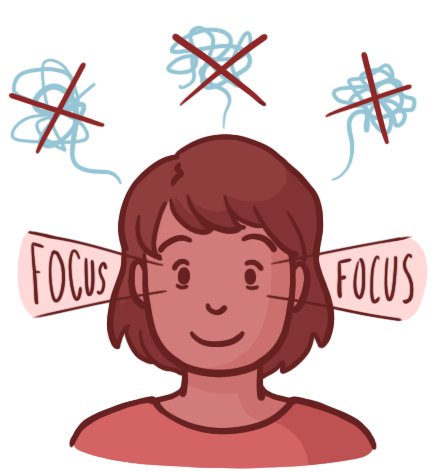
Taking the Short, Focused Study Approach
Daily consistency far outperforms last-minute cramming sessions. Commit to a dedicated study period of 30–45 focused minutes. Tackle one topic at a time using active recall techniques. Follow up with a handful of Osmosis practice questions. Refer to the Osmosis Clinical Rotation guide and Osmosis Clinical Sciences videos for clear, visual, bite-sized learning.
For NBME shelf exam preparation, emphasize the use of practice questions focused on condition management rather than exhaustive review. Strategic, targeted studying tied to your daily cases will prepare you efficiently without causing burnout.
Enough Is Enough
Avoid panicking and over-reviewing, and focus on pattern recognition instead. Being prepared means being able to assess risk safely, present coherently, and contribute meaningfully. Perfectionism is the enemy. Reliable competence is the goal.
Common Traps During Psychiatry Rotation and How to Avoid Them
During your psychiatry rotation, do your best to avoid these common pitfalls:
- Talking a lot and crowding out the patient’s voice
- Being overly passive
- Avoiding difficult questions
- Overanalyzing instead of organizing thoughts
- Carrying emotional weight home
- Neglecting personal boundaries.
Undertake a quick end-of-day reflection. Ask yourself: “What went well? What can I improve?” This regular check-in keeps you proactive and prevents small mistakes from becoming patterns, while supporting steady, effective performance.
What Smashing Your Psychiatry Rotation Really Looks Like
When you stick with these principles day after day, smashing your psychiatry rotation stops being something you aspire to and starts feeling inevitable. You’ll build real rapport with your patients without having to think about it. Your interviews will flow smoothly. Your MSEs will come out crisp and organized. You’ll catch high-risk situations early, speak up confidently, and hand off patients like a pro.
Most importantly, your patients will feel truly heard, not just processed. And you’ll finish most of your days on this rotation tired but satisfied, instead of completely drained and questioning your life choices.
Success in psychiatry is about getting really good at communication, keeping things organized, and developing solid clinical judgment. The strong evals will come naturally, but the best part is the confidence you’ll carry into every future rotation and beyond.
So jump into psychiatry with energy and confidence! Embrace the opportunity to really understand people in a way no other rotation can. Stay focused on what actually matters. You’ve got everything you need to knock this rotation out of the park and make it one of your best.
Key Takeaways
- Success in psychiatry depends more on communication, organization, and clinical judgment than memorizing rare diagnoses.
- Building rapport and conducting structured psychiatric interviews are foundational clinical skills.
- Recognizing high-risk situations and escalating concerns appropriately are critical responsibilities.
- Studying patient cases alongside high-yield psychiatric conditions improves retention and clinical reasoning.
- Consistency, professionalism, and emotional resilience are key to thriving during the psychiatry rotation.
References
- https://www.ama-assn.org/medical-students/clinical-rotations
- https://www.cambridge.org/core/journals/european-psychiatry/article/abs/good-communication-in-psychiatry-a-conceptual-review/C3719425CD474D7EA431BFEEE868F85D
- https://pmc.ncbi.nlm.nih.gov/articles/PMC8806294/
- https://www.psychdb.com/teaching/1-psych-interview
- https://stritch.luc.edu/lumen/meded/psych/handouts/mental%20status%20exam.pdf
- https://pmc.ncbi.nlm.nih.gov/articles/PMC12323708/
- https://www.osmosis.org/blog/how-to-collaborate-with-your-psychiatry-attending
- https://www.psychiatry.org/psychiatrists/medical-students
- https://www.aamc.org/career-development/affinity-groups/gsa/psychiatry
- https://medicine.cnsu.edu/PDFs/clerkships/Psychiatry_Clerkship_Handbook_2_21_25.pdf
- https://www.bumc.bu.edu/camed/files/2025/04/Psychiatry-Clerkship-Guidelines-2025-26.pdf
- https://ttuhscep.edu/som/ome/CEPC/_documents/Year3/AY24_25MM_Psychiatry.pdf
- https://clpsychiatry.org/wp-content/uploads/CLP-for-the-Medical-Student_How-to-Succeed-on-Your-Core-Rotation.pdf

Try Osmosis today! Access your free trial and find out why millions of clinicians and caregivers love learning by Osmosis.
Leave a Reply