
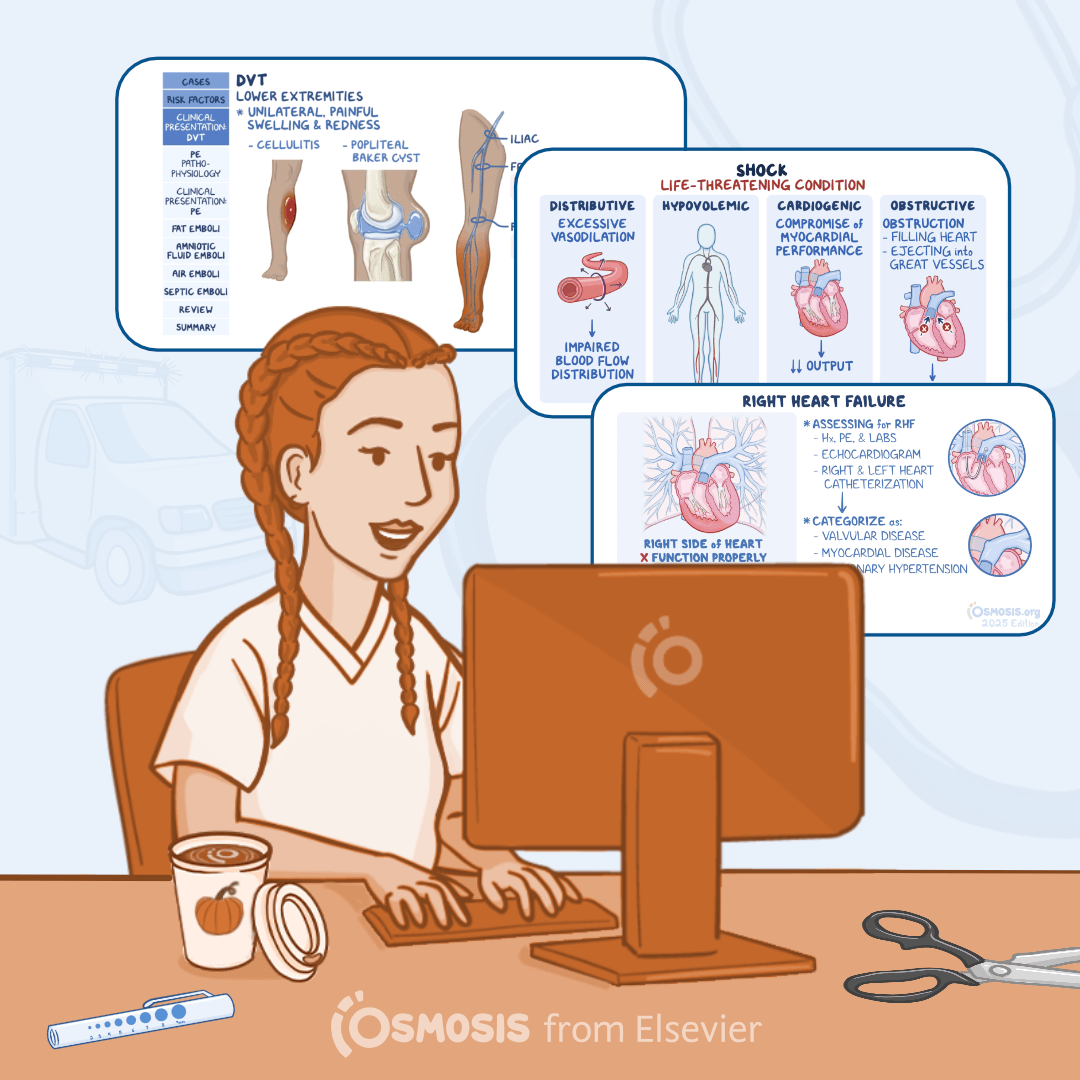
The Emergency Medicine shelf exam catches a lot of students off guard. After weeks of chaotic, fast-paced shifts where patients arrive undifferentiated and management happens in real time, it’s easy to assume the exam will feel just as unpredictable. Many students respond by trying to memorize the workup for every possible complaint that could walk through the ED doors, convinced that thoroughness is the only way to prepare.
Fortunately, that approach is both exhausting and unnecessary. The Emergency Medicine shelf tests a narrower, more consistent set of skills than the rotation itself might suggest. This article breaks down efficient study tactics to help you focus your energy where it pays off, so you can study less, retain more, and walk into the exam feeling prepared, not scattered.
Why the Emergency Medicine Shelf Exam Feels So Hard
Part of what makes this shelf feel difficult is the sheer unpredictability of the rotation itself. Unlike a clerkship tied to one organ system, the emergency department sees everything, from chest pain to psychiatric crises to pediatric fevers, often within the same shift. That breadth can make it feel impossible to know what to prioritize when it comes time to study.
The rotation’s shift-based schedule adds another layer of difficulty. Overnight shifts, weekend coverage, and irregular hours disrupt the kind of consistent study routine that works well on other rotations. Just as you settle into a rhythm, your schedule flips, and your body has to adjust all over again.
There’s also a mismatch between what you observe and what you’re tested on. In the ED, you may spend a shift managing one critically ill patient from start to finish, but the NBME® shelf exam asks you to move rapidly between dozens of shorter vignettes, each testing a distinct decision point rather than a full clinical course. Getting comfortable with that format takes practice.
The Biggest Mistakes Students Make
The most common mistake is trying to learn the complete, definitive workup for every condition, the way a specialist eventually would. The shelf isn’t testing whether you can manage a patient’s hospital course after admission. It tests whether you can recognize a life threat, stabilize it, and determine the right disposition. Students who study every condition to subspecialty depth often run out of time before covering the breadth the exam actually demands.
Another frequent trap is neglecting the “sickest patient first” mindset. In a real ED, and on the shelf, multiple problems can be true at once, but only one usually needs immediate action. Students sometimes get lost chasing a secondary diagnosis instead of first addressing the finding that could kill the patient in the next few minutes.
Students also tend to underestimate toxicology and procedural basics. Overdoses, common antidotes, and the fundamentals of procedural sedation show up more often than students expect, and they’re frequently skipped in favor of more “interesting” pathology. These are often easy, predictable points for students who take the time to learn them.
Finally, passive review remains one of the biggest time sinks. Reading through a textbook chapter on chest pain won’t train you how to rapidly triage a differential in the way the exam requires. Timed practice questions are far more effective at building the speed and prioritization skills this shelf rewards.
The Mindset Shift: What the Emergency Medicine Shelf Is Actually Testing
The Emergency Medicine shelf tests your ability to rapidly recognize life-threatening presentations, stabilize the patient, and determine the appropriate disposition. It’s not testing definitive, long-term management or subspecialty-level treatment plans.
Nearly every question follows a similar underlying structure: an undifferentiated patient presents with a symptom, and you must identify the most dangerous cause first, decide on the immediate next step, and determine whether the patient needs admission, further workup, or can be safely discharged. A patient with chest pain isn’t being tested on long-term cardiology management; they’re being tested on whether you can recognize an ST-elevation myocardial infarction and know what happens in the next few minutes.
This mirrors the same skill emphasized on every shelf exam: recognize the presentation, build a focused differential, and choose the most appropriate next step. Emergency Medicine compresses the timeline and raises the stakes, prioritizing immediate life threats above all else. Once you accept that the exam rewards fast, prioritized reasoning over comprehensive workups, your study plan becomes significantly more efficient.
What You Actually Need to Know to Score Well
The following categories consistently make up the bulk of the Emergency Medicine shelf. These are the topics that deserve the majority of your study time:
- Chest pain and cardiopulmonary emergencies: Know how to distinguish acute coronary syndrome, pulmonary embolism, aortic dissection, and pneumothorax. EKG interpretation for common arrhythmias and ischemic changes is essential here.
- Abdominal pain: Learn the classic presentations and immediate management of surgical emergencies like appendicitis and bowel obstruction, alongside medical causes like diabetic ketoacidosis that can also present with abdominal pain.
- Trauma: Master the primary and secondary trauma survey, when to obtain a FAST exam, and the immediate management of common traumatic injuries such as pneumothorax, splenic injury, and head trauma.
- Toxicology: Common overdoses, their associated toxidromes, and their antidotes are consistently high-yield. Know acetaminophen, opioid, and benzodiazepine overdoses well, along with their respective management.
- Altered mental status: Understand a systematic approach to the undifferentiated altered patient, including how to distinguish delirium from other causes and when to pursue emergent imaging or labs.
- Shock and sepsis: Shelf exams frequently test recognition of different types of shock and early sepsis management, given how time-sensitive these presentations are.
- Disposition decisions: Shelf exams heavily test when to admit, discharge, or observe. For each major presentation, make sure you understand what clinical findings change the disposition.
- Pediatric and psychiatric emergencies: Fever in a young infant, common pediatric respiratory emergencies, and the acute management of suicidal ideation or agitation round out the high-yield categories that reflect the ED’s role as a safety net for every population.
What You Don’t Need to Master
You don’t need to know the definitive inpatient management for every condition you stabilize in the ED. Once a patient is admitted, another team takes over ongoing care, and the exam reflects that division of labor. Detailed post-admission protocols are rarely tested and shouldn’t take priority over recognition and stabilization skills.
You also don’t need to memorize every rare toxidrome or obscure antidote. Focus on the overdoses and exposures that show up most often, and build outward only once those are second nature. The same applies to advanced procedural technique: you should know when a procedure like a chest tube or lumbar puncture is indicated, but the exam won’t ask you to describe the fine technical steps.
Rare presentations and highly specific subspecialty referral criteria are low-yield relative to the time it takes to master them. Save that depth for once you’ve solidified the core, high-yield topics above.
A High-Yield, Time-Efficient Study Strategy
Timed practice questions should be the backbone of your Emergency Medicine preparation. Use a question bank, like the Osmosis question bank, and practice under time pressure whenever possible, since speed and prioritization are exactly what the exam rewards. For every question, ask yourself: what’s the most dangerous possibility here, and what needs to happen right now?
Study using a “can’t miss diagnosis” framework. For every common chief complaint, like chest pain, abdominal pain, or headache, build a mental list of the most dangerous causes that must be ruled out first. This mirrors how EM physicians actually think and maps directly onto how shelf questions are constructed.
Use your shifts as study triggers whenever your schedule allows. If you managed a patient with a suspected pulmonary embolism today, review the diagnostic algorithm and management that evening. Tying your review to real clinical decisions makes the reasoning stick far more effectively than studying in isolation.
To keep your pacing on track, divide your total question goal by the number of rotation days, minus five to seven. This accounts for overnight shifts and post-call recovery days when studying simply won’t happen. And as always, know when to stop. If you’re staring at the same vignette without absorbing it, close the question bank and rest. Fatigue undermines the rapid-fire reasoning this exam depends on far more than a few extra questions ever help.
How to Balance Shelf Studying with an Emergency Medicine Rotation
Shift work makes consistent studying difficult, so it’s important to accept that some days won’t allow for it. The goal is steady progress across the rotation, not a perfect study session after every shift.
Separate your studying by shift. After a day shift, a short, focused review session may be realistic. After a night shift or a string of overnights, prioritize sleep and recovery over pushing through a study block. Forcing yourself to study immediately after an overnight shift is rarely productive and often adds to your exhaustion.
Above all, protect your sleep, especially given how disruptive shift work already is to your natural rhythm. Sleep deprivation compounds quickly on this rotation and directly undermines the rapid pattern recognition the exam requires. A rested student who studied for twenty minutes will consistently outperform an exhausted student who tried to cram between shifts.

What Scoring Well Actually Looks Like
Scoring well on the Emergency Medicine shelf doesn’t mean knowing the complete management plan for every diagnosis you’ll ever encounter. It means quickly recognizing dangerous presentations, prioritizing the most life-threatening possibility, and confidently choosing the appropriate immediate next step and disposition. It means feeling comfortable moving rapidly between unrelated vignettes without losing your prioritization instincts.
It also means being honest about what a strong score requires. You don’t need to get every question right. Most students who perform well have mastered the core “can’t miss” presentations rather than trying to learn every possible ED complaint in exhaustive detail. Students who struggle with the exam usually try to prepare like specialists versus simply not studying enough.
A strong performance comes from finishing the exam knowing you trained the exact skill the test rewards: fast, prioritized clinical reasoning, without sacrificing your sleep or sanity along the way.
The Emergency Medicine shelf rewards rapid recognition and prioritization, not comprehensive, specialist-level management. You probably don’t need to study more; you need to study smarter, focus your limited time on the high-yield “can’t miss” presentations that dominate the exam, and let go of definitive inpatient management. It’s normal to feel some fatigue with the demands of shift work, but aim to be tired and prepared, not depleted and overwhelmed. This approach doesn’t just help you on the Emergency Medicine shelf; it builds the rapid clinical reasoning that will carry you through every rotation and exam that follows.
Key Takeaways
- The Emergency Medicine shelf emphasizes rapid recognition of life-threatening conditions, immediate stabilization, and appropriate patient disposition rather than exhaustive management plans.
- High-yield topics include cardiopulmonary emergencies, abdominal pain, trauma, toxicology, altered mental status, shock, sepsis, and pediatric and psychiatric emergencies.
- Timed practice questions help develop the speed, prioritization, and clinical reasoning skills needed to navigate rapidly changing patient scenarios.
- Using a “can’t miss diagnosis” framework helps students focus on dangerous conditions that require immediate attention rather than memorizing every possible presentation.
- Consistent, targeted studying tied to clinical encounters, combined with adequate sleep and recovery between shifts, supports more sustainable Emergency Medicine shelf preparation.

Get your Osmosis free trial to discover why millions of clinicians and caregivers love learning by Osmosis!
Leave a Reply