
Neurology rotations can feel intimidating from day one. You walk onto the floor buzzing with energy from preclinical years, excited to apply what you’ve learned, only to realize you’re expected to connect subtle exam findings to precise neuroanatomy in real time. That tiny pronator drift? It needs mapping straight to the corticospinal tract. A slight asymmetry in reflexes? You’re already thinking about upper (UNM) versus lower motor neuron (LMN) pathways while the team watches.
The neurological exam is long and detailed. Differential diagnoses sprawl across vascular, inflammatory, neoplastic, infectious, and degenerative causes. It’s easy to feel overwhelmed by presentations, notes, patient care, and trying to keep up with a busy shift.
The good news is that you don’t need to know everything to do well. Your biggest challenge is figuring out where to focus your energy. Many students fall into the trap of trying to memorize every rare syndrome or impress every attending. In reality, the students who stand out are usually the ones who are organized, reliable, and systematic.
This guide focuses on the habits that consistently make the biggest difference: strong localization skills, a structured approach to patient care, and dependable daily habits that help you contribute to the team.
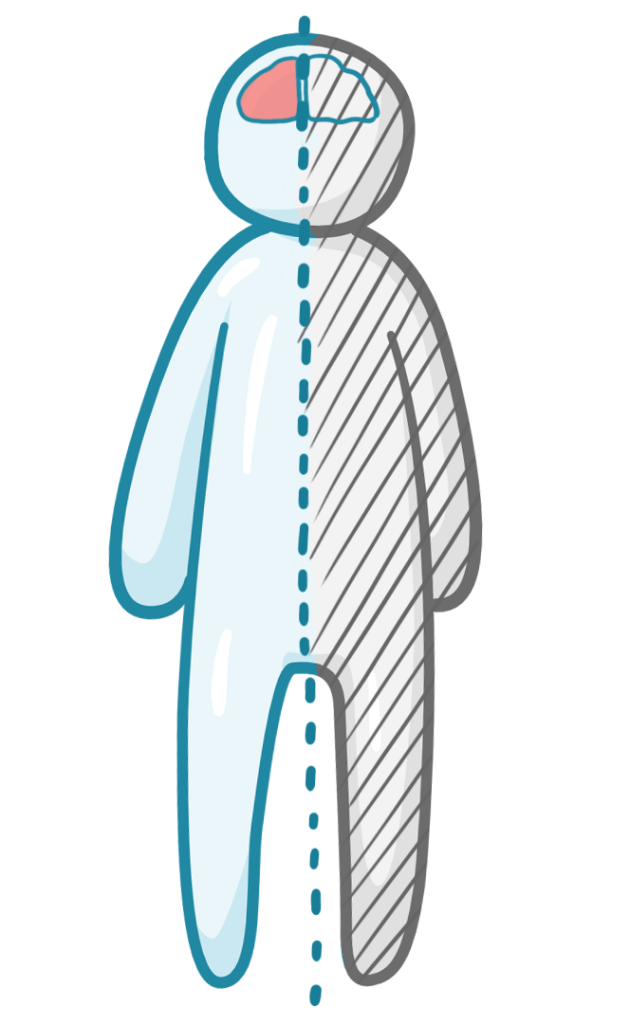
is the process of determining where in the nervous system a patient’s symptoms originate.
Neurology offers an incredible window into the beautiful complexity of the human brain and nervous system. Once you develop a repeatable approach, the patterns become easier to recognize, and the rotation becomes that much more enjoyable. Let’s make sure you step in equipped, confident, and ready to enjoy the ride!
What Makes Neurology Rotations Difficult?
Neurology rotations have a reputation for being one of the most challenging clerkships, and for good reason. The heavy emphasis on localization and neuroanatomy requires you to think in three dimensions constantly. Every symptom triggers the same fundamental question: “Where exactly is the lesion? Is it in the cortex, subcortical structures, brainstem, spinal cord, anterior horn, nerve root, plexus, or peripheral nerve?” This real-time anatomic mapping adds a layer of complexity that few rotations demand.
Unlike many other rotations, your differential diagnosis depends on answering that question before you even begin thinking about the disease process.
The neurological exam itself is also lengthy, highly structured, and unforgiving. It’s easy to lose structure mid-exam, and small findings often carry significant diagnostic weight. One skipped test or inconsistent grading throws off your entire interpretation. Diagnoses frequently hinge on subtle findings. The ability to recognize these nuances is often what separates an acute stroke from a complex migraine or early Guillain-Barré from myasthenia gravis.
Differentials can also feel overwhelming. Weakness alone could mean stroke, multiple sclerosis, spinal cord compression, neuropathy, myopathy, or a functional neurological disorder. Keeping everything organized can be exhausting. Learning how to organize these possibilities takes practice.
Attending and resident expectations can vary dramatically as well, and adjusting to different teaching styles adds another layer of complexity. Some prioritize rapid localization statements, while others want deep dives into pharmacology, imaging correlations, or pathophysiology. This inconsistency adds to your mental strain on top of long hours, emotional patient stories, and the weight of responsibility.
Many of these challenges aren’t unique to neurology. The transition from classroom learning to clinical practice often requires students to rapidly adapt to new responsibilities, manage uncertainty (thanks, Imposter Syndrome), and get organized by developing clinical workflows. Neurology adds another layer of complexity to these challenges because missing something can have an immediate impact on time-sensitive interventions like thrombolytics, thrombectomy, or neurosurgical decompression, raising the stakes dramatically.
The patterns in neurology are logical, elegant, and deeply fascinating. Despite its reputation, this rotation becomes much more manageable once you develop a consistent, systemic approach. The more patients you see, the easier it becomes to recognize common patterns and build confidence in your clinical reasoning. The intimidation fades, replaced by excitement as you see the nervous system wiring come alive in your patients.

The Mindset Shift That Changes Everything
The single most powerful mindset shift is this: localization first, diagnosis second. Localization is the process of determining where in the nervous system a patient’s symptoms originate based on the patient’s history and neurological examination. It’s the cornerstone of neurology because it guides your differential diagnosis and management.
Before uttering the words “stroke,” “seizure,” or “multiple sclerosis,” state the most likely anatomic location. “This localizes to the right middle cerebral artery territory” comes before any disease label. This habit quickly helps you organize your thoughts.
Commit to being systematic rather than encyclopedic by focusing on high-yield conditions. You don’t need to know every rare syndrome, eponym, or zebra diagnosis from obscure literature. What you do need to do is develop the ability to reason clearly using clear frameworks. Approach every patient using the same framework:
- Gather the history and exam findings.
- Determine the localization.
- Develop a focused differential diagnosis.
- Build a targeted management plan.
Using the same process every time makes complex cases feel much more manageable and helps to prevent you from going down rabbit holes during your busy shifts. However, not every patient will localize neatly. When findings are unclear or conflicting, explain your reasoning, acknowledge uncertainty, and discuss your leading possibilities.
Remember that a concise, well-reasoned assessment is usually more valuable than an overly elaborate one. A concise localization statement delivered in plain language and a focused assessment will usually make a stronger impression than listing every possible diagnosis. Attendings and residents value students who clarify their thinking and advance patient care, not those who perform intellectual gymnastics.
This shift also helps you let go of perfectionism and evaluation pressure. You don’t need to anticipate every attending’s question or know every rare neurological disorder. What matters most is demonstrating organized thinking, curiosity, and steady improvement throughout the rotation.
Finally, embrace repetition. Neurology concepts click and solidify after seeing the same patterns across multiple patients, not through heroic all-nighters. The neurological exam, and localization in particular, gets easier every time you perform it. This patient-centered repetition not only strengthens your clinical reasoning but can make you feel better throughout the rotation and highlight your growth for the residents and attendings you work with.
Protect your sleep, eat with nutrition in mind, stay active when you can, and give yourself time to recharge. Consistency will take you much farther than occasional marathon study sessions. Make this shift early, practice it relentlessly, and watch your confidence, enjoyment, and impact soar throughout your neuro rotation.
What Actually Matters During Your Neurology Rotation
Now let’s put what we’ve discussed into practice. The following skills and habits are what you’ll rely on most, regardless of the patients you see or the attending you’re working alongside.
The Neurological Exam (Your Core Tool)
Treat neuro exams as your most valuable clinical tool and the unbreakable foundation of every patient encounter. Perform it exactly the same way every time until the sequence becomes second nature because consistency makes subtle abnormalities easier to recognize.
Start with a mental status exam, including observing appearance, affect, and behavior, then test orientation, attention, memory, language, abstraction, and insight. Move systematically through the cranial nerves, followed by motor testing, reflexes, sensation, coordination, and gait. Use consistent grading for strength and reflexes so your findings are reliable and easy to communicate to the rest of the team.
The payoff from daily identical practice is enormous. Within two weeks, you’ll detect subtle changes instantly and localize lesions faster. Practice on every patient you encounter, even those on other services, to build unbreakable muscle memory.
Localization (The #1 Skill)
Localization is the cornerstone of neurology, and most neurology services lead with it. Before discussing diagnoses, identify whether the lesion is central or peripheral, whether it involves the brain or spinal cord, and whether the findings suggest an upper or lower motor neuron process. Rehearse verbalizing your localization during presentations and discussions with residents. The more often you say it out loud, the more natural it becomes.
Common Presentations You’ll See
You’ll see the same core presentations repeatedly during your rotation. Developing a consistent framework for each one will make your clinical reasoning much more efficient.
- Weakness: Determine if it’s an upper or lower motor neuron pattern.
- Numbness: Distinguish between stocking-glove, dermatomal, or hemisensory distributions.
- Headache: Determine if it’s a thunderclap onset versus a gradual onset, plus red-flag screening.
- Altered mental status: Evaluate for quick delirium, metabolic causes, seizures, infection, and focal neurological deficits.
- Seizures: Characterize the detailed onset, semiology, and postictal descriptions.
The more often you apply the same framework, the easier these presentations become to evaluate.
Know the Neurological Emergencies
Every medical student should be able to recognize the neurological conditions that require immediate action. Key emergencies include:
As a medical student, your role is to recognize these emergencies early, communicate your concerns clearly, and alert the appropriate team members. Prompt recognition can have a significant impact on patient outcomes.
Learn How to Communicate Clearly
Strong presentations are organized, concise, and clinically useful. Structure every presentation identically to include localization, pertinent positives and negatives from history and exam, assessment, and a clear plan. Keep it under 90 seconds. Use plain language and stay organized.
For example:
“This 72-year-old patient localizes to the right MCA territory based on left-sided weakness and facial droop. My assessment is acute ischemic stroke, and the plan includes aspirin, high-intensity statin therapy, swallow evaluation, and early PT/OT consultation.”
A consistent, focused presentation makes it easier for the team to follow your clinical reasoning.
Reliability and Professionalism
Clinical knowledge matters, but it’s only part of what makes a strong rotation. The habits you bring to work each day are just as important.
- Reliability consistently stands out more than trying to be the smartest person on the team.
- Arrive prepared, pre-round thoroughly, know your patients’ overnight events, follow up on labs and imaging, write clear notes, and close the loop on the tasks you’re assigned.
- Ask for feedback regularly and show that you’re incorporating it into your daily practice. Small improvements from one week to the next are often more noticeable than isolated moments of brilliance.
- Ultimately, success on a neurology rotation comes from combining thoughtful localization, organized clinical reasoning, and dependable day-to-day performance.

What Doesn’t Matter as Much
It’s easy to feel like you need to know everything to succeed on a neurology rotation. Rare syndromes and obscure eponyms make for interesting reading, but not everything deserves the same amount of attention. Focus your energy on common, high-yield patterns unless a case specifically points elsewhere.
Similarly, a longer, more involved neurological exam isn’t necessarily a better option. A focused, well-organized exam that answers the clinical question provides far more value than an exhaustive one that tires your patient.
When presenting patients, prioritize clear communication over complicated terminology. Complex medical jargon that obscures rather than clarifies your thinking is less effective than straightforward language that clearly explains your clinical reasoning.
Trying to impress by reciting twelve-item differentials or volunteering for every non-essential task tends to lead to burnout without improving your performance. Likewise, chasing a rare diagnosis in every patient often scatters your focus and increases cognitive load instead of strengthening your clinical reasoning.
Rotations reward students who deliver reliable, clear, and actionable contributions over those who pursue spotlight moments or impossible perfection. And the best part is that adopting this mindset dramatically lowers your daily stress, helps you sustain your enthusiasm for medicine, and allows you to enjoy taking part in the fascinating neurology cases you’ll see.
How to Study Without Burning Out
The most effective study method is to tie what you need to know to the patients you see each day. This contextual, patient-centered approach makes information stick permanently because it’s immediately relevant and reinforced by real experience.
Let your patients guide your studying. At the end of each day, review the conditions, presentations, and management decisions you encountered on the service. Revisiting real cases reinforces key concepts, strengthens your clinical reasoning, and makes new information easier to remember than studying topics in isolation.
Keep your daily study strategy focused and sustainable. Aim for 30–45 minutes per study session (but any focused amount of time will be productive), concentrating on one topic at a time. Use active recall techniques such as localization diagrams from memory, explain concepts out loud as if teaching them, then challenge yourself with board-style questions. Review actual MRI/CT scans alongside residents whenever possible for visual reinforcement. Consistent studying throughout the rotation is far more effective than trying to cram it all into your memory at once.
Finally, be mindful of common pitfalls. Skipping the localization step, performing an unstructured exam, overloading presentations with unnecessary details, jumping prematurely to rare diagnoses, or abandoning your daily routine when you’re tired can all slow your progress. Returning to the same structured approach every day can help you avoid these common pitfalls.
Neurology carries a high cognitive load, and pattern recognition develops through repeated exposure. Prioritize adequate sleep, nutrition, physical activity, and time to recharge, as they’re essential for learning and patient care. Ask attendings or residents for specific feedback throughout the rotation so you can adjust quickly. Together, these habits create a sustainable approach to learning that will serve you throughout your neuro rotation.
What Smashing Your Neurology Rotation Really Looks Like
Smashing your neurology rotation doesn’t mean having all the answers. It means showing up every day of your rotation with a structured, thoughtful approach to patient care.
Arrive prepared each morning, perform a well-structured neuro exam, and localize common presentations before discussing your differential diagnosis. Your presentations stay concise, organized, and helpful, moving rounds forward efficiently instead of slowing them down.
You spot neurological emergencies promptly, communicate and escalate your concerns clearly for precise handoffs, and follow up on labs, imaging, and patient progress diligently.
Your reliability shows in the small things, including writing timely notes that emphasize localization, asking thoughtful questions at appropriate moments, and incorporating the feedback you’re given into your daily practice. By maintaining a consistent approach, even during busy or challenging days, you’ll demonstrate steady week-to-week improvement. Residents and attendings will come to see you as someone they can depend on because you’re prepared, organized, and engaged.
By the end of the rotation, you should be able to localize most common presentations on the spot, communicate clearly under pressure, and feel genuinely confident managing basic neurology issues. These habits create compounding growth that attendings remember, and evaluations naturally reflect. You finish the rotation excited about neurology rather than simply relieved it’s over. Those skills not only strengthen your evaluations but also prepare you for future clerkships and residency.
Success during your neurology rotation ultimately isn’t about memorizing every possible fact or delivering flawless performances. It comes down to three foundational pillars you’ll use every day: precise localization of lesions, organized clinical reasoning with a clean, repeatable structure in your daily work, and dependable, unwavering consistency in your performance. Being clear, organized, and helpful will always outperform trying to sound impressive or chase perfection.
The repetition that once seemed tedious will quickly become a source of real confidence and clinical competence. These practical skills will accompany you through every subsequent rotation, sub-internship, residency application, and beyond. You’re not just surviving neurology. You’re building career-long strengths that will serve patients for decades!
The nervous system is incredibly fascinating, intricate, and rewarding to explore. Stay curious throughout the experience. And just know…YOU’VE GOT THIS!
Key Takeaways
- Successful neurology rotations begin with accurate lesion localization before developing a differential diagnosis.
- A consistent, structured neurological examination is the foundation of effective patient assessment.
- Recognizing common neurologic presentations and emergencies is more valuable than memorizing rare syndromes.
- Studying real patient cases and practicing active recall strengthen long-term retention and clinical reasoning.
- Reliability, organized thinking, and clear communication consistently distinguish high-performing medical students.
References
- https://dons.host.dartmouth.edu/DoNS/part_1/chapter_10.html
- https://www.msdmanuals.com/professional/neurologic-disorders/spinal-cord-disorders/spinal-cord-compression#Symptoms-and-Signs_v1046880
- https://www.medicalnewstoday.com/articles/thrombectomy
- https://www.sciencedirect.com/topics/neuroscience/babinski-reflex
- https://my.clevelandclinic.org/health/diagnostics/22901-romberg-test
- https://www.merckmanuals.com/professional/neurologic-disorders/symptoms-of-neurologic-disorders/numbness
- https://www.neurology.org/pb-assets/rfs-documents/rfs-guide-to-neurology-clerkship-1744122962050.pdf
- https://www.neurology.org/doi/pdf/10.1212/WNL.58.6.849
- https://www.neurology.org/doi/pdf/10.1212/WNL.0000000000007187
- https://www.neurology.org/doi/pdf/10.1212/NE9.0000000000200169
- https://www.neurology.org/doi/pdf/10.1212/WNL.0000000000009247

Try Osmosis from Elsevier today! Get your free trial to find out why millions of clinicians and caregivers love learning by Osmosis.
Leave a Reply