
Today’s NCLEX-RN® question of the day focuses on a patient’s altered mental status. Do you know the answer? Let’s find out!
A patient is being hospitalized for altered mental status. Their imaging was negative for any acute intracranial pathology. The physician suspects intoxication with an illicit substance. The patient’s completed laboratory tests are pictured below.
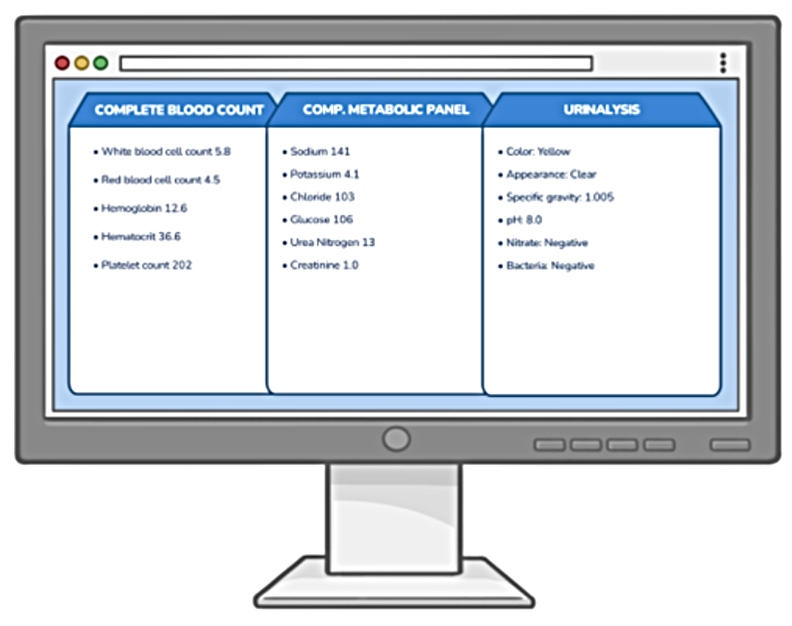
For which additional test should the nurse send a sample next?
A. D-Dimer
B. Troponin T
C. COVID-19 Antigen
D. Urine toxicology screen
Scroll down for the correct answer!
The correct answer to today’s NCLEX® Question is…
D. Urine toxicology screen
Rationale: When substance use is suspected, a blood or urine toxicology test is often performed to identify the substance used. This is the next appropriate test to rule out substance use.
Main Takeaway
Diagnosis of substance use disorder begins with the patient’s history and physical assessment. When substance use is suspected, a blood or urine toxicology test is often performed to identify the substance used. A urine toxicology screen does not diagnose substance use disorder. It only helps identify which substances are present in the patient’s system.
Diagnosis of substance use disorder is confirmed using the Diagnostic and Statistical Manual for Mental Disorders fifth edition or DSM-5 criteria, which is a set of diagnostic criteria for substance use disorder.
Incorrect Answer Explanations
A. D-Dimer
Rationale: D-dimer will help rule out a blood clot, like a pulmonary embolism; however, it will not assist in diagnosing substance use.
B. Troponin T
Rationale: Troponin T levels will help to diagnose myocardial infarction but will not help diagnose a substance use disorder.
C. COVID-19 Antigen
Rationale: COVID-19 antigen may assist with diagnosis of COVID-19 but will not diagnose use of a substance.
Want to learn more about this topic?
Watch the Osmosis video: Substance use disorder – Medications and illicit drugs: Nursing

Try Osmosis from Elsevier today! Access your free trial to find out why future clinicians and caregivers love learning by Osmosis.
Leave a Reply