
Today’s NCLEX-RN® question of the day focuses on Bronchopulmonary dysplasia. Do you know the answer? Let’s find out!
The nurse in the pediatric emergency department is caring for a 2-year-old patient with a history of bronchopulmonary dysplasia (BPD). Which term best describes this condition?
A. Acute
B. Infectious
C. Iatrogenic
D. Congenital
Scroll down for the correct answer!
The correct answer to today’s NCLEX® Question is…
C. Iatrogenic
Rationale: Iatrogenic describes an illness caused by medical examination or treatment. BPD has traditionally been considered an iatrogenic disease because lung injury may occur from prolonged oxygen therapy and mechanical ventilation in premature infants.
Main Takeaway
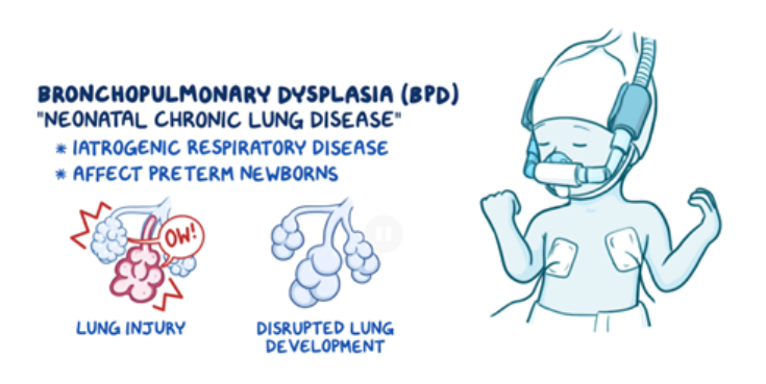
Bronchopulmonary dysplasia (BPD), also known as neonatal chronic lung disease, is a chronic lung disease that primarily affects premature infants and results from disrupted lung development combined with lung injury.
Incorrect Answer Explanations
A. Acute
Rationale: BPD is not an acute condition; instead, it is a chronic lung disease that may persist throughout childhood or even into adulthood.
B. Infectious
Rationale: An infectious condition is caused by a pathogen. BPD is not caused by an infection, although affected children may be at increased risk for respiratory infections.
D. Congenital
Rationale: Congenital describes a condition which is present at birth. BPD develops after birth because of disrupted lung development and lung injury rather than being present at birth.
Want to learn more about this topic?
Watch the Osmosis video: Bronchopulmonary dysplasia (BPD): Nursing

Get your free trial now to find out why millions of current and future clinicians and caregivers love learning by Osmosis.
Leave a Reply