
Prepare for the PANCE® with this emergency department scenario involving a patient with high fever, headache, nausea, vomiting, and a bloody nose. What’s the diagnosis? Let’s find out!
A 32-year-old man presents to the emergency department with high fever, headache, nausea, and vomiting. He was in the emergency department a few days ago for a bloody nose. Temperature is 38.3°C (101°F), blood pressure is 74/40 mmHg, heart rate is 130/min, respiratory rate is 20/min, and oxygen saturation is 95% on room air. On physical examination, he appears acutely ill with bilateral nasal packing still in place. His skin examination reveals a diffuse, erythematous macular rash.
Which of the following laboratory findings would be consistent with the underlying condition?
A. Elevated serum creatinine level
B. Elevated eosinophils
C. Normal lactic acid
D. Elevated serum calcium
E. Elevated serum bicarbonate
Scroll down to find the answer!
The correct answer to today’s PANCE® Question is…
A. Elevated serum creatinine level
Correct: See Main Explanation.
Incorrect Answer Explanations
B. Elevated eosinophils
Incorrect: This patient is presenting with signs and symptoms of toxic shock syndrome. Laboratory studies will generally demonstrate elevated neutrophils and bands, not eosinophils.
C. Normal lactic acid
Incorrect: This patient is presenting with signs and symptoms of toxic shock syndrome. This typically is associated with an elevated lactic acid due to decreased perfusion from shock.
D. Elevated serum calcium
Incorrect: This patient is presenting with signs and symptoms of toxic shock syndrome. Hypocalcemia may be seen in this condition.
E. Elevated serum bicarbonate
Incorrect: This patient is presenting with signs and symptoms of toxic shock syndrome. Metabolic acidosis, and thus a low serum bicarbonate level, would be expected in this condition.
Main Explanation
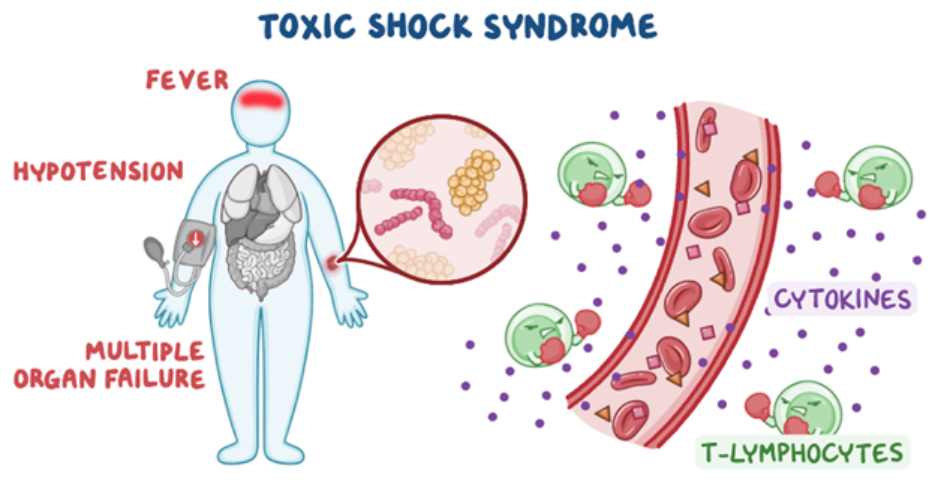
This patient’s presentation is consistent with toxic shock syndrome (TSS), most likely staphylococcal TSS related to nasal packing placed for epistaxis. TSS is characterized by fever, hypotension, diffuse erythematous rash, and signs of multiorgan dysfunction, such as an elevated serum creatinine level.
Toxic shock syndrome is a severe toxin-mediated illness caused by certain strains of Staphylococcus aureus or Streptococcus pyogenes. These toxins trigger widespread T-cell activation and massive cytokine release, which can lead to shock and multiorgan dysfunction. Most cases are caused by toxin-producing strains of S. aureus, although streptococcal TSS can occur. Streptococcal TSS is frequently associated with positive blood or tissue cultures, whereas staphylococcal TSS is often diagnosed clinically because blood cultures are commonly negative.
Laboratory studies in TSS can show a multitude of findings. Leukocytosis with a left shift, anemia, and thrombocytopenia may be seen on a complete blood cell count. Metabolic studies may demonstrate elevated BUN and creatinine levels, elevated liver enzymes, hypoalbuminemia, and elevated creatine kinase, particularly when myositis or necrotizing soft tissue infection is present. Lactic acidosis, electrolyte abnormalities, and disseminated intravascular coagulation (DIC) may also occur. The specific laboratory abnormalities vary depending on the severity of shock and the degree of organ involvement.
Major Takeaway
Toxic shock syndrome commonly causes laboratory evidence of multiorgan dysfunction, including elevated creatinine and liver enzymes, lactic acidosis, and hematologic abnormalities.
Want to learn more about this topic?
Review this Osmosis content: Toxic shock syndrome: Clinical sciences
References
- Centers for Disease Control and Prevention (2022). Streptococcal toxic shock syndrome. Retrieved September 24, 2023, from https://www.cdc.gov/groupastrep/diseases-hcp/Streptococcal-Toxic-Shock-Syndrome.html
- Jameson, J., Fauci, A.S., et al. (2018). Chapter 135: Staphylococcal infections. Harrison’s Principles of Internal Medicine, 20e. McGraw Hill.

Get your free trial today to discover why millions of clinicians and caregivers love learning by Osmosis.

Leave a Reply