
What is COMLEX Level 1 and who is this guide for?
Having gone through the experience of medical school and taking boards, we understand how important these examinations are to your professional journey. This guide is designed to help osteopathic medical students like you confidently prepare for the COMLEX-USA Level 1; the first of three exams you’ll take to become a doctor of osteopathy (which is kind of a big deal)!
Right now, you’re hard at work learning the foundations and fundamentals of osteopathic medicine, so you can use your knowledge to ace the COMLEX-USA Level 1 exam, which means this guide is for YOU! Whether your exam is months away or just weeks away, if you’re wondering what’s on the test, how to study (including how to integrate OMM), what the day of your exam looks like, and everything in between, then you’re in the right place.
Our goal with this guide is to make your life easier. So, we’ve made it simple to search, read straight through, or skip around and find what you need when you need it. And for a sense of what you’ll need to do to prepare, take a quick peek at our top 3 tips for COMLEX-USA Level 1 article!
Once you work your way through this guide, you’ll know exactly what’s around the corner, including how the COMLEX Level 1 exam is scored, what topics it covers, how to create a study plan, and how we can help you walk into the exam confident and calm. Now, let’s get started!
What is COMLEX-USA® Level 1?
The Comprehensive Osteopathic Medical Licensing Examination of the United States, Level I, or COMLEX-USA Level 1, is a one-day, computer-based exam that covers everything you’ve learned in your first two years as an osteopathic medical student, or OMS. It’s also the first of three tests necessary to become an osteopathic physician.
The COMLEX exam is written and administered by the National Board of Osteopathic Medical Examiners (NBOME), which is the organization responsible for all COMLEX-USA licensing exams, and it’s through their website you’ll eventually register and receive your score reports.
The COMLEX Level 1 exam is required for every osteopathic medical student and is most often taken at the end of your second year of medical school, right before starting clinical rotations. Some students, though, decide to wait until they’ve completed a few clinical rotations before taking it, mostly for more time to study (more on that later).
Is the COMLEX Level 1 exam the same or similar to USMLE Step 1?
The COMLEX-USA Level 1 exam is uniquely different from the USMLE Step 1 exam. It tests you on both Osteopathic Principles and Practice (OPP), and Osteopathic Manipulative Medicine (OMM), which are integrated into each section. So, unlike the USMLE, you’re not just tested on pathology, physiology, and pharmacology, but how an osteopathic physician thinks.
>> Curious about the key differences between DOs and MDs? Learn more about it! <<
How do you register for COMLEX Level 1?
Now that you know that you need to take this test, how do you get started? Let’s begin with the NBOME registration process:
- Create an NBOME account. Set up your profile on the NBOME portal and verify your identity.
- Confirm your eligibility. Your College of Osteopathic Medicine (COM) certifies that you’re in good standing and eligible to sit for the exam. Many schools also require a passing Comprehensive Osteopathic Medical Self-Assessment Examination (COMSAE) score before your eligibility is confirmed.
- Apply and pay. Submit your application through the NBOME portal and pay the exam fee.
- Schedule with Pearson VUE, which is the testing center administering your exam. Once you’re approved, book your date and location on the Pearson VUE website. Dates are generally available for up to six months in advance.
Be sure to give yourself plenty of lead time to schedule your exam date. Popular dates and locations fill up fast, especially during the spring testing crunch period, so schedule as early as you can!
How much does COMLEX Level 1 cost?
As of 2026, the testing fee set by the NBOME is $745, but make sure to check the current Bulletin of Information for the exact amount (as it’s subject to change without notice). A few other costs worth planning for:
- Rescheduling: roughly $85 to $250, depending on how close you are to your test date
- Timing rule: you can’t schedule or reschedule within 5 calendar days of the exam date, so choose your date carefully
- No-show/very late cancellation: the late fee is approximately $400 if you miss your appointment without canceling in a timely manner
Are testing accommodations available for the COMLEX?
If you have a disability, as defined by the Americans with Disabilities Act (ADA), you may apply to the NBOME for reasonable testing accommodations. A few things to know:
- You’re required to complete one year of medical school before applying. Typically, you’ll need an unofficial transcript from your first year or a signed, dated letter from a school official.
- It’s best to apply early because the NBOME generally requires about 75 days to review a complete application. Applying early leaves time to submit additional information or request reconsideration if needed.
- Be prepared to submit credible, objective documentation from qualified healthcare professionals that support your request and demonstrate why the requested accommodations are necessary.
Why is COMLEX Level 1 important?
COMLEX-USA Level 1 matters because it’s an important step in continuing your medical education. Without passing it, you can’t move towards becoming a licensed physician.
Here’s more on why the COMLEX Level 1 exam is so important:
- You need it to continue progressing. Most medical schools require students to pass COMLEX-USA Level 1 before starting clinical rotations.
- It’s required for licensure. Level 1 is the first of three COMLEX-USA exams required to become a licensed DO.
- Residency applications. While Level 1 is now pass/fail, a passing result is still a baseline expectation that helps set the tone for how residencies can perceive your application.
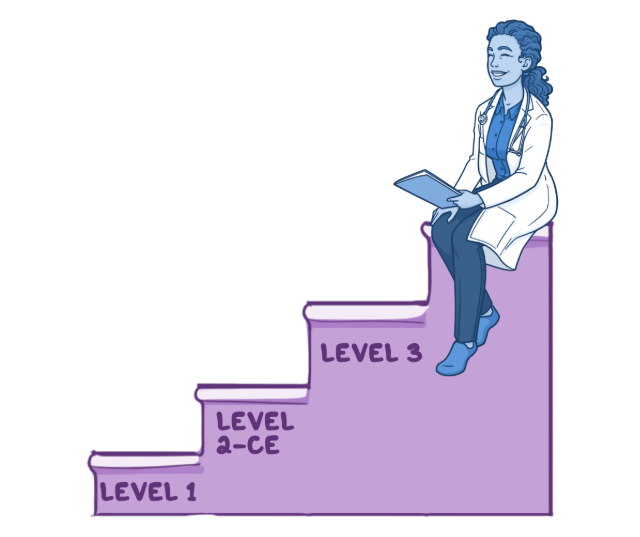
- It’s a foundation for what’s next. The knowledge you build for Level 1 carries directly into COMLEX Level 2-CE and Level 3. In fact, you can’t sit for Level 2 or Level 3 without first taking Level 1.
The excellent news is the first-time pass rate for the COMLEX Level 1 is around 90%, which means the vast majority of students who prepare well will pass on their first try!
What’s the format of the COMLEX Level 1 exam?
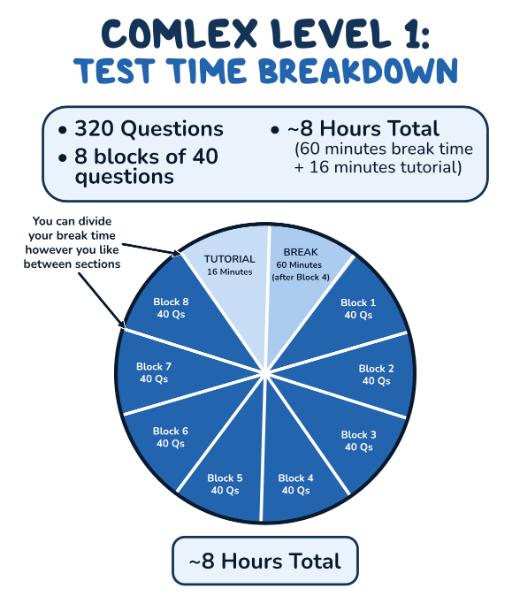
COMLEX Level I is a one day, computer-based exam administered over 8 hours. Questions consist of single, best answers, and multiple-choice options.
How many questions are on COMLEX Level 1?
- 320 total questions
- 8 blocks of 40 questions each
Note that the NBOME reduced the number of questions from 352 to 320 and adjusted the break structure on May 7, 2026. The content focus remains the same.
How long is COMLEX Level 1?
- Total testing time is 8 hours, including 1 hour of break time divided throughout.
- The exam is split into two 4-hour sections.
- Each 4-hour section has 4 blocks, and each block has 40 questions.
- Each question takes on average about 90 seconds to answer.
- At that pace, plan for roughly 50–60 minutes per 40-question block, which works out to about 4 hours per section across its 4 blocks, leaving a little buffer to review flagged questions before time runs out.
- Blocks within each section aren’t individually timed, so you control the pace of each block as well as when, and how long to take your breaks.
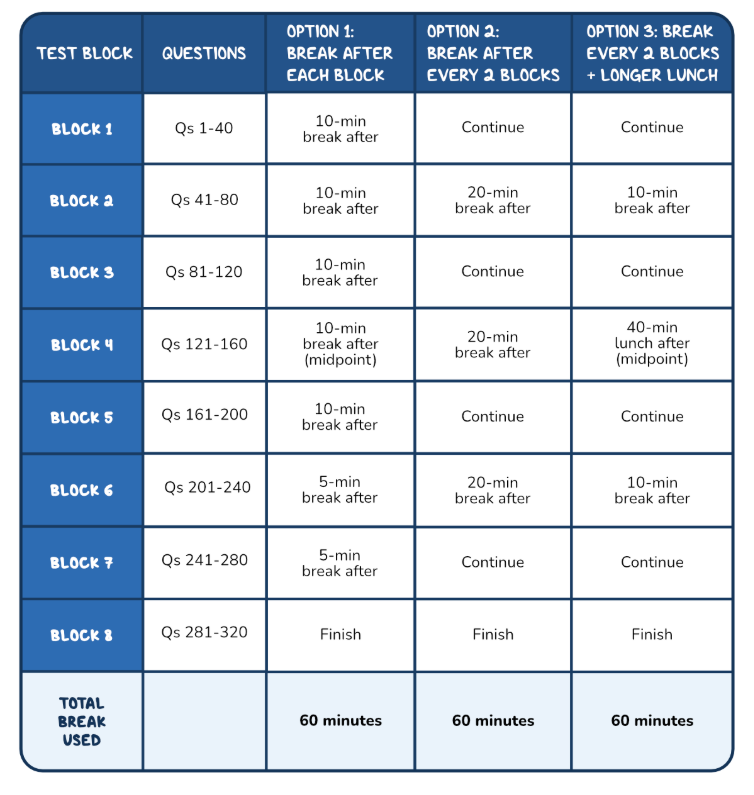
How do breaks work and do you have sample schedules?
- You’re given a total of 60 minutes of break time.
- Because the test blocks aren’t individually timed, you decide how to spend your 60 minutes of break time.
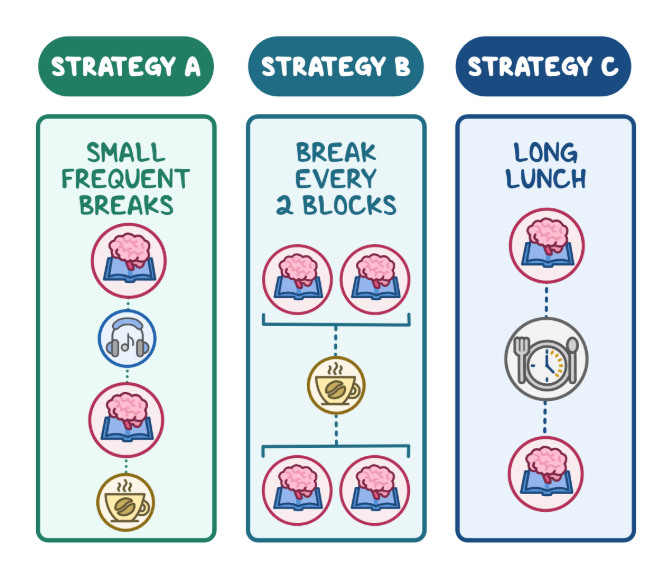
- There’s no separate, mandatory lunch period. Most COMLEX test takers take a longer break (about 30–40 minutes) during the midpoint (after Block 4), between the two, 4-hour sessions, and then take quick breaks between the other blocks to go to the restroom, have some water, etc.
- Make sure to keep an eye on the on-screen break timer, because once the 60 minutes have elapsed, any further break time comes out of your testing time.
Here are a some common ways to budget your break time across the day’s 8 blocks:
What types of questions are asked on the COMLEX?
All COMLEX Level 1 questions are “single-best-answer” format (you pick the best option from the choices given). Sometimes audio-visual items will be included, like images, heart or lung sounds, or short video clips.
Can you give me an example of a COMLEX question?
Sure, but don’t stress if you get it wrong. We haven’t gone over how to prep yet! Note: The following question was generated using Osmosis AI; more on that later!
COMLEX Level 1-Style Single Answer Choice: Myocardial Infarction
A patient experiences acute myocardial infarction. Cardiac biomarkers are measured serially to assess for myocardial injury. Which of the following cardiac biomarkers is most sensitive and specific for myocardial necrosis?
A. Creatine kinase-MB (CK-MB)
B. Lactate dehydrogenase (LDH)
C. Aspartate aminotransferase (AST)
D. Troponin I
E. Myoglobin
Answer & Rationale
Correct Answer: D. Troponin I
Rationale: Troponins I and T are the most sensitive and specific markers of myocardial necrosis and have become the standard in the biochemical diagnosis of acute MI. Troponin is a cardiac-specific protein that participates in myosin cross-bridging in cardiac myocytes. During cellular injury and death, troponin is rapidly released into the serum.
Troponin I begins to rise within 4 hours of myocardial infarction and remains elevated for 7-10 days. Using conventional assays, the time interval from acute MI to first detection is approximately 4-10 hours, requiring serial monitoring every 4-6 hours to effectively rule out MI.
High-sensitivity troponin (hs-cTn) assays allow even earlier detection. A negative high-sensitivity troponin on arrival has a 99.4% negative predictive value for acute MI, and recent guidelines endorse abbreviated 1- or 2-hour MI rule-out protocols using hs-cTn.
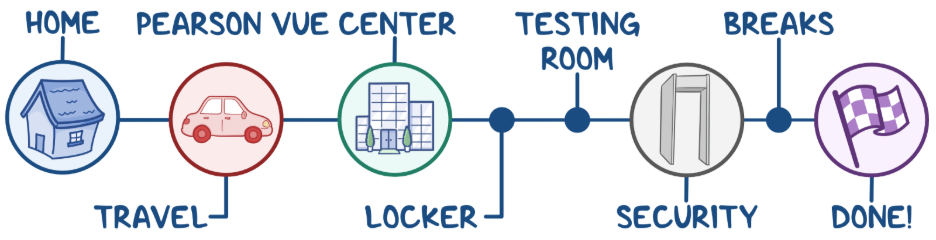
What is the COMLEX testing experience like?
Think back to your MCAT (Medical College Admissions Test). The COMLEX is very similar! In fact, if you’re taking COMLEX Level 1, then you already have experience with Pearson VUE testing centers, so this is likely familiar to you. However, as a refresher, let’s go through the day together!
At check-in:
- Arrive to the testing center at the time listed on your confirmation email and bring the required identification (ID). Usually two forms are required, like a driver’s license, passport or military ID, so be sure to check which forms of identification are accepted. Also, make sure your ID matches the name you used to register for your exam!
- Your exam will be verified. You’ll sign a waiver confirming that you accept the test rules and agreements.
- Sometimes a photograph will be taken or a palm scan for extra security.
- You’ll be assigned a locker for the day to store your personal belongings, including food and drink.
- No jewelry, except for a wedding band, is allowed on test day.
- Make sure to leave your electronics in your locker, or even better, in your car, since Pearson UVA has a zero-tolerance policy for prohibited electronics.
During the exam:
- A proctor will walk you to your assigned testing station and seat.
- You’ll have somewhere to take notes and write things down, usually an erasable whiteboard and marker, but it can’t be taken outside the testing room. Pro tip: Use the timed tutorial in the beginning of the test to write down high yield information, so you don’t sacrifice working exam time.
- You can review and change answers within a section, but once you move on, previous sections lock.
- You can adjust font size and screen colors during the tutorial or anytime during the exam.
- You’ll be required to raise your hand for breaks, as well as sign in and out.
After the exam:
- Raise your hand when finished, and the proctor will escort you out.
- Retrieve your belongings and go celebrate a job well done!
What topics are tested on COMLEX Level 1?
- Community Health & Wellness
- Human Development, Reproduction & Sexuality
- Endocrine System & Metabolism
- Nervous System & Mental Health
- Musculoskeletal System
- Genitourinary & Renal System
- Breast Disorders
- Gastrointestinal System & Nutritional Health
- Circulatory & Hematologic Systems
- Respiratory System
- Integumentary System (Skin)
In addition, foundational sciences are also tested and often integrated into clinical cases:
- Anatomy
- Physiology
- Pathology
- Pharmacology
- Microbiology
- Immunology
- Genetics
- Biochemistry
- Behavioral science
- Epidemiology
- Ethics
- Preventive medicine
- Patient safety
- Diagnostic reasoning
- Clinical decision making
What is the COMLEX Level 1 blueprint?

Before you dive into studying, let’s review what the COMLEX Level 1 assesses.
The exam is designed to follow what’s referred to as the COMLEX-USA Blueprint, which is NBOME’s roadmap for the exam. Instead of just memorizing information, the blueprint focuses on knowledge, skills, and clinical reasoning required of every osteopathic medical student before starting clinical rotations.
How’s the exam broken down?
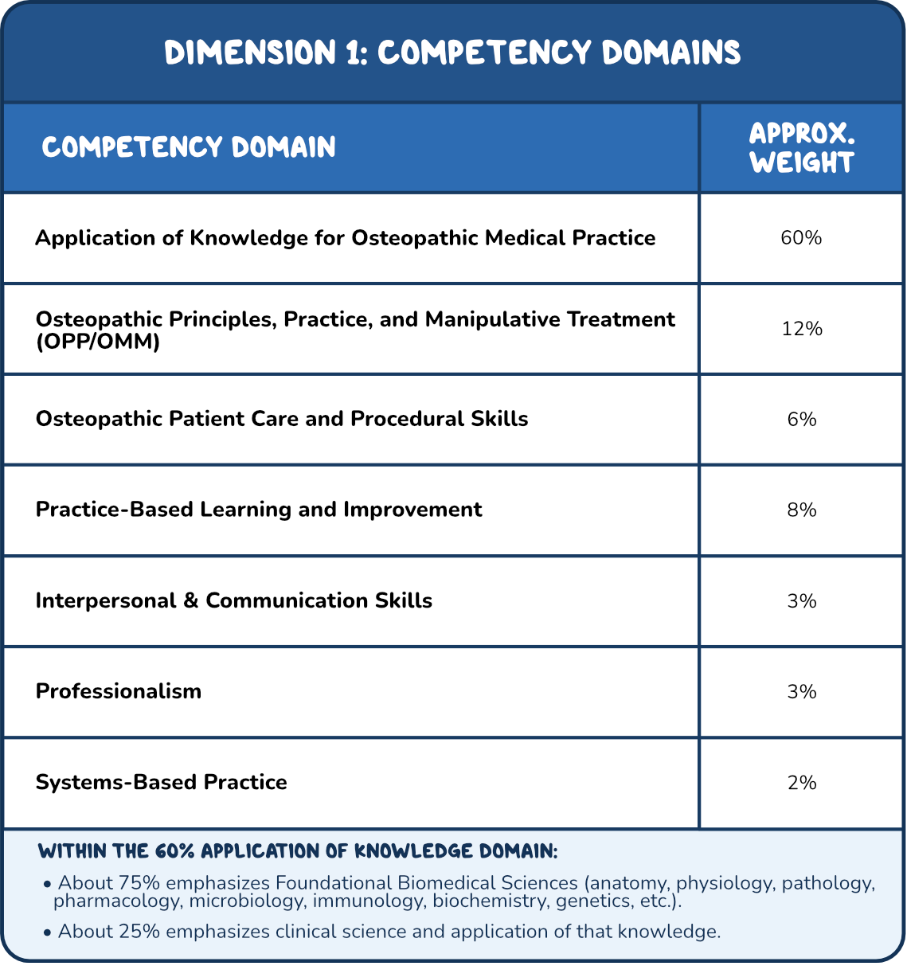
Rather than just asking straightforward recall questions, topics are integrated into patient scenarios. Because of that, every question combines two dimensions:
- Competency domains: What you should be able to do as a physician
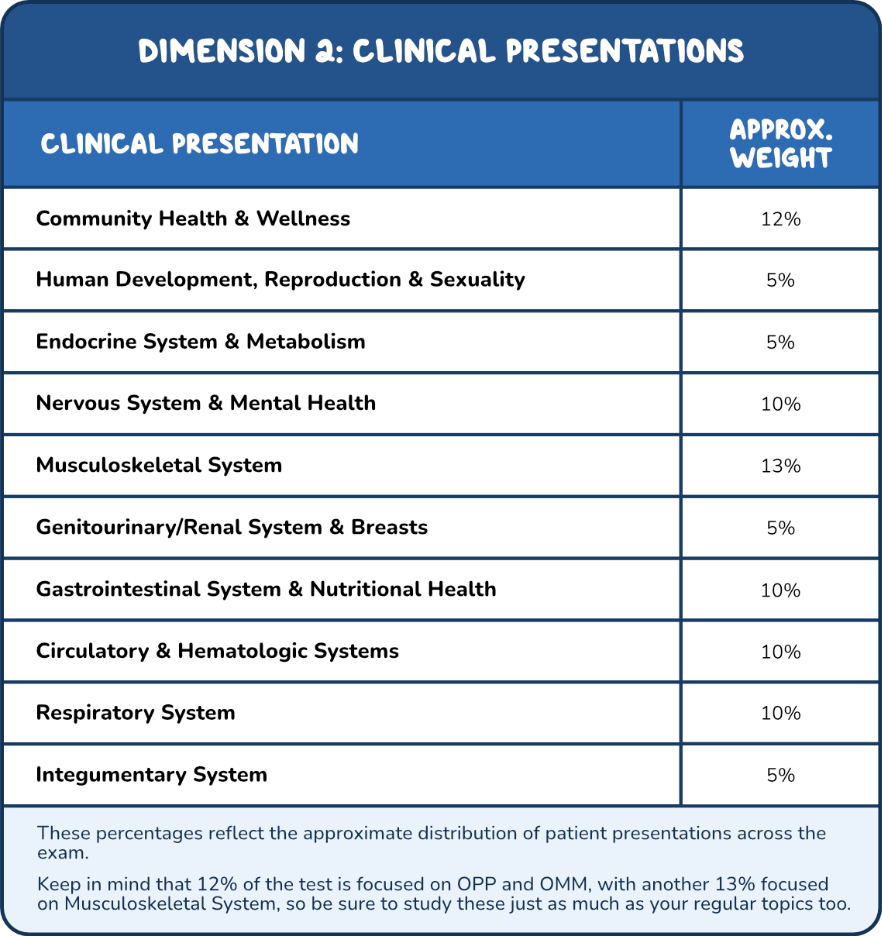
- Clinical presentations: Why the patient is seeking medical care
Let’s start with the specific competency domains:
On the other side of the blueprint are clinical presentations.
Instead of “Here’s a pathology question,” COMLEX asks, “Here’s a patient with chest pain, now tell me what’s going on?” These presentations cover virtually every major body system and are broken down by percentile below:
What medical subjects are included on the COMLEX?
The competency domains tell you how you’ll be tested, so now let’s look at what you’ll actually be tested on.
Systems-based content is tested via clinical presentations and includes topics like:
- Community Health & Wellness
- Human Development, Reproduction & Sexuality
- Endocrine System & Metabolism
- Nervous System & Mental Health
- Musculoskeletal System
- Genitourinary & Renal System
- Breast Disorders
- Gastrointestinal System & Nutritional Health
- Circulatory & Hematologic Systems
- Respiratory System
- Integumentary System (Skin)
Foundational sciences are also tested and often integrated into clinical cases:
- Anatomy
- Behavioral science
- Physiology
- Epidemiology
- Pathology
- Ethics
- Pharmacology
- Preventive medicine
- Microbiology
- Patient safety
- Immunology
- Diagnostic reasoning
- Genetics
- Clinical decision making
- Biochemistry
>> Need some OMM practice questions? We’ve got you covered! <<
What are osteopathic principles and practices (OPP)?
One of the biggest differences between COMLEX and USMLE is the addition of Osteopathic Principles and Practice (OPP) and Osteopathic Manipulative Medicine (OMM).
Think of OPP as the philosophy behind osteopathic medicine. It emphasizes that the body functions as one integrated unit; structure and function are closely related, and the body has unique abilities to heal and regulate itself.
OMM, on the other hand, is the hands-on clinical application of those principles. It focuses on diagnosing and treating somatic dysfunction, which refers to impaired function of muscles, joints, fascia, and related structures using osteopathic manipulative techniques.
Rather than memorizing every technique, COMLEX usually asks you to recognize dysfunctions, understand autonomic relationships, choose the most appropriate treatment, or identify when manipulation should not be performed.
Highest-Yield OMM Topics
Some OMM topics appear much more frequently than others.
The highest-yield concepts include:
- Viscerosomatic Reflexes (~25%)
- Counterstrain tender points (20%)
- Chapman points (~20%)
- High-Velocity Low-Amplitude, or HVLA, indications and contraindications
- Sympathetic and parasympathetic innervation
- Myofascial release
- Fryette’s spinal mechanics (~15%)
- Facilitated Positional Release, or FPR
- Type I and Type II vertebral dysfunctions
- Lymphatic techniques
- Sacral diagnosis
- Basic cranial concepts
- Pelvic diagnosis
- Somatic dysfunction diagnosis
- Rib dysfunctions (~10%)
- Treatment selection and contraindications
- Muscle Energy
If you’re prioritizing your OMM review, these topics deserve the greatest attention.
- Chapman points (20%)
- Viscerosomatic reflexes (25%)
- Counterstrain (20%)
- Muscle energy
What skills does the COMLEX exam test?
Beyond recall, Level 1 tests how you think. Expect questions that ask for:
- Clinical (diagnostic) reasoning: move from a patient’s presentation to the most likely diagnosis or next step.
- Data interpretation: read labs, imaging, and vital signs and decide what they mean.
- Integration across medical areas: connect a mechanism in one system to findings in another; for example, tying a somatic dysfunction to the organ it reflects.
>> Want to see integration in action? Work through this somatic dysfunction question. <<
When is the best time to take COMLEX Level 1?
Most students take COMLEX Level 1 at the end of their second year, usually between April and June, right after finishing preclinical coursework and before starting clinical rotations.
A typical timeline looks…
First and second year medical school:
- Lay the groundwork by treating your coursework as board prep. While learning should be fun and preparing for boards as a first-year medical student is rough, if you start early, it’ll be much easier when exam time comes.
Four to eight weeks after 2nd year:
- Dedicated study period for focused prep once classes wrap up.
- Take a baseline self-assessment, like a COMSAE, early in your dedicated (study) period, so you know where you need to focus your study time.
Test Scheduling:
- Choose a date toward the end of that dedicated window, when your practice scores are consistently in the passing range.
- Most schools require you to take a qualifying COMSAE, demonstrating that you’re likely to pass before being able to register for the exam. Use it as a guide to see your strengths and weaknesses and go from there.
How hard is COMLEX Level 1?
COMLEX Level 1 is challenging, because it covers two years of dense material and asks you to apply it under time pressure. What makes it challenging:
- Amount of material: the exam spans every organ system and every foundational science, so there’s a lot to hold in your head at once.
- Adding OMM to basic sciences: you’re expected to weave osteopathic principles into your clinical reasoning, not treat them as a separate subject.
- Applied knowledge and clinical reasoning: questions rarely reward memorization alone; they ask you to connect ideas across topics.
The challenge most learners describe isn’t any single subject; it’s having the stamina to prepare themselves for a long exam day. The fix is practicing under realistic conditions.
Make sure to remind yourself that challenging isn’t the same as impossible. Thousands of medical students pass the COMLEX every year, and with a solid plan and some discipline, you’ll be one of them!
How is COMLEX Level 1 scored?
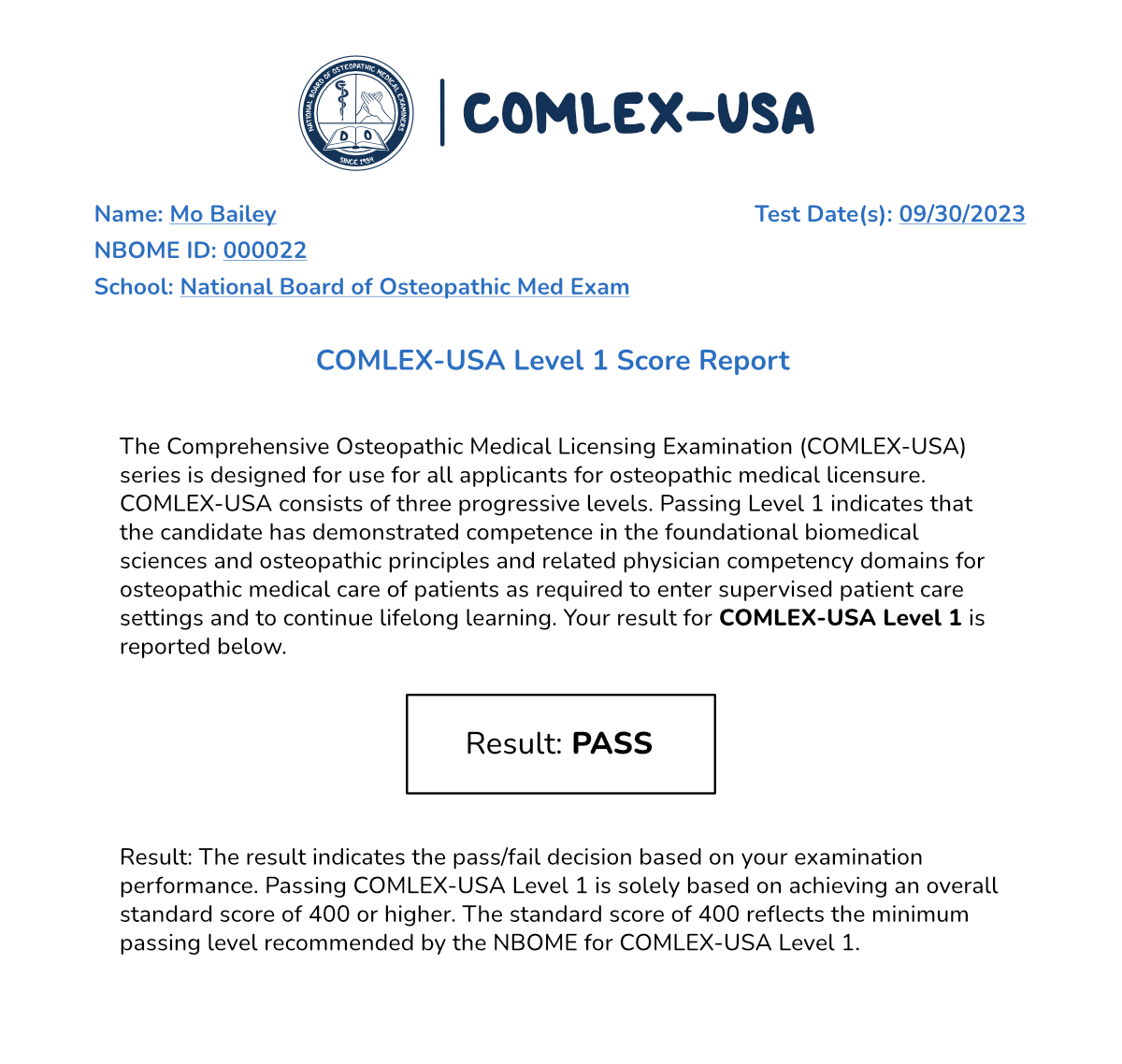
As of May 2022, the NBOME no longer reports a three-digit score for COMLEX Level 1. You simply receive a result of pass or fail.
- Pass/fail structure: your raw score (the number of questions you answer correctly) is converted to a standard score, which determines whether you pass.
- Score reporting timeline: results are generally available 2-6 weeks after the end of your testing window.
- If you don’t pass: you can register to retake the exam, and your school and the NBOME can guide you on timing and next steps.
- What your score report includes: a Formative Performance Profile, which is a visual report that compares a candidate’s strengths and weaknesses with peers across content areas, competencies, and clinical cases) and is in place of a numeric score.
- Performance profiles: the profile compares both your overall performance and by content area against first-time test-takers who passed, so you can see your relative strengths and weak spots.
Your Performance Profile is meant for you and your school as a learning tool and isn’t shared with residency programs.
What is the COMLEX Level 1 pass rate?
- First-time pass rate: about 90% in the most recent testing cycle
- Repeat test-takers: pass at a lower rate, historically around 75%
In other words, the odds are very much in your favor when you prepare consistently. A structured study plan is what separates a comfortable pass from a close call.
How should you study for COMLEX Level 1?
There’s no single right way to study, but test takers who do well on the exam often share a few habits: they start studying for the exam early in their medical education, they prioritize using practice questions (also known as Qbanks) to identify what areas they need to study, and they review their weak areas regularly. Here’s how to put that into action.
How do you create a COMLEX Level 1 study plan?
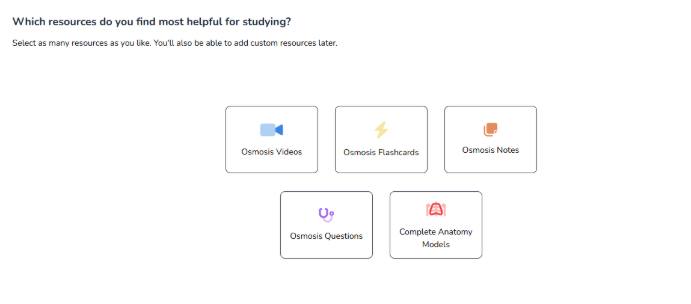
We’ve got you covered. Our Study Schedule tool builds a personalized, daily study plan around your exam date. The best part? It’s really easy to use! Simply choose the resources you want to review including Osmosis AI, videos, flashcards, high-yield notes, practice questions, Complete Anatomy models, and a variety of additional resources that come with an Osmosis plan!
Here’s a quick example of how to use the Osmosis Study Schedule tool:
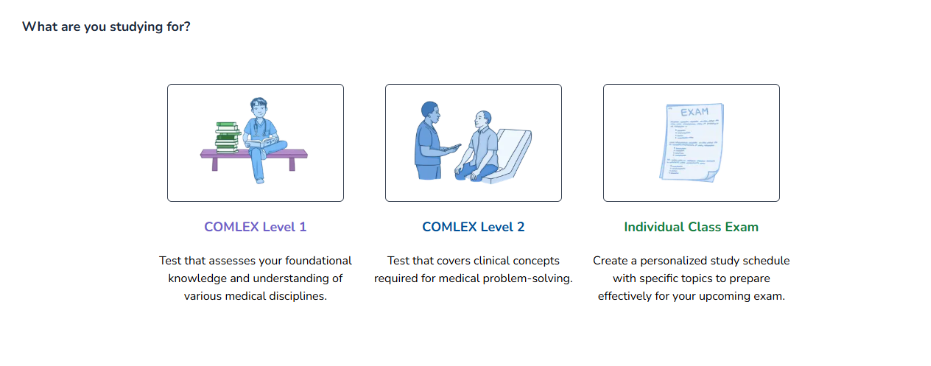
- Pick your exam:
- Choose your resources.
- Put in the date you want to be finished studying, making sure to leave time for high yield review, so maybe 1-2 weeks before your test date, depending on your personal preferences.
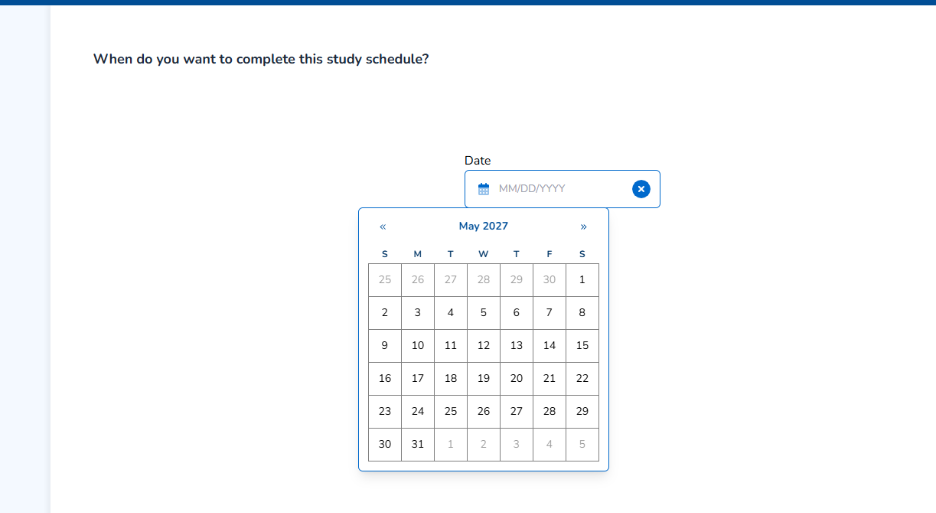
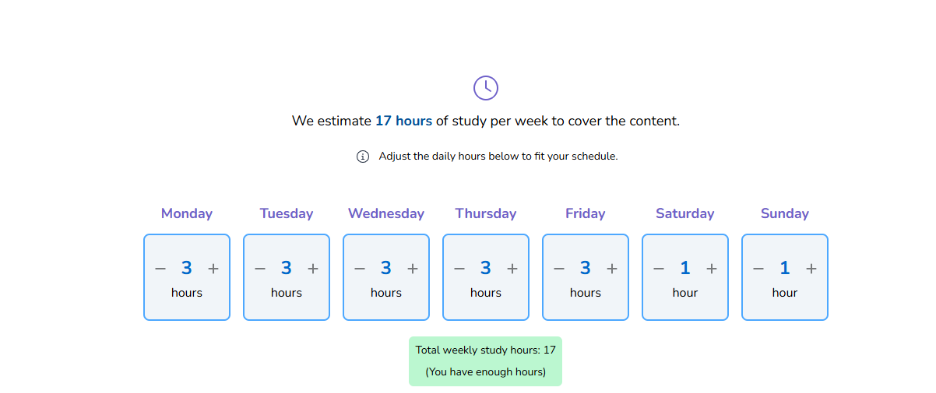
- Osmosis will calculate how many hours you’ll need to make your way through the review process, allowing you to choose how long you want to study each day. Be sure to add heavier and lighter study days too!
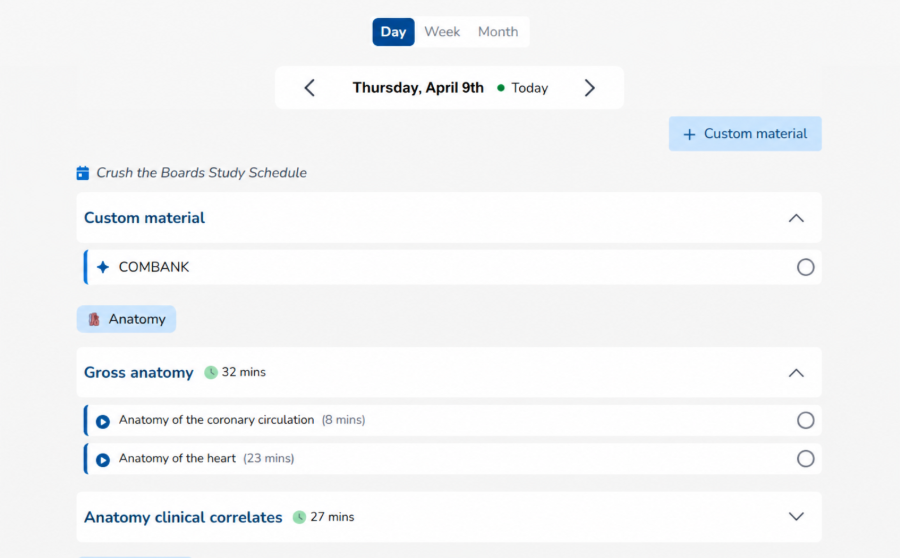
- Check and follow the study schedule to easily track which topics you’ve completed each day! You can add custom material, like COMBANK questions, which are added to your profile, so all of your study resources are in one concrete place.
If you’re more of a hands-on person, you can create a study schedule on your own by simply working backward from your test date. Count the weeks you have, then split your time between content review and practice questions.
- Timeline planning: map your dedicated period week-by-week, assigning organ systems or subjects to each.
- Balancing review and practice: spend the first stretch on content review, then shift the balance toward practice questions as test day nears.
What are the most effective study strategies for acing COMLEX Level 1?
A few strategies consistently outperform the rest. Here’s what works, and why:
- Practice active recall by testing yourself (instead of rereading your texts or notes) to force your brain to retrieve information, strengthening your memory far more than type of passive review.
- Use study tools that incorporate spaced repetition; reviewing concepts at increasing intervals helps you fight the forgetting curve and lock in knowledge for the long term.
- Practice questions test you on COMLEX exam topics by applying knowledge to vignettes and exposing gaps you didn’t know you had.
- Regularly review weak areas: treating every practice block and wrong answer as a diagnostic, then circle back and relearn the topics you miss. Try using the Osmosis Learning Loop to help you identify what topics you need to study!
How should you study OMM for COMLEX?
We know it’s tempting, but don’t save OMM for the last week. Because osteopathic principles are woven throughout the exam, the smartest approach is to fold OMM into your daily study instead of cramming it separately.
- Integrate OPP into daily study: when you review a system, review its associated osteopathic findings right alongside it. It’ll add an additional 10-30 minutes regularly instead of several hours later on.
- Practice and review: OMM questions build pattern recognition for techniques and reflexes quickly.
- Reinforce your OMM with targeted practice questions as you go.
What are the best COMLEX Level 1 study resources?
Many learners use combinations of question banks, video libraries, flashcards, and review books along with a variety of study tools. However, the best learning resources do double duty: they teach content and build your test-taking skills.
Here’s how you can support your Level 1 prep, plus the resources worth incorporating into your study sessions:
- Watch Videos: Osmosis videos to break complex topics into clear, visual explanations, so difficult concepts are finally clear.
- You can determine if the Osmosis visual learning style works for you by signing up for a free trial or exploring our YouTube channel before subscribing.
- OMTotal provides members with a library of free, step-by-step demonstrations of osteopathic manipulative treatment techniques to strengthen clinical skills.
- Test Yourself with Practice Questions: Quizzing what you’ve learned using a Qbank is the single best, high-yield learning activity you can do, because it trains you to apply knowledge under exam conditions and helps you understand why you answered a question correctly or incorrectly. The Osmosis Q-Bank contains more than 3,000 practice questions.
- Practice Answering Exam-style Questions: NBOME provides DO students with official exam-style practice questions to reinforce their clinical knowledge.
- Create and Use Flashcards: Reinforce key concepts, improve long-term retention using active recall and spaced repetition to help you efficiently manage the large volume of information you need to learn.
- Osmosis flashcards have spaced repetition built into the algorithm to resurface key topics right before you forget them!
- Anki also offers a free flashcard tool to help medical students efficiently learn, retain, and recall complex medical knowledge.
- Review Books and Notes: concise references keep your content review focused instead of sprawling.
We suggest sticking with one or two core learning resources rather than using a bunch of different tools, as the consistent use of select, trusted resources reinforce concepts more effectively and reduce the time lost switching between different formats and teaching styles.
What does a COMLEX Level 1 study schedule look like?
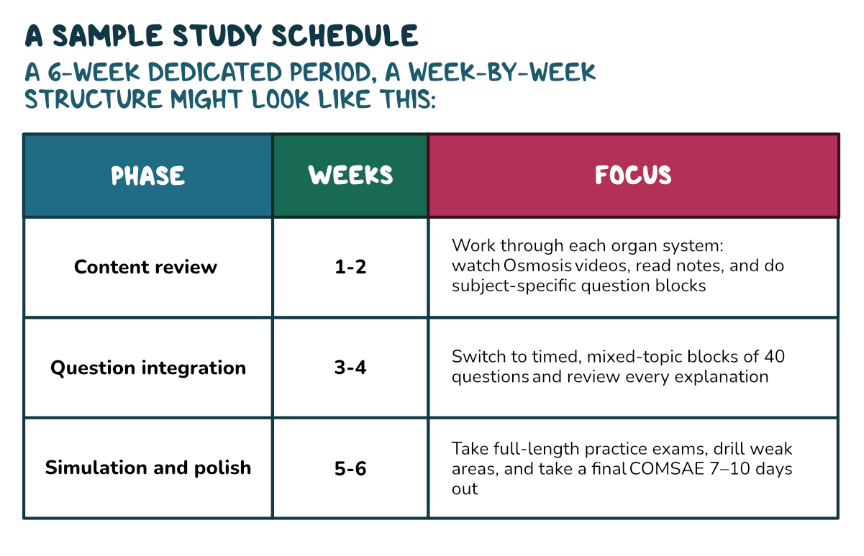
Everyone’s schedule looks a little different, but a strong plan generally moves through three phases: content review, mixed practice, and final simulation. Here’s a sample built around a dedicated study period.
A realistic daily breakdown during the middle weeks:
- Morning: one to two timed question blocks of approximately 40 questions each.
- Midday: review every question you missed and log the concepts to revisit.
- Afternoon: targeted content review on your weakest topics, plus OMM.
- Evening: flashcards powered by spaced repetition, then rest.
>> Learn how med students use the Osmosis Study Schedule to build a study plan. <<
How do you study throughout the school year?
You don’t have to wait for your dedicated period to start preparing. Studying during the school year, also known as the non-dedicated approach, builds a foundation that makes your dedicated weeks far less stressful.
A sustainable non-dedicated study routine:
- Tie board prep to class: as you cover a topic in coursework, do a handful of board-style questions on it.
- Keep it small: 30-60 minutes a day of practice questions (Qbank) and flashcards is plenty.
- Stay consistent: a little every day beats a cram session, thanks to spaced repetition identifying the areas you need to focus on.
What is Osmosis AI and what does it do?
Osmosis AI is a conversational study companion built into the Osmosis platform to help students review medical and health-related topics by providing explanations, answering follow-up questions, linking to relevant Osmosis videos and trusted Elsevier content, and creating summaries, flashcards, and Qbank-style practice questions.
Available on both the web and mobile apps, you can also use Osmosis AI to deepen your understanding of a topic using Tutor (Socratic) Mode, which guides you step-by-step with questions instead of simply revealing the answer, and includes citations so you can verify and trust the information!
How can Osmosis AI help you prepare for COMLEX Level 1?
Think of Osmosis AI as your on-demand study partner. Osmosis AI is grounded in trusted Osmosis and Elsevier medical education content. That means that unlike more general AI tools, Osmosis AI’s responses are designed specifically for healthcare learners and point you to relevant Osmosis videos and learning resources for deeper study.
Whether you’re learning a topic for the first time or reviewing before test day, you can use it to:
- Break down tough concepts into clear, easy-to-understand explanations.
- Compare diseases, treatments, and medications to better understand key differences.
- Generate practice questions to test your knowledge and identify weak spots.
- Create flashcards and mnemonics to make memorizing high-yield facts easier.
- Summarize long topics into concise, board-focused reviews.
- Find related Osmosis videos and learning resources to reinforce what you’re studying.
Use Osmosis AI whenever you get stuck, want to quiz yourself, need a new deck of flashcards, or want a quick refresher; it can help you study more efficiently and stay focused on the concepts that matter most for COMLEX Level 1.
>> Learn more about Osmosis AI along with product releases and updates <<
Should osteopathic med students take both the COMLEX and USMLE®?
One of the biggest questions you might be asking yourself is whether you should take both COMLEX-USA and the USMLE, or just COMLEX. And the answer depends on your career goals, the residency programs you’re interested in, and how much additional time and expense you’re willing to invest.
First, remember that COMLEX is required for graduation and licensure as a DO physician. Every osteopathic medical student must pass the COMLEX-USA sequence. The USMLE is optional for DO students unless your medical school specifically requires it.
How are the COMLEX and USMLE exams different?
Although the two exams cover much of the same foundational medical knowledge, there are several important differences, the COMLEX includes osteopathic principles and manipulative medicine, while the USMLE follows an allopathic framework. The exams also differ in their testing formats, content emphasis, and score-reporting systems. These differences can affect how students prepare based on which exam best aligns with their training and future licensure plans.
How do the exam structures compare?
- USMLE Step 1 focuses almost entirely on applying basic science concepts to clinical medicine.
- COMLEX Level 1 tests those same foundational sciences but also emphasizes the osteopathic approach to patient care and clinical reasoning.
OMM and OPP
The biggest difference between the USMLE exam and the COMLEX exam is that the COMLEX includes Osteopathic Principles and Practice (OPP) and Osteopathic Manipulative Medicine (OMM) throughout the exam. MDs are not required to learn osteopathic medicine, and the USMLE does not test OMM.
Scoring
Today, both COMLEX Level 1 and USMLE Step 1 are reported as Pass/Fail, so neither exam provides a numeric score at the Level 1 stage. However, residency programs will later look closely at Level 2-CE and Step 2 CK, which is still numerically scored.
Question Styles
The overall medical content overlaps substantially, but the exams feel different.
- USMLE questions tend to be straightforward, emphasizing pathophysiology, mechanisms of disease, and interpretation of laboratory and imaging findings.
- COMLEX questions often include an osteopathic perspective, integrate OMM into otherwise standard clinical cases, and may use a slightly different wording style that requires careful reading.
>> Learn more about the differences between the COMLEX Level 1 and USMLE Step 1 <<
When is taking both the COMLEX Level 1 and USMLE Step 1 helpful?
While most residency programs now accept COMLEX scores, for many students, the COMLEX alone is enough, especially in specialties such as:
- Family Medicine
- Internal Medicine
- Pediatrics
- Psychiatry
- Preventative Medicine
- Neuromusculoskeletal Medicine
- Emergency Medicine (many programs)
- Community-based residency programs
However, taking the USMLE may strengthen your application if you’re interested in programs that are university-based or historically MD-focused, such as:
- Anesthesiology
- Radiology (diagnostic or interventional)
- Emergency Medicine (some programs)
- Obstetrics and Gynecology
- Neurology
- Physical Medicine and Rehabilitation (PM&R)
Additionally, taking the USMLE exam is highly recommended for certain competitive specialties, like:
- Orthopedic Surgery
- Neurosurgery
- Dermatology
- Plastic Surgery
- Otolaryngology (ENT)
- Urology
- Ophthalmology
- Radiology Oncology
- Vascular Surgery
- Thoracic surgery
- General Surgery (at highly academic programs)
- Highly competitive academic residency programs
The reality is that some residency directors are simply more familiar with USMLE performance, making it easier to compare applicants from MD and DO schools. Taking both exams may increase the number of programs willing to review your application or make comparisons with allopathic applicants.
Other Factors to Consider About Taking Both Exams
Before deciding to take both exams, consider:
- Your specialty interests: If you’re leaning toward a highly competitive specialty, taking both exams may provide more flexibility.
- Program requirements: Always check with residency programs you’re interested in, since expectations vary.
- Cost: Registering for another licensing exam and purchasing additional study resources can be expensive.
- Time commitment: Preparing for two exams requires extra planning, especially to review COMLEX-specific OMM content.
- Your testing confidence: It’s generally better to perform well on one exam than to perform poorly on two.
- Desired location for residency. Highly desired locations, like big cities or major coastlines, are typically more competitive, and taking both exams can be the factor that gives you a leg up in the residency interview process.
Happily, the majority of the medical content overlaps between COMLEX and USMLE. If you’ve prepared well for one, you’ve already covered most of the material for the other. The biggest additional study area for COMLEX is OPP and OMM, while USMLE preparation often focuses on practicing its unique question style.
Want to learn more about the USMLE Step 1 exam?
If you’re planning to take both exams, or you’re still deciding, be sure to check out our Ultimate Guide to USMLE® Step 1, where we cover the exam format, academic blueprint, study timeline, high-yield resources, and proven study strategies to efficiently prepare. Because the two exams overlap so much, many students build a single study plan that prepares them for both while adding dedicated OMM review before COMLEX.
What are some common COMLEX Level 1 mistakes to avoid?
Most setbacks come down to a handful of avoidable habits. Here’s each one, along with a better choice:
- Using too many study tools: Pick one or two core resources and go deep! Juggling a dozen resources spreads you thin and will burden you with having to learn multiple tools.
- Not doing enough practice questions: Instead, make Qbank (practice) questions the backbone of your prep, not an afterthought; they’re the closest thing to the real exam.
- Ignoring OMM until the last minute: Fold osteopathic principles into your daily study. OMM runs throughout the COMLEX exams and can be a reliable source of points when you’re prepared.
- Poor time management: Instead, practice in timed blocks so pacing becomes second nature well before test day. (We can help with that.)
>> Need a mental break while you study? Our roundup of the best DO podcasts is a great place to start. You’ve got this! <<
How do you stay healthy while studying for COMLEX Level 1?
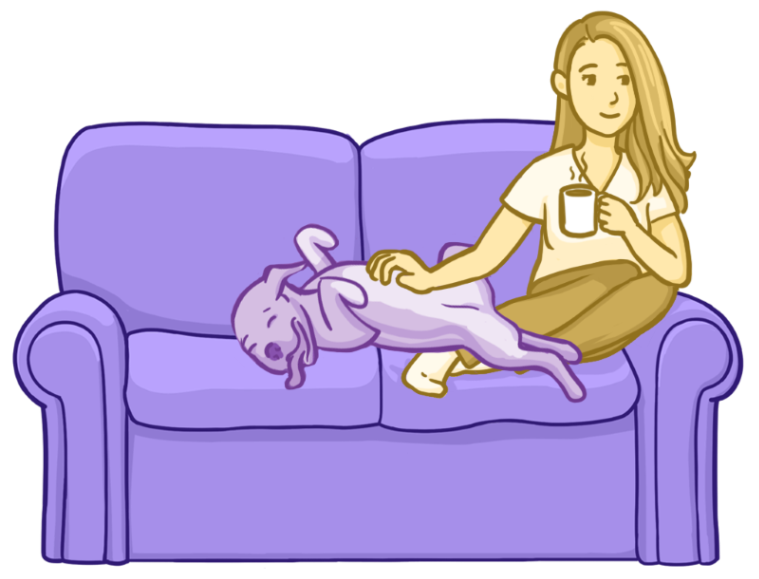
Your brain performs best when you take care of yourself! Protecting your health during a dedicated study block isn’t a luxury, it’s part of the strategy:
- Take real breaks: taking regular study breaks keeps your focus sharp and prevents burnout.
- Move your body: even a short daily walk, stretching, or a quick workout clears your head and supports retention.
- Eat well and hydrate: steady fuel beats a caffeine-and-snacks spiral.
- Protect your sleep: trading sleep for cram time usually backfires; a consistent sleep schedule helps your mind retain what you study.
- Lean on your people: friends, family, and classmates keep you grounded when the pressure builds.
- Celebrate milestones: finish a tough system or hit a practice-score goal? Mark the win!
- Rest the day before: step away from studying the day before your exam so you walk in fresh. Use this time for lunch with a friend or maybe treat yourself to a relaxing massage? Whatever you choose, make it low key and fun!
COMLEX Level 1 FAQs
How long should you study for COMLEX Level 1?
Most students dedicate 4 to 8 weeks of focused study on top of the foundation they build doing coursework. The right length of time depends on your baseline and your school’s schedule. Let your practice exam scores (not the calendar) tell you when you’re ready.
Is COMLEX harder than USMLE Step 1?
Neither exam is objectively harder; they’re just different. COMLEX adds osteopathic principles and OMM, which the USMLE doesn’t test, and it leans a little more on primary-care and musculoskeletal content. If you’ve studied OMM alongside your basic sciences, COMLEX plays to your strengths.
What is a passing score for COMLEX Level 1?
Level 1 is pass/fail, so there’s no numeric target to hit. The exam is simply reported as pass or fail. Behind the scenes, your raw score is converted to a standard score that must clear the NBOME’s passing threshold. You’ll receive only the pass/fail result, along with a Performance Profile.
Can you pass COMLEX without a question bank?
It’s possible, but we don’t recommend it. Practice questions are the single most effective way to prepare, because they train you for the exact skill the exam tests. A question bank also exposes your weak spots far faster than passive reading ever will.
What resources are most helpful for COMLEX Level 1?
The most helpful resources combine a strong question bank, clear video lessons, and spaced-repetition flashcards. Osmosis helps DO students study efficiently. Whatever tools you choose, focus on one or two tools and use them consistently.
Final Thoughts: How to succeed on the COMLEX Level 1 Exam
Here’s the bottom line: COMLEX Level 1 is a big exam, but it’s a very passable one when you approach it with a plan.
- Start early and treat your coursework as board prep
- Make practice questions the center of your study
- Integrate OMM from day one instead of saving it for the end
- Simulate real test conditions before the big day so nothing feels new
Nine out of ten first-time test-takers pass, and with steady, structured preparation, so there’s every reason to expect you’ll be one of them. You’ve made it this far in medical school; you have exactly what it takes to do this, too!
Key Takeaways
- COMLEX-USA Level 1 is a one-day, computer-based examination covering foundational medical knowledge while integrating Osteopathic Principles and Practice and Osteopathic Manipulative Medicine.
- The 2026 exam includes 320 questions divided into eight blocks of 40 questions, with eight hours of total testing time and one hour of break time.
- COMLEX emphasizes applied knowledge and clinical reasoning, integrating competency domains with patient presentations rather than relying solely on straightforward recall.
- Effective preparation includes active recall, spaced repetition, practice questions, regular review of weak areas, and integrating OMM throughout the study period rather than leaving it until the end.
- A structured study plan can progress from content review to mixed question practice and full-length simulation, while consistent preparation during the school year can make the dedicated study period more manageable.
References
- National Board of Osteopathic Medical Examiners (NBOME). COMLEX-USA Bulletin of Information. https://www.nbome.org/assessments/comlex-usa/bulletin-of-information/
- National Board of Osteopathic Medical Examiners (NBOME). COMLEX-USA Eligibility Requirements. https://www.nbome.org/assessments/comlex-usa/bulletin-of-information/eligibility/
- National Board of Osteopathic Medical Examiners (NBOME). Frequently Asked Questions: What is COMLEX-USA? https://www.nbome.org/frequently-asked-questions/#what-is-comlex-usa
- National Board of Osteopathic Medical Examiners (NBOME). COMLEX-USA Scoring and Reporting. https://www.nbome.org/assessments/comlex-usa/scoring-and-reporting/
- National Board of Osteopathic Medical Examiners. Foundational Osteopathic Medical Competency Domains (FOMCD), 2026. https://www.nbome.org/app/uploads/2026/01/FOMCD-2026_Web.pdf
- National Board of Osteopathic Medical Examiners. COMLEX-USA Level 1 Formative Performance Profile. https://www.nbome.org/app/uploads/2024/09/L1-Formative-Performance-Profile.pdf
- National Board of Osteopathic Medical Examiners. COMLEX-USA Level 1 Score Report Sample. https://www.nbome.org/app/uploads/2024/09/L1-Score-Report.pdf
- National Board of Osteopathic Medical Examiners (NBOME). COMLEX-USA Blueprint (2025). https://www.nbome.org/app/uploads/2025/05/COMLEX-USA-Blueprint-2025.pdf
- Pearson VUE. NBOME Testing Information. https://www.pearsonvue.com/us/en/nbome.html
- Pearson VUE. COMLEX-USA Level 1 & Level 2 Exam Format Guide. https://www.pearsonvue.com/content/dam/VUE/vue/en/documents/publications/Level-1-and-2-Exam-Format.pdf
- Pearson VUE. COMLEX-USA Level 1 & Level 2 Exam Day Guide. https://www.pearsonvue.com/content/dam/VUE/vue/en/documents/publications/Level-1-and-2-Exam-Day.pdf
- Pearson VUE. Professional Test Center Check-In Process. https://www.pearsonvue.com/content/dam/VUE/vue/en/documents/pearson-professional-center-exam-check-in-process.pdf
- Pearson VUE. Test Taker Resources. https://www.pearsonvue.com/us/en/test-takers/resources.html

Get your free trial now to discover why millions of clinicians and caregivers love learning by Osmosis.
Leave a Reply