
While Pediatrics may seem more approachable than the surgery or internal medicine shelves, the Pediatrics shelf exam has (rightfully) earned a reputation for being deceptively tricky. The patients are adorable, the clinic days tend to be lighter, and the rotation often feels less grueling. However, when it comes time to ramp up studying, many students are surprised by the sheer breadth of testable content. The exam expects you to be familiar with normal development, preventive care, and acute management across every age group from newborns to adolescents, each with its own standards and norms.
Often, the main obstacle preventing students from doing well on the shelf isn’t a lack of effort. It’s overstudying low-yield minutiae rather than focusing on the clinical patterns that actually appear on the exam. This article won’t ask you to memorize every developmental milestone down to the month. Instead, it focuses on high-yield, efficient study tactics to help you study less, score higher, and keep your sanity intact.
Why the Pediatrics Shelf Exam Feels So Different
The Pediatrics shelf is unlike most other shelf exams, which is a major factor in its perceived difficulty. The most obvious difference is the age range. A student may be prompted with four questions in a row focusing on neonates, then asked a question about an adolescent. Since normal vital signs, lab values, and developmental expectations shift dramatically depending on patient age, you’re essentially required to learn multiple sets of “normal.”
Additionally, the exam places much more emphasis on preventive care, screening, and outpatient treatment relative to the internal medicine shelf. For students coming off a block of primarily inpatient rotations, the shift can feel disorienting. The NBME® Pediatrics shelf loves questions about well-child visits, anticipatory guidance, and vaccination schedules. These topics require more rote memorization compared to the clinical algorithmic thinking emphasized on other shelf exams.
On top of that, pediatric presentations are often vague. Questions frequently include nonspecific descriptors in the stem, such as “fussy baby” or “fever,” in a toddler without sick contacts (people who have recently been in close proximity to the patient, usually family members, classmates, or friends). The shelf exam tests your ability to take these nonspecific findings and work through the most likely diagnosis or intervention based on the patient’s age, history, and clinical findings. In this way, the Pediatrics shelf uniquely tests both rote memorization and the algorithmic clinical reasoning found on other shelves, which is what makes studying for it feel like a balancing act.
The Biggest Mistakes Students Make
The most common trap students encounter while studying for the Pediatrics shelf is trying to memorize every developmental milestone and vaccine detail in isolation. Students may spend hours creating elaborate charts comparing what a child should be capable of at 4 months versus 9 months, without building a framework for actually applying that information on the exam. The shelf is unlikely to ask, “At what exact month does a child do X?” It’s far more likely to present a child who isn’t meeting milestones and ask for the appropriate intervention.
Another common mistake is overfocusing on rare genetic and metabolic disorders. Conditions like phenylketonuria and maple syrup urine disease are interesting, but they account for only a small fraction of testable content. It’s far more productive to master otitis media, bronchiolitis, and asthma management before brushing up on rare conditions.
Passive reading is also a major pitfall. The Pediatrics shelf loves “next best step” questions, which require active decision-making. Highlighting a textbook won’t help you build that skill. You build it through practice questions, getting questions wrong, and understanding what led to an incorrect choice, and then focusing on those areas at the most opportune periods (also known as spaced repetition).
Finally, many students don’t adjust to the outpatient-style question stems that show up on the shelf. If you’re used to inpatient vignettes with labs and imaging, the shift to well-child visits and screening questions can feel like uncharted territory. Recognizing this early and adjusting your approach is essential. Don’t let the sheer volume of content inspire an unfocused study plan. Focusing on common conditions will always serve you better than a shallow familiarity with everything.
The Mindset Shift: What the Pediatrics Shelf Is Actually Testing
The Pediatrics shelf tests your ability to recognize clinical patterns across age groups and determine the appropriate next step. It’s not asking you to be a walking pediatrics textbook. Instead, it expects you to differentiate between a sick kid and a well kid, identify common conditions from vague presentations, and know when to reassure a parent versus when to intervene.
There’s also a strong emphasis on understanding what’s “normal.” A huge portion of the exam comes down to knowing age-appropriate developmental milestones, growth patterns, and vital sign ranges well enough to spot when something is off. This is also why prevention and screening questions appear so frequently. Well-child care, vaccination schedules, and anticipatory guidance are core to pediatrics, and the shelf reflects that.
The key takeaway is that this exam rewards understanding over raw memorization. If you understand the general trajectory of development and the common presentations at each age, you can reason through most questions even if you don’t have every detail committed to memory.
What You Actually Need to Know to Score Well
An essential factor in performing well is focusing on the topics that consistently make up the bulk of the exam.
Common pediatric conditions. Otitis media, asthma, bronchiolitis, croup, gastroenteritis, and urinary tract infections are the bread and butter of the Pediatrics shelf. Know the common presentations, workup strategies, and when to treat versus observe.
Newborn and neonatal issues. Neonatal jaundice, feeding difficulties, congenital heart defects, and neonatal sepsis workup show up frequently. Understand the timelines for physiologic versus pathologic jaundice, and know the red flags that require urgent intervention.
Developmental milestones and red flags. You don’t need to memorize every milestone every month. Instead, learn the major milestones at key ages (2 months, 6 months, 12 months, 2 years, and 4 years) and focus on recognizing when a child is significantly behind. The exam cares more about your ability to identify and manage delays than your ability to recite a milestone chart. You’ll also be surprised by how many milestones you pick up naturally just from completing practice questions.
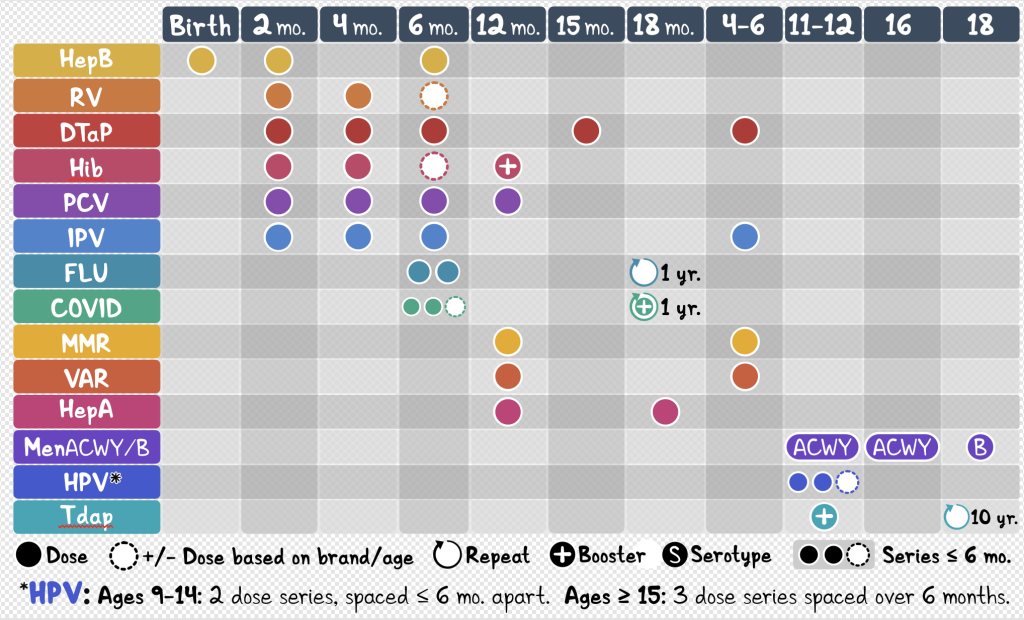
Vaccination schedules and preventive care. Know the standard childhood vaccination schedule and its rationale. Understand catch-up schedules, contraindications, and what anticipatory guidance to give at each well-child visit.
Common pediatric emergencies. Respiratory distress, dehydration, febrile seizures, and pediatric sepsis are high-yield emergency topics. Know the initial assessment and management steps for each.
What You Don’t Need to Master (Despite Feeling Like You Do)
Rare genetic syndromes and metabolic disorders, in detail, are typically low-yield. You should be able to recognize the classic buzzword presentations (cherry red spot, mousy odor, etc.), but you don’t need to master the biochemistry of every disease.
Don’t try to memorize every milestone down to the exact month. As long as you understand the general developmental trajectory and can identify significant delays, you’re covered. Similarly, don’t memorize guidelines without understanding the clinical reasoning behind them. The exam tests whether you can apply guidelines to a scenario, not whether you can recite them.
Finally, avoid the trap of trying to know everything equally across all age groups. Newborn and infant presentations are more heavily tested than adolescent topics, so weigh your studying accordingly. Adolescent medicine shows up, but not nearly as often as neonatal and early childhood content.
A High-Yield, Time-Efficient Study Strategy
The key to performing well on the shelf is starting practice questions early. Don’t wait until the last week of the rotation. Questions from the Osmosis question bank or similar resources teach you how the exam presents content and what decision-making patterns are emphasized. Use them as a learning tool, not just an assessment.
Organize your studying around age-based frameworks: newborn, infant, child, adolescent. This mirrors how the exam presents cases and helps you build the mental models of treatment that the exam expects you to shift between. It also helps clarify what’s normal and what’s pathologic at each stage. When you encounter a weak area, do a targeted review of that specific topic rather than broadly rereading an entire chapter.
For milestones and vaccines, spaced-repetition tools, like Osmosis flashcards, quizzes, and personalized study schedules, can help reinforce key concepts and improve long-term retention. Unfortunately, there are areas where some rote memorization is unavoidable. Short, repeated exposure over the weeks of the rotation will lock them in better than a single cramming session. Focus on high-yield associations rather than exhaustive detail. A useful trick is to tie milestone review to your clinic patients. If you see a 9-month-old for a well-child visit, take a few minutes afterward to quiz yourself on the expected developmental stages. This turns passive clinical time into active studying.
Another tip is to divide your total question target by the number of rotation days, minus 5 to 7. This gives you a manageable daily goal with a built-in buffer. And as always, know when to stop. If you’re not absorbing anything, close the question bank and go to bed. Forced studying has diminishing returns and may do more harm than good.
How to Balance Shelf Studying with a Pediatrics Rotation
The Pediatrics rotation tends to have greater variability from site to site than surgery or medicine. Some programs emphasize clinic-heavy days, others focus on inpatient care, while many are a mix of both. Take advantage of the lighter clinic days for more focused studying, and accept that busy inpatient weeks may only allow for short review sessions.
Much like previous rotations, use your patients to help consolidate clinical information. If you see a kid with croup in the clinic, review croup that evening. This ties your studying to real clinical encounters, which makes it stick far better than learning it as a disconnected fact. Use shorter, consistent study sessions instead of cramming. Twenty to thirty minutes of focused question review is more effective than two hours of distracted reading. Prioritize consistency over intensity, and don’t force it on days where studying just isn’t going to happen.
And don’t forget to sleep. The same advice from every other shelf still applies. Sleep is how your brain consolidates what you’ve learned, and sacrificing it for extra study time is a net loss.
What Scoring Well Actually Looks Like
Scoring well on the Pediatrics shelf means quickly identifying age-appropriate normal versus abnormal findings. It means recognizing the classic presentations of common pediatric conditions and feeling confident in preventive care and next-step decisions. It means not getting trapped by overly detailed or rare answer choices when a common diagnosis is staring you in the face.
A strong performance comes from finishing the exam mentally taxed but not overwhelmed. You studied the high-yield material, you practiced the question style, and you trusted your preparation. And the best part? You become a more competent future clinician in the process!
Study Smarter, Think Like a Pediatrician
The Pediatrics shelf exam rewards pattern recognition, prioritization, a bit of memorization, and a solid understanding of what’s normal across age groups. You don’t need to memorize every vaccine detail, every milestone, or every rare metabolic disease to do well. You do need to understand the common conditions, recognize when something is off, and know what to do about it.
It’s normal to feel stressed by the sheer volume of content on this exam, but breadth doesn’t require depth in every area. Efficient, targeted studying builds the clinical intuition that this exam tests and that you’ll carry into every rotation that follows. The students who score well on shelf exams aren’t the ones who studied the most. They’re the ones who studied the right things. Study less, study smarter, and trust that it’s enough.
Key Takeaways
- The Pediatrics shelf emphasizes clinical pattern recognition across multiple age groups.
- High-yield topics include common pediatric illnesses, newborn care, milestones, and preventive medicine.
- Practice questions and active recall are more effective than passive reading or rote memorization.
- Understanding normal development and identifying red flags are central to exam success.
- Efficient, targeted studying outperforms a broad, unfocused review of low-yield material.

Try Osmosis today! Get your free trial today to find out why millions of clinicians and caregivers love learning by Osmosis.
Leave a Reply