Complete blood count (CBC) - Red blood cells (RBC): Nursing
Notes
| RED BLOOD CELLS (RBCs) | ||
| KEY POINTS | NOTES | |
| PHYSIOLOGY |
| |
| PATHOLOGY |
| |
| NURSING IMPLICATIONS |
| |
Transcript
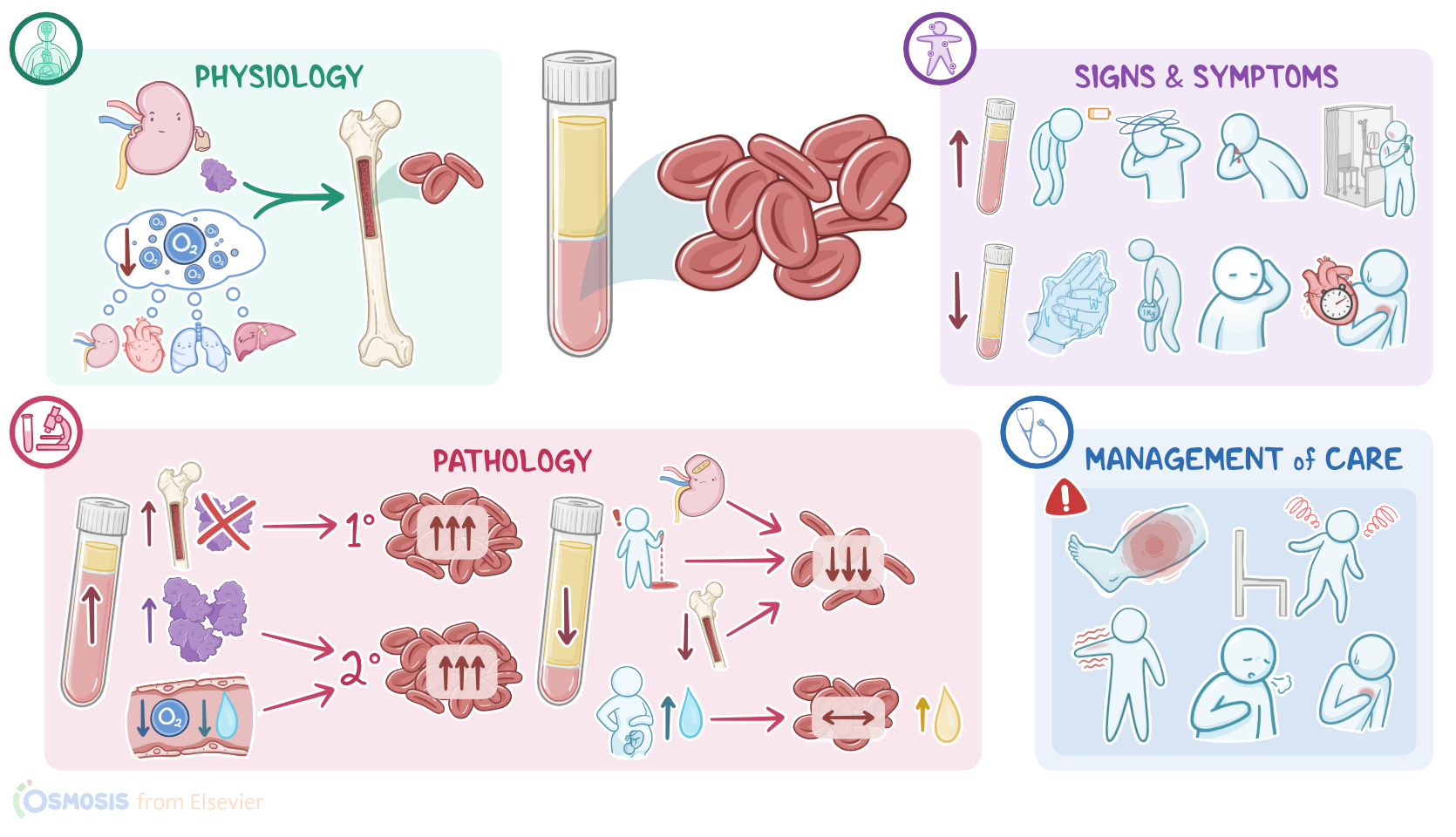
Ms. Poly is a 67-year-old client who arrives at the clinic for a scheduled appointment with her primary care physician. Ms. Poly reports experiencing fatigue, frequent headaches, and nosebleeds. She also mentions feeling itchy after taking a shower. Based on these findings, a complete blood count, or CBC, is ordered to check her red blood cell count. Red blood cell count, also known as an erythrocyte count, red cell count, or just RBC count, is a part of CBC that measures the number of red blood cells in one cubic millimeter of blood. Now, red blood cells, or RBCs for short, are created by the bone marrow, which is stimulated by erythropoietin from kidneys, or by a lack of oxygen in the tissue. RBCs carry oxygen from the lungs to peripheral tissues, collect the carbon dioxide there, and carry it back to the lungs, where it is exchanged for oxygen.
The normal values of RBC count differ between sexes. This is because, in females, RBC production is stimulated by erythropoietin only, while in males, androgens provide additional stimulation for RBC production. So, in adult males, the RBC count ranges from 4.6 to 6.0 million/µL, while in adult females, it ranges from 4.0 to 5.4 million/µL. All right, there are some conditions that can alter the RBC count. An increased RBC count can result from a condition called polycythemia. Polycythemia vera is one type of polycythemia, when the bone marrow produces an excess amount of RBCs without being stimulated. Another type is secondary polycythemia, which is when the bone marrow is stimulated by additional erythropoietin or a lack of oxygen to produce more RBCs. Alternatively if the amount of fluid in the blood decreases, like with dehydration, the concentration of RBCs increases, so the RBC count goes up.
On the other hand, low RBC levels can be caused by a decreased RBC production, like in kidney disease, which decreases the synthesis of erythropoietin; bone marrow suppression, like in aplastic anemia; increased RBC destruction, which can happen if there is a deficiency of glucose-6-phosphate dehydrogenase; or just by the loss of cells, like with blood loss. Another way RBC count can decrease is fluid overload where excess intravascular fluid dilutes the blood. This causes a relative decrease in RBCs and is referred to as dilutional anemia. Also, during pregnancy, blood plasma increases more in relation to RBCs, which causes a physiological anemia of pregnancy. Now, a client’s RBCs will be measured when there are signs or symptoms of low or high RBCs. Symptoms of decreased RBCs can include fatigue, weakness, pallor, cold extremities, tachycardia, palpitations, and chest pain. On the other hand, symptoms of increased RBCs can include fatigue, dizziness, frequent nose bleeds, and itching after a warm shower.
Additionally, RBCs can be measured to assess a client recovering from surgery, as well as after an acute hemorrhage, or episode of hemolysis. Finally, RBCs are measured to screen clients who are at risk for anemia. All right, let’s look at the nursing implications for a client with an altered RBC count. The priority goals of care are to identify and treat the underlying cause, and monitor your client’s RBC count. First, collect a sample by venipuncture using a lavender-topped tube. This tube contains the anticoagulant EDTA to help prevent clotting of the sample. After obtaining your sample, remember to gently invert the sample several times to ensure the EDTA mixes with the blood, but avoid shaking the tube, as this will cause hemolysis, or breaking apart of the RBCs, which will alter the results. Now, if your client has an increased RBC count, keep in mind they are at increased risk of thrombosis as the blood comes more viscous. Ensure your client maintains adequate hydration, and encourage activity to prevent venous stasis. Notify the healthcare provider if your client shows signs of thrombosis, such as sudden change in mental status, numbness or tingling on one side of the body, blood-tinged sputum, chest pain, or pain or swelling in one leg. If your client has polycythemia vera, perform therapeutic phlebotomy as prescribed to achieve a normal RBC count.