Disseminated intravascular coagulation (DIC): Nursing
Introduction0:00–0:20
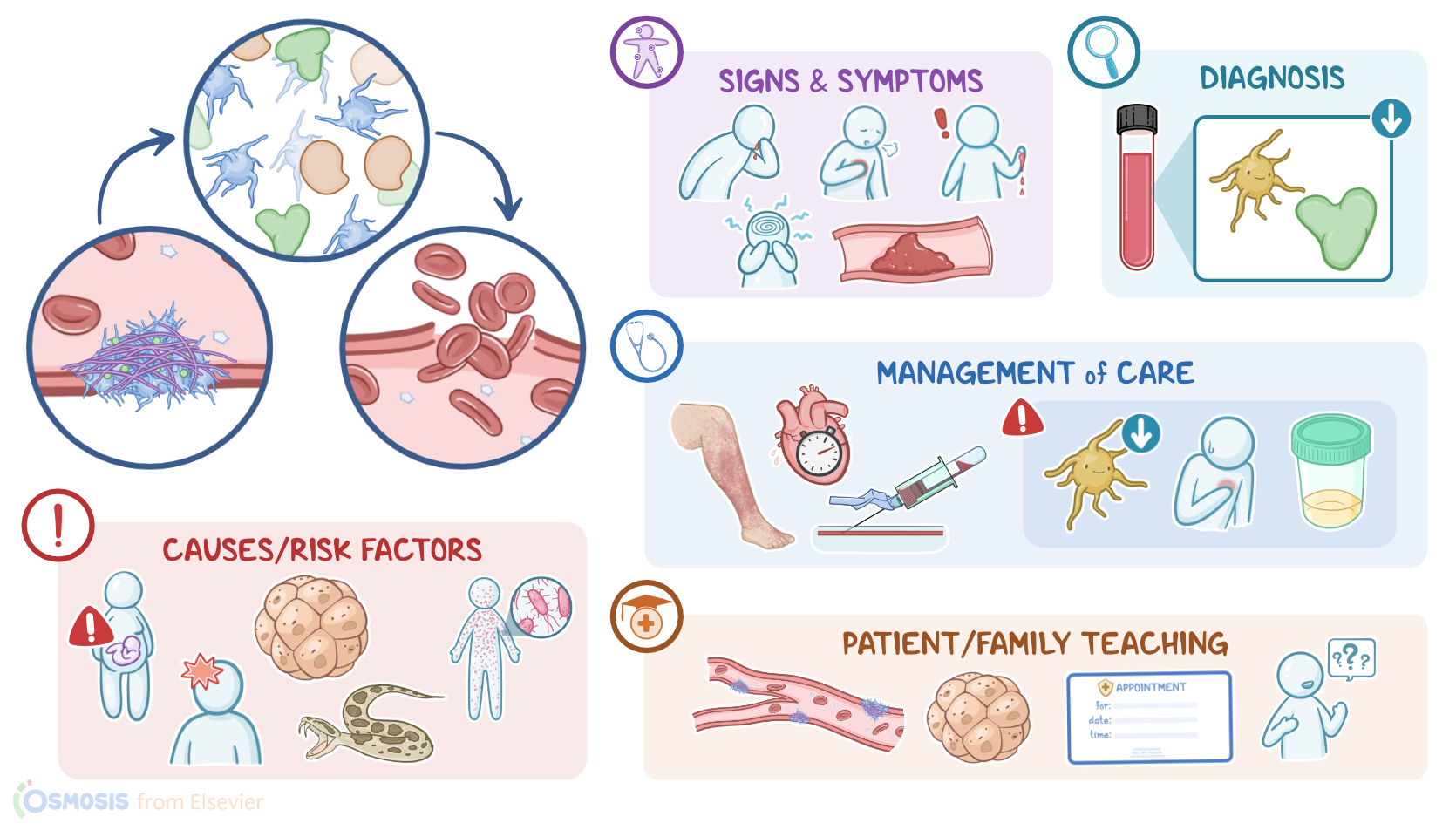
Disseminated intravascular coagulation, or DIC for short, is a rare but life threatening condition. It is characterized by accelerated clotting within blood vessels, which in turn leads to increased consumption of platelets and clotting factors which can ultimately result in uncontrollable bleeding.
Physiology0:20–1:23
Now, let's quickly review the physiology of clotting, also known as the coagulation cascade, which is activated in response to an injury to limit the bleeding.
So normally when a tissue and its blood vessels are injured, the circulating platelets are activated locally and aggregate to form a temporary plug at the site of injury.
The platelet plug then starts attracting circulating clotting factors, which starts off the coagulation cascade, ultimately resulting in the formulation of fibrin, which in turn builds a tightly connected mesh that stabilizes the platelet plug.
Lastly, in order to avoid excessive clotting, a protein called plasmin balances off the clotting process by breaking down the fibrin mesh and ultimately dissolving the clot through a process called fibrinolysis.
Now, DIC is caused by the presence of an underlying disorder that triggers uncontrolled activation of the coagulation cascade.
The most common cause is sepsis. Other causes include cancer, serious trauma, and obstetric complications such as a placental abruption or amniotic fluid embolism.
Causes & risk factors1:23–1:53
In addition, DIC can be caused by a severe immune reaction. Which can be triggered by an incompatible blood transfusion, organ transplant rejection, or toxins like snake or spider venom.
Now, the pathology of DIC develops when a severe disorder or immune reaction triggers massive systemic activation of the coagulation cascade, resulting in widespread clot formation intravascularly, hence the name disseminated intravascular coagulation.
Pathology1:53–2:29
These clots can then go on and block small and mid-sized vessels, causing ischemia or necrosis of the involved tissue. Additionally, this widespread clotting leads to increased consumption of platelets and clotting factors.
As a result, clients are at risk of uncontrollable and life-threatening bleeding, even from minor injuries like venna puncture sites.
All right, so, the first clinical manifestations of DIC often include undue bleeding from the nose, gums, or mouth, as well as blood in the stools due to gastrointestinal bleeding, blood in the urine due to urinary tract bleeding, visual changes due to retinal hemorrhage, or simply blood oozing from puncture sites.
Clinical manifestations2:29–3:35
More severe manifestations of deep tissue bleeding include altered mental status, chest pain, and dyspnea, along with palpitations, tachycardia, and even shock.
Additionally, clients can present with clinical manifestations from clotting. These include venous thromboembolism, such as deep vein thrombosis, where the obstructed venous flow in the legs may present with leg pain and swelling.
Another manifestation can be arterial thrombosis, which can cause ischemia and even necrosis of the involved organ. Other findings may include bluish discoloration of nail beds and lips due to cyanosis, as well as complications like myocardial infarction or stroke.
Ultimately, the combination of bleeding and ischemia may result in organ hypoperfusion, which may even lead to multi-organ failure.
Diagnosis3:35–4:10
The diagnosis of DIC starts with the client's history and physical assessment, followed by laboratory tests. Typical laboratory findings in DIC include a CBC that shows a decreased platelet count.
Decreased fibrinogen level as well as a prolonged prothrombin time or PT and prolonged partial thromboblastin time or PTT, both of which reflect decreased levels of circulating clotting factors.
In addition, there's an elevated level of D-dimer, which is a fibrin degradation product indicating significant blood clot formation and subsequent fibrinolysis.
Treatment4:10–4:29
Treatment of DIC involves supportive measures, including IV fluids and blood products to replace the blood loss, as well as anticoagulant medications to counteract excessive clotting and ventilator support in cases of respiratory failure.
Management and care4:29–6:23
Definitive treatment of DIC focuses on addressing the underlying cause when possible. OK, let's look at the nursing care you'll provide for a client with DIC.
Your priorities of care are to decrease bleeding, monitor for abnormal clotting, and address the underlying cause. Begin by assessing your client's vital signs, skin, and neurological status for signs of bleeding and monitor your client's CBC.
Immediately report signs of active bleeding to the healthcare provider, including petechia, purpura, bleeding from venal puncture sites, hypotension, tachycardia, altered level of consciousness, as well as decreased platelets, RBCs, hemoglobin, or hematocrit levels.
Then administer supplemental oxygen and the prescribed IV fluids to prevent hypovolemia, as well as fresh frozen plasma and platelets to promote clotting and slow bleeding.
Also, insert an indwelling urinary catheter to monitor urine output. Be sure to avoid unnecessary needle sticks and apply pressure to any sites of oozing.
Lastly, continue to monitor your client's CBC. Now, if your client is not actively bleeding, monitor your client's laboratory test results, including coagulation panel and D-dimer.
Watch them closely for signs of clot formation and microcirculatory clotting. Immediately report decreased platelet counts, prolonged PT, PTT, decreased fibrinogen, or elevated D-dimer, as well as manifestations of tissue ischemia, including abdominal or chest pain, diminished or absent pulses.
General client and family teaching6:23–6:48
Finally, while providing care, assist the healthcare team in addressing the underlying cause. For example, if the underlying cause is believed to be sepsis, administer antimicrobial medications as prescribed.
Review6:48–9:00
All right, let's consider client and family teaching. Begin by explaining that DIC is a life threatening condition that causes excessive clotting and bleeding at the same time.
Then discuss the underlying disorder that triggered their condition. Review their prescribed treatment regimen, and allow time for them to ask questions before they're discharged home.
Stress the importance of keeping follow-up appointments for continued monitoring. All right, as a quick recap, DIC is a life threatening condition characterized by accelerated extensive clotting, which causes depletion of platelets and clotting factors, and leads to uncontrolled bleeding.
DIC is caused by an underlying disorder that triggers uncontrolled activation of the coagulation cascade, such as sepsis, cancer, trauma, postoperative damage, obstetric complications, or severe immune reactions like incompatible blood transfusion, organ transplant rejection, or toxins from snake or spider venom.
Once the underlying cause triggers the clotting cascade, symptoms of clotting. Or bleeding may manifest, including bleeding from mucous membranes, oozing blood from puncture sites, blood in stools, altered mental status, chest pain, dyspnea, palpitations, tachycardia, cyanosis, or signs of a venous or arterial thromboembolism, shock, or multi-organ failure.
Diagnosis of DIC involves the client's history and physical assessment, as well as laboratory tests including platelet count, PT, PTT, and D-dimer.
Treatment focuses on addressing the underlying cause, while providing supportive measures, anticoagulation therapy, blood products, and ventilator support if needed.
Goals of nursing care include decreasing bleeding, monitoring for abnormal clotting, and addressing the underlying cause.
Client and family teaching includes explaining DIC, the plan of care, and the need for continued monitoring.
| DISSEMINATED INTRAVASCULAR COAGULATION (DIC) | ||
| KEY POINTS | NOTES | |
| DEFINITION |
| |
| PHYSIOLOGY |
| |
| CAUSES AND RISK FACTORS |
| |
| PATHOPHYSIOLOGY |
| |
| SIGNS AND SYMPTOMS |
| |
| DIAGNOSIS |
| |
| TREATMENT |
| |
| MANAGEMENT OF CARE |
| |
| PATIENT AND FAMILY TEACHING |
| |
- "McCance & Huether’s pathophysiology: The biological basis for disease in adults and children (9th ed.). ISBN: 978-0-323-78987-5 " Elsevier (2023)
- "Lewis’s medical-surgical Nursing (12th ed.) ISBN:978-0-323-78961-5 " Elsevier (2023)
No notes for this video yet
Try adding a note below