Hepatitis B virus (HBV) infection in pregnancy: Nursing
Introduction0:00–0:25
Hepatitis B virus, or HBV, is associated with hepatitis, or inflammation of the liver, which is often self-limiting, but in some cases, can result in extensive liver damage.
During pregnancy the virus can be transmitted to the baby, potentially causing adverse health effects.Now, let’s quickly review some anatomy and physiology.
Physiology0:25–0:53
The liver is a large, solid organ located in the right upper quadrant of the abdomen, which has several functions, including the production of bile, cholesterol, and certain blood proteins like albumin and clotting factors.
The liver is also involved in helping with glucose, fat, and bilirubin metabolism, as well as detoxification of certain toxins.Now, HBV infection is caused by hepatitis B virus which is a DNA enveloped virus that belongs to the Hepadnavirus family.
Causes & risk factors0:53–1:47
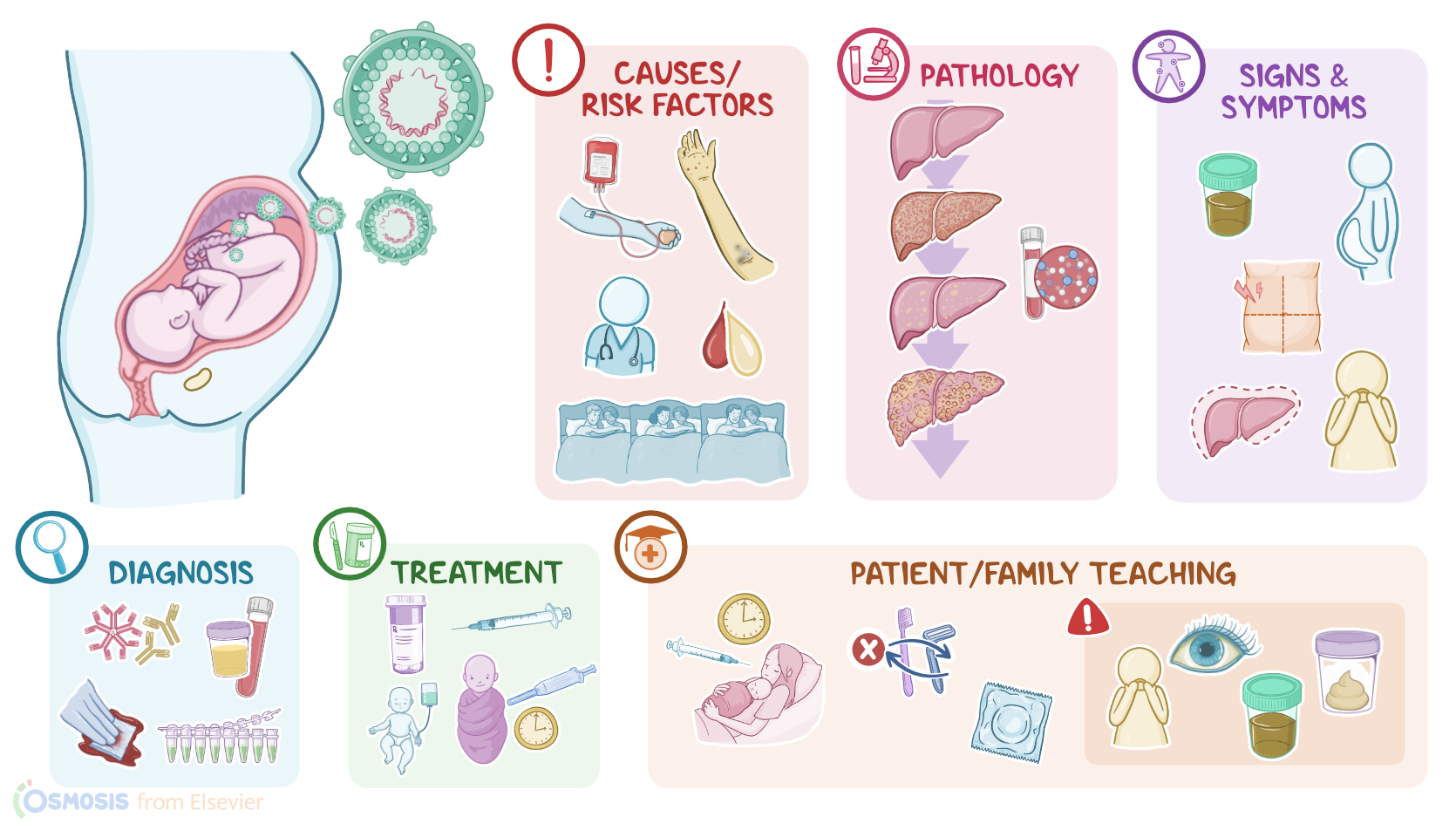
Hepatitis B virus is primarily transmitted through blood and other body fluids; so the main risk factors include blood transfusions, hemodialysis, IV drug use, working as a healthcare professional, as well as high-risk sexual behavior, such as having multiple partners or not using protection.Now, hepatitis B virus can also be transmitted vertically from the mother to the baby.
This can happen as the virus travels across the placenta; during invasive procedures like amniocentesis or chorionic villus sampling; if the amniotic membranes rupture prematurely; and during labor, as the newborn passes through the birth canal.In terms of pathology, the virus causes progressive damage to the liver.
Pathology1:47–2:36
Eventually, fibrosis and scarring occurs, which can progress to cirrhosis, as well as complications like hepatic encephalopathy, where toxins like ammonia build up in the blood.
Chronic HBV also increases the risk of hepatocellular carcinoma. Now, in the case of vertical HBV transmission, the baby can be at risk for certain complications.
Most neonates infected with HBV are asymptomatic at birth, but eventually will develop a chronic infection. Those born to clients with chronic hepatitis may have additional complications such as low birthweight, jaundice, lethargy, poor feeding, and failure to thrive.Okay, moving on to clinical manifestations of HBV infection during pregnancy.
Clinical manifestations2:36–3:32
In the case of acute hepatitis, these typically include fatigue, malaise, nausea, and vomiting. Additionally, clients can present with a low-grade fever, jaundice, skin rash, itching, particularly on the palms and soles of the feet, as well as dark urine.
They may also have right upper quadrant tenderness, as well as hepatomegaly. On the flip side, pregnant clients with chronic hepatitis B can be asymptomatic, or they could present with mild symptoms like malaise and fatigue.
However, progressive liver damage can, over time, lead to problems like jaundice; as well as ascites, or fluid accumulation in the peritoneal cavity, on account of reduced albumin production; and easy bruising or bleeding because of reduced clotting factors.Diagnosis of HBV infection during pregnancy starts with the client’s history and physical assessment.
Diagnosis3:32–4:32
Laboratory tests typically reveal elevated liver enzymes like aspartate transaminase, or AST and alanine aminotransferase or ALT; as well as elevated bilirubin levels; and prolonged bleeding time.
Additionally, lab tests can reveal specific serologic findings. So, acute HBV infection presents with hepatitis B surface antigen or HBsAg; as well as IgM antibodies against hepatitis B core antigen.
Clients with chronic HBV infection present the same serologic markers, but instead of IgM antibodies, they have IgG antibodies against hepatitis B core antigen.
Finally, to confirm the diagnosis of HBV infection, PCR can be performed to detect the presence of viral DNA.The treatment of acute hepatitis caused by HBV infection during pregnancy primarily involves supportive care to relieve the symptoms.
Treatment4:32–5:38
Antiviral therapy with tenofovir or lamivudine should be administered in severe cases or when the PCR test shows a high level of HBV DNA.
Now, in terms of health promotion and prevention, all pregnant clients should be screened for the hepatitis B surface antigen, or HBsAg because of the high prevalence of the disease in the general population.
Screening is especially important for clients of childbearing age who present with signs of IV drug use like track marks, and those who have a history of IV drug use.
This population needs HBV screening and vaccination, when indicated. Lastly, all newborns should be routinely immunized against HBV, and those born to clients identified as HBsAg-positive or whose HBV status is unknown, should be treated with hepatitis B immunoglobulin, or HBIG within 12 hours of birth.Alright, now let’s talk about nursing management for clients with hepatitis B infection during pregnancy.
Your priority goals of care include providing supportive care and decreasing the risk of transmission to the fetus and newborn.First, provide supportive care by administering the prescribed antihistamines, antiemetics, or diuretics, as needed.
Management of care5:38–6:19
For clients who have a high level of viral DNA, administer the prescribed antiviral therapy. Then, after the baby is born, administer the prescribed HBIG and the hepatitis B vaccine to reduce the risk of HBV transmission.Now let’s move on to client and family teaching.
Begin by explaining that hepatitis B is a virus that causes hepatitis, which is an inflammation of the liver. Review the plan of care, including regular monitoring of their liver function and virus level, as well as antiviral medications, as needed.
General client & family teaching6:19–7:55
Remind your client to maintain their regular appointments with the healthcare provider throughout their pregnancy for ongoing monitoring and symptom management.Then, reassure them that the risk of transmission to their baby can be minimized by administering hepatitis B immunoglobulin and the hepatitis B vaccine within 12 hours of birth; and let them know that breastfeeding is safe after the infant receives these therapies.
Be sure to teach them how they can prevent cracked nipples during breastfeeding, which can cause bleeding and increase the risk of transmitting the virus to their baby.
Also remind them that they cannot donate their breast milk. Also be sure to reinforce behaviors that can minimize transmission risk to others.
Remind them to practice frequent hand hygiene, to use barrier methods during sexual contact, and to avoid sharing personal hygiene items such as toothbrushes and razors.Finally, instruct them to contact their healthcare provider immediately if they experience symptoms or signs of worsening hepatic disease, such as nausea, fatigue, loss of appetite, or pain in their upper abdomen; if they notice yellowing of their skin or the whites of their eyes; or if their urine turns dark brown or if their stools become light tan in color.Alright, as a quick recap .
. .
Hepatitis B virus, or HBV, is a virus that causes an inflammation of the liver which can result in extensive liver damage.
During pregnancy, HBV can be transmitted vertically to the baby through the placenta; during invasive procedures like amniocentesis or chorionic villus sampling; if the amniotic membranes rupture prematurely, and during labor.
Review7:55–9:25
Diagnosis includes history and physical assessment, as well as laboratory tests which can show elevated LFTs, elevated bilirubin levels; and prolonged bleeding time; while serologic testing reveals the presence of HBsAg, IgM or IgG antibodies, and the presence of viral DNA through PCR testing.
Health promotion and prevention involves screening all pregnant clients and at risk populations like IV drug users for the HBsAg.
Treatment for the mother is generally supportive, and it can include antiviral therapy. All babies of HBsAg positive mothers or those with unknown or undocumented HBsAg status should recieve HBIG and the hepatitis B vaccine within 12 hours of birth.
Priority goals of nursing care include providing supportive care and decreasing the risk of transmission to the fetus and newborn.
Client and family education is focused on the plan of care for the mother and baby, preventing transmission of the infection, and when to contact the healthcare provider.
receive H B I G and the hepatitis B vaccine within 12 hours of birth Priority goals of nursing care include providing supportive care and decreasing the risk of transmission to the fetus and newborn client and family Education is focused on the plan of care for the mother and baby preventing transmission of the infection and went
| HEPATITIS B VIRUS (HBV) INFECTION IN PREGNANCY | ||
| KEY POINTS | NOTES | |
| DEFINITION |
| |
| PHYSIOLOGY |
| |
| CAUSES AND RISK FACTORS |
| |
| PATHOPHYSIOLOGY |
| |
| SIGNS AND SYMPTOMS |
| |
| DIAGNOSIS |
| |
| TREATMENT |
| |
| MANAGEMENT OF CARE |
| |
| PATIENT AND FAMILY TEACHING |
| |
No notes for this video yet
Try adding a note below