Hypoparathyroidism: Nursing
Introduction0:00–0:20
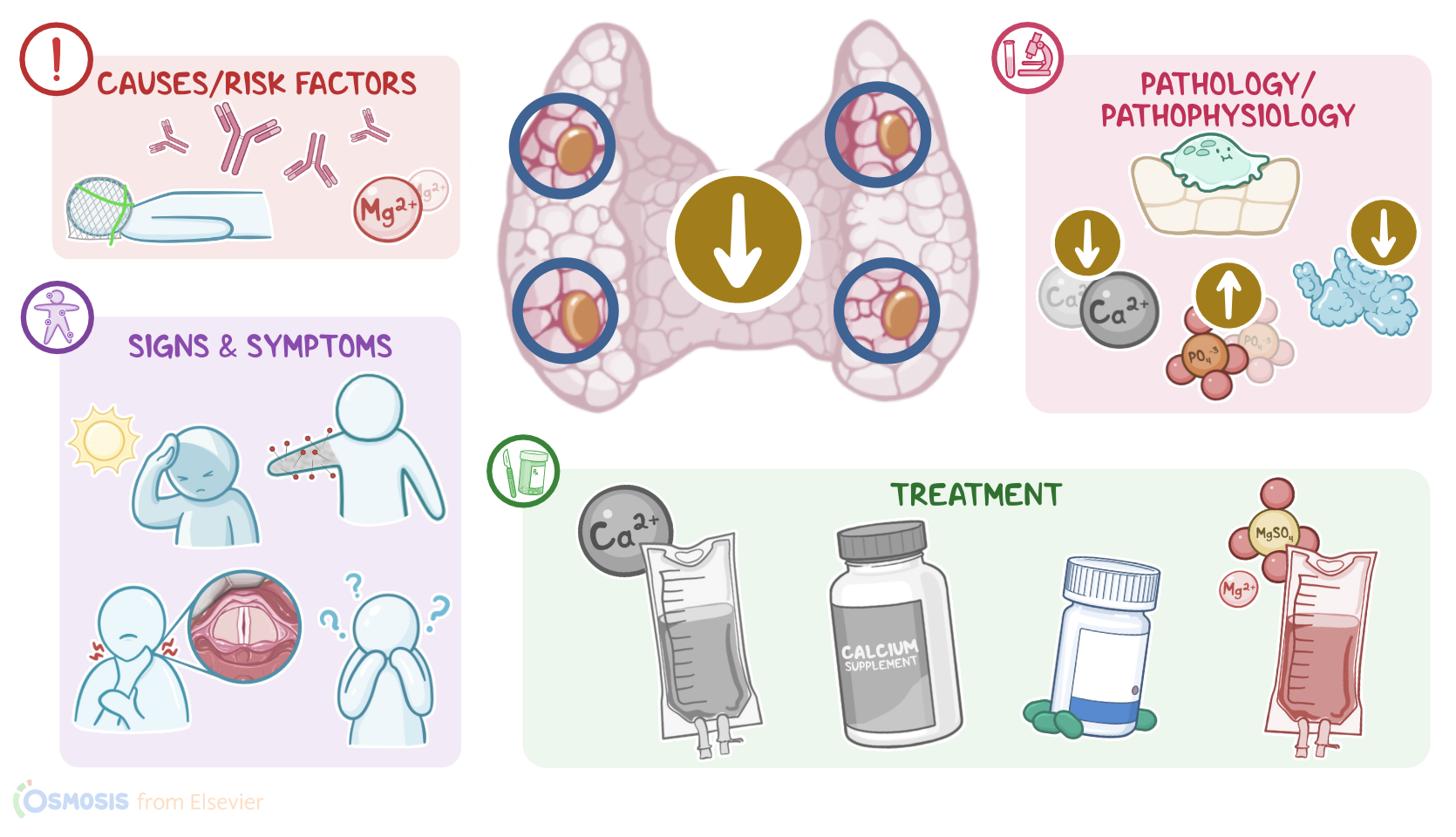
Hypoparathyroidism is a condition characterized by low blood parathyroid hormone, or PTH for short, which ultimately results in hypocalcemia, or low blood calcium levels, as well as hyperphosphatemia, or high blood phosphate levels.
Now, PTH is produced by four small glands called the parathyroid glands. These glands lie in the neck, being stuck to the back surface of the thyroid gland.
Physiology0:20–1:10
The main function of PTH is keeping the levels of calcium within the normal range. For example, when calcium levels are low, PTH boosts bone resorption, which causes the release of calcium and phosphate from the bone into the bloodstream.
In addition, PTH activates vitamin D, which in turn increases calcium and phosphate absorption from the gut. PTH also stimulates calcium reabsorption and phosphate excretion from the kidney.
On the other hand, high calcium levels cause the secretion of PTH to fall, which increases the deposition of calcium in bones and the excretion of calcium by the kidneys.Alright, now hypoparathyroidism can be caused by anything that damages the parathyroid glands.
Causes & risk factors1:10–2:18
The most common cause is iatrogenic where surgery or radiation therapy for another condition also injures the parathyroid glands.
Thyroidectomy is a good example since when a part of the thyroid is removed, the parathyroids will often be removed or damaged also.
Hypoparathyroidism may also be caused by autoimmune destruction mediated by autoantibodies. Next, there are the functional causes like hypomagnesemia where the parathyroid glands will function poorly when magnesium level is low.
However the glands are not damaged, so when hypomagnesemia is corrected, the hypoparathyroidism will resolve. Finally, hypoparathyroidism can be idiopathic, meaning that the cause is unknown.
Now, risk factors of developing hypoparathyroidism include neck surgery or radiation therapy; and serious injury to the neck, like during a car crash or by strangulation; as well as a family history of parathyroid disorder or autoimmune diseases.Regardless of the underlying cause and type of hypoparathyroidism, when PTH levels fall below normal, they result in inhibition of bone resorption, as well as vitamin D activation, and calcium reabsorption from the kidneys.
Pathology2:18–2:57
These changes add up to finally cause hypocalcemia, as well as hyperphosphatemia.Now, many organs and tissues throughout the body depend on normal calcium levels to function properly.
This is especially important in nerve transmission in the heart, muscles, and brain. As a result, hypocalcemia makes the neurons more excitable.
Okay, so in clients with hypoparathyroidism, signs and symptoms are typically associated with hypocalcemia. These can include photophobia, as well as mental status changes, which can range from anxiety, irritability, and confusion to psychosis, and in severe cases, even seizures.
Clinical manifestations2:57–4:11
In addition, the increased neuromuscular excitability may result in tetany, which is characterized by involuntary muscle contractions leading to severe muscle cramps, most often involving the hands and feet, but severe cases can even involve the respiratory muscles, leading to difficulty breathing; clients with hypocalcemia can also present with paresthesia, or a feeling of tingling or numbness, typically around the mouth or in the hands and feet.
In addition, hypocalcemia may lead to bronchospasm, laryngospasm, and even cardiac arrhythmias. Finally, hypocalcemia may manifest as two clinical signs; Chvostek sign and Trousseau sign.
A positive Chvostek sign describes an ipsilateral contraction of facial muscles upon percussing the facial nerve; whereas a positive Trousseau sign describes an involuntary contraction of the muscles in the hand and wrist upon compressing the upper arm with a blood pressure cuff.
The diagnosis of hypoparathyroidism starts with history and physical assessment, followed by laboratory tests showing decreased blood levels of PTH, hypocalcemia, and hyperphosphatemia, as well as hypomagnesemia, and vitamin D deficiency, in addition to increased urine levels of cyclic adenosine monophosphate, or cAMP for short.
Diagnosis4:11–4:33
Treatment4:33–5:16
The treatment of hypoparathyroidism may be grouped into long-term and short-term options. Long-term options include oral calcium supplements.
In addition, oral ergocalciferol, a vitamin D analog, can be given to counteract the effects of vitamin D deficiency. On the other hand, short-term options are focused on treating acute complications of hypoparathyroidism.
For example, a client experiencing respiratory muscle tetany may have difficulty breathing, which can be relieved using rebreathing techniques.
Finally, in cases of acute and severe hypocalcemia, intravenous calcium must be administered; whereas for acute hypomagnesemia, intravenous magnesium sulfate is administered.
Alright, let’s look at the nursing care you’ll provide to a client with hypoparathyroidism. As you care for your client, your priority goals are to prevent complications and provide supportive care as calcium levels are stabilized.
Management of care5:16–6:16
Begin by assessing your client for signs of hypocalcemia, and review their laboratory test results, taking note of a calcium level less than 9.0 mg/dL.
Also assess their vital signs, as well as the rate and depth of their respirations. Ensure an emergency tracheostomy kit, oxygen, and suction equipment are at the bedside and in working order in the event of laryngospasm, and notify the healthcare provider right away if your client develops dyspnea or stridor.
Next, assess your client’s cardiac status by auscultating their heart sounds and checking their heart rhythm on the electrocardiogram, or ECG, and report to the healthcare provider right away if they develop arrhythmias or hypotension; if your client is taking digoxin, be sure to monitor them closely, and report signs that their medication is not effective, such as a rapid heart rate, fatigue, or dyspnea.
Client taking digoxin6:16–7:37
In addition, closely monitor your client for other clinical manifestations of hypocalcemia, such as paresthesias, muscle cramps, or the presence of positive Trousseau or Chvostek signs.
Also monitor for signs of neurological irritability; keep your client safe by instituting seizure precautions, such as padding side rails, and be sure to immediately report signs of seizure activity.
If your client becomes confused, reorient them as needed and maintain a quiet environment. Next, administer calcium gluconate as prescribed.
Ensure your client has a patent IV access, and then administer it slowly, per facility protocol, keeping a close eye on their ECG for arrhythmias, as well as hypotension, or cardiac arrest.
Also monitor your client’s IV site closely for signs of extravasation and ask your client to let you know if they feel any pain or discomfort at the IV insertion site.
Be sure to have the antidote hyaluronidase readily available, if needed. In addition, monitor their serum calcium level and report signs of too much calcium, such as fatigue and muscle weakness.Okay, let’s shift our focus to client and family teaching.
General client and family teaching7:37–8:35
Begin by explaining how hypoparathyroidism affects the calcium levels in the blood.Then, let them know that they will require lifelong treatment and routine monitoring.
Emphasize the importance of adhering to their medication and dietary regimen to help prevent hypocalcemia. Teach your client to eat a diet high in calcium, which includes foods like dark green vegetables, soybeans, tofu, and calcium-fortified orange juice.
In contrast, be sure to explain how their diet should be low in phosphorus, so they need to avoid milk, yogurt, processed cheese, and carbonated soft drinks.
Likewise, advise your client to avoid foods with oxalic acid, such as spinach and rhubarb, since these inhibit calcium absorption.
Lastly, teach them about their prescribed calcium and vitamin D supplements, and stress the importance of immediately reporting signs of hypocalcemia to their healthcare provider.Alright, as a quick recap… Hypoparathyroidism is characterized by low levels of PTH, which leads to hypocalcemia and hyperphosphatemia.
Review8:35–9:43
Hypoparathyroidism is most commonly caused by injury to the parathyroid glands from surgery or radiation therapy, but it can also be caused by autoimmune diseases, hypomagnesemia, or be idiopathic.
Signs and symptoms result from hypocalcemia, and include arrhythmias, mental changes, seizures, the presence of Chvostek or Trousseau signs, as well as signs of tetany, such as involuntary muscle contractions, muscle cramps, paresthesia, bronchospasm, and laryngospasm.
Treatment involves long-term options like oral calcium supplements and the vitamin D analog ergocalciferol, as well as short-term options including rebreathing techniques, IV calcium, and IV magnesium sulfate.
The priority goals of nursing care are to prevent complications and provide supportive care as calcium levels are stabilized.
Client and family education is centered around a dietary and
| HYPOPARATHYROIDISM | ||
| KEY POINTS | NOTES | |
| DEFINITION |
| |
| PHYSIOLOGY |
| |
| CAUSES AND RISK FACTORS |
| |
| PATHOPHYSIOLOGY |
| |
| SIGNS AND SYMPTOMS |
| |
| DIAGNOSIS |
| |
| TREATMENT |
| |
| MANAGEMENT OF CARE |
| |
| PATIENT AND FAMILY TEACHING |
| |
No notes for this video yet
Try adding a note below