Immunodeficiency disorders - Primary: Nursing
Introduction0:00–0:17
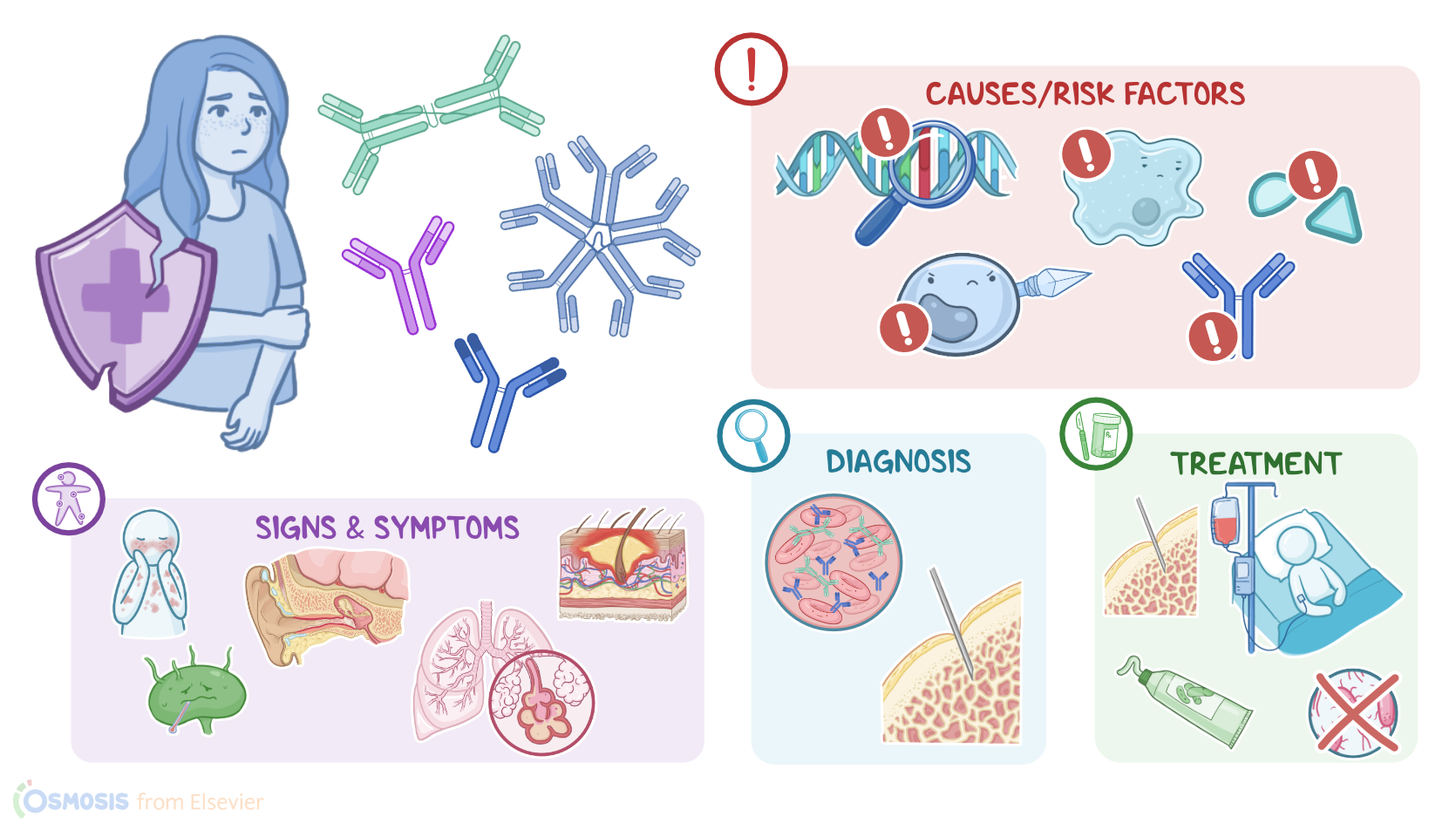
Primary immunodeficiency disorders are a diverse group of conditions that affect one or more elements of the immune system, leading to increased vulnerability to infection, autoimmune manifestations, and several types of cancer.
Physiology0:17–1:59
All right, let’s quickly review some physiology. The immune system consists of white blood cells that protect us from pathogens like viruses, bacteria, and fungi, as well a foreign substances, such as toxins and chemicals, and destroy abnormal cells, such as those that might develop into cancer.
Now, the immune system consists of two main branches: innate and adaptive. The innate immune response involves non-specific defense mechanisms, meaning that they do not differentiate one pathogen from another.
These include complement proteins and cells like phagocytes and natural killers; as well as dendritic cells, which then activate the adaptive immune response.
The adaptive response is highly specific, meaning that it recognizes different pathogens and is mediated by cells called lymphocytes, which include T and B cells.
T cells can be further divided into CD4+ and CD8+ T cells. CD4+ T cells are also known as T helper cells, because they interact with dendritic cells, and in turn help activate the rest of the lymphocytes.
On the other hand, CD8+ T cells, also known as cytotoxic T cells, are in charge of cell-mediated immunity, where they attack abnormal and infected cells.
Finally, B cells mediate a specific adaptive response, called humoral immunity, by secreting antibodies that bind to and destroy extracellular pathogens.
Causes & Risk factors1:59–2:34
Now, primary immunodeficiencies are a group of over 130 disorders that result from genetic defects in one or more elements of the immune system, including antibodies, T cells, complement components, and phagocytes.
Unlike secondary immunodeficiencies, which are acquired and typically occur well after infancy, primary immunodeficiencies are inherited and typically become evident during the first few years of life.
So far, the only well-known risk factor for developing a primary immunodeficiency is family history. The pathology of primary immunodeficiencies varies depending on the element of the immune system that is defective.
Pathology2:34–5:48
Disorders of adaptive immunity include B-cell or antibody deficiencies, T-cell disorders, and combined B and T-cell deficiencies.
Since antibodies fight extracellular pathogens, antibody deficiencies are characterized by high susceptibility to pneumonia, otitis, and other infections caused by encapsulated bacteria.
The most common and benign disorder within this group is selective IgA deficiency, which is characterized by low levels of IgA that normally protects mucous membranes like the digestive and respiratory tracts, with normal production of other antibody classes.
On the other end of the spectrum is X-Linked or Bruton agammaglobulinemia, a condition that almost exclusively presents in those assigned male at birth, because they have only one X chromosome.
This condition results in absence of mature B cells, causing extremely low levels of circulating antibodies of all classes.
Next are T-cell deficiencies; with the main one being DiGeorge or 22q11.2 deletion syndrome. This is a genetic condition where a portion of DNA on chromosome 22 is missing, causing developmental midline defects, including thymic hypoplasia.
Since T-cells are produced in the bone marrow but then mature in the thymus, clients with thymic hypoplasia typically have a deficiency in mature T-cells, which results in impaired cell-mediated immunity.
In turn, this results in increased risk of infection by intracellular pathogens, like viruses and fungi, as well as non-tuberculous mycobacteria.
With severe combined immunodeficiency, or SCID for short, the immune system is so dysfunctional that it’s considered almost completely absent.
Clients with SCID have an extreme susceptibility to all kinds of bacterial, viral, and fungal infections; including opportunistic infections that a healthy immune system would typically be able to fend off.
Finally, there are disorders of innate immunity, including phagocyte disorders and complement disorders. Phagocyte disorders are characterized by recurrent bacterial and fungal infections of the skin and mucosal membranes, impaired wound healing, and delayed separation of the umbilical cord.
On the other hand, complement deficiencies involve one or more complement proteins. Early complement deficiencies involve C1 to C4, and are associated with an increased risk of severe, recurrent pyogenic infections of the sinuses and respiratory tract, as well as autoimmune manifestations like systemic lupus erythematosus.
Terminal complement deficiencies, on the other hand, involve C5 to C9, and individuals are particularly susceptible to recurrent Neisseria infections.Now, although the clinical manifestations of primary immunodeficiencies are highly variable, most disorders lead to increased susceptibility to infection, as well as a higher risk of developing autoimmune disorders, and certain kinds of cancer, especially leukemia or lymphoma.
Clinical manifestations5:48–6:23
Primary immunodeficiencies should be suspected in clients with recurrent sinus or ear infections, frequent pneumonias, failure to thrive, poor response to prolonged antibiotic therapy, and a persistent thrush or skin abscesses.So, the diagnosis of primary immunodeficiency disorders starts with the client’s history and physical assessment.
Diagnosis6:23–7:06
Further diagnostic tests may include obtaining a complete blood count, measuring the levels of circulating antibodies, and performing a flow cytometry assay to determine the number and percentage of lymphocytes.
If the diagnosis is still unclear, a bone marrow biopsy can be performed to look at the number and morphology of hematopoietic stem cells.
Finally, diagnosis of certain conditions can also be confirmed with genetic testing, such as fluorescence in situ hybridization or FISH for short, and PCR, to look for the exact genetic abnormality causing the disease.
Treatment of primary immunodeficiencies is aimed at preventing severe infections, treating infections with appropriate antimicrobials, as well as strengthening the immune system, and treating the underlying cause of the immune defects, when possible.Some conditions, like X-linked agammaglobulinemia, can benefit from intravenous IgG infusions, or IVIG for short.
Treatment7:06–7:46
This immunoglobulin is typically pooled across several individuals and therefore provides a diverse set of antibodies that help boost the immune system.
In other cases, such as with severe combined immunodeficiency, the only available treatment is a bone marrow transplant.
Management of care7:46–9:33
All right, let’s look at the nursing care you’ll provide to a client with a primary immunodeficiency disorder. Your priority goals of care are to prevent healthcare-related infections during treatment, assist in eliminating infections, and monitor for complications of treatment.
Start by implementing infection control measures by placing your client in a private room with a sign on the door notifying all staff and visitors of needed infection control measures.
When providing care, practice scrupulous hand hygiene and use appropriate personal protective equipment, or PPE for short.Be sure to limit the use of invasive devices, and always use strict aseptic technique while drawing blood samples and initiating and maintaining IVs.
If your client needs blood products, ensure they receive only irradiated, cytomegalovirus-negative, leukocyte-depleted blood products.
Now, if your client has been admitted for an infection, draw cultures for laboratory tests to identify the pathogen, and administer the ordered antimicrobials.
When IVIG is ordered for your client, ensure that epinephrine and other emergency equipment is readily available. Then, obtain a baseline set of vital signs, and pre-medicate them with acetaminophen, diphenhydramine, and IV fluids.
Remember to begin the infusion slowly and monitor their vital signs closely during and after the infusion. Immediately report if they experience adverse effects from IVIG treatments, including dyspnea; chest tightness; hyper- or hypotension; abdominal, flank, or back pain; or myalgias.
Immediately stop the infusion and follow your institutional protocol. Okay, moving onto client and family teaching.
General client & family teaching9:33–11:33
Begin by explaining that primary immunodeficiency is a genetic condition that increases their risk for infection. Review the plan of care, as well as any prescribed medications, and instruct them to take them exactly as directed.
Then, review infection control measures that can help decrease their risk of getting an infection, such as frequent hand hygiene, and avoiding large crowds, people with infections, and live attenuated vaccines.
Remind them of the importance of brushing their teeth, gums, and tongue first thing in the morning, after each meal, and before bed; as well as flossing once each day.
Prompt them to notify their healthcare provider immediately if they develop any symptoms of infection, such as fever, chills, or sore throat.Next, encourage your client to help support their immune system by eating a well-balanced diet.
Emphasize the importance of avoiding any raw meats or undercooked eggs, and to only eat pasteurized dairy products, and fruits and vegetables that have been washed well.
Also be sure to encourage your client to follow up with their healthcare provider regularly. Stress the importance of regular dental care, and remind them of the importance of antibiotic prophylaxis before any dental and surgical procedures.
Also teach them to have a baseline screening with an audiologist, since infections as well as certain antibiotics that are used to treat the infections can increase the risk of hearing loss; and teach talk to them about the importance of a baseline ophthalmologic screening and regular vision checks, since they are at increased risk of eye infections or inflammation that can affect their vision.
Finally, discuss the option for a referral for genetic counseling and testing for additional information and care.All right, as a quick recap… Primary immunodeficiency disorders are a group of 130 genetic disorders that affect one or more parts of the immune system.
Review11:33–12:49
These conditions increase the risk of infection, autoimmune disorders, and some types of cancer. Symptoms typically present within the first few years of life, and primary immunodeficiency disorders should be suspected in any client with recurrent sinus or ear infections, frequent pneumonia, failure to thrive, poor response to prolonged antibiotic therapy, and a persistent thrush or skin abscess.
Diagnosis is made based on history and assessment, as well as laboratory tests including complete blood count, levels of circulating antibodies, flow cytometry assays, bone marrow biopsy, and genetic testing.
Treatment is aimed at preventing severe infections, treating infections with antibiotics, as well as strengthening the immune system, and if possible, treating the underlying cause.
Your priority goals of care are to assist in eliminating the infection and monitor for complications. Client teaching is focused on infection prevention and health maintenance measures and when to contact the healthcare provider.
| IMMUNODEFICIENCY DISORDERS - PRIMARY | ||
| KEY POINTS | NOTES | |
| DEFINITION |
| |
| PHYSIOLOGY |
| |
| CAUSES AND RISK FACTORS |
| |
| PATHOLOGY |
| |
| CLINICAL MANIFESTATIONS |
| |
| DIAGNOSIS |
| |
| TREATMENT |
| |
| MANAGEMENT OF CARE |
| |
| PATIENT AND FAMILY TEACHING |
| |
No notes for this video yet
Try adding a note below