Nutrition - Newborn: Nursing
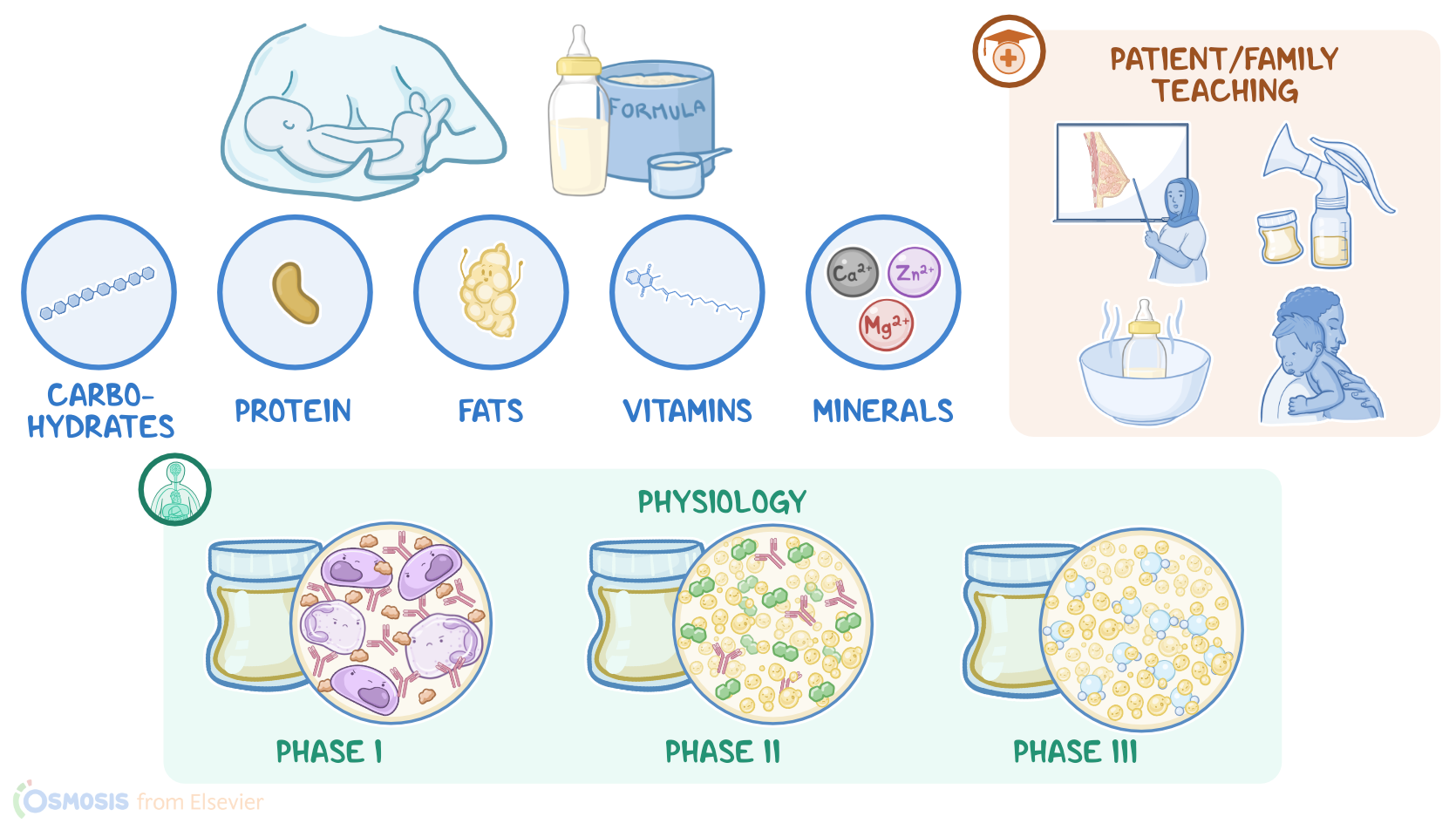
The newborn’s diet must supply the calories and nutrients, including carbohydrates, proteins, fats, vitamins, and minerals needed to support the rapid growth and development that occurs in early life. During the first few months of life, newborn nutritional needs can be met by either breast milk or iron-fortified infant formula.
Alright, let's look at the composition of breast milk, which differs with each of the three phases of milk production, also known as lactogenesis. Phase I of lactogenesis starts during pregnancy and continues throughout the first few days postpartum. During this phase, the breasts produce an early version of breast milk called colostrum which is a thick yellowish fluid that is high in protein, vitamins, minerals, immune cells, and immunoglobulins like IgA, which protects the infant’s gastrointestinal tract from infections and aids in establishing normal flora. Colostrum is low in fat and carbohydrates, so it has few calories. Colostrum also has a laxative effect, which promotes the passage of the infant’s first bowel movement called meconium, which helps prevent hyperbilirubinemia. Colostrum meets all the nutritional needs for the newborn during the first few days of life.
Now, Phase II of lactogenesis starts two to three days postpartum. The milk produced during this phase is called transitional milk. Compared to colostrum it contains less immunoglobulins and proteins, but has more vitamins, fats, and carbohydrates, so it’s higher in calories.
The last phase of lactogenesis is Phase III, during which mature milk is produced. Mature milk is present by 10 days to 2 weeks postpartum, and contains nutrients that are sufficient for appropriate infant growth. These include proteins, carbohydrates, and fats, as well as vitamins, minerals, and enzymes, like lysozyme, which has antibacterial properties.
Now, the nutritional content of mature breast milk will vary during the course of the feeding session. So, foremilk, which is the first milk that flows from the breast, is rich in protein and carbohydrates, and low in fat, so it has less calories. It is also quite watery, so it quenches the infant’s thirst. On the flip side is hindmilk, which is the milk near the end of feeding. Hindmilk is rich in fat, and thus higher in calories.
In addition to the nutritional advantages of breastmilk, there are many long-term health benefits for the baby, including promoting a healthy gut microbiome, lower rates of allergies, ear infections, asthma, and sudden infant death syndrome, or SIDS. Moms can also benefit from breastfeeding, because it promotes uterine involution, reduces the risk of postpartum hemorrhage, burns calories, and reduces the risk of cancers of the breast, uterus, and ovary; as well as conditions like osteoporosis, type II diabetes, and heart disease. Finally, breastfeeding is free!
Alright, now let’s switch gears and discuss infant formulas. The main types include standard cow’s milk-based formulas, hydrolyzed protein formulas, elemental formulas, and soy-based formulas. The most widely used infant formulas are standard cow’s milk–based formulas, which have been modified by decreasing the protein content, removing the butterfat and adding vegetable oil, as well as adding carbohydrates, mostly in the form of lactose, along with essential nutrients such as vitamins and minerals.
Now, another type of cow’s milk-based formula is hydrolyzed formula, sometimes called predigested formula, where the protein has been hydrolyzed or broken down into smaller sized proteins than those found in standard cow's milk-based formula. This type of formula is used when milk protein allergy is suspected, because the hydrolyzed proteins are less likely to stimulate antibody production. Next, are elemental formulas that contain protein derived from free amino acids, along with fat in the form of medium-chain triglycerides which are easier to absorb. Elemental formulas are used for infants with abnormal gastrointestinal tracts and fat malabsorption problems, including conditions like short bowel syndrome, severe liver disease, or gastroschisis.
Finally, are soy-based formulas, which contain soy protein and either glucose or sucrose instead of lactose. Soy-based formulas can be a good choice for babies that seem to have trouble digesting lactose or if the family wants to exclude animal proteins from their baby’s diet. Soy-based formulas are also recommended for infants with disorders such as galactosemia and lactase deficiency.
Okay, moving on to client and family teaching. If the infant’s mother plans to breastfeed, provide teaching on techniques that can help promote successful breastfeeding. Demonstrate the different feeding positions, including the cradle hold, cross-cradle hold, football hold, and side lying hold. Once you have the mother and baby properly positioned, show her how to hold her breast, stimulate the baby’s rooting reflex, and help the baby latch onto the breast.
Remember to explain how to know that the baby is latched on well by checking that the baby grasps the breast with the lips flanged out; the areola is covered well; and the tongue is cupped under the breast. Explain that an adequate latch creates a seal between the baby’s mouth and the breast, which is needed to create enough suction to remove milk from the breast. Once the baby has latched on and begins sucking rhythmically, tell her that she should hear audible swallowing and feel gentle tugging at the breast. Also stress that there should be no pain associated with the sucking; so if pain is present, demonstrate how to unlatch the baby from the breast, reposition the baby, and then latch the baby back on the breast.
Next, let your client know that most breastfed babies will need to nurse every 2 to 3 hours, or about 8 to 12 times each day; will typically nurse for about 15 to 30 minutes on each breast; and that a good time to burp the baby is when they switch from one breast to the other. Also teach your client that babies should never be put on a strict feeding schedule, and explain how a good milk supply can be maintained by feeding their baby regularly. Teach her how to recognize signs of hunger, such as bringing hands to the face, rooting, or making sucking noises. Tell them that crying is a late sign of hunger, so stress the importance of not waiting until then to feed their baby.
| NUTRITION - NEWBORN | ||
| KEY POINTS | NOTES | |
| DEFINITION |
| |
| PHYSIOLOGY |
| |
| BREASTMILK |
| |
| INFANT FORMULA |
| |
| PATIENT AND FAMILY TEACHING |
| |
No notes for this video yet
Try adding a note below