Pertussis: Nursing
Introduction0:00–0:29
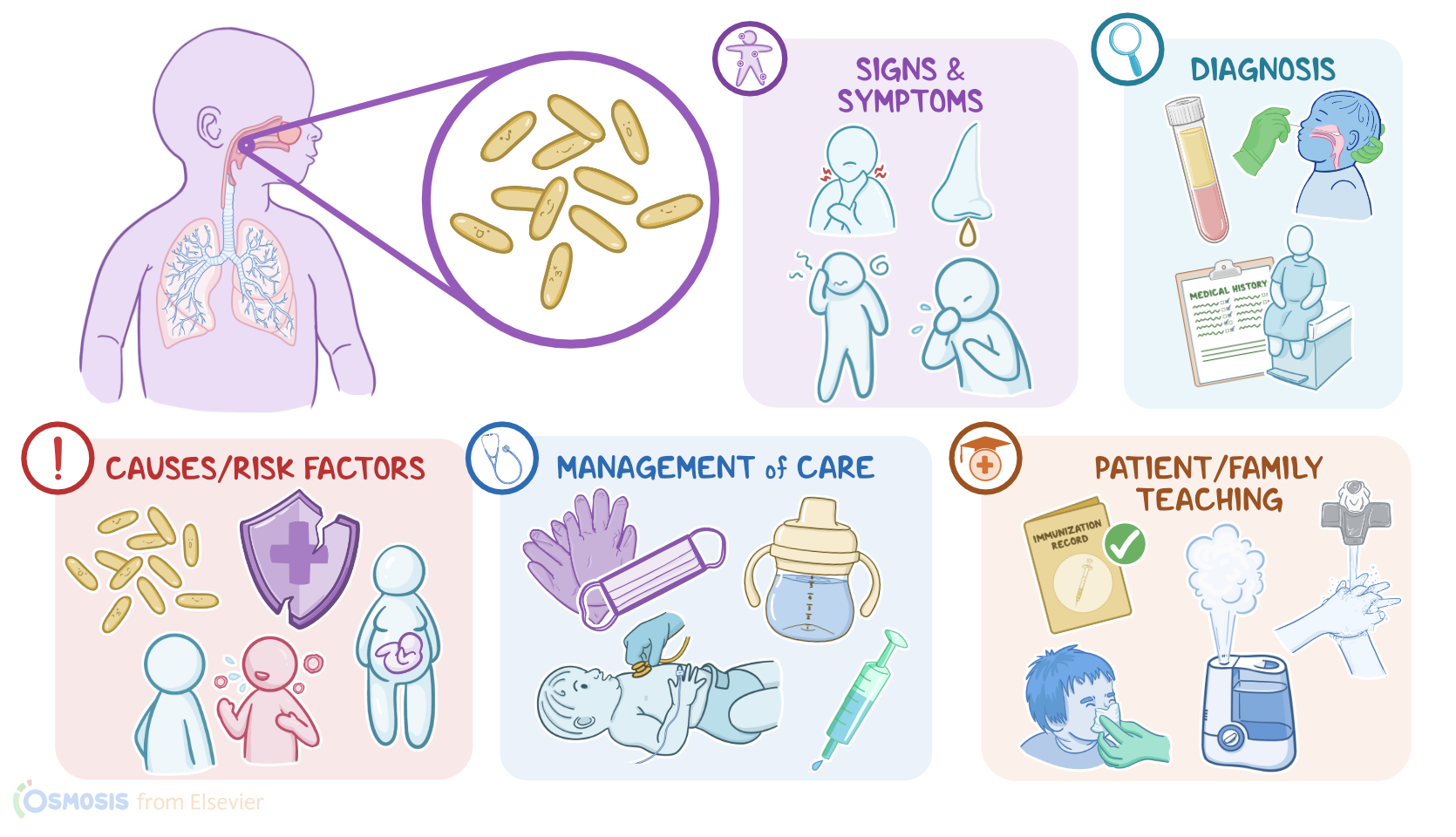
Pertussis, also known as whooping cough, is an acute respiratory infection caused by the bacteria Bordetella pertussis. The disease is characterized by paroxysmal cough, meaning fits of sudden and periodic cough, as well as abundant respiratory secretions.
It can affect people of all ages, but it can be particularly severe, and even life threatening in children younger than 6 months.
Now, the respiratory tract consists of the upper and lower airways, as well as the lungs. The tiniest branches of the lower airways, called the bronchioles, end with the alveolar sacs, which are lined by a thin membrane that allows gas exchange to occur.
Physiology0:29–1:15
Now, the respiratory system is equipped with defense mechanisms against potential pathogens. For example, the upper and lower airways are lined with ciliated epithelial cells that sweep pathogens that make their way inside, to be expelled back out through the nose or mouth.
At the same time, the lungs have plenty of immune cells, like macrophages, that react when a pathogen makes its way in by producing cytokines that attract more immune cells.
These immune cells destroy and dispose of the invading pathogen. Okay, now, pertussis is an infection caused by a gram-negative bacillus, called Bordetella pertussis.
Causes & risk factors1:15–1:32
Risk factors for acquiring infection include pregnancy, close contact with an infected individual and lack of immunization or underimmunization.
Pathology-wise, pertussis is transmitted by airborne contagious droplets. After inhalation, the bacteria adheres to the epithelial cells of the upper respiratory tract and the nasopharynx.
Pathology1:32–2:58
Once attached, it produces toxins that damage the local tissues, causing inflammation and edema of the respiratory tract.
This results in abundant secretions of the respiratory tract. In addition, some of the toxins can also paralyze the cilia, thus preventing the bacteria and the mucus secretion from being cleared.
This makes the blood vessels leakier, allowing fluid to move out into the surrounding tissues, causing edema in the airway.
So the swelling can obstruct air flow, causing shortness of breath, and it also causes the characteristic “whooping” sound when they try to take a deep breath.
Some complications of pertussis include secondary infections, like pneumonia and otitis media, as well as hypoxia and apnea when the physiology of gas exchange is affected.
Now, the clinical manifestations of pertussis occur following an incubation period of around 7 to 10 days. Then, the disease progresses in three stages.
Clinical manifestations2:58–3:49
The first stage, called the catarrhal phase, lasts 1 to 2 weeks, and manifests as a mild upper respiratory tract infection with mild or no fever, rhinorrhea, malaise and a mild nonproductive cough.
The second stage, called the paroxysmal stage, is characterized by paroxysms of cough, which are severe, forceful and repeated coughs that occur during a single expiration.
These bouts are often followed by a prolonged inspiration that produces a characteristic “whoop” sound. The third and the last stage, called the convalescent phase, is characterized by a residual cough that lasts 2 to 3 weeks.
Diagnosis of pertussis starts with the client’s history and physical assessment. A complete blood count can show leukocytosis and lymphocytosis.
Diagnosis3:49–4:12
The causative bacteria can be identified in nasopharyngeal cultures or with a PCR from nasopharyngeal secretions. Alternatively, the antibodies against Bordetella pertussis can be identified using serology testing.
Treatment of pertussis is focused on treating the bacterial infection with antibiotics and providing respiratory support.
Treatment4:12–5:09
The antibiotic of choice is usually a macrolide like erythromycin or azithromycin, or trimethoprim/sulfamethoxazole for those who can’t take macrolides.
Supportive treatment includes oxygen, suctioning of respiratory secretions, hydration and avoidance of respiratory irritants.
Finally, clients under 7 are recommended to get the DTaP vaccination and clients over 7 are recommended to get the Tdap.
Both prevent diphtheria, tetanus and pertussis, but the difference is that the DTaP vaccine works at full capacity against all three diseases, hence the 3 uppercase letters; while the Tdap only contains a full strength dose against tetanus, and sufficient doses for continued immunity against diphtheria and pertussis, hence the uppercase T and the lowercase d and p in the name.
Alright, now let’s talk about nursing care for a child with pertussis. Your goals are to prevent the spread of infection, provide respiratory support, and supportive care.
Management and care5:09–6:41
First, immediately place your client in an airborne isolation room and implement droplet and contact precautions in order to prevent transmission of the bacteria.Next, place them on cardiac telemetry monitoring and continuous pulse oximetry, as ordered.
Then auscultate the lungs for air exchange, and assess the quality and frequency of cough. Be sure to take steps to keep the child calm and prevent crying, as this can exacerbate the cough.
Closely observe your client during and after coughing spells for signs of respiratory distress. Alert the healthcare provider for decreased SpO2; cyanosis; altered mental status; or signs of airway obstruction like wheezing, gasping for air, or apnea, and administer humidified oxygen, as prescribed.
It’s also important to monitor your client’s temperature and hydration status, especially during the paroxysmal phase of the infection.
Encourage oral fluids, and administer non-aspirin antipyretics and antibiotics, as prescribed. Immediately report to the healthcare provider if the child is unable to tolerate oral fluids and if their urine output decreases.
Establish IV access, administer the prescribed IV fluids, and closely monitor their intake and output.Now, moving on to family and client teaching.
Let the child’s caregivers know that pertussis is an upper respiratory infection, meaning it doesn’t affect the lungs, and it’s caused by a bacteria.
It is treated with antibiotics and supportive care. Teach them that infection with pertussis does not provide lifelong protection from future illness, and that scheduled immunizations and boosters are still recommended.
General client and family teaching6:41–7:48
Also encourage them to verify or update their own immunization status.Next, let them know that their child’s cough symptoms may linger after treatment, and that they can reduce symptoms of cough by avoiding environmental triggers like dust and smoke, by keeping a humidifier in the room, and encouraging the child to rest.Be sure to remind them of the importance of preventing the spread of infection by practicing frequent hand washing, covering their mouth when coughing or sneezing, wearing a mask, and socially distancing.
Lastly, instruct them to notify the healthcare provider if their child has difficulty breathing, or if there’s change in their child’s behavior such as listlessness or not wanting to eat or drink.Alright, as a quick recap… Pertussis, also known as whooping cough, is an acute respiratory infection caused by a gram-negative bacteria called Bordetella pertussis.
It is transmitted by airborne droplets that colonize the upper respiratory tract and the nasopharynx, causing inflammation and edema.
The disease is characterized by paroxysmal cough, hence its alternate name, as well as abundant respiratory secretions. Risk factors for acquiring infection include pregnancy, close contact with an infected individual, and lack of immunization or underimmunization.
Review7:48–8:57
Diagnosis is made from nasopharyngeal cultures, PCR from nasopharyngeal secretions, or antibody testing. Treatment consists of antibiotic therapy and providing respiratory support.
Vaccination can be done with the DTaP vaccine before the age of 7, and the Tdap vaccine afterwards. Nursing management is centered on preventing the spread of infection, providing respiratory support, and providing supportive care.
Client and family teaching is centered on managing symptoms, preventing spread of the disease, promoting immunizations, and when to contact the healthcare provider.
respiratory support vaccination can be done with the DTaP vaccine before the age of seven. And the Tdap vaccine afterwards nursing management is centered on preventing the spread of infection providing respiratory support and providing supportive care client, and family, teaching is centered on managing symptoms, preventing spread of the disease promoting immunizations and went to
| PERTUSSIS | ||
| KEY POINTS | NOTES | |
| DEFINITION |
| |
| PHYSIOLOGY |
| |
| CAUSES AND RISK FACTORS |
| |
| PATHOPHYSIOLOGY |
| |
| SIGNS AND SYMPTOMS |
| |
| DIAGNOSIS |
| |
| TREATMENT |
| |
| MANAGEMENT OF CARE |
| |
| PATIENT AND FAMILY TEACHING |
| |
No notes for this video yet
Try adding a note below