Roseola (Exanthem subitum): Nursing
Watch later
Watch later
Notes
| ROSEOLA (EXANTHEM SUBITUM) | ||
| KEY POINTS | NOTES | |
| DEFINITION |
| |
| PHYSIOLOGY |
| |
| CAUSES AND RISK FACTORS |
| |
| PATHOPHYSIOLOGY |
| |
| SIGNS AND SYMPTOMS |
| |
| DIAGNOSIS |
| |
| TREATMENT |
| |
| MANAGEMENT OF CARE |
| |
| PATIENT AND FAMILY TEACHING |
| |
Transcript
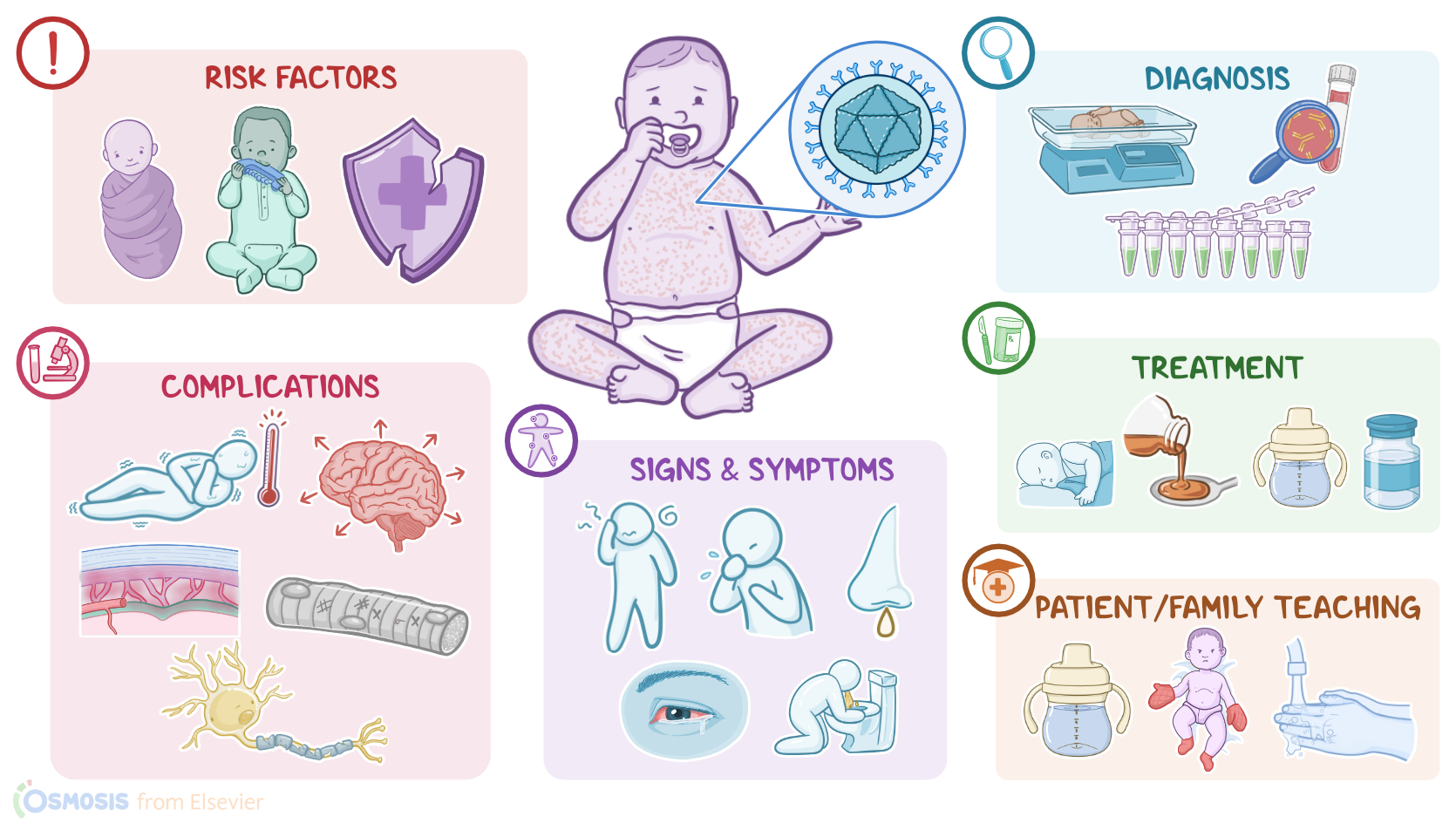
Roseola, also known as roseola infantum, exanthem subitum, or sixth disease, is a self-limiting, viral exanthem, most commonly caused by human herpesvirus 6, or HHV-6. Roseola is typically seen in children between the ages of six months and two years, and it’s characterized by a fever that may exceed 104 F or 40 C.
Let’s start by discussing the physiology of the immune response with a focus on T lymphocytes. It all begins in the bone marrow where undifferentiated hematopoietic stem cells begin to differentiate into different types of white blood cells. Some of these cells migrate to the thymus where they become mature T cells, also known as T lymphocytes. These cells defend us against intracellular viruses, fungi, and tumor cells and are responsible for long-term immunity.
Now, after a foreign antigen enters the body, it runs into antigen-presenting cells, like macrophages and dendritic cells, which engulf the foreign antigen and digest it into fragments. These antigen fragments are then presented on their surface and recognized by T helper cells, which help activate B cells to produce antibodies against that antigen. Next, these antibodies bind to any affected cell that expresses the antigen on its surface, eventually enabling natural killer, or NK cells, and cytotoxic T cells to easily recognize and destroy them.
Now, the most common cause of roseola is human herpesvirus 6, or HHV-6 for short, which is a small DNA virus that belongs to the Herpesviridae family. Less commonly, roseola can also be caused by enteroviruses and adenoviruses, as well as human herpesvirus 3 and 7. Important risk factors for developing roseola include age between 6 and 24 months and immunosuppression.
Now moving on to pathology. HHV-6 is an airborne virus, meaning it spreads via small virus-containing droplets that get flung in the air when an infected client coughs or sneezes. If an individual inhales these droplets or they come in contact with infected surfaces and then touch their eyes, nose, or mouth, they can become infected. Once the virus enters the body, it attaches to dendritic cells, which then migrate to the lymph nodes where they interact with T helper lymphocytes. T lymphocytes then ingest the virus and get infected.
Once inside the cell, the virus replicates, forming new viral particles, which eventually destroy the T lymphocyte. As a result, the surrounding tissue cells get infected and the replication of the virus continues. HHV-6 can also enter a latent state, where the virus stays inside the cell instead of killing it. This may seem harmless, but in immunosuppressed clients, the virus can reactivate and cause serious life-threatening complications.
Some serious neurologic complications of roseola include febrile seizures, encephalitis, and aseptic meningitis. Some clients can also develop thrombocytopenia, rhabdomyolysis, and Guillain-Barre syndrome, which is an autoimmune demyelinating condition that affects the peripheral nervous system.
Now, clinical manifestations of roseola typically appear after an incubation period of 5 to 15 days and they can be subdivided into two main phases: febrile and maculopapular phases.
The febrile phase starts with a sudden, high fever that may exceed 104 F or 40 C. This phase typically lasts for three to five days and during this time, some children may be active and well-appearing. On the other hand, some clients may present with malaise, cough, runny nose, conjunctivitis, periorbital edema, diarrhea, and vomiting. Additionally, a client might develop regional lymphadenopathy or swelling of cervical, postauricular, and occipital lymph nodes; and Nagayama spots, which are erythematous papules on the uvula and soft palate.
Key Takeaways
Roseola, also called exanthem subitum, or sixth disease, is a viral exanthem typically caused by human herpesvirus 6 or HHV-6, but can also be caused by other viral pathogens like human herpesvirus 7 (HHV-7). Children between 6 months and 2 years are most commonly affected by this condition.
Signs and symptoms start with the febrile phase which lasts about 3 to 5 days. This phase is characterized by a fever that can exceed 104 degrees F or 40 C, and general symptoms like cough, runny nose, swollen lymph nodes, malaise, diarrhea, and vomiting. Next comes the maculopapular phase, which involves small rose-colored macules and papules. These tend to appear on the neck and trunk and then spread to the face and extremities. The rash usually lasts 1 to 2 days.
Diagnosis of roseola is most commonly made through history and physical assessment along with measuring HHV-6-specific IgM antibodies. Treatment focuses on supportive therapies, while immunocompromised clients might require the administration of antivirals.