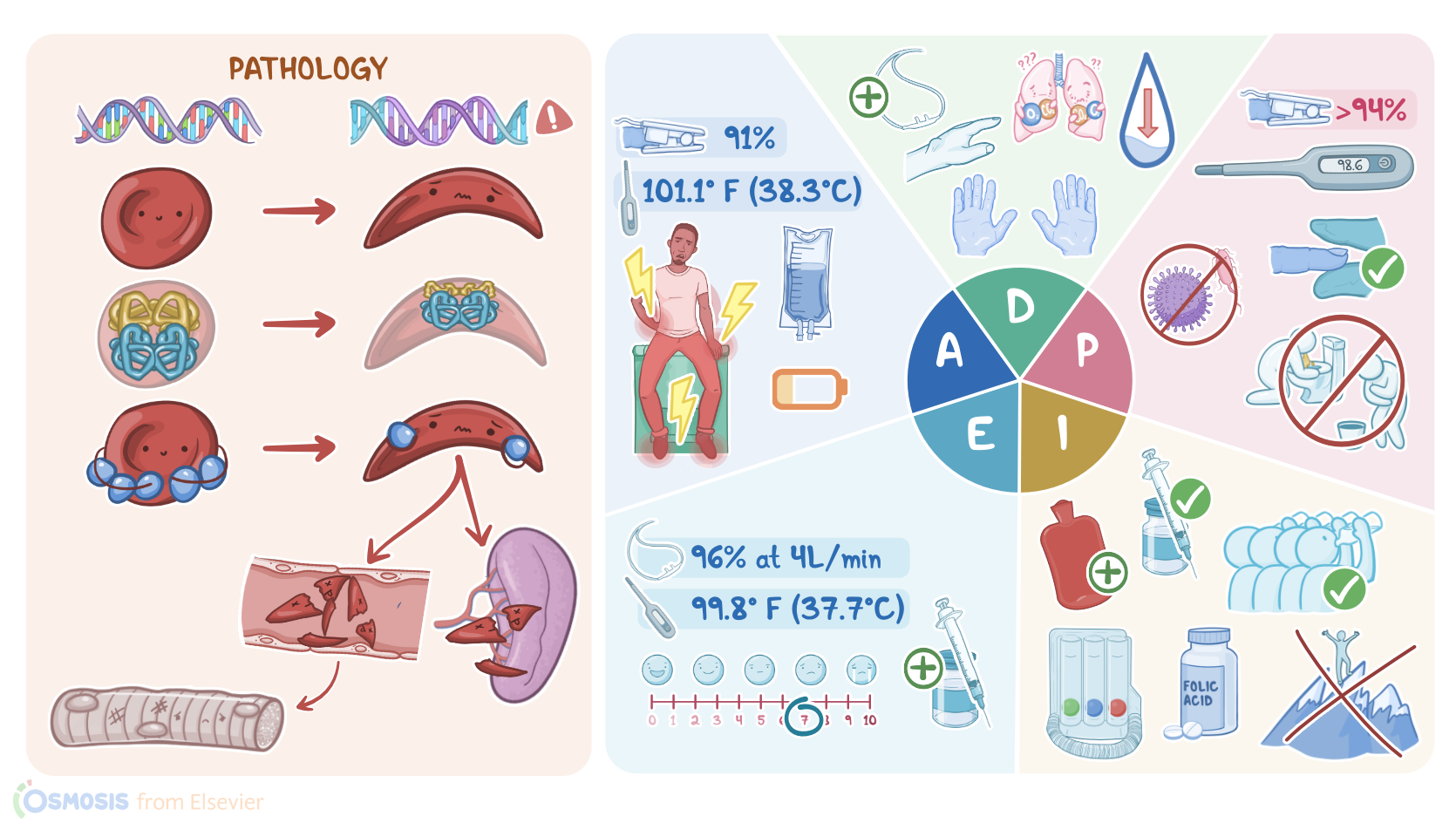
Sickle cell disease: Nursing process (ADPIE)

Last updated: January 26, 2022

Sickle cell disease: Nursing process (ADPIE)

gap test med surg

gap test med surg

Aortic aneurysm: Nursing process (ADPIE)
Coronary artery disease (CAD) and angina pectoris: Nursing process (ADPIE)
Hypertension: Nursing process (ADPIE)
Left-sided heart failure: Nursing process (ADPIE)
Myocardial infarction (MI): Nursing process (ADPIE)
Pericardial effusion and cardiac tamponade: Nursing process (ADPIE)
Rheumatic heart disease: Nursing process (ADPIE)
Antihyperlipidemics - Statins: Nursing pharmacology
Calcium-channel blockers: Nursing pharmacology
Angiotensin II receptor blockers (ARBs): Nursing pharmacology
Angiotensin-converting enzyme (ACE) inhibitors: Nursing pharmacology
Antihyperlipidemics - Miscellaneous: Nursing pharmacology
Diabetes insipidus: Nursing process (ADPIE)
Diabetes mellitus (DM): Nursing process (ADPIE)
Diabetic ketoacidosis (DKA): Nursing process (ADPIE)
Hyperosmolar hyperglycemic state (HHS): Nursing process (ADPIE)
Hyperthyroidism: Nursing process (ADPIE)
Hypothyroidism: Nursing process (ADPIE)
Syndrome of inappropriate antidiuretic hormone (SIADH): Nursing process (ADPIE)
Medications for antidiuretic hormone (ADH) disorders: Nursing pharmacology
Medications for thyroid disorders: Nursing pharmacology
Non-insulin injectable antidiabetic drugs - GLP-1 agonists and amylinomimetics: Nursing pharmacology
Oral antidiabetic medications - Alpha-glucosidase inhibitors: Nursing pharmacology
Oral antidiabetic medications - Biguanides and thiazolidinediones: Nursing pharmacology
Oral antidiabetic medications - DPP-4 inhibitors: Nursing pharmacology
Oral antidiabetic medications - Sulfonylureas and meglitinides: Nursing pharmacology
Oral antidiabetic medications - Sodium-glucose co-transporter-2 (SGLT-2) inhibitors: Nursing pharmacology
Insulin: Nursing pharmacology
Medications for growth hormone disorders: Nursing pharmacology
Epistaxis: Nursing process (ADPIE)
Eye injury: Nursing process (ADPIE)
Glaucoma: Nursing process (ADPIE)
Tonsillitis: Nursing process (ADPIE)
Antiglaucoma medications: Nursing pharmacology
Eye anesthetics: Nursing pharmacology
Mydriatics and cycloplegics: Nursing pharmacology
Ophthalmic anti-inflammatories and anti-infectives: Nursing pharmacology
Appendicitis: Nursing process (ADPIE)
Celiac disease: Nursing process (ADPIE)
Cirrhosis: Nursing process (ADPIE)
Gastroesophageal reflux disease (GERD): Nursing process (ADPIE)
Hiatal hernia: Nursing process (ADPIE)
Pancreatitis: Nursing process (ADPIE)
Peptic ulcer disease (PUD): Nursing process (ADPIE)
Antacids: Nursing pharmacology
Antidiarrheals: Nursing pharmacology
Laxatives: Nursing pharmacology
Weight loss medications: Nursing pharmacology
Antiemetics: Nursing pharmacology
Gallstone-dissolving agents: Nursing pharmacology
Gastric mucosal protective agents: Nursing pharmacology
Antispasmodics (GI): Nursing pharmacology
Histamine H2 antagonists: Nursing pharmacology
Proton pump inhibitors (PPIs): Nursing pharmacology
Treatment for Helicobacter pylori: Nursing pharmacology
Diuretics - Osmotic and carbonic anhydrase inhibitors: Nursing pharmacology
Cholinergic therapy (GU): Nursing pharmacology
Acute kidney injury (AKI): Nursing process (ADPIE)
Benign prostatic hyperplasia (BPH): Nursing process (ADPIE)
Urinary incontinence - Stress: Nursing process (ADPIE)
Urinary tract infections (UTIs): Nursing process (ADPIE)
Hemophilia: Nursing process (ADPIE)
Leukemia: Nursing process (ADPIE)
Sickle cell disease: Nursing process (ADPIE)
Anticoagulants - Heparin: Nursing pharmacology
Antiplatelet agents: Nursing pharmacology
Hemostatics: Nursing pharmacology
Iron preparations: Nursing pharmacology
Thrombolytics: Nursing pharmacology
Antihyperlipidemics - Fibrates: Nursing pharmacology
Blood products: Nursing pharmacology
Antihyperlipidemics - Bile acid sequestrants and cholesterol absorption inhibitors: Nursing pharmacology
Anticoagulants - Direct thrombin and factor Xa inhibitors: Nursing pharmacology
Anaphylaxis: Nursing process (ADPIE)
Lyme disease: Nursing process (ADPIE)
Vaccines: Nursing pharmacology
Immunoglobulins: Nursing pharmacology
Immunosuppressants for autoimmune diseases: Nursing pharmacology
Atopic dermatitis: Nursing process (ADPIE)
Frostbite: Nursing process (ADPIE)
Methicillin-resistant Staphylococcus aureus (MRSA): Nursing process (ADPIE)
Pressure injury: Nursing process (ADPIE)
Debridement agents: Nursing pharmacology
Keratolytics: Nursing pharmacology
Antibiotics - Topical: Nursing pharmacology
Antifungals - Topical: Nursing pharmacology
Corticosteroids - Topical: Nursing pharmacology
Acute compartment syndrome: Nursing process (ADPIE)
Fractures: Nursing process (ADPIE)
Gout: Nursing process (ADPIE)
Musculoskeletal injuries: Nursing process (ADPIE)
Rheumatoid arthritis (RA): Nursing process (ADPIE)
Acetylcholinesterase inhibitors for myasthenia gravis: Nursing pharmacology
Analgesics: Nursing pharmacology
Antiepileptics: Nursing pharmacology
Medications for Alzheimer disease: Nursing pharmacology
Skeletal muscle relaxants: Nursing pharmacology
Medications for migraines: Nursing pharmacology
Meningitis: Nursing process (ADPIE)
Parkinson disease: Nursing process (ADPIE)
Seizure disorder: Nursing process (ADPIE)
Stroke: Nursing process (ADPIE)
Trigeminal neuralgia: Nursing process (ADPIE)
Breast cancer: Nursing process (ADPIE)
Tumor lysis syndrome (TLS): Nursing Process (ADPIE)
Plant extracts for chemotherapy: Nursing pharmacology
Antitumor antibiotics: Nursing pharmacology
Alkylating agents: Nursing pharmacology
Peripheral arterial disease (PAD): Nursing process (ADPIE)
Peripheral venous disease (PVD): Nursing process (ADPIE)
Candidiasis: Nursing process (ADPIE)
Gonorrhea and chlamydia: Nursing process (ADPIE)
Pelvic inflammatory disease (PID): Nursing process (ADPIE)
Asthma: Nursing process (ADPIE)
Bacterial pneumonia: Nursing process (ADPIE)
Carbon monoxide poisoning: Nursing process (ADPIE)
Chronic obstructive pulmonary disease (COPD): Nursing process (ADPIE)
Epiglottitis: Nursing process (ADPIE)
Foreign body aspiration and upper airway obstruction: Nursing process (ADPIE)
Laryngotracheobronchitis (LTB) and croup: Nursing process (ADPIE)
Smoke inhalation injury: Nursing process (ADPIE)
Venous thromboembolism (VTE): Nursing process (ADPIE)
Antihistamines: Nursing pharmacology
Bronchodilators: Nursing pharmacology
Corticosteroids - Inhaled: Nursing pharmacology
Mast cell stabilizers - Inhaled: Nursing pharmacology
Leukotriene modifiers: Nursing pharmacology
Medications to control airway secretions: Nursing pharmacology
Oxygen therapy: Nursing pharmacology

Notes

SICKLE CELL ANEMIA

KEY POINTS
NOTES
PATIENT REPORT
  • 24-year-old man
  • History sickle cell anemia
  • Sudden, severe pain in back, hands, and feet

PATHOPHYSIOLOGY
  • Sickle cell disease
    • Group of genetic conditions affecting hemoglobin that cause red blood cells to sickle
    • Cells become more fragile and are easily destroyed 
    • Sickled cells are less flexible and can occlude vessels leading to ischemia and necrosis
  • Red blood cells carry oxygen and contain hemoglobin A
  • Hemoglobin A contains two α-globin and two β-globin chains making them flexible
  • Causes
    • Mutation in HBB gene
  • Risk factors
    • Ancestors from sub-Saharan Africa, South America, Caribbean, and Central America
    • Mediterranean, Middle Eastern, Indian, and Asian descent 
  • Signs and symptoms
    • Fatigue
    • Pallor
    • Bone or joint pain
    • Swelling
    • Headaches
  • Complications
    • Avascular necrosis
    • Seizures
    • Stroke
    • Acute chest syndrome
    • Sickle cell nephropahy
    • Splenic infarct
    • Infection
    • Vision loss 

DIAGNOSIS AND TREATMENT
  • Diagnosis
    • DNA testing 
    • Routine newborn screening
  • Treatment
    • Oxygen
    • Fluids
    • Folic acid
    • Analgesics
    • Antibiotics 
    • Hydroxyurea
    • Vaccination

ASSESSMENT
  • Tired
  • Temperature: 101.1 F (38.3 C)
  • Heart rate: 110
  • Respiratory rate: 20
  • Clear breath sounds
  • Blood pressure: 112/78 mmHg
  • Oxygen saturation: 91% room air
  • Pain: 9/10
  • IV fluids infusing
  • 1+ edema to hands
  • Skin turgor decreased
  • Dry mucous membranes
  • Folic acid and hydroxyurea at home
  • Hemoglobin: 10.9 mg/dL (6.76 mmol/L)
  • Hematocrit: 38%
  • Red blood cells: 4.0 million/mm3 (4.0 x 10¹²/L)
  • White blood cells: 18,000/mm3 (18 x 109/L)
  • Reticulocytes: 12%

NURSING DIAGNOSES
  • Impaired gas exchange related to decreased oxygen-carrying capacity
  • Ineffective peripheral tissue perfusion related to decreased oxygen-carrying capacity
  • Acute pain related to intravascular sickling 
  • Deficient fluid volume related to infection, fever, nausea, and vomiting

PLANNING
  • Increase oxygen saturation
  • Adequate perfusion and oxygenation to peripheral tissues
  • Manage pain
  • Adequate fluid balance
  • Resolve infection
  • Normalize temperature
  • Free of nausea and vomiting

IMPLEMENTATION
  • Administer medications as prescribed
  • Apply warm compresses
  • Demonstrate incentive spirometer
  • Titrate oxygen as needed
  • Remind how to prevent exacerbations

EVALUATION
  • Temperature: 99.8 F (37.7 C)
  • Heart rate: 86
  • Respiratory rate: 16
  • Clear breath sounds
  • Blood pressure: 118/78 mmHg
  • Oxygen saturation: 96% 4L nasal cannula
  • Pain: 7/10
  • Increase analgesic, reapply warm compresses

Transcript

Watch video only

Darnell Tyler is a 24-year-old Black male client with a history of sickle cell disease who presents to the emergency department, or ED, with a report of sudden, severe pain, rated a 9/10 that started late last night in his back, hands and feet.

He says he has been nauseous and vomiting for the last few days. After blood is drawn for culture, IV fluids and antibiotics are started. Then Darnell is admitted to the medical unit for further treatment and evaluation.

Sickle cell disease is a group of genetic conditions that affect hemoglobin, which can cause red blood cells to take the shape of a sickle or crescent. As a result, these red blood cells are more fragile and can be destroyed more easily, which can cause anemia.

Normally, red blood cells are able to carry oxygen from the lungs to peripheral tissues because they contain hemoglobin A, or HbA for short. Now, hemoglobin A is made up of two α-globin and two β-globin peptide chains, giving red blood cells a characteristic flexible biconcave shape that allows them to travel easily through blood vessels.

With this in mind, sickle cell disease is caused by a mutation in the HBB gene, which almost always results in the 6th amino acid of beta globin being a valine instead of glutamic acid.

As a result, two normal α-globin and two mutated β-globin peptide chains give rise to an abnormal hemoglobin called hemoglobin S for sickle, or HbS for short.

Now, under normal conditions, HbS is also able to carry oxygen quite well. However, under conditions such as hypoxia, acidosis, or dehydration, HbS forms long chains within the red blood cells.

This ultimately distorts the red blood cells into a rigid and fragile crescent shape that looks like a sickle. Now, sickle cell disease is autosomal recessive, so both parents must pass the mutated HBB gene to their child, so they will be homozygous for HbS.

This is especially common in individuals whose ancestors came from Sub-Saharan Africa, as well as South America, the Caribbean, and Central America. The mutated gene is also quite common among individuals of Mediterranean, Middle Eastern, Indian, and Asian descent.

On the other hand, if a client has one mutated HBB gene and one normal HBB gene, then they’re heterozygous for HbS, which makes them sickle cell carriers, also called sickle trait.

These clients usually have no health problems unless they are exposed to extreme conditions like dehydration or high altitude.Now, some of these fragile sickle cells get prematurely destroyed in blood vessels, a process often referred to as intravascular hemolysis; while others get destroyed by the spleen, which is also known as extravascular hemolysis.

Increased red blood cell breakdown leads to anemia and symptoms such as fatigue, pallor, shortness of breath, and jaundice. Less red blood cells stimulate bone marrow erythropoiesis, leading to new bone formation, and extramedullary hematopoiesis leading to hepatomegaly.

Finally, sickle cells can't travel easily through blood vessels, so they may get stuck and clump together in smaller blood vessels, causing vaso-occlusion, meaning they block the blood flow, eventually leading to tissue ischemia and pain, as well as infarction and necrosis.

This is especially common in the long bones and the back, as well as hands, and feet. So these clients typically present with bone or joint pain without a history of trauma, as well as swelling and pain in the fingers and toes.

Vaso-occlusion can result in many complications, which is known as a vaso-occlusive or sickle cell crisis. An important complication is avascular necrosis of the hips, which can cause tiny breaks in the bone and eventually, the bone may collapse.

In the brain, vaso-occlusion can lead to headaches, seizures, and even ischemic stroke. Vaso-occlusion in the lungs and cause a pulmonary infarction, which is often referred to as acute chest syndrome, and may present with chest pain, dyspnea, and cough.

Another important complication in the lungs is pulmonary hypertension, which can even lead to cor pulmonale, often referred to as right-side heart failure. In the kidneys, vaso-occlusion can cause sickle cell nephropathy, which is associated with hematuria and proteinuria; as well as chronic kidney disease.

Next, red blood cells can clog up the spleen and cause splenic infarcts; and since the spleen plays an important role in immunity against encapsulated bacteria, a client with sickle cell disease will be susceptible to infections by encapsulated bacteria, including Streptococcus pneumoniae, Neisseria meningitidis, and Haemophilus influenzae.

Finally, clogging of small blood vessels of the retina can lead to retinopathy and vision loss. To prevent these complications, it’s important to diagnose sickle cell disease as early as possible.

Diagnosis of sickle cell disease can be done prenatally with DNA testing, as well as with routine newborn screening. Hemoglobin electrophoresis can be performed to identify HbS.

Another important diagnostic study is a peripheral blood smear, which shows the characteristic sickle cells. Additionally, since there’s hemolysis, the blood levels of unconjugated bilirubin are often increased, while the hemoglobin levels are decreased.

To compensate, the bone marrow revs up and starts pumping out immature red blood cells called reticulocytes, therefore the reticulocyte count is usually elevated. In clients with bacterial infection, white blood cell count can also rise.