Tuberculosis (TB): Nursing
Definitions & Key takeaways
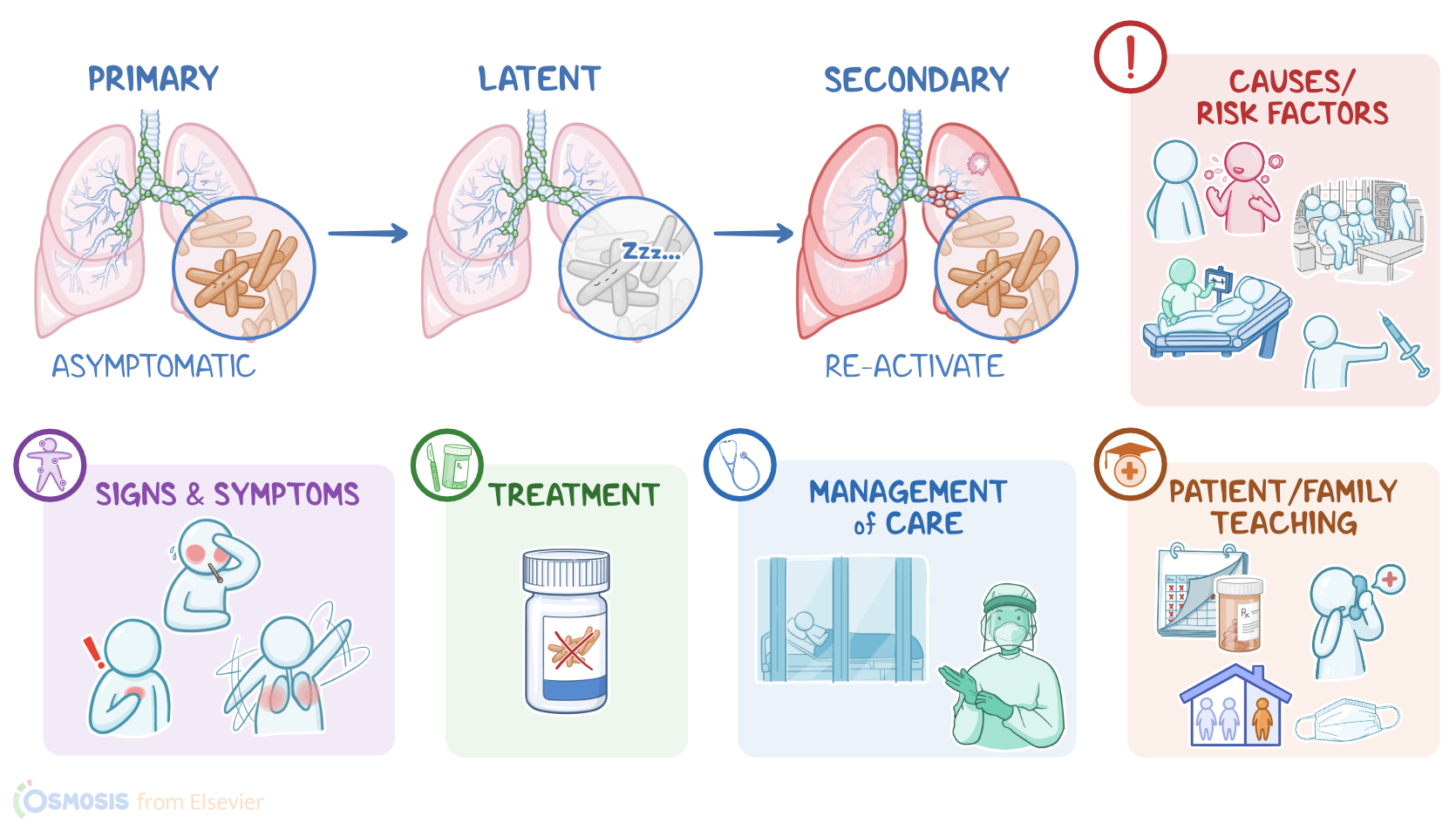
Tuberculosis (TB) is a chronic infectious disease caused by the bacterium Mycobacterium tuberculosis. It primarily affects the lungs but can also spread to other parts of the body. TB is transmitted through the air when an infected person coughs, sneezes, or talks, and another person inhales the bacteria.
People with active tuberculosis infections may experience flu-like symptoms, as well as chest pain, or even respiratory distress. Treatment for TB requires long-term antibiotics, often for 4 months to one year.
The goals of nursing care include improving the client's pulmonary function, providing supportive care during treatment, and preventing the spread of TB to others. Client and family teaching focuses on adherence to their medication regimen, infection control measures, and when to contact their healthcare provider.
Introduction0:00–0:15
Physiology0:15–1:02
Causes & risk factors1:02–2:13
Pathology2:13–3:56
Clinical manifestations3:56–5:19
Diagnosis5:19–8:29
Treatment8:29–9:56
Management and care9:56–11:10
General client and family teaching11:10–12:48
Review12:48–13:51
| TUBERCULOSIS | ||
| KEY POINTS | NOTES | |
| DEFINITION |
| |
| PHYSIOLOGY |
| |
| CAUSES AND RISK FACTORS |
| |
| PATHOPHYSIOLOGY |
| |
| SIGNS AND SYMPTOMS |
| |
| DIAGNOSIS |
| |
| TREATMENT |
| |
| MANAGEMENT OF CARE |
| |
| PATIENT AND FAMILY TEACHING |
| |
No notes for this video yet
Try adding a note below