
Hypovolemia · What Is It, Causes, Signs, and More

Published: Jan 06, 2025
Author: Corrine Tarantino, MPH
Editor: Alyssa Haag
Editor: Ahaana Singh
Editor: Józia McGowan, DO
Editor: Kelsey LaFayette, DNP, RN
Illustrator: Jessica Reynolds, MS
Copyeditor: David G. Walker
7-day free trial

Go deeper with Osmosis

Osmosis is a learning platform with videos, questions, and AI tools to help you master topics like this.

4.8 · 12,000+ reviews
Watch quick, visual videos
Practice with Qbank-style questions
Use AI to explain, quiz, and review
Study anytime with the mobile app
Start free trial

No credit card · Cancel anytime

What is hypovolemia?

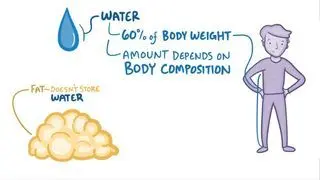
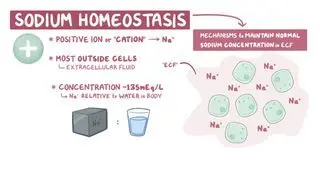
Hypovolemia refers to a low extracellular fluid (ECF) volume, often involving a decrease in both water and sodium levels. In order to maintain bodily functions and preserve homeostasis (i.e., a relatively equivalent state), the body requires a specific amount of blood and other bodily fluids. An imbalance caused by hypovolemia results in a decreased ECF volume, which can adversely affect several organ systems. For example, the heart may begin to beat faster in order to compensate for the low ECF. 

Learn deeper with Osmosis

Master this topic faster with videos, questions, and AI.

Used by 8M+ healthcare learners.

Start free trial

No credit card · Cancel anytime

What causes hypovolemia?

Hypovolemia is commonly caused by dysfunction of various organs, such as congestive heart failure or kidney failure. Rarely, neurological disorders, particularly those affecting the hormones that regulate kidney functioning can also cause hypovolemia. 

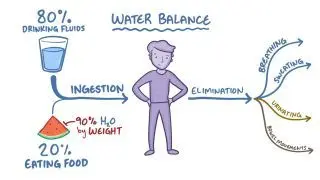
Another common cause of hypovolemia is dehydration, which may result from excessive water evaporating from the skin in extreme heat or when experiencing a fever. Dehydration can also result from continuous vomiting or diarrhea without sufficient fluid intake, usually associated with infections that cause gastroenteritis

Hypovolemia may also result from excessive accumulation of fluids within the interstitial space, between cells. For instance, when an infection becomes severe, sepsis can occur, which is a life-threatening condition in which the individual's response to the infection leads to organ dysfunction and systemic inflammation. In turn, fluids begin to leak out into the interstitial space, thereby causing hypovolemia. Other conditions that can cause fluids to exit blood vessels include pancreatitis, pericarditis, burns, and nutritional hypoalbuminemia.

Finally, hypovolemia may also be caused by sudden blood loss due to a trauma, like a motor vehicle accident or a fall from a height. External or internal bleeding may occur and, if not identified quickly, can be life-threatening.

What are the signs and symptoms of hypovolemia?

The general symptoms of hypovolemia include weakness, fatigue, dizziness, and increased thirst. Other more severe symptoms may also be present, including low urine output (i.e., oliguria), cyanosis characterized by blue discoloration of the skin from poor circulation, pain in the abdominal region or chest, and confusion or a decreased level of consciousness.

Many clinical signs can be found upon examination. Some more reliable indicators include an increase in heart rate by more than 15 to 20 beats per minute upon standing (i.e., orthostatic tachycardia) or a decrease in blood pressure by more than 10 to 20 mmHg when standing (i.e., orthostatic hypotension). Additionally, a decreased jugular venous pressure (JVP) can indicate hypovolemia.

Severe cases can lead to hypovolemic shock, which occurs once there’s not enough fluid for the heart to effectively pump. This condition requires emergent medical care as organ damage can occur if they do not receive enough blood to function. Hypovolemic shock is characterized by tachycardia, hypotension, peripheral hypoperfusion, and peripheral vasoconstriction. When hypovolemic shock occurs as a result of blood loss, it is referred to as hemorrhagic shock and when it occurs due to sepsis, it is called septic shock.

How is hypovolemia diagnosed?

Hypovolemia is diagnosed after a medical evaluation involving an assessment of signs and symptoms, medical and family history, and a physical examination. Subsequently, blood and urine tests, including a complete blood count and chemistry panels (i.e., a blood test that includes electrolytes, liver, and kidney function), are often conducted. Individuals with renal causes of hypovolemia often show an increased BUN, creatinine, urine sodium concentration, and urine pH. Blood tests can also indicate possible development of acid-base disorders, like metabolic acidosis for individuals with diarrheal illnesses. Individuals in hypovolemic shock may also experience hepatic or cardiac ischemia, often revealed by the chemistry panel and cardiac biomarkers (e.g., myocardial lactate extraction). Additional diagnostic tests, such as X-ray, CT, or MRI, may be conducted depending on the suspected underlying cause.

How is hypovolemia treated?

Treatment for hypovolemia varies based on the underlying cause, but the goal is always aimed at restoring fluid balance and replacing any continued fluid loss. In mild cases, individuals are typically treated by oral hydration and a maintenance diet, which increases their intake of sodium and vitamins. In more severe cases, intravenous fluids, modified based upon the underlying condition, are administered. Typically, individuals receive isotonic saline, which is a mixture of sodium chloride and water that contains the same concentration of sodium chloride as found normally in the human body. However, other choices vary by the nutrient composition of the specific individual’s blood. For example, an individual who has elevated sodium levels (i.e., hypernatremia) and has lost both water and salts will typically receive hypotonic saline, which is a mixture of sodium chloride and water that contains less sodium chloride than what is found normally in the human body. Additionally, individuals who have lost blood from hemorrhage often receive a blood transfusion. Other treatments may be required to treat the underlying cause, such as medications for heart failure or dialysis for kidney failure.

What are the most important facts to know about hypovolemia?

Hypovolemia is a condition characterized by low levels of blood or fluids in the body. There are many causes, including medical conditions like renal disorders, dehydration, excessive fluid accumulation between cells, and trauma. The most common symptoms of hypovolemia include weakness, fatigue, dizziness, and increased thirst. Hypovolemia is diagnosed with a thorough medical evaluation, followed by blood and urine testing. Typically, hypovolemia is treated through increased fluids either orally or intravenously and any specific treatments for the underlying condition. Additionally, individuals who experienced hemorrhaging are often provided with a blood transfusion
Students say Osmosis is 100% worth it

Because Osmosis saves them time. Lowers stress. And actually helps them remember when it counts.

I used Osmosis to prepare for my first medical school licensing exam! Super helpful and interactive for people who may not do great with just pages of text info!

Cecilia Ruiz

Cecilia Ruiz

MD student

Sayan Misra

I have used Osmosis for about four years. Best thing I have ever used for my medical studies.

Sayan Misra

Sayan Misra

Med student

Osmosis videos are superior because they define simple concepts, tell a story with a clear progression, and provide context.

Jay Pate

Jay Pate

Dental student

References


Bhat L., & Humphries, R.L. (2017). Neurologic emergencies. In Stone C., & Humphries R.L. (Eds.), CURRENT Diagnosis & Treatment: Emergency Medicine (8th ed.). McGraw Hill. 


Kreimeier, U. (2000). Pathophysiology of fluid imbalance. Critical Care, 4 Suppl 2(Suppl 2), S3–S7. DOI: 10.1186/cc968


Melendez Rivera, J.G., & Anjum, F. (2021). Hypovolemia. In StatPearls. https://www.ncbi.nlm.nih.gov/books/NBK565845/


Mount, D.B. (2018). Hypovolemia. In Jameson, J., Fauci, A.S., Kasper, D.L., Hauser, S.L., Longo, D.L., & Loscalzo, J. (Eds.), Harrison's Principles of Internal Medicine (20th ed.). McGraw Hill.


Segal, A. (2017). Disorders of extracellular volume: Hypovolemia and hypervolemia. In Lerma E.V., Rosner M.H., & Perazella M.A. (Eds.), CURRENT Diagnosis & Treatment: Nephrology & Hypertension (2nd ed.). McGraw Hill.