

Lactate Dehydrogenase · What Is It, Function, Treatment, and More

Published: Oct 16, 2025
Author: Georgina Tiarks
Editor: Alyssa Haag, MD
Editor: Ian Mannarino, MD, MBA
Editor: Kelsey LaFayette, DNP, ARNP, FNP-C
Editor: Arianna Succi, MD
Editor: Mary Roberts, MSN, RN
Illustrator: Jessica Reynolds, MS
Copyeditor: David G. Walker
7-day free trial

Go deeper with Osmosis

Osmosis is a learning platform with videos, questions, and AI tools to help you master topics like this.

4.8 · 12,000+ reviews
Watch quick, visual videos
Practice with Qbank-style questions
Use AI to explain, quiz, and review
Study anytime with the mobile app
Start free trial

No credit card · Cancel anytime

What is lactate dehydrogenase?

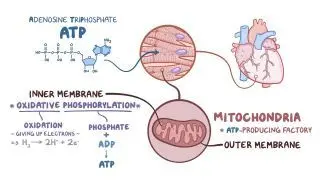
Lactate dehydrogenase (LDH), also known as lactic acid dehydrogenase, is an oxidoreductase enzyme, a class of enzymes that can transfer electrons between molecules. During glycolysis, glucose is transformed into pyruvate, which is metabolized to produce adenosine triphosphate (ATP) through the citric acid cycle and oxidative phosphorylation. When oxygen is absent or limited, LDH catalyzes the conversion of pyruvate to lactate through a reversible reaction known as the anaerobic pathway.  

LDH is present in nearly all tissues in the body, with skeletal muscle cells responsible for around 40% of the total lactate production. Since LDH is present in most tissues, the measurement of LDH in the blood can signify tissue turnover and is a non-specific way of determining tissue injury within the body. 

Learn deeper with Osmosis

Master this topic faster with videos, questions, and AI.

Used by 8M+ healthcare learners.

Start free trial

No credit card · Cancel anytime

What is the function of lactate dehydrogenase?

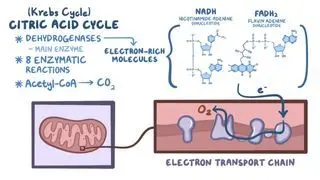
Lactate dehydrogenase is an enzyme used in the conversion of pyruvate (a product of glycolysis) to lactate, and vice versa, through a reversible reaction. Glycolysis is the pathway whereby glucose is converted into pyruvate for energy. When oxygen is present (i.e., under aerobic conditions), pyruvate is processed in the citric acid cycle (i.e., the Krebs cycle) and via oxidative phosphorylation to produce energy molecules in the form of ATP. 

When oxygen is not present (i.e., anaerobic conditions), the citric acid cycle cannot proceed, and cells generate energy through anaerobic glycolysis. In this pathway, LDH catalyzes the reduction of pyruvate to lactate, converting NADH to NAD+. The regeneration of NAD+ is necessary for energy production in the absence of oxygen. Once lactate is produced, it enters the bloodstream and is transported to the liver to be recycled in the Cori cycle (i.e., lactic acid cycle).  

In the liver, the reversible LDH enzyme converts lactate back into pyruvate, converting NAD+ to NADH in the process. Once pyruvate is created, it can be metabolized to regenerate glucose in the liver. Glucose is then transported to other tissues in the body, such as to muscles, where it can be broken down to produce energy. The net ATP produced during anaerobic metabolism is only 2 ATP per glucose molecule, compared to 36 ATP generated during aerobic metabolism. 

Since LDH exists in the cytoplasm of most cells in the body, measuring lactate dehydrogenase can be a useful, non-specific marker of tissue damage. It can also be used as an indicator of further underlying disease. 

How do you measure lactate dehydrogenase?

Lactate dehydrogenase can be measured from blood or fluids from the body. The test measures the amount of LDH that has leaked from damaged cells. A healthcare professional can draw blood inserting a small needle into a vein and analyzing the sample using the LDH blood test 

LDH can also be measured from other body fluids including cerebrospinal fluid, pleural effusion fluid, and abdominal fluid. LDH is measured in units per liter, and for adults, a normal LDH range is typically 122 to 222 units per liter, depending on the laboratory and assay used. 

What does it mean if lactate dehydrogenase is elevated?

Elevated lactate dehydrogenase can be caused by many underlying conditions, typically characterized by low oxygen availability or tissue damage, resulting in release of LDH into the bloodstream. Typically, LDH is considered elevated when levels are greater than 222 units per liter 

What causes elevated lactate dehydrogenase?

Most commonly, elevated LDH levels are caused by exercise or strenuous activity. During exercise, muscles may not receive enough oxygen to meet their energy demands, and muscle cells will often turn to anaerobic metabolism for energy. Elevated LDH can also indicate ongoing tissue damage from more serious underlying conditions. For instance, cancer cells require high levels of energy to sustain their constant replication and often switch from oxidative phosphorylation to anaerobic metabolism (Warburg effect).  

LDH can also be elevated in conditions affecting the respiratory system (e.g., pulmonary embolism), hematologic system (e.g., lymphoma, leukemia, anemia), and cardiac system (e.g., heart attack). Other causes of elevated LDH include trauma, gastrointestinal system disease (e.g., pancreatitisliver disease), kidney disease, or infectious disease (e.g., malaria, encephalitis, meningitis, HIV). The levels of LDH change with the severity of disease, so healthcare providers may use it as a non-specific marker for prognosis or to determine if treatment is working. 

LDH can also be falsely elevated due to certain medications (e.g., narcotics, procainamide, aspirin) and alcohol 

How is elevated lactate dehydrogenase treated?

Elevated lactate dehydrogenase can be treated by addressing the underlying cause. If LDH levels are high, a healthcare provider may want to order additional testing, which may include a complete blood count (CBC), complete metabolic panel (CMP), or other blood tests. An LDH isoenzyme test can also determine the specific types of LDH that are elevated, which can help determine the tissue of origin. In certain situations, the healthcare provider may recommend treatment with ascorbic acid (i.e., vitamin C), which may lower LDH levels. 

What are the most important facts to know about lactate dehydrogenase?

Lactate dehydrogenase (LDH) is an oxidoreductase enzyme that catalyzes the reversible conversion of pyruvate to lactate. When adequate oxygen is available (i.e., aerobic condition), pyruvate is metabolized through the Krebs cycle and oxidative phosphorylation to produce energy in the form of ATP. However, when oxygen availability is low, cells rely on the anaerobic pathway, which increases LDH production. The LDH test measures the amount of LDH in the blood or bodily fluids and is a useful, though non-specific, marker of tissue damage. LDH can be elevated due to a multitude of causes, such as strenuous exercise, cancer, anemialiver disease, kidney disease, cardiovascular disease, among others. Treatment depends on the underlying cause 

Key Takeaways

Definition 

Lactate dehydrogenase (LDH), also known as lactic acid dehydrogenase, is an oxidoreductase enzyme that can transfer electrons. When oxygen is absent or limited, LDH catalyzes the conversion of pyruvate to lactate through a reversible reaction known as the anaerobic pathway.  

Function 
 

- Conversion of pyruvate (product of glycolysis) to lactate and vice versa (reversible reaction)  

- Glycolysis: converts glucose → pyruvate, producing energy 

     - Aerobic conditions: 

           - Pyruvate enters the citric acid (Krebs) cycle and oxidative phosphorylation → 36 ATP molecules produced  

     - Anaerobic conditions: 

          - Oxidative phosphorylation stops, LDH converts pyruvate → lactate via hydrogen ions removal (NADH → NAD+)  

          - Lactate enters the bloodstream and travels to the liver → Cori cycle: LDH converts lactate → pyruvate → glucose → transported elsewhere (e.g., muscles) for energy production  

          - 2 ATP per glucose molecule produced  

- LDH is present in the cytoplasm of most cells in the body → LDH measurement can suggest tissue damage  

How to measure 

- From blood or body fluids (CSF, pleural effusion fluid, abdominal fluid)  

- Test measures amount of LDH that leaked from cells when damaged  

- Normal range (adults): 122-222 units per liter  

Elevated LDH  

- Indicates underlying conditions:  

     - Tissue damage  

     - Not enough oxygen  

Causes of elevated LDH 

- Exercise or strenuous activity   

- Cancer (Warburg effect)  

- Respiratory system conditions (e.g., pulmonary embolism 

- Hematologic system conditions  

- Cardiac system conditions (heart attack 

- Trauma  

- Gastrointestinal system disease (pancreatitis, liver disease) 

- Kidney disease  

- Infectious disease (malaria, encephalitis, meningitis, HIV 

- Falsely elevated due to alcohol or medications (narcotics, procainamide, aspirin)   

Treatment 

- Address underlying cause  

     - Investigations: additional blood tests, LDH isoenzyme 

- Vitamin C (can lower LDH levels)  

Students say Osmosis is 100% worth it

Because Osmosis saves them time. Lowers stress. And actually helps them remember when it counts.

I used Osmosis to prepare for my first medical school licensing exam! Super helpful and interactive for people who may not do great with just pages of text info!

Cecilia Ruiz

Cecilia Ruiz

MD student

Sayan Misra

I have used Osmosis for about four years. Best thing I have ever used for my medical studies.

Sayan Misra

Sayan Misra

Med student

Osmosis videos are superior because they define simple concepts, tell a story with a clear progression, and provide context.

Jay Pate

Jay Pate

Dental student

References


Adeva-Andany M, López-Ojén M, Funcasta-Calderón R, Ameneiros-Rodríguez E, Donapetry-García C, Vila-Altesor M, Rodríguez-Seijas J. Comprehensive review on lactate metabolism in human health. Mitochondrion. 2014;17:76-100. https://doi.org/10.1016/j.mito.2014.05.007 


Drent M, Cobben NA, Henderson RF, Wouters EF, van Dieijen-Visser M. Usefulness of lactate dehydrogenase and its isoenzymes as indicators of lung damage or inflammation. Eur Respir J. 1996;9(8):1736-1742. https://doi.org/10.1183/09031936.96.09081736 


Eventoff W, Rossmann MG, Taylor SS, Torff HJ, Meyer H, Keil W, Kiltz HH. Structural adaptations of lactate dehydrogenase isozymes. Proc Natl Acad Sci U S A. 1977;74(7):2677-2681. https://doi.org/10.1073/pnas.74.7.2677 


Khan AA, Allemailem KS, Alhumaydhi FA, Gowder SJT, Rahmani AH. The biochemical and clinical perspectives of lactate dehydrogenase: an enzyme of active metabolism. Endocr Metab Immune Disord Drug Targets. 2020;20(6):855-868. https://doi.org/10.2174/1871530320666191230141110 


Klein R, Nagy O, Tóthová C, Chovanová F. Clinical and diagnostic significance of lactate dehydrogenase and its isoenzymes in animals. Vet Med Int. 2020;2020:5346483. https://doi.org/10.1155/2020/5346483 


Liberti MV, Locasale JW. The Warburg effect: how does it benefit cancer cells? Trends Biochem Sci. 2016;41(3):211-218. https://doi.org/10.1016/j.tibs.2015.12.001