

SOAP BRAIN MD · Lupus Diagnostic Criteria Acronym

Published: Dec 23, 2025
Author: Lily Guo, MD
Editor: Alyssa Haag, MD
Editor: Ian Mannarino, MD< MBA
Editor: Kelsey LaFayette, DNP, ARNP, FNP-C
Illustrator: Abbey Richard, MSc
7-day free trial

Go deeper with Osmosis

Osmosis is a learning platform with videos, questions, and AI tools to help you master topics like this.

4.8 · 12,000+ reviews
Watch quick, visual videos
Practice with Qbank-style questions
Use AI to explain, quiz, and review
Study anytime with the mobile app
Start free trial

No credit card · Cancel anytime

What is lupus?

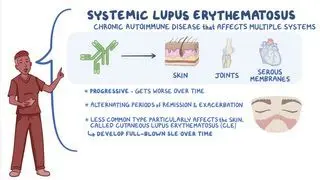
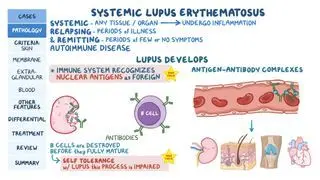
Lupus, also known as systemic lupus erythematosus (SLE), refers to the chronic autoimmune disorder of unknown cause that can affect any organ of the body. SLE is characterized by multisystem inflammation and antibodies to nuclear and cytoplasmic antigens. While common symptoms of lupus include fatigue, fever, joint pain, and rash, clinical presentation can vary greatly making diagnosis challenging. Greater than 90% of cases of SLE occur in individuals assigned female at birth, frequently starting at childbearing age 

In addition to obtaining medical history and looking for clinical signs and symptoms, tests for lupus may be performed which includes blood tests, urine tests, and imaging studies such as joint radiography, echocardiography, and computer tomography (CT) and magnetic resonance imaging (MRI) of the brain and chest. Kidney biopsy and lumbar puncture can also play a role in diagnosing lupus.  

Medications used to treat SLE include antimalarials (e.g., hydroxychloroquine), corticosteroids (e.g., methylprednisolone, prednisone), and disease-modifying anti-rheumatic drugs (DMARDS) (i.e., methotrexate, cyclophosphamide, cyclosporine, mycophenolate, azathioprine). In 2019, the European League Against Rheumatism (EULAR) and the American College of Rheumatology (ACR) published new criteria for the classification of SLE, most of which are outlined in the acronym, SOAP BRAIN MD.  

Learn deeper with Osmosis

Master this topic faster with videos, questions, and AI.

Used by 8M+ healthcare learners.

Start free trial

No credit card · Cancel anytime

What is SOAP BRAIN MD?

SOAP BRAIN MD is an acronym to help remember the clinical features of systemic lupus erythematosus.

What does the “S” in SOAP BRAIN MD mean?

The “S” in SOAP BRAIN MD refers to serositis, which is inflammation of the serous layers of the body, which includes inflammation of the tissues lining the lungs (i.e., pleuritis) and heart (i.e., pericarditis). Pleuritis results in sharp chest pain that worsens with breathing. Acute pericarditis is the most common cardiac complication of SLE and occurs in approximately 25% of cases. Pericarditis can result in chest pain, shortness of breath, and can lead to life-threatening complications such as pericardial effusion, or build-up of fluid around the heart. In less than 1% of patients with SLE, the pericardial effusion can progress to cardiac tamponade, which is a severe build-up of fluid around the heart that limits the heart’s ability to fill with blood and pump, leading to hemodynamic compromise. 

What does the “O” in SOAP BRAIN MD mean?

The “O” in SOAP BRAIN MD refers to oral ulcers, which look like red ulcers surrounded by a white halo and can be found on the roof of the mouth, inside the cheeks, or on the lips. These oral ulcers are typically painless. Other oral findings associated with lupus include cheilitis, which is an inflammation of the lips, and a fissured tongue, where there are grooves across surface of tongue.  

What does the first “A” in SOAP BRAIN MD mean?

The “A” in SOAP BRAIN MD refers to arthritis, or inflammation of the body’s joints. Arthritis and arthralgias (i.e., joint pain) occur in over 90% of individuals with SLE and are often one of the earliest manifestations. Arthritis tends to be migratory (i.e., moving from one joint to another over time), polyarticular (i.e., affecting more than one joint), and symmetrical. 

What does the “P” in SOAP BRAIN MD mean?

The “P” in SOAP BRAIN MD refers to photosensitivity. Those with lupus are more prone to getting new skin rashes or exacerbating pre-existing skin lesions from exposure to ultraviolet (UV) rays. Photoprotective measures should be taken including avoiding sunlight during the peak hours (i.e., 10-4 pm), wearing broad-spectrum sunscreen with at least SPF of 30, and reapplication of sunscreen often. 

What does the “B” in SOAP BRAIN MD mean?

The “B” in SOAP BRAIN MD refers to blood abnormalities. All three blood cell lines (i.e., red blood cells, white blood cells, and platelets) can be affected in lupus, which can result in anemia, leukopenia, and thrombocytopenia, respectively. Anemia of chronic disease, also called anemia of inflammation and anemia of chronic inflammation, is the most common form of anemia amongst those with SLE. Leukopenia can be due to a reduction in lymphocytes or neutrophils, which are cells that play crucial roles in fighting off infection. Thrombocytopenia of SLE is typically mild and occurs in 10-40% of individuals. 

What does the “R” in SOAP BRAIN MD mean?

The "R" in SOAP BRAIN MD stands for renal involvement, which affects about 50% of individuals with SLE. Managing the disease includes regular screening for kidney involvement or damage through urine tests to measure protein loss (i.e., proteinuria), creatinine, and estimate glomerular filtration rate, which indicates kidney function. Proteinuria exceeding 0.5 grams per day (g/day) is a criterion for evaluating renal impairment in SLE patients 

Additionally, if proteinuria is consistently over 0.5 g/day and renal function is impaired, a kidney biopsy might be conducted to determine the specific type and severity of kidney involvement for diagnosis of lupus nephritis. Additionally, renal involvement can lead to high blood pressure in those with SLE due to inability to regulate water and sodium levels in the body 

What does the second “A” in SOAP BRAIN MD mean?

The second “A” in SOAP BRAIN MD refers to antinuclear antibody (ANA), which are autoantibodies to nuclei of cells. Approximately 98% of those with SLE have a positive ANA blood test. Part of the criteria for diagnosis of SLE requires having a positive ANA level at a titer of ≥1:80 at least once on testing. ANA-negative SLE is rare but can occur especially in those who have longstanding disease and have undergone treatment. Over time people with lupus may lose ANA reactivity and become serologically negative.  

What does the “I” in SOAP BRAIN MD mean?

The “I” in SOAP BRAIN MD refers to immunologic abnormalities. There may be abnormalities in any of three immunologic domains: antiphospholipid antibodies, complement proteins, and SLE-specific antibodies.   

Antiphospholipid antibodies include anti-cardiolipin antibodies, anti-β2GP1 antibodies, and lupus anticoagulant. Testing for the antibodies in the blood can help provide evidence for a diagnosis of SLE, however, these can be negative in some individuals with SLE. Complement proteins, such as C3 or C4, can be low in those with SLE. Lastly, SLE-specific antibodies, including anti-dsDNA antibody or anti-Sm antibody, can be detected on laboratory testingAnti-dsDNA antibodies are seen in approximately 70% of those with SLE whereas anti-Sm antibodies are seen in 30%.  

What does the “N” in SOAP BRAIN MD mean?

The “N” in SOAP BRAIN MD refers to neurologic abnormalities, including psychosis (e.g., delusions, hallucinations without insight), delirium, and seizures. Stroke, cognitive dysfunction, and peripheral neuropathy can also occur.  

What does the “M” in SOAP BRAIN MD mean?

The “M” in SOAP BRAIN MD refers to malar rash, also known as butterfly rash, characterized by erythema involving the cheeks and nasal bridge but sparing the nasolabial folds. The rash frequently occurs after sun exposure. The erythema can develop into fine, scaling, coalesced papules (i.e., raised bumps). While the rash is usually transient and resolves on its own, in some cases it may progressively worsen. The rash can be the first sign of disease and can precede the systemic symptoms by weeks.  

What does the “D” in SOAP BRAIN MD mean?

The “D” in SOAP BRAIN MD refers to discoid rash, which involves round, coin-shaped skin lesions. They are typically erythematous, scaly, and thick plaques (i.e., raised patches of skin) that appear most commonly on the face, scalp, ears, and neck. On darker skin tones, the erythema may be subtle and can appear pink, violaceous (i.e., reddish-purple), or gray. Discoid rashes can cause skin atrophy and scarring or lead to hair loss if on the scalp.  

What are the most important facts to know about the SOAP BRAIN MD acronym?

Lupus erythematosus is a multisystem autoimmune disease. Genetic females of childbearing age are at greater risk of lupusLupus affects any number of organs in the body, however, the organ systems most affected in SLE are the joints, skin, renal system, pulmonary system, and cardiovascular system. There is currently no cure, however treatment options include anti-malarial drugs, corticosteroids, and disease-modifying anti-rheumatic drugs (DMARDS) which can help regulate the immune system. SOAP BRAIN MD is an acronym that describes the clinical features of systemic lupus erythematosus, namely serositis, oral ulcersarthritisphotosensitivity, blood abnormalities, renal involvement, antinuclear antibody, immunologic abnormalities, neurologic abnormalities, malar rash, and discoid rash 

Key Takeaways

Definition of SOAP BRAIN MD 

SOAP BRAIN MD is an acronym to help remember the clinical features of systemic lupus erythematosus.   

Systemic Lupus Erythematosus 

- Chronic autoimmune disorder  

- Multisystem inflammation and production of antibodies to nuclear and cytoplasmic antigens 

- Can affect any organ of the body 

- Common symptoms: fatigue, fever, joint pain, rash  

- Diagnosis can include: medical history, physical examination, blood and urine tests, imaging, kidney biopsy lumbar puncture  

- Treatment:  

     - Antimalarials (e.g., hydroxychloroquine 

     - Corticosteroids  

     - DMARDS (i.e., methotrexate, cyclophosphamide, cyclosporine, mycophenolate, azathioprine 

S 

Serositis = inflammation of the serous layers of the body  

- Pleuritis  

     - Sharp chest pain that worsens with breathing  

- Pericarditis  

     - 25% of SLE (most common cardiac complication)  

     - Chest pain, shortness of breath, pericardial effusion, cardiac tamponade (<1% of cases)   

O 

Oral ulcers = painless red ulcers surrounded by a white halo on the roof of the mouth, inside the cheeks, or on the lips  

(Other oral findings associated with lupus: cheilitis, fissured tongue)  

A 

Arthritis = joint inflammation  

- >90% of SLE cases  

- Often an early manifestation  

- Migratory  

- Polyarticular  

P 

Photosensitivity = increased susceptibility to skin rashes or exacerbation of skin lesions upon UV exposure  

- Prevention: avoid sunlight during peak hours; broad-spectrum sunscreen with frequent application  

B 

Blood abnormalities 

- Anemia of chronic disease  

- Leukopenia  

     - Neutrophils or lymphocytes reduction 

- Thrombocytopenia  

     - Mild, 10-40% of individuals  

R 

Renal involvement  

- 50% of SLE cases  

- Can lead to high blood pressure  

- Regular monitoring of:  

     - Proteinuria (should be below 0.5 g/day) 

     - Kidney function: creatinine, estimated glomerular filtration rate  

- Kidney biopsy (if consistent proteinuria and impaired function) 

A 

Antinuclear antibody (ANA) = autoantibodies to nuclei of cells  

- Positive in 98% of SLE cases  

- Part of diagnostic criteria (titer ≥1:80 at least once)  

- May become serologically negative over time  

I 

Immunologic abnormalities = abnormalities in any of three immunologic domains:  

- Antiphospholipid antibodies  

     - Anti-cardiolipin antibodies 

     - Anti-β2GP1 antibodies 

     - Lupus anticoagulant 

- Complement proteins (C3, C4)  

- SLE-specific antibodies:  

     - Anti-dsDNA antibody (seen in 70% of cases)  

     - Anti-Sm antibody (seen in 30% of cases)  

N 

Neurologic abnormalities  

- Psychosis (delusions, hallucinations 

- Delirium  

- Seizures  

- Stroke  

- Cognitive dysfunction  

- Peripheral neuropathy  

M 

Malar rash (butterfly rash) = erythema involving the cheeks and nasal bridge but sparing the nasolabial folds  

- Frequently after sun exposure  

- Can develop into raised bumps  

- Usually self-resolving, but can progressively worsen in some cases 

D 

Discoid rash = round, coin-shaped skin lesions  

- Erythematous, scaly, thick plaques 

- On darker skin tones: may be subtle, pink, violaceous, or gray  

- Face, scalp, ears, neck  

- Can cause skin atrophy or scarring, hair loss  

Students say Osmosis is 100% worth it

Because Osmosis saves them time. Lowers stress. And actually helps them remember when it counts.

I used Osmosis to prepare for my first medical school licensing exam! Super helpful and interactive for people who may not do great with just pages of text info!

Cecilia Ruiz

Cecilia Ruiz

MD student

Sayan Misra

I have used Osmosis for about four years. Best thing I have ever used for my medical studies.

Sayan Misra

Sayan Misra

Med student

Osmosis videos are superior because they define simple concepts, tell a story with a clear progression, and provide context.

Jay Pate

Jay Pate

Dental student

References


Aringer M, Costenbader K, Daikh D, et al. 2019 European League Against Rheumatism/American College of Rheumatology classification criteria for systemic lupus erythematosus. Arthritis Rheumatol. 2019;71(9):1400-1412. doi:10.1002/art.40930. PMID:31385462; PMCID:PMC6827566. 


García-Ríos P, Pecci-Lloret MP, Oñate-Sánchez RE. Oral manifestations of systemic lupus erythematosus: A systematic review. Int J Environ Res Public Health. 2022 Sep 21;19(19):11910. doi: 10.3390/ijerph191911910. PMID: 36231212; PMCID: PMC9565705. 


Jung JH, Soh MS, Ahn YH, Um YJ, Jung JY, Suh CH, Kim HA. Thrombocytopenia in systemic lupus erythematosus: Clinical manifestations, treatment, and prognosis in 230 patients. Medicine (Baltimore). 2016 Feb;95(6):e2818. doi: 10.1097/MD.0000000000002818. PMID: 26871854; PMCID: PMC4753950. 


Mittoo S, Gelber AC, Hitchon CA, et al. Clinical and serologic factors associated with lupus pleuritis. Rheumatol. 2010;37:747–753