
Ulcerative Colitis Diet · What Is It, Foods to Include and Avoid, and More

Published: Nov 23, 2025
Author: Lily Guo, MD
Editor: Alyssa Haag, MD
Editor: Józia McGowan, DO
Editor: Kelsey LaFayette, DNP, ARNP, FNP-C
Illustrator: Jessica Reynolds, MS
7-day free trial

Go deeper with Osmosis

Osmosis is a learning platform with videos, questions, and AI tools to help you master topics like this.

4.8 · 12,000+ reviews
Watch quick, visual videos
Practice with Qbank-style questions
Use AI to explain, quiz, and review
Study anytime with the mobile app
Start free trial

No credit card · Cancel anytime

What is ulcerative colitis?

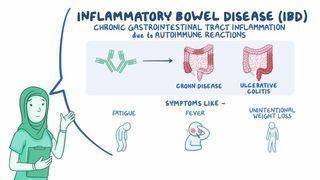
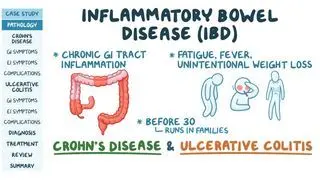
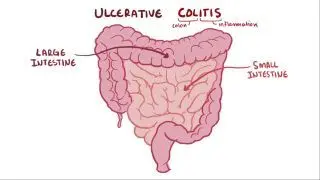
Ulcerative colitis (UC) is a chronic inflammatory condition that typically affects the large intestine, also known as the colon. Ulcers develop on the colon's inner lining, leading to symptoms such as abdominal pain, diarrhea, bloody stools, fatigue, loss of appetite, and weight loss. In addition to gastrointestinal symptoms, individuals with ulcerative colitis can experience extraintestinal symptoms, including arthritis, mouth ulcers, erythema nodosum (i.e., tender, red bumps under the skin), pyoderma gangrenosum (i.e., large, painful ulcers), and conjunctivitis. 

While the cause of ulcerative colitis is currently unknown, it is hypothesized to be related to a combination of genetic, environmental, and autoimmune factors. Ulcerative colitis is a chronic lifelong condition; however, it can be managed with medications (e.g., aminosalicylates, corticosteroids, immunosuppressants), lifestyle changes, and dietary modifications. Surgery may be an option if ulcerative colitis is refractory to medications. 

Learn deeper with Osmosis

Master this topic faster with videos, questions, and AI.

Used by 8M+ healthcare learners.

Start free trial

No credit card · Cancel anytime

What is an ulcerative colitis diet?

An ulcerative colitis diet is designed to help manage the symptoms of ulcerative colitis. Eating specific foods can reduce inflammation, ease symptoms, and improve overall health. Generally, the diet includes foods that are high in fiber and low in fat and provide a balanced source of nutrients. Foods that can help improve gut health, such as fermented foods, can be beneficial while following an ulcerative colitis diet. The ulcerative colitis diet further involves avoiding certain trigger foods that can worsen symptoms, like spicy or fatty food, and avoiding dehydration.  During an ulcerative colitis flare, consuming foods low in fiber and easier to digest can help manage symptoms.  

How does an ulcerative colitis diet help ulcerative colitis?

An ulcerative colitis diet can help manage the condition by reducing inflammation and easing symptoms. A diet high in fiber, if not currently in a flare, and low in fat can increase stool volume, making it easier to pass and reducing diarrhea and abdominal pain. Fermented foods, such as yogurt and sauerkraut, can help promote a healthy gut microbiome, which is vital for people with ulcerative colitis. Staying hydrated is also essential, as water can help improve the peristalsis of the digestive system and prevent constipation. A well-balanced diet can also provide the nutrients the body needs to repair and rebuild tissues. 

What foods are best on an ulcerative colitis diet?

The best foods to eat on an ulcerative colitis diet include fruits and vegetables (e.g., leafy greens, berries, and colorful vegetables), which are a great source of fiber, antioxidants, vitamins, and minerals. Whole grains, including oats, brown rice, quinoa, and whole wheat bread, can be beneficial as they are nutrient-rich, a good source of fiber, and allow for easier passage of stool. Additional foods to include in an ulcerative colitis diet include lean proteins such as chicken, turkey, and fish; plant-based proteins such as tofu and legumes; and fermented foods such as kimchi, kombucha, yogurt, and sauerkraut. Fermented foods and yogurt contain beneficial bacteria (i.e., probiotics) that can help promote a healthy gut microbiome. This can be especially important for individuals with ulcerative colitis, as the condition can disrupt the balance of bacteria in the gut.  

During an ulcerative colitis flare-up, however, raw fruits and vegetables can exacerbate inflammatory symptoms since they are more challenging to digest. Cooked or steamed fruits without skins or seeds and pureed soups and sauces made from vegetables may be easier to digest. Additionally, nuts and seeds, pureed into butter or pressed into oils, can be a healthy way to consume nutritious fats without irritating the gastrointestinal system. Like raw vegetables, whole grains are generally harder to digest and should be avoided during an ulcerative colitis flare-up. It is suggested that one eats a lower fiber diet during a flare-up to help the colon recover more quickly, such as refined grains and starches (e.g., white pasta, white rice, and white bread).  Rice pilaf, couscous, crackers, and wraps are likewise good options. Once the symptoms resolve, it is acceptable to re-incorporate high-fiber foods to supplement the gut microbiome.  

Lastly, staying hydrated with water is crucial for individuals with ulcerative colitis. Water helps promote motility of the gastrointestinal tract and prevents constipation. Notably, a diet that works for one individual may not work for another. Therefore, it is best to work with a healthcare provider or registered dietitian to determine the best diet plans for managing ulcerative colitis.  

What foods should be avoided on an ulcerative colitis diet?

Certain foods that should be avoided on an ulcerative colitis diet include spicy foods, fatty foods, or high FODMAP foods. FODMAP stands for fermentable oligo-, di-, monosaccharides, and polyols, which are short-chain carbohydrates that the small intestine cannot properly absorb. A high FODMAP diet has been thought to contribute to symptoms of digestive stress and inflammatory bowel disease. Examples include dairy-based milk and ice cream; wheat-based products such as cereal, bread, and crackers; beans and lentils; specific vegetables, such as artichokes, asparagus, onions, and garlic; and specific fruits, including apples, cherries, pears, and peaches. Eliminating dairy products and foods containing gluten may reduce ulcerative colitis flare-ups for some individuals. Beverages containing caffeine, such as coffee and caffeinated teas, can speed up the rate of digestion and exacerbate symptoms. Carbonated beverages and alcohol can irritate the bowels and should be avoided on an ulcerative colitis diet.  

What are the most important facts to know about an ulcerative colitis diet?

An ulcerative colitis diet is designed to help manage the symptoms of ulcerative colitis, reduce inflammation, and prevent flare-ups. Ulcerative colitis is a condition where ulcers develop on the colon's inner lining, commonly resulting in abdominal pain, diarrhea, and bloody stools. By eating easily digestible and nutritious foods, individuals can help manage the symptoms of the disease. Foods recommended on an ulcerative colitis diet include a variety of colorful fruits and vegetables, whole grains, lean proteins, and fermented foods. During a flare-up, it is recommended to eliminate whole grains and raw vegetables, and fruits from one’s diet. Foods high in FODMAPs (e.g., ice cream, cereal, bread)  can irritate the bowels and should be avoided on an ulcerative colitis diet. It is recommended to speak with a health care professional before making drastic changes in the diet to ensure that the plan is tailored to the needs of the specific individual.  
Students say Osmosis is 100% worth it

Because Osmosis saves them time. Lowers stress. And actually helps them remember when it counts.

I used Osmosis to prepare for my first medical school licensing exam! Super helpful and interactive for people who may not do great with just pages of text info!

Cecilia Ruiz

Cecilia Ruiz

MD student

Sayan Misra

I have used Osmosis for about four years. Best thing I have ever used for my medical studies.

Sayan Misra

Sayan Misra

Med student

Osmosis videos are superior because they define simple concepts, tell a story with a clear progression, and provide context.

Jay Pate

Jay Pate

Dental student

References


Bischoff SC, Escher J, Hébuterne X, et al. ESPEN practical guideline: Clinical nutrition in inflammatory bowel disease. Clin Nutr. 2020;39:632-653. https://doi.org/10.1016/j.clnu.2019.11.002


Grammatikopoulou MG, Goulis DG, Gkiouras K, et al. Low FODMAP diet for functional gastrointestinal symptoms in quiescent inflammatory bowel disease: a systematic review of randomized controlled trials. Nutrients. 2020;12(12):3648. https://doi.org/10.3390/nu12123648


Mady R, Grover W, Butrus S. Ocular complications of inflammatory bowel disease. ScientificWorldJournal. 2015;2015:438402. https://doi.org/10.1155/2015/438402


Moayyedi P, Simrén M, Bercik P. Evidence-based and mechanistic insights into exclusion diets for IBS. Nat Rev Gastroenterol Hepatol. 2020;17:406-413. https://doi.org/10.1038/s41575-020-0270-3


Shepherd S, Gibson P. The Complete Low FODMAP Diet: A Revolutionary Plan for Managing IBS and Other Digestive Disorders. 1st ed. The Experiment, LLC; 2013.


Zhan Y, Zhan Y, Dai S. Is a low FODMAP diet beneficial for patients with inflammatory bowel disease? A meta-analysis and systematic review. Clin Nutr. 2018;37:123-129. https://doi.org/10.1016/j.clnu.2017.05.019