
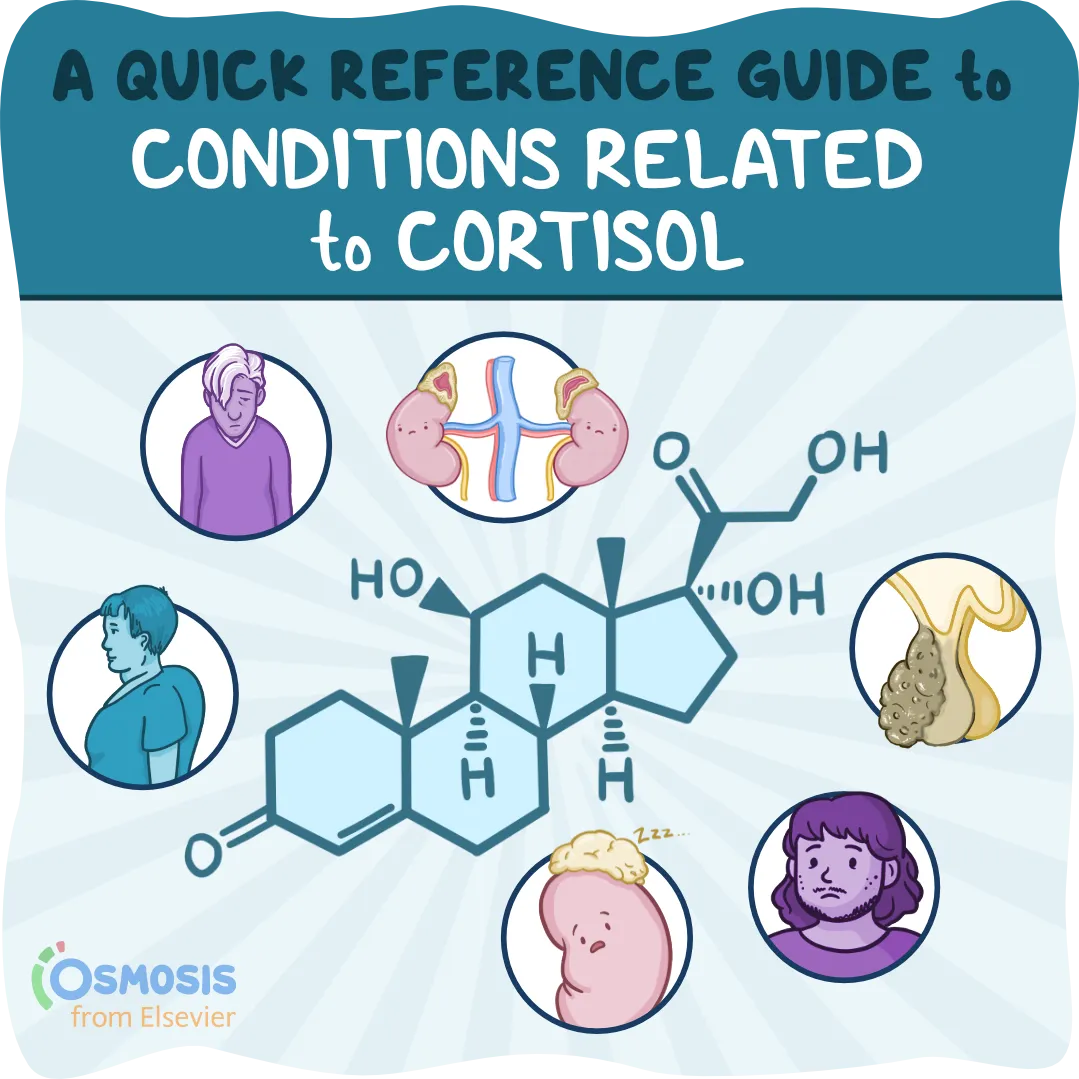
Get an overview of cortisol’s physiological roles, its regulation by the hypothalamic-pituitary-adrenal (HPA) axis, and related disorders such as hypercortisolism and hypocortisolism.
Introduction
A common topic of discussion in the media, cortisol has been an ongoing focus for researchers due to the major impact it has on our health. Disrupting cortisol levels can lead to a variety of health issues, ranging from complications with the adrenal and pituitary glands to the negative effects of long-term medication use. Cortisol also affects our mental health, with studies suggesting links between elevated cortisol levels, anxiety, and depression. It also plays a role in metabolism, immune function, and circadian rhythm regulation, with studies underway on the effects of chronic cortisol exposure and increased risk of chronic conditions such as cardiovascular disease, metabolic disorders, and immune system dysfunction.
A steroid hormone produced by the adrenal glands, cortisol plays a vital role in the body, such as helping maintain blood pressure, regulate glucose metabolism, reduce inflammation, and mediate stress. The hypothalamic-pituitary-adrenal (HPA) axis manages cortisol within a narrow range to support these functions. Specifically, the hypothalamus releases corticotropin-releasing hormone (CRH) to stimulate the anterior pituitary gland to release adrenocorticotropic hormone (ACTH), which then triggers the adrenal glands to produce cortisol. In some cases, there’s either too much or too little cortisol in the body due to HPA axis dysfunction. Let’s take a closer look at some conditions related to cortisol levels.

Hypercortisolism
Excess cortisol, also called hypercortisolism, is when there are high levels of cortisol in the body due to exogenous or endogenous causes. The most common cause of exogenous Cushing syndrome is the chronic use or high doses of glucocorticoids (e.g., prednisone, hydrocortisone, dexamethasone). This excess cortisol can be caused by adrenal hyperplasia, a hormone-secreting adrenal tumor, or a tumor elsewhere in the body, such as the lungs, that secretes ACTH. When a pituitary adenoma causes excess ACTH secretion, it results in Cushing disease.
Regardless of the cause, signs and symptoms of hypercortisolism are typically nonspecific and include weight gain with central (truncal) obesity, hair loss, decreased libido, fatigue, and weakness. Other manifestations include hypertension, hyperglycemia, menstrual changes, cutaneous atrophy, and erectile dysfunction. There are also characteristic facial and body changes, including moon face, facial flushing, dorsocervical fat pad (“buffalo hump”), and supraclavicular fat pads.
Diagnosis of hypercortisolism is based on a medical history, physical examination, laboratory testing, and diagnostic imaging. Lab testing can include cortisol levels (e.g., serum, urine), ACTH levels, and dexamethasone suppression tests. Diagnostic imaging such as brain MRI and adrenal CT can help identify the underlying cause (e.g., pituitary adenoma or adrenal hyperplasia).
Treatment of hypercortisolism depends on the underlying cause. In cases related to glucocorticoid use, gradual medication withdrawal may be appropriate. For tumors, surgical resection may be required, sometimes followed by radiotherapy or medication.

Hypocortisolism
Conversely, hypocortisolism, also called adrenal insufficiency, occurs when there are low cortisol levels in the body and may be primary, secondary, or tertiary. Primary adrenal insufficiency (Addison disease) occurs when the adrenal glands cannot produce cortisol; secondary adrenal insufficiency results from inadequate ACTH release by the pituitary gland; and tertiary adrenal insufficiency occurs when insufficient CRH is released by the hypothalamus.
Similar to hypercortisolism, adrenal insufficiency symptoms are often nonspecific, including weight loss, fatigue, hair loss, menstrual changes, and decreased libido. Other manifestations include skin changes (e.g., hyperpigmentation, decreased skin turgor), altered mental status, and psychiatric changes. In severe cases, an acute adrenal crisis may occur—a medical emergency presenting as shock (e.g., hypotension, confusion, abdominal pain, altered level of consciousness).
Diagnosis of adrenal insufficiency involves medical history, physical examination, and laboratory testing. Lab testing may include serum cortisol, ACTH, renin, and aldosterone levels, complete metabolic panel, anti-21-hydroxylase antibodies, and tests for infectious causes such as tuberculosis. An ACTH stimulation test may also be performed.
Treatment includes stabilization during adrenal crisis, identification of the underlying cause, and lifelong cortisol replacement therapy (e.g., hydrocortisone, prednisone, dexamethasone).
More Common Conditions
- A Quick Reference Guide to Common Conditions in Older Adults
- A Quick Reference Guide to Common Conditions Associated With Pregnancy
- A Quick Reference Guide to Common Conditions Associated with Long Covid
- A Quick Reference Guide to Common Conditions Associated with Gut Health
- A Quick Reference Guide to Common Conditions Related to Sexual Health: Bacterial Infections
- A Quick Reference Guide to Common Conditions Related to Sexual Health, Part 2: Viruses
- A Quick Reference Guide to Conditions Related to Cortisol
- A Quick Reference Guide to Signs and Symptoms Associated with Diabetes Mellitus
- A Quick Reference Guide to Male Reproductive Health Disorders
- A Quick Reference Guide to Female Reproductive Health Disorders
About the Author
Kelsey LaFayette, DNP, ARNP, FNP-C, Nursing Content Manager at Osmosis from Elsevier, obtained a Bachelor of Arts in Nursing degree from Luther College in 2011. As an RN, she has a clinical background in medical and pulmonary inpatient units, urgent care, and critical care, and earned her Doctor of Nursing Practice degree from the University of Illinois at Chicago in 2022. Throughout her career, Kelsey has served in multiple education and leadership roles, including charge nurse, preceptor, and Clinical Team Lead, developing orientation programs and policies. These experiences shaped her passion for nursing education for students, clinicians, patients, and families. She currently serves as a manager on the Nursing Content team and contributes to projects that support lifelong learning.
Reviewer
Lisa Miklush, PhD, RN, CNS, Senior Content Editor
References
- Ceccato F, Scaroni C. Central adrenal insufficiency: open issues regarding diagnosis and glucocorticoid treatment. Clin Chem Lab Med. 2019;57(8):1125-1135. doi:10.1515/cclm-2018-0824
- Cole S. Evaluation and treatment of adrenal dysfunction in the primary care environment. Nurs Clin North Am. 2018;53(3):385-394. doi:10.1016/j.cnur.2018.04.007
- Hirsch D, Shimon I, Manisterski Y, et al. Cushing’s syndrome: comparison between Cushing’s disease and adrenal Cushing’s. Endocrine. 2018;62(3):712-720. doi:10.1007/s12020-018-1709-y
- Martin-Grace J, Dineen R, Sherlock M, Thompson CJ. Adrenal insufficiency: physiology, clinical presentation, and diagnostic challenges. Clin Chim Acta. 2020;505:78-91. doi:10.1016/j.cca.2020.01.029
- Nieman LK. Recent updates on the diagnosis and management of Cushing’s syndrome. Endocrinol Metab (Seoul). 2018;33(2):139-146. doi:10.3803/EnM.2018.33.2.139
- https://www.ncbi.nlm.nih.gov/pmc/articles/PMC8584322
- https://www.nature.com/articles/s44220-023-00016-0

Try Osmosis from Elsevier today! Access your free trial and discover why millions of current and future clinicians and caregivers love learning by Osmosis.
Leave a Reply